Last Updated: July 2026 | Author: Munir Ardi
The fight against devastating diseases and community health emergencies is not won by willpower alone; it is won by well-funded institutions. Discovering a cure for spinal cord injuries, mapping the neuroscience of autism, or simply equipping local first responders with life-saving AEDs requires millions of dollars in capital. This is the domain of medical research and institutional grants.
Before diving into institutional funding, it is crucial to understand the overarching architecture of the healthcare financial system. We highly recommend that all administrators and researchers report back to our Master Pillar on the medical and healthcare financial assistance guide to see how institutional research eventually impacts individual patient care.
Unlike personal financial assistance, institutional grants are highly competitive, rigorously audited financial awards given to universities, 501(c)(3) non-profits, and government agencies to push the boundaries of science and community safety.

Breakthrough cures and life-saving community equipment require massive capital. Federal agencies and private foundations distribute billions of dollars annually through medical research and institutional grants to drive innovation and protect public health.
Phase 1: The Tier 3 Research & Funding Directory
As a Sub-Pillar resource, this page serves as your central command hub for specific, niche institutional grants. Depending on your organization’s specific medical focus, you must deploy your grant-writing teams to these specialized targets. Select your operational sector below to access our dedicated funding blueprints:
- Maternal & Infant Health: Organizations researching premature birth and birth defects must target March of Dimes research grants.
- Neurological Trauma: Laboratories developing regenerative therapies should aggressively pursue spinal cord injury research grants.
- Developmental Sciences: Institutions seeking to understand and support neurodivergence should explore our guide on autism research grants.
- Advanced Brain Mapping: Universities and top-tier labs can learn the exact methodologies of how to get a neuroscience research grants through the NIH and private sectors.
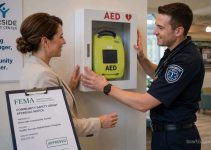
- First Responder Equipment: For municipal and community safety, we outline the exact steps to secure AED grants for fire departments and EMS teams.
- Community Defibrillators: If you are a school, community center, or non-profit looking to install life-saving heart monitors, explore our guide on automated external defibrillator grants.
- Public Safety & Fire Prevention: Funding is aggressively deployed to stop disasters before they happen. Learn how municipalities and safety coalitions secure fire prevention grants.
- Law Enforcement K9 Units: Securing, training, and providing veterinary care for police dogs requires massive capital. Discover how departments fund these working animals through police K9 grants.
Phase 2: The Architecture of Institutional Funding
Securing a six- or seven-figure grant requires an understanding of where the money originates. Institutional funding is generally split into two massive reservoirs:
1. Federal and Government Grants
The National Institutes of Health (NIH) and the National Science Foundation (NSF) are the largest public funders of biomedical research in the world. Federal grants (such as the R01 grant) provide the most substantial capital, but they require exhausting peer reviews, pristine preliminary data, and an administrative infrastructure capable of handling strict federal compliance.
2. Private Foundations and Philanthropy
For organizations that may not have the bureaucratic weight to win an NIH grant, private foundations are the ultimate strategic target. Organizations like the Bill & Melinda Gates Foundation, the Michael J. Fox Foundation, and the Brain & Behavior Research Foundation offer agile, targeted funding. While the dollar amounts may be slightly smaller than federal grants, the application process is often faster and more focused on innovative, high-risk/high-reward concepts.
Pro-Tip: Navigating the NIH Bureaucracy
If your institution is targeting massive federal research funding, understanding the bureaucratic lifecycle of an NIH application is absolutely critical before you write a single page. To guide your research and administrative teams through the rigorous federal submission steps, from initial concept to peer review, watch this essential foundational breakdown: NIH Grants Process: A Brief Walk-Through for Beginners:
Phase 3: The Muslim Perspective (Fard Kifayah, Riba, & Hibah)

Advancing medical science is a communal obligation (Fard Kifayah) in Islam. Securing pure grant funding (Hibah) ensures that research institutions can expand their life-saving work without falling into the trap of interest-bearing commercial loans (Riba).
For Muslim scientists, medical professionals, and institutional administrators, conducting medical research is not just a career; it is a Fard Kifayah (a communal religious obligation). Islam mandates that the community must produce experts capable of curing diseases and protecting human life (Hifz al-Nafs). However, funding these massive operations presents severe tests in Islamic jurisprudence (Fiqh).
1. Expanding Facilities Without Riba
Building a new neuroscience laboratory or outfitting a community with medical equipment requires massive capital. When institutions lack cash, the secular financial system encourages taking out commercial business loans. This involves paying Riba (interest/usury), which is strictly Haram. Engaging in Riba to fund medical research contaminates the spiritual purity (Barakah) of the institution’s work.
2. Avoiding Institutional Gharar
Institutions must also be wary of Gharar (uncertainty and deception) when engaging with commercial liability insurance or private equity funding that may attempt to monopolize and price-gouge the resulting medical cures. Research must be conducted transparently and ethically, without exploiting vulnerable patient populations during clinical trials.
3. The Halal Power of Hibah Grants
The pursuit of federal and foundation grants is the ultimate Halal financial strategy for institutions. Because a grant from the NIH or a private foundation is given to further public knowledge without the requirement of paying back the principal or interest, it functions as a pure Hibah (gift/grant).
Muslim researchers and institutions are highly encouraged to aggressively pursue these funds. For Muslim medical professionals seeking ethical guidance, networking, and institutional support, the Islamic Medical Association of North America (IMANA) serves as a premier resource, providing Halal medical guidelines and sometimes facilitating scholarships and grants for medical students and researchers.
Conclusion: Fueling the Future of Medicine
Medical research and institutional grants are the lifeblood of scientific advancement and community health infrastructure. Whether you are seeking to cure autism, map the brain, or provide a local fire department with AEDs, the funding exists for those who know how to ask.
Your strategy is clear: map your specific niche using our Tier 3 directory, assemble a meticulous grant-writing team, and target the NIH or specialized private foundations. For Muslim-led institutions, securing these Halal Hibah funds ensures that your pursuit of science fulfills your communal religious obligations while remaining completely free from the destructive force of Riba.
Frequently Asked Questions (FAQs)
Q1: Can an individual doctor apply for a medical research grant?
A: Rarely. Most massive federal and foundation grants require the applicant to be a recognized institution (like a university, a teaching hospital, or a registered 501(c)(3) non-profit). The grant is awarded to the institution, which then sponsors the Principal Investigator (the lead doctor/scientist).
Q2: What is an NIH R01 Grant?
A: The R01 is the original and historically oldest grant mechanism used by the National Institutes of Health (NIH). It provides support for health-related research and development based on the mission of the NIH. It is highly competitive and typically funds a project for 3 to 5 years.
Q3: Can community organizations get grants for medical equipment?
A: Yes. While universities fight for research grants, community organizations, volunteer fire departments, and schools can apply for specific institutional grants designed to purchase life-saving medical equipment, such as AEDs (Automated External Defibrillators) or trauma kits.
Q4: Are grant funds subject to audits?
A: Absolutely. Institutional grants, especially federal ones, come with immense compliance requirements. Institutions must submit detailed financial reports proving that the funds were spent exactly as outlined in the approved grant budget. Misusing funds can result in federal penalties and the revocation of the grant.
Important Disclaimer: StartGrants.com is an informational directory. We do not distribute grants nor are we affiliated with the NIH, NSF, or any private medical foundation. Grant guidelines, application deadlines, and compliance rules are highly complex and change constantly. Always consult the official Request for Application (RFA) from the funding agency and work with your institution’s grant administration office before applying.