
Last Updated: July 2026 | Author: Munir Ardi
There are few situations more terrifying than being stranded hundreds or thousands of miles away from home with zero financial resources. Whether your vehicle suffered a catastrophic transmission failure on a cross-country road trip, your wallet and passport were stolen in a foreign city, or a sudden natural disaster severed all local supply chains, panic sets in immediately.
When survival mode kicks in, many people make financially devastating decisions, such as taking out predatory payday loans or maxing out high-interest credit cards just to buy a plane ticket. However, you do not have to resort to financial ruin. Learning exactly how to get home when stranded involves tapping into a highly organized, international network of government agencies and community charities designed specifically to rescue displaced travelers.
Before executing the emergency extraction tactics outlined below, you must understand the broader ecosystem of community safety nets. Anchor your crisis strategy by reviewing our foundational master guide on Community and Humanitarian Donations.
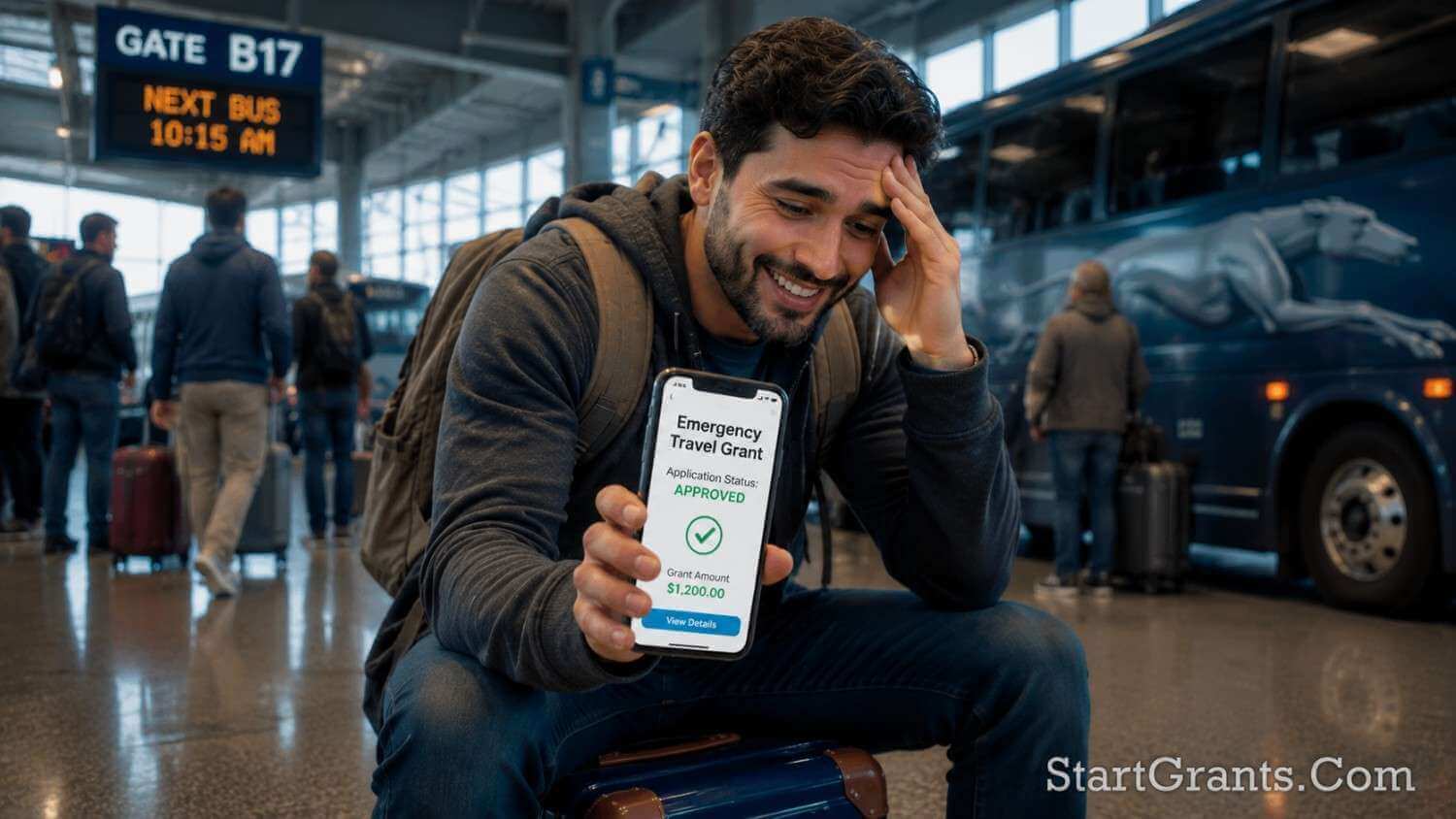
Being stranded hundreds of miles from home without financial resources is a terrifying experience. Fortunately, domestic charities and federal programs offer emergency travel grants and vouchers to secure your safe return.
Phase 1: Domestic Stranding (Charities & Bus Vouchers)
If you are stranded within the borders of the United States, your primary extraction pipeline will not be the federal government; it will be massive, localized 501(c)(3) charities that specialize in transient relief.
Travelers Aid International
The most targeted resource is Travelers Aid International. This organization operates booths and offices in major airports, bus terminals, and train stations across the country. Their explicit mission is to assist individuals who become disconnected from their support systems while in transit. If you are robbed or lose your funds, Travelers Aid caseworkers can often secure emergency, one-way bus tickets or negotiate with airlines on your behalf.
The Salvation Army
If there is no Travelers Aid desk nearby, you must locate the nearest Salvation Army corps. They maintain highly localized “Transient Assistance” budgets. While they will not buy you a first-class plane ticket, a caseworker can issue emergency gas vouchers if you have a working vehicle, or a Greyhound bus ticket to get you to your home city. To understand how to navigate their specific bureaucracy, read our tactical guide on Salvation Army Emergency Financial Assistance.
Phase 2: Emergency Transient Housing
Securing a bus ticket or a wired transfer of funds takes time. In the interim, you must secure a safe place to sleep that does not drain your remaining cash on a commercial hotel room.
Historically, the Young Men’s Christian Association (YMCA) and the YWCA were the premier providers of safe, transient housing for travelers. While the modern YMCA is primarily known for fitness and childcare, many regional branches still operate SROs (Single Room Occupancies) or maintain partnerships with local emergency shelters for stranded individuals. Discover how to leverage their vast community networks in our guide on YMCA Financial Assistance.
Protecting the Vulnerable: A stranding crisis becomes exponentially more dangerous if the traveler is elderly or disabled. Many charities have expedited triage protocols for seniors. If you are coordinating a rescue for an older relative, explore dedicated safety nets in: Donate to Save the Elderly.
Phase 3: International Stranding (The U.S. Embassy)
Being stranded domestically is an inconvenience; being stranded internationally without a passport or money is a genuine emergency. If you are overseas and destitute, you must immediately contact the nearest U.S. Embassy or Consulate.
The State Department cannot simply give you a “free grant” to fly home, but they operate a vital safety net: the U.S. Repatriation Program. Through this program, the U.S. government will issue you an emergency Repatriation Loan.
This loan covers the cost of a one-way, economy-class flight back to the United States, basic food, and lodging while you wait for the flight. However, there is a severe bureaucratic catch: Your passport will be strictly limited. Upon returning to the U.S., you will not be issued a new, valid passport until you have repaid the Repatriation Loan in full to the federal government.
Pro-Tip: Navigating Repatriation Bureaucracy
Securing a federal loan to evacuate a foreign country involves a highly specific chain of command, involving both the Department of State and the Department of Health and Human Services (HHS). To understand exactly what you are signing and how the federal government extracts its citizens during international crises, watch this official briefing: 5 Things to Know about the U.S. Repatriation Program:
Phase 4: The Bureaucracy of Emergency Funds (No Cash)
A critical piece of knowledge regarding how to get home when stranded is understanding that charities do not hand out cash. If you walk into a community center and ask for $200, you will be denied. This policy exists to prevent fraud and substance abuse.
Assistance is strictly rendered via vendor payments. A caseworker will physically purchase the bus ticket in your name, or call the local motel and pay them directly over the phone for a one-night stay. You must be prepared to surrender your pride, show your ID, and allow the charity to manage the logistics of your rescue.
Phase 5: The Muslim Perspective (Ibn al-Sabil, Riba, & Takaful)
For a Muslim traveler stranded away from home, the crisis is met with a profound, divine safety net built directly into Islamic law. However, the panic of the situation often drives travelers toward Western financial solutions that severely compromise their faith. Navigating an emergency extraction requires strict adherence to Islamic financial jurisprudence (Shariah) to ensure a safe, pure return.
The Divine Right of Ibn al-Sabil (The Stranded Traveler)
In the West, asking a charity for a bus ticket can feel humiliating. In Islam, it is a divine right. The Qur’an (9:60) explicitly lists eight categories of people (the Asnaf) who are eligible to receive Zakat (obligatory alms). One of those categories is Ibn al-Sabil—The Wayfarer or Stranded Traveler.
Even if a Muslim is a millionaire in their home country, if they are stranded in a foreign city without access to their wealth, they are legally and spiritually entitled to receive Zakat to cover their travel home. If a Muslim is stranded, their first step should be to locate the nearest Islamic Center or Masjid. It is the communal obligation of that local Muslim community to use Zakat funds to purchase their bus or plane ticket home. Organizations like ICNA Relief and Islamic Relief USA also maintain emergency funds for such crises.
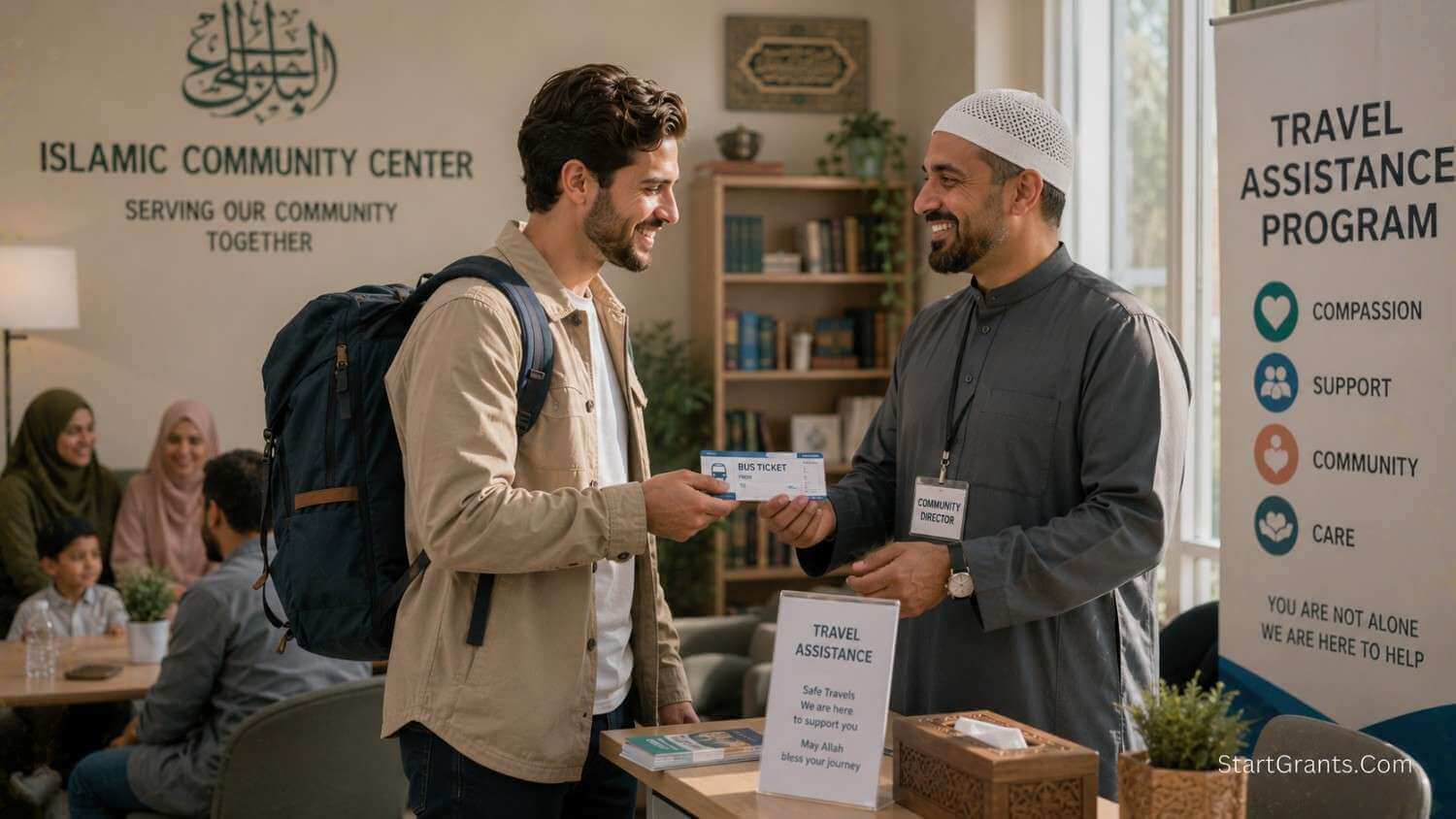
In Islamic jurisprudence, a stranded traveler (Ibn al-Sabil) possesses a divine right to receive Zakat funds to safely return home, even if they are wealthy in their home country. This Halal safety net prevents reliance on Riba-laced credit card cash advances.
The Trap of Cash Advances (Riba)
When someone loses their wallet but still has their smartphone, the fastest Western solution is to take a “Cash Advance” from a credit card or a digital payday loan app. These platforms charge immediate, exorbitant, compounding interest.
In Islam, intentionally taking on debt that stipulates the payment of interest is explicitly Riba, which is strictly Haram (forbidden) and brings spiritual ruin. A Muslim must absolutely refuse to fund their journey home using Riba-bearing loans. Utilizing the Zakat safety net (which is a Hibah, requiring no repayment) or securing a Qard Hasan (zero-interest benevolent loan) from a friend back home via wire transfer is the only Halal path.
Repatriation Loans and Penalty Interest
If a Muslim is forced to use the U.S. Repatriation Program (detailed in Phase 3) to evacuate a foreign country, they must be highly vigilant. The U.S. government issues this as a loan. If the loan is not paid back promptly upon returning to American soil, the government will begin charging interest and late penalties on the debt.
Allowing the debt to accumulate interest plunges the traveler into Riba. Therefore, a Muslim who accepts a repatriation loan must make it an absolute, urgent priority to pay off the principal balance the moment they have access to their domestic funds, ensuring no Riba is ever paid to the Treasury.
Gharar and Travel Insurance
Many travelers purchase comprehensive Travel Insurance to protect against being stranded. Traditional commercial travel insurance contains Gharar (excessive uncertainty) and elements of gambling. While Takaful (Islamic cooperative insurance) for travel exists in the Middle East and Asia, it is practically non-existent in the U.S.
Contemporary Islamic scholars generally apply the principle of Dharurah (legal and operational necessity), permitting Muslims to purchase commercial travel insurance (especially for international travel or hazardous regions) to prevent catastrophic financial ruin or being stranded without medical care, provided the intent is pure protection, not speculative profit.
Conclusion
Discovering how to get home when stranded is about suppressing panic and activating logistical safety nets. Domestically, utilizing the vast infrastructure of Travelers Aid International and the Salvation Army guarantees you will not be left sleeping on the streets. Internationally, the U.S. Embassy’s Repatriation Program provides the ultimate, albeit strict, federal extraction loan.
For the Muslim traveler, a crisis on the road is met with the profound beauty of Islamic solidarity. By claiming your divine right as Ibn al-Sabil to receive Zakat, fiercely rejecting the trap of Riba-laced cash advances, and managing evacuation debts ethically, your journey home becomes not just a physical rescue, but a powerful testament to the purity and protection of Islamic finance.
Frequently Asked Questions (FAQs)
Q1: Will the U.S. Embassy give me a grant to fly home if I am robbed abroad?
A: No. The U.S. Embassy does not give “free grants” for emergency travel. They provide a Repatriation Loan. You must sign a promissory note agreeing to repay the U.S. government for the cost of the flight. Until the loan is repaid, your passport will be limited or suspended.
Q2: Can the Salvation Army buy me a plane ticket?
A: It is highly unlikely. The Salvation Army and similar local charities have limited emergency budgets. They focus on the most cost-effective extraction methods, which typically means issuing a voucher for a Greyhound bus ticket or providing gas cards if you have a vehicle.
Q3: What is Travelers Aid International?
A: Travelers Aid International is a network of social service agencies and volunteer programs stationed at major transit hubs (airports, train stations, bus terminals) across the U.S. They specialize in helping individuals who are stranded, offering resources like emergency transportation, lodging vouchers, and crisis counseling.
Q4: Why is it Haram to use a credit card “Cash Advance” to buy a bus ticket?
A: A credit card cash advance immediately begins accruing compounding interest, often at an exorbitant rate, the moment the cash is withdrawn. In Islamic finance, taking a loan that requires the payment of interest is classified as Riba, which is strictly forbidden (Haram). Muslims must seek Halal alternatives like Zakat for Ibn al-Sabil or interest-free loans (Qard Hasan).
Q5: Can a wealthy Muslim receive Zakat if they are stranded?
A: Yes. Under Islamic jurisprudence (Fiqh), a stranded traveler (Ibn al-Sabil) is one of the eight eligible categories to receive Zakat. Even if they are a millionaire in their home country, if they are cut off from their wealth and physically stranded without funds, they are legally permitted to receive Zakat to cover the costs of returning home.
Disclaimer: The information provided in this article is for educational and informational purposes only. We are not a federal agency, a diplomatic embassy, or a religious fatwa council. U.S. State Department repatriation policies and charity emergency budgets are subject to constant changes. Always consult directly with the nearest U.S. Embassy or Consulate if stranded abroad, and seek guidance from a qualified Islamic finance scholar regarding Halal emergency financing, Riba avoidance, and specific Zakat eligibility as Ibn al-Sabil.