Last Updated: June 2026 | Author: Zee

Dental Hygiene school is an investment. Grants can help cover expensive gear like loupes and instrument kits.
Let’s look at the numbers. The average cost of a Dental Hygiene degree (Associates or Bachelors) can easily top $40,000. But the average salary for a Registered Dental Hygienist (RDH) in 2026 is projected to be over $84,000 a year.
The ROI (Return on Investment) is incredible. But there is a hurdle: The Upfront Cost.
Unlike standard college majors, Dental Hygiene students face unique expenses. You aren’t just buying books; you are buying loupes ($1,500), scalers, uniforms, and paying for expensive clinical board exams. Often, standard FAFSA aid covers tuition but leaves you paying thousands out-of-pocket for these mandatory “Instrument Kits.”
The good news? There is a hidden ecosystem of grants specifically designed to pay for these tools and your tuition. Before applying for specific hygiene scholarships, ensure your overarching educational funding strategy is set by reviewing our master directory on dental school grants and scholarships. Here is your tactical guide to funding your RDH journey.
Phase 1: The “Big League” (Association Grants)
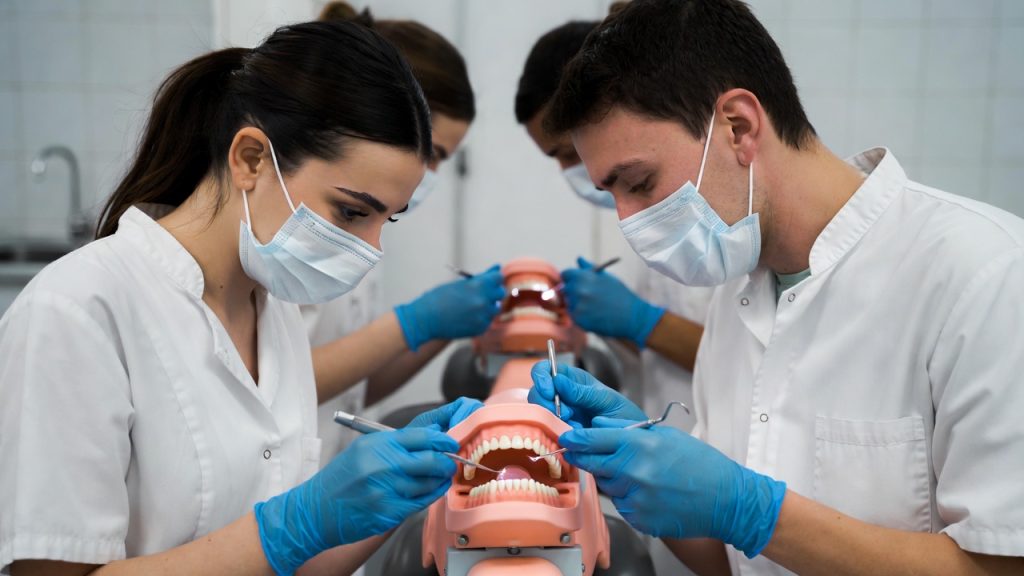
Major associations like ADHA offer thousands of dollars in scholarships specifically for student members.
The biggest mistake students make is applying for generic “college scholarships.” You need to look where the dentists hang out. The professional associations want to fund their future colleagues.
1. ADHA Institute for Oral Health (The Holy Grail)
If you only apply to one scholarship this year, make it this one. The American Dental Hygienists’ Association (ADHA) runs a massive foundation that pairs students with multiple donors.
- The Strategy: You fill out ONE application, and their system automatically matches you to over 10 different scholarships (like the Dr. Esther Wilkins Scholarship or the Mars Wrigley Foundation award).
- Value: Awards typically range from $1,000 to $2,000.
- Eligibility: You must be an ADHA Student Member (Membership is cheap, approx $65, and worth it for the access).
- Deadline: Usually closes in February annually.
- Apply Here: ADHA Institute for Oral Health.
2. ADEA (American Dental Education Association)
While ADHA is for practitioners, ADEA is for future leaders and educators.
- The Grant: ADEA/Haleon Dental Hygiene Scholarship.
- Focus: They award $2,500 to students who demonstrate a passion for “Community Health” and inclusivity.
- Winning Angle: In your essay, don’t just say you want to clean teeth. Say you want to educate your community about preventive health. ADEA loves the word “Prevention.”
- Link: ADEA Scholarships.
Phase 2: Corporate Sponsors (The Brands You Use)

Corporate sponsors like Colgate and Oral-B fund students who demonstrate a passion for community health education.
Big dental brands (Colgate, Oral-B, Hu-Friedy) have massive marketing budgets. Part of that budget is tax-deductible “Education Grants.”
3. Colgate “Bright Smiles, Bright Futures”
Colgate specifically targets diversity in the workforce.
- The Mission: This grant is often earmarked for students from underrepresented backgrounds (Minority/BIPOC) who are committed to serving at-risk communities.
- Value: Up to $2,500.
- Pro Tip: Your essay should focus on “Health Equity”—how you plan to help children in underserved areas access dental care.
4. Crest + Oral-B (P&G) Scholarship
Procter & Gamble (P&G) funds this prestigious award through the ADHA.
- Target: They look for students pursuing a Baccalaureate degree (BSDH) who have an interest in Clinical Research.
- Why apply: Winning this puts you on the radar of one of the biggest companies in the world. It looks amazing on a resume.
5. The “Product Grant” Hack: Hu-Friedy
Sometimes, cash isn’t the only way to save money.
- The Hu-FriedyGroup/Esther Wilkins Instrument Scholarship: Instead of cash, this unique program awards you a brand new Instrument Kit of your choice.
- The Value: Since a high-quality kit can cost $1,000+, winning this is as good as cash. It directly lowers your out-of-pocket school bill.
Phase 3: Federal Funding (The Heavy Hitters)
While association grants give you $1,000, the Federal Government can cover your entire tuition if you know where to look.
6. HRSA Scholarships for Disadvantaged Students (SDS)
This is a massive federal pot of money, but the application process is tricky.
- How it works: You do NOT apply to the government directly. HRSA gives millions to specific colleges. The colleges then distribute it to students.
- The Strategy: When applying to Dental Hygiene schools, ask the Financial Aid office specifically: “Does this program participate in the HRSA Scholarships for Disadvantaged Students grant?”
- Eligibility: You must prove financial need or come from a “disadvantaged background” (which can include growing up in a medically underserved area).
7. Pell Grant (Don’t Forget the Basics)
Since Dental Hygiene is often an Undergraduate degree (Associate or Bachelor’s), you still qualify for the Federal Pell Grant.
- Value (2025-2026): Up to $7,395 per year (amount changes annually).
- Action: Submit your FAFSA on October 1st. It’s first-come, first-served for some state matching grants.
8. The NHSC Service Commitment: Free School for Service
The National Health Service Corps (NHSC) Scholarship Program is perhaps the most lucrative “grant” for dental hygiene students. In 2026, the program has expanded its reach to combat the rural dental professional shortage. However, there is a catch: for every year of scholarship support you receive, you must commit to working at least two years in an underserved community (HPSA site). It is a life-changing financial move, but it requires a heart for service in high-need areas.
Pro-Tip: Choosing the Right Path & Funding
Before you finalize your grant applications, it is essential to understand the different schooling routes and how they affect your financial aid options. Watch this expert breakdown of dental hygiene school paths and the foundational knowledge you need to secure your professional future:
Phase 4: The Diversity Advantage (The Muslim Strategy)
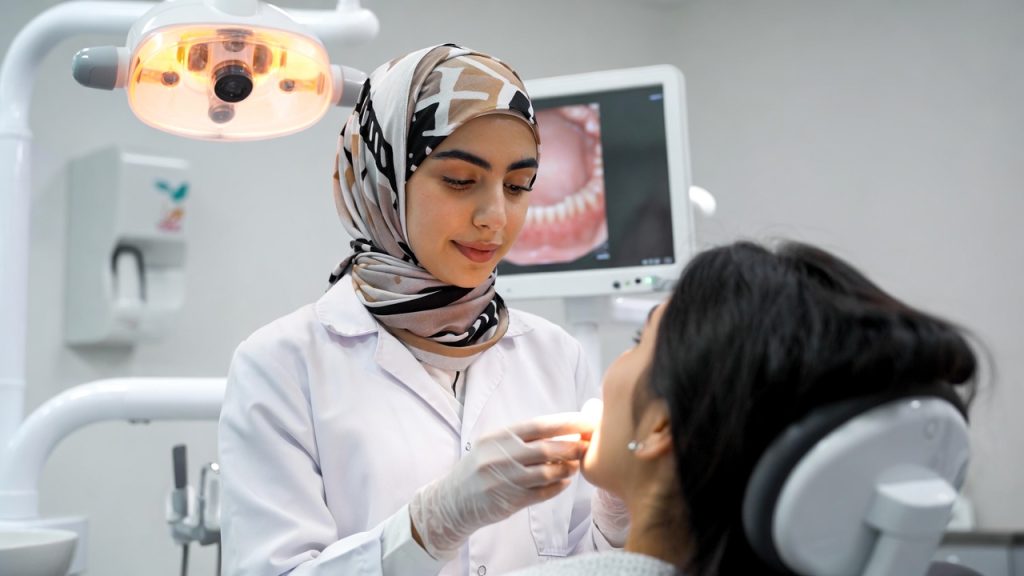
Cultural competence is a huge asset. Scholarships favor applicants who can bridge the gap for underserved communities.
Scholarship committees are desperate for “Cultural Competence.” They want hygienists who can serve diverse populations. As a Muslim or minority applicant, you are not just a student; you are a solution to a public health gap.
How to Write the “Winning Essay”:
1. The Modesty & Comfort Angle
Many Muslim women delay dental cleanings because they are uncomfortable with male providers or staff who do not understand religious boundaries (Haya).
- Essay Hook: “As a Muslim Dental Hygienist, I can bridge the gap for female patients in my community who have avoided care due to cultural modesty concerns. I will create a safe environment that encourages regular screenings.”
2. The “Halal” Ingredient Awareness
Some patients worry about animal by-products (gelatin/glycerin) in dental products (prophy paste/fluoride varnish).
- Essay Hook: “My background gives me the unique ability to educate patients about ingredient safety and Halal-certified options, building trust with a demographic that often feels ignored by mainstream dentistry.”
3. The Grants to Target:
- NDA Foundation (National Dental Association): Specifically for underrepresented minorities in dentistry.
- Hispanic Dental Association (HDA): If you are Latino/Muslim, this is a double advantage.
Phase 5: The “Hidden Cost” Hacks (Loupes & Boards)
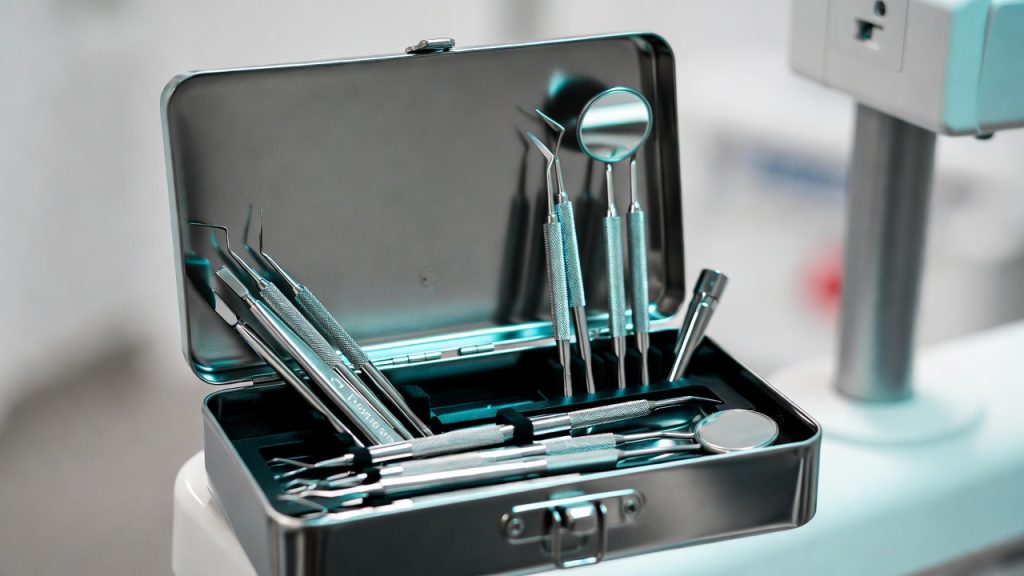
The “hidden cost” of hygiene school is the instrument kit. Look for product grants from manufacturers like Hu-Friedy.
Tuition is one thing, but the “Extras” can bankrupt you. Here is how to handle them.
1. The “Loupes” Grant
Dental Loupes (kacamata pembesar) cost $1,500+.
- Tip: Brands like Orascoptic and Designs for Vision often offer “Student Rep” programs. If you agree to be their ambassador on campus (organizing one lunch-and-learn), they might give you a steep discount or even a free pair.
2. Local Component Grants
Don’t just look national.
- Strategy: Every state has a local “Dental Hygienists’ Association” (e.g., California DHA, Texas DHA). They often have small $500 scholarships that go unclaimed because nobody applies.
- Action: Google
[Your State] Dental Hygienists Association Scholarship.
Phase 6: The National Health Service Corps (NHSC) LRP
Most students think NHSC is only for Doctors and Dentists. Wrong. Registered Dental Hygienists (RDHs) are fully eligible for the NHSC Loan Repayment Program.
The Deal:
- You get: Up to $50,000 tax-free to pay off your student loans.
- You give: A 2-year service commitment working full-time at an NHSC-approved site (usually a community health center, rural clinic, or tribal clinic).
- Why it’s better than a scholarship: You can apply for this after you get hired. It gives you freedom during school, and financial relief immediately after.
- Strategy: When looking for your first job, search specifically for clinics with a HPSA Score (Health Professional Shortage Area) of 14 or higher. The higher the score, the more money you get.
Phase 7: Indian Health Service (IHS) Loan Repayment
For hygienists who want to serve Native American or Alaska Native communities, the IHS offer is even more generous.
- The Deal: Up to $50,000 for an initial 2-year contract.
- The “Unicorn” Feature: Unlike other programs, IHS allows you to renew your contract annually. Some hygienists stay for 10 years and have their entire mortgage and education paid for.
- Cultural Angle (Muslim/Minority): Working in tribal areas often requires high cultural sensitivity. If you are a Muslim applicant who understands the importance of preserving tradition while introducing modern medicine, you will fit in perfectly.
Phase 8: State-Specific “STAR” Programs
Many states have their own mini-versions of the NHSC specifically for hygienists.
- California: The Health Professions Education Foundation (HPEF) offers the Allied Healthcare Scholarship.
- Iowa: The Health Care Professional Recruitment Program.
- Virginia: The Virginia State Loan Repayment Program (VA-SLRP) includes Dental Hygienists.
State-Level Incentives: Don’t Ignore Your Local Capitol
While Pell Grants get all the attention, state-level “Workforce Shortage” grants are often easier to win. States like Texas, California, and New York offer specific dental hygiene grants to students who promise to stay and practice within the state for at least three years after graduation. These funds are often administered through state-specific higher education departments and can be “stacked” on top of federal aid.
Action Step: Go to Google and search: [Your State] State Loan Repayment Program Dental Hygienist.
Phase 9: The Military Route (HPSP & STRAP)
Did you know the Army, Navy, and Air Force hire civilian Dental Hygienists? Or they commission them as officers?
The Army HPSP (Health Professions Scholarship Program):
- While usually for dentists, there are specific recruitment cycles for Allied Health professionals.
- Benefits: 100% Tuition + Monthly Stipend ($2,000+) + Signing Bonus ($20,000+).
- The Reality: You will serve as an officer. For Muslim women, the US Military has updated its religious accommodation policies (allowing hijabs in uniform with approval), making this a more viable option than 10 years ago.
Phase 10: Public Service Loan Forgiveness (PSLF)
If you work for a non-profit hospital, a university dental school, or a government clinic (FQHC), you qualify for PSLF.
The Math:
- Make 120 qualifying monthly payments (10 years).
- The remaining balance is forgiven tax-free.
- Why it matters for Hygienists: Many hygienists work in private practice (Dr. Smith’s office). Private practice does NOT qualify. If you have massive debt, choosing a non-profit job for 10 years is smarter than a private practice job that pays slightly more.
Phase 11: How to Structure Your “Personal Statement”
The scholarship judges read thousands of essays that say: “I want to make people smile.” Boring. They throw those away. You need a narrative arc.
The “Problem-Solution” Structure:
- The Hook (The Problem): Start with a specific story about lack of access.
- Example: “I watched my neighbor pull his own tooth with pliers because he couldn’t afford a cleaning.”
- The Pivot (The Solution): Introduce Dental Hygiene not as a job, but as the remedy.
- Example: “I realized that preventive care could have saved him. I don’t just want to clean teeth; I want to prevent the decay of my community.”
- The Execution (The Plan): Be specific.
- Example: “With this scholarship, I will focus my clinical rotation on geriatric patients…”
- The Diversity Kicker (For Muslim Applicants):
- Example: “Furthermore, I plan to research the compatibility of Miswak (traditional chewing stick) with modern fluoride treatments to encourage better oral health in the immigrant population.” (This shows you are a scholar, not just a worker).
Phase 12: Hacking the “Letter of Recommendation”
Most grants require 2 letters. One from a professor, one from a dentist.
The Mistake: Students ask, “Can you write me a recommendation?” The dentist says yes, writes a generic “She is nice,” and you lose.
The Hack: Write a “Brag Sheet” for your recommender.
- Hand them a paper that lists:
- Your GPA.
- Specific clinical skills you excelled at (e.g., “Recall how I handled that difficult pediatric patient last week?”).
- The specific criteria of the scholarship (e.g., “This grant focuses on leadership. Please mention the time I organized the study group.”).
- Why this works: Dentists are busy. If you give them the bullet points, they will write a powerful, specific letter that wins you the money.
Phase 13: The “Instrument Kit” Micro-Grants (Detailed)
We mentioned Hu-Friedy, but let’s dig deeper into Local Component Grants.
Many local dental societies have “Student Emergency Funds.”
- Scenario: You break your cavitron tip or lose a cassette. It costs $300 to replace. You are broke.
- The Grant: Reach out to the “Component President” of your local ADHA chapter.
- The Email Script:
“Dear President [Name], I am a student member at [School]. I am currently facing an unexpected expense for my clinical board exam kit. Does the local component have any micro-grants or sponsorship opportunities for students in exchange for volunteer hours at the next society meeting?”
- Result: Often, they will write a check just to help a student, or let you work the registration desk at an event in exchange for the cash.
Conclusion: Your ROI Starts Now
Becoming a Registered Dental Hygienist (RDH) is one of the smartest career moves in 2026. The job security is elite, and the salary is high.
However, graduating with $50,000 in debt eats into that salary. By stacking Association Grants (ADHA), Corporate Sponsorships (Colgate), and leveraging your unique background (Diversity/Muslim Angle), you can significantly reduce that burden.
Treat scholarship applications like your first job. Write the essays. Dig for the local grants. Your future patients—and your bank account—will thank you.
Frequently Asked Questions (FAQ)
Q1: Is there student loan forgiveness for Dental Hygienists?
A: Yes, absolutely. Registered Dental Hygienists (RDH) are eligible for the National Health Service Corps (NHSC) Loan Repayment Program. If you commit to working for 2 years in a designated “Health Professional Shortage Area,” the government can pay off up to $50,000 of your student loans tax-free.
Q2: Can I get a full-ride scholarship for Dental Hygiene school?
A: It is rare to find one single grant that covers everything. The winning strategy is “stacking.” Most students combine the Federal Pell Grant (approx. $7,395) with an ADHA Institute grant ($1,000-$2,000) and state-specific workforce grants to cover the full cost.
Q3: Do the military or IHS hire Dental Hygienists?
A: Yes. The Indian Health Service (IHS) offers an excellent loan repayment program (up to $50,000) with annual contract renewals. The US Military (Army/Navy) also hires civilian hygienists and offers the HPSP Scholarship for those willing to serve as commissioned officers.
Q4: Do I need a 4.0 GPA to get these scholarships?
A: Not necessarily. While merit-based grants (like ADEA) prefer high grades (3.5+), many grants are “Needs-Based” (like HRSA) or “Service-Based” (like NHSC). They care more about your financial situation and your willingness to work in underserved communities than your report card.
Q5: How can I pay for my Dental Instrument Kit if I don’t have the money?
A: First, apply for the Hu-Friedy Instrument Scholarship. Second, ask your school’s financial aid office to increase your “Cost of Attendance” calculation to include the kit, which allows you to take out a larger subsidized student loan. Finally, check with your local Dental Hygienists’ Association component for micro-grants.
Q6: What is the “Cultural Competence” advantage in essays?
A: Scholarship committees are looking for hygienists who can serve diverse populations. If you are bilingual or come from a minority background (e.g., Muslim, Hispanic), emphasize how you can build trust with patients who might otherwise avoid the dentist due to language or cultural barriers.
Q7: Can international students apply for dental hygiene grants in the US?
A: Most federal grants (like the Pell Grant and NHSC) require US citizenship or permanent residency. However, international students can apply for private scholarships from organizations like the ADHA or school-specific institutional aid.
Q8: Are there grants specifically for RDH (Registered Dental Hygienist) students returning to school for a Bachelor’s degree?
A: Yes. Many “Bridge Program” grants exist for students moving from an Associate degree to a Bachelor of Science in Dental Hygiene. Professional associations prioritize these grants to encourage higher clinical education and research.
Important Disclaimer: StartGrants.com is an independent information portal. We are not a government agency and do not provide direct grants or products. Always verify the current status of programs with the providing organization.