
Last Updated: June 2026 | Author: Munir Ardi
Every year, millions of families face the terrifying reality of premature birth, birth defects, and infant mortality. Behind the scenes of every surviving NICU baby is a team of scientists who spent years researching life-saving interventions. However, neonatal and maternal health research is astronomically expensive. For decades, the primary engine driving this specific field of science has been March of Dimes research grants.
Before initiating a specialized application, ensure your laboratory or institution’s overarching funding strategy is aligned. Report back to our Tier 2 directory on medical research and institutional grants to understand how foundation funding operates alongside federal NIH grants.
Whether you are a young investigator seeking your first major laboratory funding or an established institution running clinical trials on preeclampsia, here is your 2026 tactical guide to securing funding from the March of Dimes.

Preventing premature birth and infant mortality requires cutting-edge science and immense capital. March of Dimes research grants provide vital funding to scientists dedicated to solving the most complex maternal and infant health crises.
Phase 1: Targets and Grant Categories
The March of Dimes does not fund general medical research; their capital is strictly deployed to combat the maternal and infant health crisis. To secure their funding, your research proposal must directly align with their core mission areas: preventing preterm birth, eliminating birth defects, and addressing maternal mortality.
1. The Basil O’Connor Starter Scholar Research Award
This is arguably their most famous grant. It is specifically designed to support young investigators (those who have just completed their postdoctoral training) who are embarking on their independent research careers. This grant provides critical seed money to help new scientists establish their laboratories and generate the preliminary data needed to later secure massive federal NIH grants.
2. Prematurity Research Centers (PRC) Funding
For large-scale institutions, the March of Dimes funds collaborative, transdisciplinary networks known as PRCs. This is not for a single scientist, but for universities and hospitals working together to discover the unknown causes of preterm labor. Millions of dollars are awarded to institutions that can prove they are utilizing team science (genetics, bioinformatics, sociology) to tackle the issue.
Horizontal Strategy: Institutional research often overlaps across pediatric disciplines. If your research on infant brain development transitions into neurodivergence, cross-reference our guide on securing autism research grants to expand your laboratory’s funding portfolio.
Pro-Tip: Writing a Winning LOI
The first step to securing a foundation grant is not sending a full proposal, but submitting a flawless Letter of Intent (LOI). Watch this essential guide covering Nonprofit Grant Writing 101: Letter of Intent Breakdown so your research team can survive the initial elimination round:
Phase 2: The Muslim Perspective (Hifz al-Nafs & Riba-Free Research)
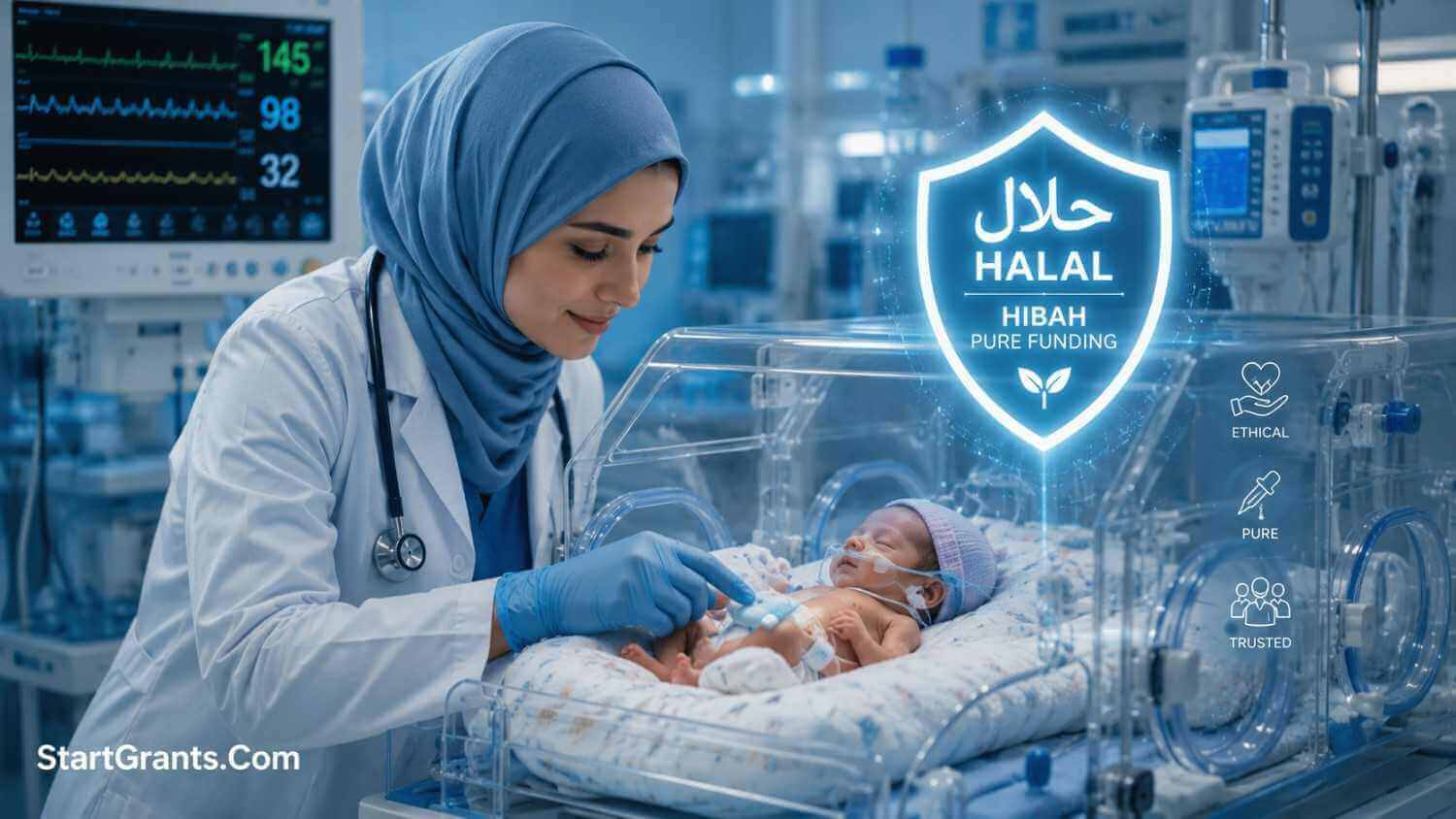
Protecting the life of the unborn and the mother (Hifz al-Nafs) is a paramount Islamic duty. Securing Halal research funding (Hibah) ensures that life-saving neonatal discoveries are made without the spiritual contamination of Riba.
For Muslim scientists and medical institutions, researching maternal and infant health is a direct fulfillment of Hifz al-Nafs (the protection of human life), which is one of the five foundational goals of Islamic law (Maqashid Syariah). However, the financial mechanisms used to fund these noble laboratories must also align with Islamic jurisprudence (Fiqh).
1. Fulfilling the Duty of Hifz al-Nafs
Islam places immense value on the life of the mother and the unborn child. Investing intellect, time, and resources into discovering why preterm births occur or how to prevent congenital anomalies is considered a highly rewarded communal obligation (Fard Kifayah). However, the purity of the research outcome is heavily tied to the purity of the funding.
2. The Danger of Riba in Laboratory Expansion
Modern medical equipment—from advanced incubators to genomic sequencers—costs millions. When an institution or private lab cannot afford this equipment, the default secular solution is to take out high-interest commercial business loans. This introduces Riba (usury) into the foundation of the research. In Islam, Riba is strictly Haram and is believed to strip the Barakah (divine blessing) from the wealth and the work being produced.
3. The Purity of Hibah Grants
Securing a grant from the March of Dimes is the ultimate Halal financial maneuver. Because these grants are awarded to advance public health without the expectation of financial repayment or interest, they fall under the Islamic category of Hibah (a pure gift or grant). Funding a lab through Hibah protects the institution from the sin of Riba.
Muslim researchers seeking to navigate the ethical guidelines of maternal health research (such as the Fiqh of embryology or fetal interventions) should connect with the Islamic Medical Association of North America (IMANA). IMANA provides vital bioethical frameworks to ensure that cutting-edge medical research remains strictly Halal.
Conclusion: Funding the Fight for Life
The fight to end premature birth and infant mortality cannot be waged with empty bank accounts. The March of Dimes provides the critical financial ammunition that researchers need to turn theoretical science into life-saving clinical interventions.
Your strategy is to identify the correct grant mechanism—whether it is the Basil O’Connor award for young scholars or a massive collaborative PRC grant—and submit a flawless Letter of Intent. For Muslim researchers, aggressively pursuing these foundation grants ensures that the sacred duty of Hifz al-Nafs is fulfilled using pure, Halal Hibah, keeping the laboratory completely free from the destructive burden of Riba.
Frequently Asked Questions (FAQs)
Q1: Who is eligible for the Basil O’Connor Starter Scholar Research Award?
A: The award is specifically for young investigators holding a Ph.D. or M.D. who have recently completed their postdoctoral fellowship or clinical training. The applicant must be in an independent faculty position but should not yet have secured a major federal grant (like an NIH R01).
Q2: Do March of Dimes research grants fund clinical trials?
A: Yes, but with strict parameters. They fund translational and clinical research that has a direct, measurable impact on maternal health, premature birth prevention, or the treatment of birth defects. However, they typically do not fund the commercial development of pharmaceuticals for profit.
Q3: Can an individual apply, or does it have to be through a university?
A: March of Dimes grants are institutional. Even if you are the Principal Investigator (PI) designing the research, the actual grant application and the distribution of funds must be processed through your sponsoring institution (a university, teaching hospital, or recognized non-profit research institute).
Q4: How competitive are these grants?
A: Highly competitive. Only a small percentage of submitted Letters of Intent (LOIs) are invited to submit full proposals, and an even smaller percentage of those are actually funded. The research must be highly innovative and directly aligned with the foundation’s strategic goals.
Important Disclaimer: StartGrants.com is an informational directory. We are not affiliated with the March of Dimes or any federal health agency. Grant guidelines, funding availability, and application cycles change annually. Always consult the official Request for Proposal (RFP) on the March of Dimes website and coordinate with your institution’s grant administration office before applying.