Last Updated: June 2026 | Author: Munir Ardi
Fleeing a domestic violence situation is one of the most dangerous transitions a person can make. Abusers frequently use financial control as a weapon, intentionally destroying their partner’s credit, restricting access to bank accounts, and ensuring the victim has no money to escape. When a survivor finally makes the brave decision to leave, they are often stepping into absolute poverty, making the existence of fully funded, highly secure emergency shelters a matter of life and death.
Operating these safe havens is incredibly expensive. Unlike general homeless facilities, domestic violence (DV) shelters require undisclosed locations, 24/7 security personnel, trauma-informed counselors, and child advocates. To sustain these massive operational costs, organizations rely on a complex web of grants for domestic violence shelters provided by federal agencies, state governments, and private corporate foundations.
Before examining the specific funding sources that keep these organizations running, it is important to understand where DV shelters fit within the broader spectrum of crisis housing. For a comprehensive overview of the entire system, review our master directory on emergency housing for the homeless.
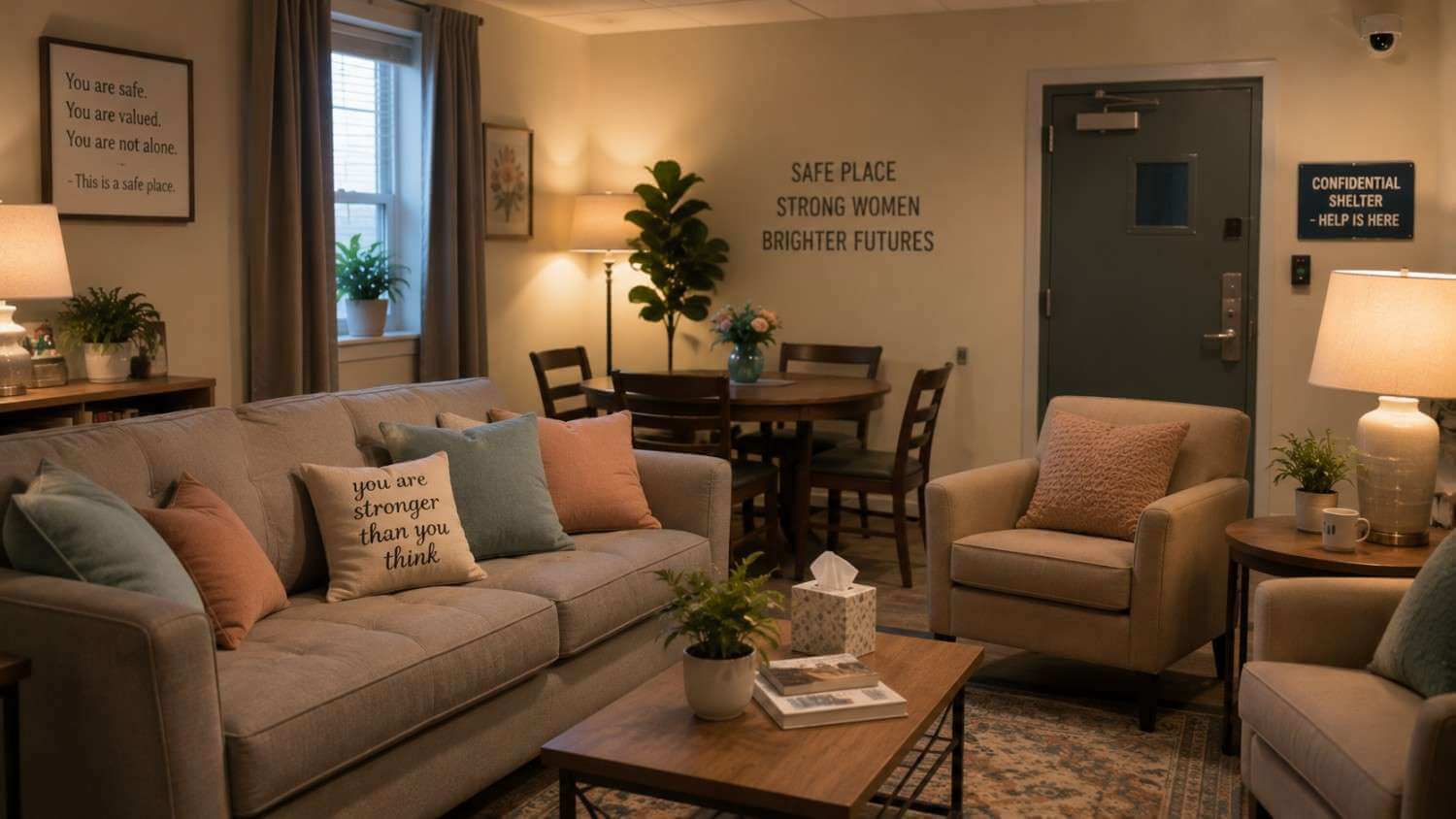
Domestic violence shelters require specialized grants to maintain high-security facilities and confidential locations to protect survivors from abusers.
Phase 1: The Heavy Cost of Confidentiality
General homeless shelters are highly visible community centers. Domestic violence shelters are the exact opposite. Their addresses are strictly confidential to prevent abusers from tracking down their victims. The grants awarded to these non-profits are uniquely structured to cover non-traditional expenses:
- Advanced Security Systems: Bulletproof glass, reinforced doors, and constant surveillance.
- Legal Advocacy: Funding for onsite lawyers to help survivors file immediate restraining orders and secure child custody.
- Emergency Relocation: If the local shelter is compromised or full, grants allow case workers to rapidly deploy free motel and hotel vouchers for the homeless to hide the survivor in an undisclosed commercial hotel.
Phase 2: The Federal Government Giants (DOJ and HHS)
The vast majority of base funding for DV shelters comes directly from the United States federal government. Two primary legislative acts drive billions of dollars into state and local agencies.
1. Violence Against Women Act (VAWA) Grants
Administered by the Department of Justice’s Office on Violence Against Women (OVW), VAWA grants are the gold standard for shelter funding. These grants are specifically designed to fund local transitional housing programs, legal assistance for victims, and the implementation of coordinated community responses to domestic abuse.
2. Family Violence Prevention and Services Act (FVPSA)
Administered by the Department of Health and Human Services (HHS), FVPSA is the primary federal funding stream dedicated entirely to the support of emergency shelters and related assistance for victims of domestic violence and their dependents. It funds the National Domestic Violence Hotline and directly subsidizes local safe houses.
[ OFFICIAL FEDERAL GRANT PORTALS ]
Organizations seeking to apply for federal domestic violence funding should use only these official government portals:
- Department of Justice (OVW): Official OVW Grant Programs Website
- Department of Health and Human Services (FVPSA): Official FVPSA Program Portal
Pro-Tip: Understanding VAWA Funding
If you operate a shelter or are an advocate looking to secure federal funding, understanding the complexities of the Violence Against Women Act is your first crucial step. Watch this comprehensive breakdown, What is VAWA? Everything You Need to Know About the Violence Against Women Act, to learn exactly how this legislation provides the financial backbone for survivor services nationwide:
Phase 3: The Survivor’s Journey (Translating Grants into Action)
For a survivor fleeing in the middle of the night, federal policy means very little. What matters is how those grants manifest into immediate action on the ground. When a survivor arrives at a funded shelter, the grants instantly cover critical phases of recovery:
- Phase A (Immediate Crisis): Provision of a secure bed, emergency clothing, and targeted support for any children involved. Fleeing with kids adds massive complexity, which is why shelters heavily utilize specialized resources to find help for homeless families with children.
- Phase B (Transitional Stability): Emergency shelters are temporary (usually 30 to 90 days). The ultimate goal is to move the survivor into an independent, secure apartment utilizing transitional housing grants for the homeless.

Federal grants not only fund the physical shelters but also provide the critical legal counseling and child support services necessary for families to rebuild their lives.
Phase 4: Corporate and Private Foundation Grants
Federal grants are highly competitive and bound by strict red tape. To fill the gaps, domestic violence shelters rely heavily on private corporate foundations.
- The Mary Kay Ash Foundation: One of the most famous private funders in this sector, they award $20,000 unrestricted grants annually to hundreds of domestic violence shelters across the United States. Because the funds are unrestricted, shelters can use them for immediate needs like fixing a broken security gate or buying emergency groceries.
- The Allstate Foundation: This foundation focuses heavily on financial abuse. They provide grants to shelters specifically to run financial literacy programs, helping survivors rebuild their ruined credit scores, open independent bank accounts, and achieve long-term economic independence.
Phase 5: The Muslim Perspective (Protecting Life Without Riba)
Domestic violence occurs in every community, including the Muslim community. In Islam, the concept of Hifz al-Nafs (Preservation of Life) is an absolute priority. Enduring physical abuse is not a religious virtue; fleeing an abusive situation to protect yourself and your children is a fundamental right. However, the financial desperation of leaving can push survivors into forbidden traps.
1. The Riba Trap of Escaping
Because abusers often control the bank accounts, a survivor might feel forced to take out a “Payday Loan” or use a high-interest cash advance to pay for a motel room, a rental deposit, or a divorce lawyer. This is a dangerous trap. These loans utilize compounding Riba (usury), which is strictly Haram. Riba will financially crush the survivor just as they are trying to rebuild their independence.
2. The Gharar of Predatory Legal Services
Fleeing abuse requires legal help. Survivors must beware of online “legal defense subscriptions” that demand hefty monthly fees but guarantee no actual court representation. Paying for such an uncertain, exploitative outcome involves Gharar (excessive deception) and is forbidden.
3. Halal Safe Havens and Zakat Relief
Muslim survivors must know that Halal support exists. Under Islamic law, a woman fleeing abuse with no access to her wealth qualifies for Zakat under multiple categories, including Ibn al-Sabil (the stranded traveler) and Al-Gharimin (those in overwhelming debt/distress). National organizations like the Peaceful Families Project work specifically to combat DV in Muslim communities, while ICNA Relief operates dedicated, secure transitional homes for women and children across the US. These Halal shelters are funded by community Zakat (Hibah), ensuring survivors are protected without incurring Riba-based debt.
Pro-Tip: Taking the First Step
For a survivor, the fear of the unknown can sometimes be as paralyzing as the abuse itself. If you are considering leaving but are terrified of what the emergency housing environment will be like, watch this comforting and transparent walkthrough, What to Expect When Going into a Domestic Violence Shelter!, to understand the safety, privacy, and support that awaits you:
Conclusion
Grants for domestic violence shelters are the invisible engine that keeps thousands of survivors safe every single night. Whether funded by the federal government’s VAWA program, the FVPSA, or private organizations like the Mary Kay Foundation, these funds ensure that victims of abuse have a secure, confidential place to heal. If you are reading this and need immediate help, do not let financial fear keep you trapped. The grants have already paid for your safety. Call the National Domestic Violence Hotline (1-800-799-SAFE) today—your safe haven is waiting.
Frequently Asked Questions (FAQs)
Q1: Who can apply for federal domestic violence grants?
A: Individual survivors cannot apply directly for federal VAWA or FVPSA grants. These funds are awarded strictly to state governments, Native American tribes, and registered 501(c)(3) non-profit organizations (such as local DV shelters and legal aid societies).
Q2: Are domestic violence shelters free for survivors?
A: Yes. Because the shelters are fully funded by the grants discussed in this article, survivors are never charged to stay in an emergency domestic violence shelter. All associated services, including counseling and food, are provided free of charge.
Q3: How do shelters protect a survivor’s location?
A: DV shelters use grant money to maintain extreme confidentiality. Their physical addresses are never listed publicly on Google Maps. If a survivor needs help, they meet case workers at a secure off-site location (like a police station or hospital) and are transported to the shelter privately.
Q4: Can a shelter help me if I have children?
A: Yes. The vast majority of domestic violence shelters are specifically equipped to house mothers and their children. Grant funding ensures that these facilities provide cribs, pediatric care coordination, and trauma counseling for children who have witnessed abuse.
Q5: Is it Halal to use Zakat funds to escape an abusive marriage?
A: Yes, absolutely. A Muslim woman fleeing domestic violence who is cut off from financial resources falls squarely into the categories of Zakat eligibility (such as the stranded or those in severe distress). Accepting Zakat from the community to secure safe housing and legal protection is completely Halal and highly encouraged to protect Hifz al-Nafs (life and safety).