
Last Updated: June 2026 | Author: Zee
In the United States, a severe medical diagnosis is often accompanied by a devastating financial crisis. Even for patients with robust private health insurance, the out-of-pocket maximums, out-of-network surgical fees, and exorbitant prescription copays can quickly drain a family’s life savings. Medical debt remains one of the leading causes of personal bankruptcy in the country.
However, navigating the healthcare system does not have to mean accepting financial ruin. A massive, often-hidden ecosystem of philanthropic foundations, federal programs, and hospital charity care initiatives exists specifically to bridge the gap between what insurance covers and what treatments actually cost.
Welcome to your central command hub. This 2026 overarching guide categorizes the sprawling landscape of healthcare funding. Whether you are seeking immediate relief for a looming surgery, looking for copay assistance for a chronic illness, or navigating the complexities of maternity care, we have structured this directory to route you directly to the exact funding you need.

You do not have to choose between your life and your livelihood. Thousands of non-profits and federal safety nets exist to fund your medical care.
Phase 1: Surgery & Operation Grants
Major surgical interventions—such as organ transplants, bariatric surgeries, or emergency cardiovascular bypasses—carry astronomical price tags. When insurance denies a life-saving procedure by labeling it “experimental” or “out-of-network,” patients are left scrambling.
Fortunately, specialized non-profits and surgical foundations provide direct grants to cover operating room fees, anesthesia, and post-operative care. To discover the organizations funding major medical procedures, proceed to our dedicated sub-directory on surgery and operation grants.
Phase 2: Disease-Specific Financial Assistance
If you have been diagnosed with a highly specific chronic illness, such as Breast Cancer, Multiple Sclerosis, or Leukemia, you should not apply for generic medical aid. You must target “Disease-Specific” funds.
Massive organizations like the Leukemia & Lymphoma Society or the American Cancer Society have designated funds strictly for patients battling those exact conditions. These funds often cover treatment, travel to specialists, and even everyday living expenses during chemotherapy. Find your exact diagnosis and its funding source in our guide to disease-specific financial assistance.
Phase 3: Disability & Mental Health Grants
Physical disabilities and severe mental health crises require long-term, specialized interventions. Standard medical insurance often caps physical therapy sessions and severely limits psychiatric inpatient care.
From securing funds for a wheelchair-accessible van and home modifications to finding grants that cover residential mental health treatment and service animals, the funding landscape here is highly specialized. Explore the resources available in our comprehensive hub for disability and mental health grants.
Phase 4: Maternity, Fertility & Pediatric Care
Building and protecting a family comes with its own unique set of medical expenses. In Vitro Fertilization (IVF) is rarely covered by insurance and can cost upward of $20,000 per cycle. Furthermore, if a newborn requires an extended stay in the Neonatal Intensive Care Unit (NICU), the bills can be catastrophic.
We have compiled a roster of family-building grants, NICU financial relief programs, and pediatric charity care resources. To find funding for your growing family, navigate to our guide on maternity, fertility, and pediatric financial help.
Phase 5: Medical Bills & Prescription Assistance
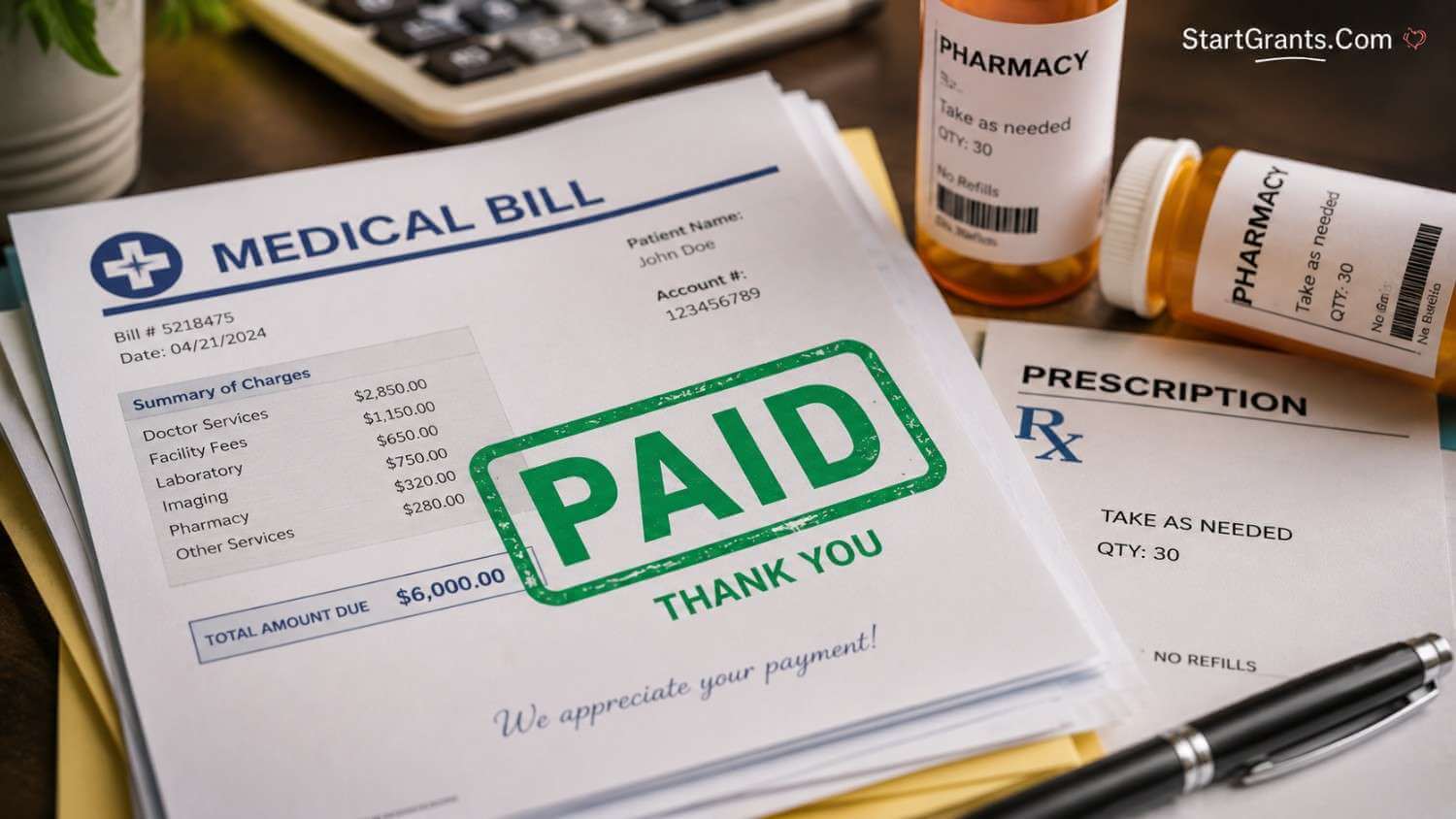
High copays and past-due hospital bills can be eradicated through Manufacturer Patient Assistance Programs (PAPs) and federal Charity Care laws.
What happens if the surgery is already over, and you are simply drowning in the aftermath of the bills? Or what if your monthly specialty medication costs more than your rent?
Federal law dictates that non-profit hospitals must offer Charity Care to low-income patients, which can legally wipe out your entire hospital debt. Additionally, pharmaceutical manufacturers offer Patient Assistance Programs (PAPs) that provide expensive medications for free. Learn how to invoke these laws and apply for copay relief in our breakdown of medical bills and prescription assistance.
Pro-Tip: Wiping Out Hospital Debt
Before you ever pay a medical bill with a credit card, you must understand how Hospital Charity Care policies work. Watch this breakdown on how to legally force a hospital to forgive your medical debt:
Phase 6: Medical Research & Institutional Grants
Not all medical funding goes directly to patients. If you are a medical professional, a university researcher, or an administrator at a rural clinic, you need institutional funding to buy equipment, run clinical trials, or keep your community clinic open.
This B2B (Business-to-Business) side of healthcare funding involves massive federal block grants from the NIH and HRSA. If you are seeking funds to advance medical science or expand facility operations, review our directory of medical research and institutional grants.
Phase 7: The Ethical Dilemma (Avoiding Riba in Medical Debt)
When faced with a life-or-death medical emergency, hospital billing departments often aggressively push patients to sign up for medical credit cards (like CareCredit). For patients of the Muslim faith, this presents a severe theological crisis due to the strict Islamic prohibition against Riba (usurious interest).
These medical credit cards often trap desperate patients with deferred interest rates that can skyrocket past 26% if a single payment is missed. While Islamic jurisprudence allows for exceptions in absolute life-or-death necessities (Dharurah), patients are commanded to exhaust all Halal, interest-free alternatives first.
The philanthropic grants, federal Medicaid expansions, and Charity Care policies linked throughout our sub-directories are precisely the Halal solutions needed to bypass predatory medical lending and protect both your physical health and financial purity.
Conclusion: Routing Your Path to Recovery
The US healthcare system is intentionally complex, but you do not have to fight it alone. Do not let the sticker shock of a diagnosis prevent you from seeking treatment.
Your first tactical step is to accurately classify your need. Select the specific sub-pillar above that matches your current medical crisis. Whether you are fighting a specific disease, attempting to grow your family, or trying to erase an old hospital bill, the funding exists—you just need to know exactly where to send your application.
Frequently Asked Questions (FAQs)
Q1: What is the difference between a medical grant and a medical loan?
A: A medical grant is philanthropic or government financial assistance that never has to be repaid. It is essentially “free money” for your treatment. A medical loan is debt provided by a bank or credit card company that you must pay back over time, usually with high compounding interest.
Q2: Can I get financial assistance if I already have health insurance?
A: Yes. Many non-profit organizations and Patient Assistance Programs (PAPs) are specifically designed for the “underinsured.” They help cover the high deductibles, copayments, and out-of-network fees that your primary insurance refuses to pay.
Q3: How do I know if a hospital offers Charity Care?
A: By federal law (under the Affordable Care Act), all 501(c)(3) non-profit hospitals must have a written Financial Assistance Policy (Charity Care). You can usually find this policy by searching the hospital’s website or by directly asking the billing department for their “Financial Assistance Application.”
Q4: Are crowdfunding sites like GoFundMe considered medical grants?
A: No. Crowdfunding relies on donations from your personal network of family, friends, and strangers. While effective for some, it is not a formal grant. Formal grants are distributed by official 501(c)(3) non-profit foundations or government agencies based on strict eligibility criteria.
Important Disclaimer: StartGrants.com is an independent informational directory and does not provide direct financial aid or medical advice. Healthcare funding availability changes constantly. Always consult directly with the specific charity, hospital billing department, or your social worker to confirm eligibility.
