
Last Updated: July 2026 | Author: Munir Ardi
There is a massive, persistent myth in the American philanthropic sector surrounding the First Amendment and the separation of church and state. Millions of Americans—including pastors, imams, and rabbis—assume that because they operate a religious institution, they are legally barred from receiving taxpayer dollars.
So, do churches get government grants? The answer is an absolute, resounding Yes. In fact, Faith-Based Organizations (FBOs) receive billions of dollars in federal and state funding every single year. The government relies heavily on religious institutions because they already possess the grassroots infrastructure needed to feed the hungry, house the homeless, and execute disaster relief far faster than federal bureaucrats ever could.
However, tapping into this massive federal treasury requires understanding a strict set of constitutional rules. Before you begin applying for federal funds for your congregation, you must understand the broader ecosystem of religious philanthropy. Anchor your organizational strategy by reviewing our master pillar: Faith-Based and Religious Donations.
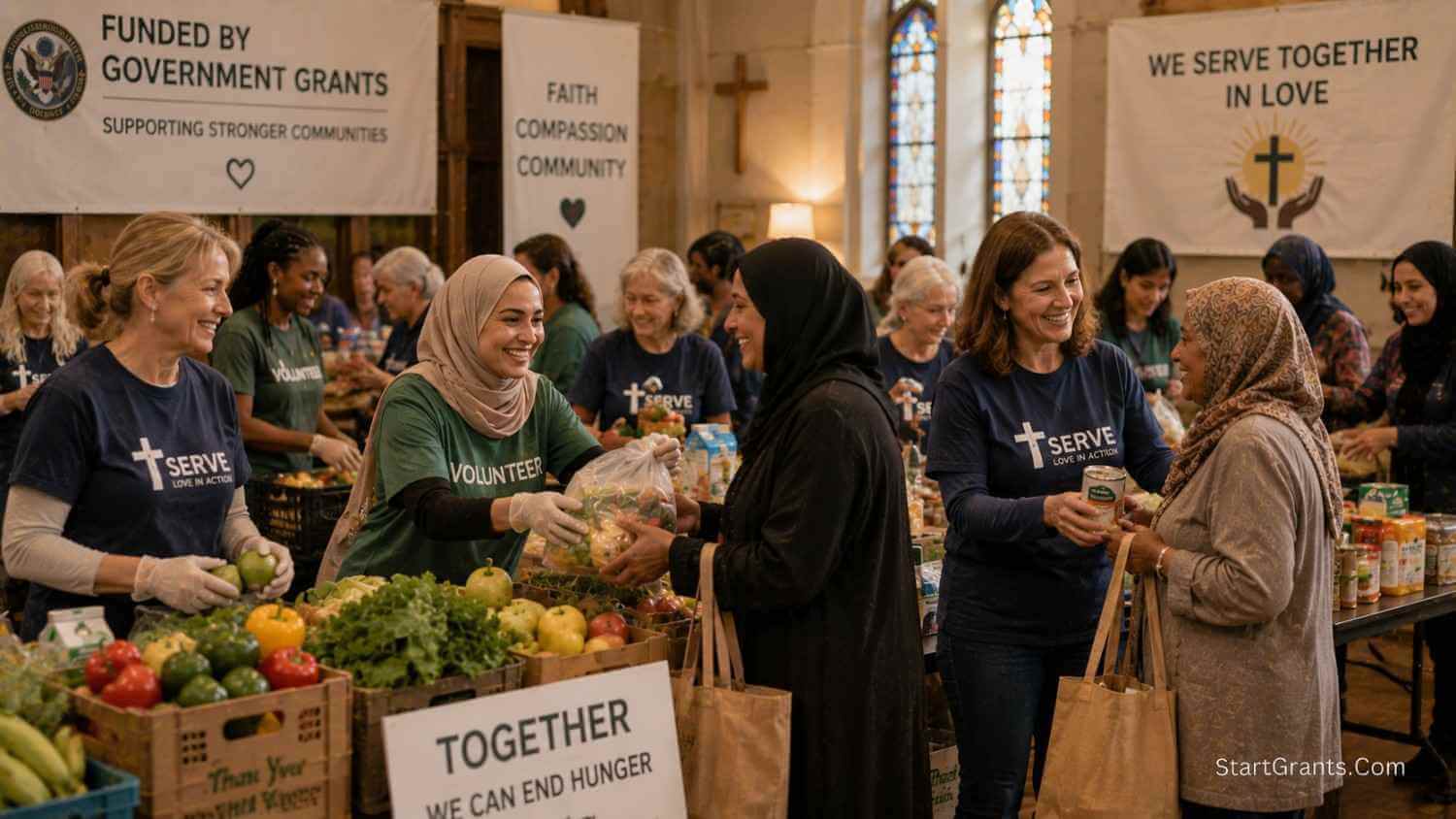
Despite the separation of church and state, the federal government awards billions of dollars to faith-based organizations to execute vital secular community services, such as operating food pantries and emergency shelters.
Phase 1: The Constitutional Rule (Secular Use Only)
To understand how churches get funding, you must understand the primary legal boundary: The government will fund your secular community services, but they will absolutely never fund your religious activities.
Under federal law (specifically guidelines managed by agencies like the HHS Center for Faith-Based and Neighborhood Partnerships), your church, mosque, or synagogue has the exact same right to apply for a grant as a secular 501(c)(3) nonprofit. However, you must maintain a strict firewall in your accounting.
- What is FORBIDDEN: You cannot use a federal grant to buy Bibles or Qurans, pay the salary of your pastor or imam, fund a missionary trip to convert people, or repair the stained glass windows in your main worship sanctuary.
- What is ALLOWED: You can use a federal grant to buy food for a soup kitchen operated in the church basement, pay the salary of a secular social worker employed by the church, or fund an after-school tutoring program for at-risk youth, provided the program is open to the public and does not include mandatory religious instruction.
Phase 2: The FEMA Nonprofit Security Grant Program (NSGP)
While the government will not pay to fix your altar, there is one massive exception where the government will write a check specifically to fortify a religious building: Physical Security.
Because houses of worship are frequently targets of hate crimes and domestic terrorism, the Federal Emergency Management Agency (FEMA) operates the Nonprofit Security Grant Program (NSGP). This program provides up to $150,000 per site (and often more for multi-site organizations) directly to faith-based organizations.
You can use the FEMA NSGP to purchase and install bullet-resistant doors, high-definition security camera networks, blast-proof window films, perimeter fencing, and even to hire contracted security guards. This is arguably the most critical grant any religious institution should apply for in 2026.
Pro-Tip: Winning the FEMA Security Grant
The FEMA NSGP is highly competitive. Your application will be instantly rejected if you do not properly conduct a Vulnerability Assessment and prove that your specific religious building is at high risk of a hate crime. To understand exactly how to write this specialized proposal and what physical upgrades FEMA actually approves, watch this expert breakdown: Grants for Nonprofits: How to Get Up to $150K for Security Upgrades:
Phase 3: Synergizing Faith-Based Funding
Because federal grants require immense bureaucratic compliance, many small churches or mosques fail when they apply alone. To successfully absorb government capital, religious institutions must deploy synergy and partnerships.
- The Partnership Model: Federal agencies love to fund “coalitions.” If your local mosque or church partners with a massive, established national NGO to execute a refugee resettlement program, your chances of winning the government grant skyrocket. Learn how to leverage established networks in our guide: How to Apply for Grants for Partnership Programs with Islamic Relief USA.
- Private Endowments for Faith: If the federal restriction against “religious activity” is too strict for your mission, you must pivot away from the government and target private foundations that explicitly fund religious diversity and faith-based leadership training. Uncover these massive private pockets by reading: Here is How El-Hibri Foundation is Great for Grant Seekers.
Phase 4: The Bureaucratic Firewall (501c3 & Audits)
Here is a massive bureaucratic trap: In the United States, churches, mosques, and synagogues are automatically considered tax-exempt by the IRS without having to formally file for 501(c)(3) status. However, you cannot get a government grant with automatic status.
Federal agencies and private foundations will demand to see an official IRS Determination Letter. If your religious institution wants government money, you must formally register as a 501(c)(3), acquire a Unique Entity ID (UEI), and register your organization on SAM.gov.
Furthermore, if you accept federal money, you open your religious institution’s books to federal auditors. If an auditor finds that you commingled a federal block grant with the church’s Sunday tithing collection, your organization will be forced to repay the government out of your own pocket. You must open separate, dedicated bank accounts for all grant funds.
Phase 5: The Muslim Perspective (Masjid Funding, Riba & Takaful)
For Islamic Centers and Masjids operating in the United States, the question of whether to accept U.S. government funding frequently triggers intense community debate. Some board members fear that taking federal money compromises the Masjid’s independence or violates Shariah. However, understanding the Islamic legal framework (Fiqh) proves that securing these funds is not only permissible but a strategic imperative to protect the Ummah.
Masjids as FBOs & The Concept of Hibah
Under the U.S. Constitution, a Masjid has the exact same legal standing as any church or synagogue. The federal grants provided by agencies like FEMA or the Department of Health and Human Services are classified in Islamic finance as Hibah (a gift given without expectation of financial return). Because the U.S. government does not demand repayment of the grant, nor does it charge interest on it, accepting a federal grant to run a halal food pantry or fortify the Masjid’s physical security is 100% Halal.
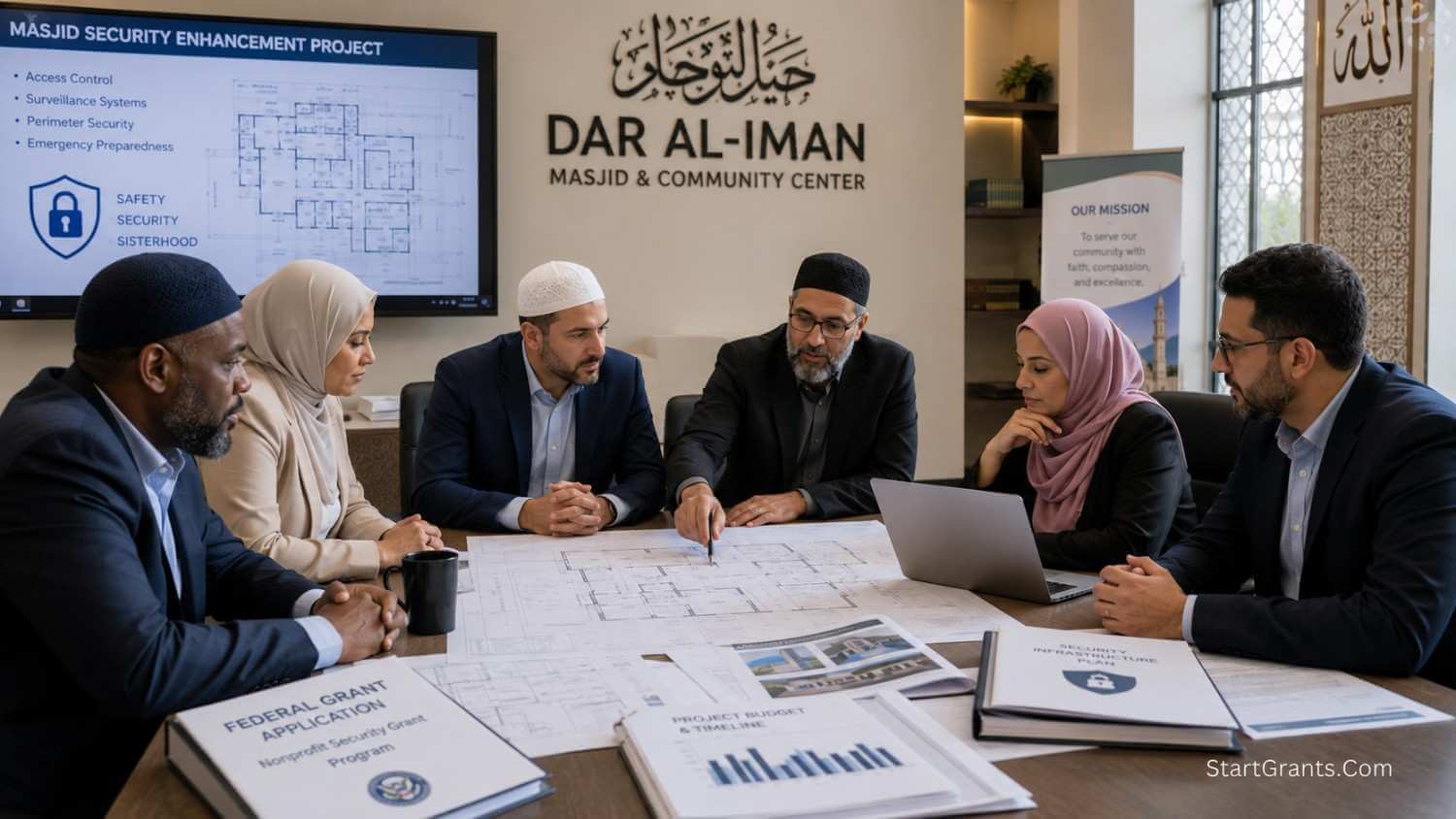
For Islamic Centers in the U.S., securing federal security grants (like the FEMA NSGP) is a Halal and strategic necessity. However, Masjids must aggressively avoid using Riba-bearing commercial bridge loans to float the upfront construction costs.
The Hidden Trap: FEMA Reimbursement and Riba
While the grant itself is Halal, the execution often plunges Masjids into a severe spiritual trap. The FEMA NSGP is a reimbursement grant. This means the Masjid must hire the contractors, buy the security cameras, and pay for the bulletproof doors using the Masjid’s own money first. FEMA will reimburse the Masjid 30 to 90 days later.
Because security upgrades can cost $150,000, many secular churches take out commercial “Bridge Loans” from banks to float the construction costs, paying compounding interest while waiting for the FEMA check. For a Masjid, intentionally paying this interest is explicitly Riba, which is strictly Haram (forbidden) and destroys the spiritual purity of the House of Allah.
A Masjid’s board of directors must absolutely refuse commercial bridge loans. To survive the reimbursement gap ethically, the Masjid must engineer Halal liquidity. They must utilize existing operational reserves, pool Qard Hasan (zero-interest benevolent loans) from wealthy community members, or tap into unrestricted Waqf (endowment) yields to float the security project ethically.
Gharar and Mandatory Federal Insurance
When the government awards a $150,000 contract to upgrade your building, they will legally mandate that the Masjid carries extensive Commercial Property, Liability, and sometimes Cyber Insurance to protect the taxpayer’s investment.
Traditional commercial insurance contains Gharar (excessive uncertainty) and elements of gambling. Ideally, Masjids should utilize Takaful (Islamic cooperative insurance). However, because authentic B2B Takaful is practically non-existent in the U.S. market, contemporary Islamic scholars (including the Fiqh Council of North America) widely apply the principle of Dharurah (legal and operational necessity). This permits the Masjid to purchase the required commercial insurance policy to protect the congregation from ruinous lawsuits and to comply with federal grant laws, provided the intent is survival and legal compliance, not speculative profit.
The Absolute Separation of Zakat
If a Masjid receives federal funds to run a community program (like a job training center for refugees), those federal dollars must be strictly isolated from the Masjid’s Zakat accounts. Zakat is a divine tax restricted solely to eight specific categories of recipients (the Asnaf). Federal grants belong to the general public fund (similar to Bayt al-Mal). Commingling federal grant money with Zakat collections is a severe violation of both IRS auditing laws and Islamic Fiqh. Impeccable, separate ledger accounting is a religious obligation.
Conclusion
So, do churches get government grants? Absolutely. Faith-Based Organizations are the unsung engines of the American social safety net. By formally registering your 501(c)(3), maintaining a strict firewall between your secular community services and your religious sermons, and aggressively targeting physical protection funds through the FEMA NSGP, your congregation can leverage millions of dollars in federal capital to serve the vulnerable and protect your sanctuary.
For the Muslim community, navigating this federal landscape is a profound duty of civic engagement and ethical stewardship. By securing Halal government Hibah, fiercely rejecting the trap of Riba-laced bridge loans, and managing mandatory insurance through Dharurah, Masjids can fortify their walls and expand their community outreach while maintaining absolute spiritual purity and Barakah.
Frequently Asked Questions (FAQs)
Q1: Does the separation of church and state prevent churches from getting federal grants?
A: No. The First Amendment prevents the government from establishing a religion or funding religious activities (like worship or proselytizing). However, Faith-Based Organizations (FBOs) are legally allowed to receive government grants to execute secular community services, such as running homeless shelters, food banks, and youth mentorship programs.
Q2: What is the FEMA Nonprofit Security Grant Program (NSGP)?
A: The NSGP is a federal grant program designed to provide funding for physical security enhancements to nonprofit organizations that are at a high risk of a terrorist attack or hate crime. This is the primary federal grant used by churches, synagogues, and mosques to buy security cameras, reinforced doors, and hire guards.
Q3: Can we use a government grant to pay our pastor or imam?
A: No. Federal funds cannot be used to support religious instruction, worship, or proselytization. Paying the salary of clergy who are engaged in religious duties is strictly forbidden under federal grant guidelines. You can only pay staff who are executing the specific, secular community program funded by the grant.
Q4: Why is it Haram for a Masjid to use a bank loan to float a FEMA reimbursement grant?
A: Because FEMA pays the Masjid back *after* the construction is complete, organizations often need upfront cash. If a Masjid takes a commercial bridge loan from a bank to cover this gap, the bank charges compounding interest. In Islam, intentionally paying interest is classified as Riba, which is strictly forbidden (Haram) and spiritually pollutes the institution.
Q5: Do we have to formally register as a 501(c)(3) to get a grant if churches are automatically tax-exempt?
A: Yes. While the IRS automatically considers churches tax-exempt for income purposes, federal grant-making agencies and massive private foundations require proof of formal registration. To pass the bureaucratic screening on Grants.gov or SAM.gov, you must have an official IRS Determination Letter proving your 501(c)(3) status.
Disclaimer: The information provided in this article is for educational and informational purposes only. We are not a federal agency, a legal firm, or a religious fatwa council. FEMA NSGP regulations, HHS faith-based guidelines, and federal auditing rules are subject to constant legislative changes. Always consult with a certified CPA regarding grant fund isolation, an attorney for federal compliance, and a qualified Islamic finance scholar regarding Halal institutional structuring, avoiding Riba in organizational debt, and strict Zakat accounting.