Last Updated: June 2026 | Author: Munir Ardi
When sudden cardiac arrest strikes, survival drops by 10% for every minute that passes without defibrillation. For many rural and volunteer communities, the local fire department is the first to arrive on the scene. However, modern Automated External Defibrillators (AEDs) cost between $1,500 and $3,000 per unit, a crippling expense for underfunded stations. This is why securing AED grants for fire departments is quite literally a matter of life and death.
Before launching a grant campaign for your firehouse, it is crucial to understand the broader landscape of institutional funding. We recommend that station captains and administrators review our Tier 2 directory on medical research and institutional grants to understand how federal health funding is distributed to frontline agencies.
Whether you are outfitting a single volunteer engine or upgrading an entire municipal fleet, here is your 2026 tactical guide to securing the funding necessary to protect your community.
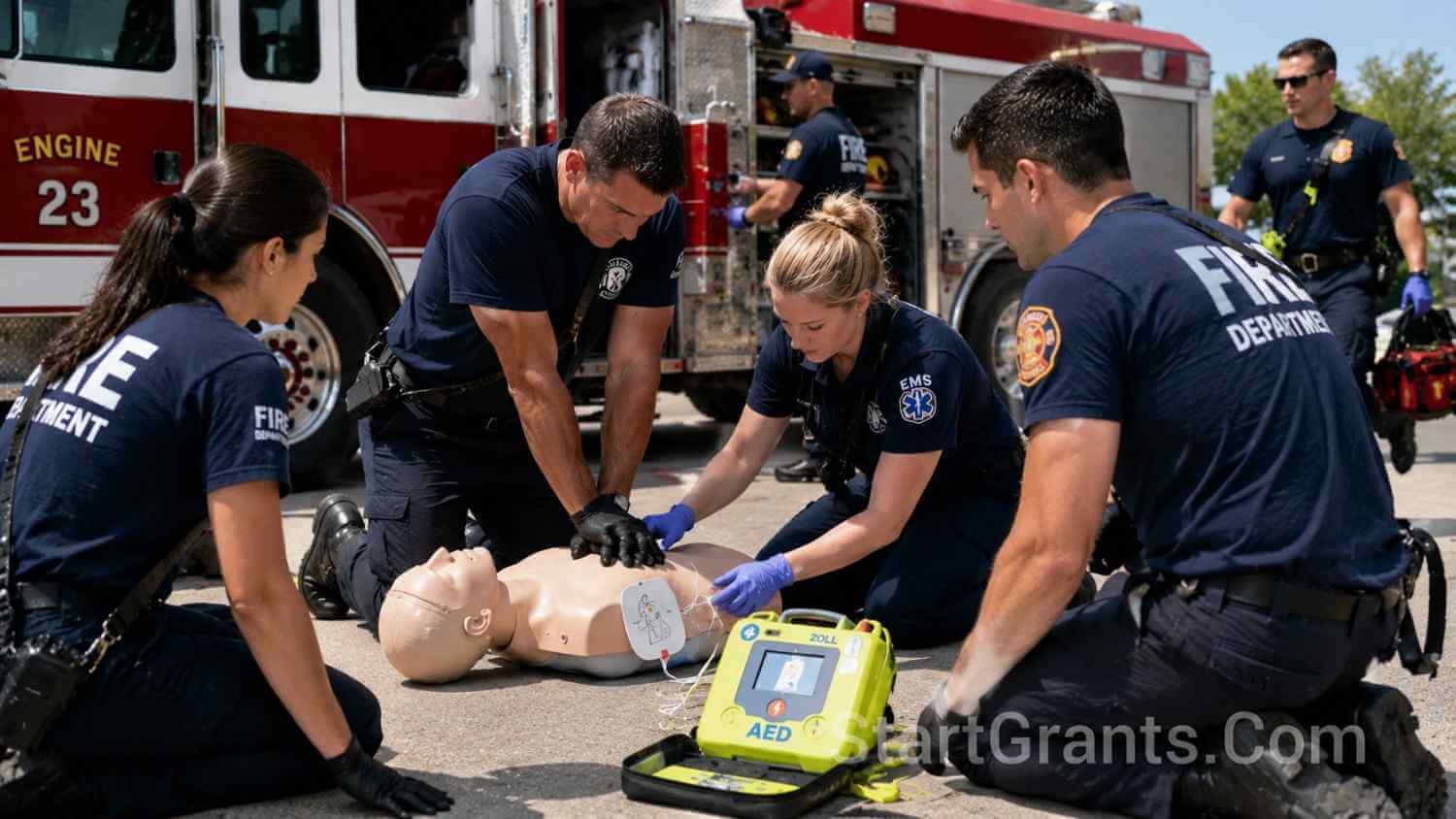
Sudden cardiac arrest requires immediate intervention. Securing AED grants for fire departments ensures that first responders have the critical medical equipment needed to save lives before reaching the hospital.
Phase 1: Major Federal and Private Funding Targets
Unlike massive academic research grants, first responder funding is highly localized and focused on immediate community impact. Your grant-writing team should target these primary organizations:
1. FEMA’s Assistance to Firefighters Grant (AFG)
The Federal Emergency Management Agency (FEMA) operates the AFG program, which is the largest source of federal funding for local fire departments in the United States. A specific, highly funded category within the official Assistance to Firefighters Grant (AFG) program is dedicated to “Equipment” and “EMS operations,” making it the premier target for bulk AED purchases.
2. Firehouse Subs Public Safety Foundation
In the private sector, this foundation is legendary among first responders. Funded by a portion of the restaurant chain’s sales, the Firehouse Subs Public Safety Foundation has awarded millions of dollars directly to fire departments and EMS agencies specifically for life-saving medical equipment, including AEDs and chest compression machines.
3. Local Community Foundations and Health Endowments
Do not overlook local money. Many state-level health departments and regional hospital endowments offer micro-grants specifically designed to put AEDs in public spaces, police cruisers, and volunteer fire engines within their immediate geographic footprint.
Horizontal Strategy: Equipping a community goes beyond medical tools. If your municipality is also seeking funds to build community centers that act as safe havens during emergencies, cross-reference our guide on community facilities grants.
Pro-Tip: Winning the FEMA AFG Grant
Securing federal funds from FEMA requires strict adherence to their Notice of Funding Opportunity (NOFO). Watch this authoritative briefing, the Congressman Nick Langworthy | FEMA AFG Grant Writing Seminar 2026, to learn exactly how your fire department can structure a narrative that wins federal approval:
Phase 2: The Muslim Perspective (Hifz al-Nafs & Riba-Free Communities)
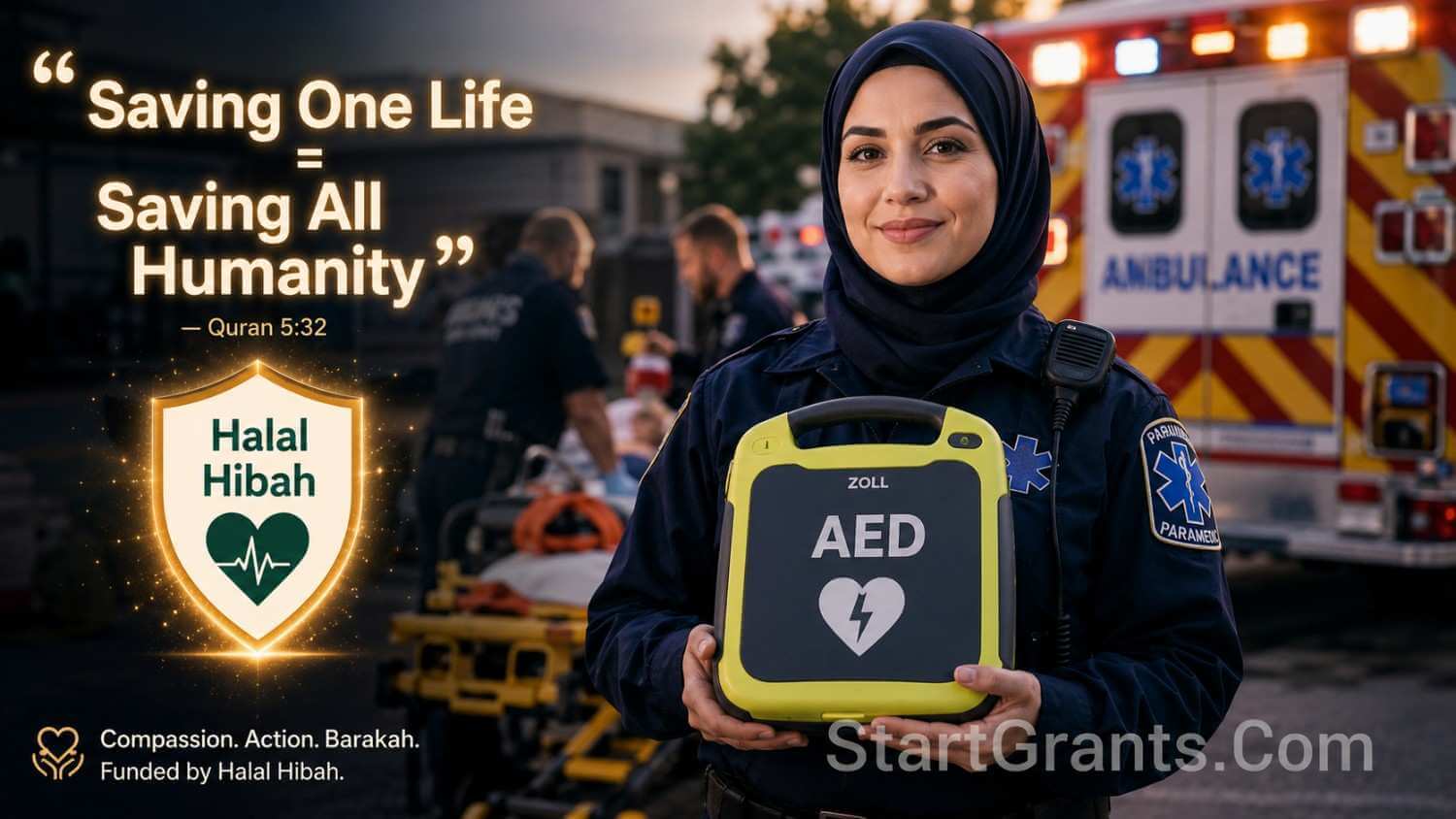
“Whoever saves a life, it is as if he had saved mankind entirely” (Quran 5:32). Equipping emergency responders through pure Hibah grants allows communities to fulfill the duty of Hifz al-Nafs without relying on interest-bearing municipal debt (Riba).
For Muslim first responders and community leaders, emergency medical services are the ultimate manifestation of the Quranic verse (Al-Ma’idah 5:32): “Whoever saves a life, it is as if he had saved mankind entirely.” This principle of protecting human life is known in Islamic jurisprudence as Hifz al-Nafs. However, how a municipality funds this life-saving equipment matters deeply in Islamic finance.
1. The Trap of Municipal Riba
When volunteer fire departments or local municipalities cannot afford equipment, they often resort to taking out commercial loans or issuing municipal bonds to raise capital. These financial instruments are inherently tied to Riba (usury/interest), which is strictly Haram. Financing the tools of Rahmah (mercy) using Riba compromises the spiritual purity of the community’s infrastructure.
2. The Halal Sanctity of Hibah
The pursuit of government and foundation grants is the most Halal financial strategy a fire department can execute. Because FEMA AFG funds or private foundation grants are awarded to protect the public without demanding repayment or interest, they function as pure Hibah (gifts/grants). This allows communities to equip their heroes ethically and financially responsibly.
For Muslim medics, firefighters, and health professionals seeking to navigate community health initiatives and bioethical emergency care, the Islamic Medical Association of North America (IMANA) serves as a vital network, ensuring that medical readiness remains compliant with Islamic values.
Conclusion: Equipping the Frontlines
A fire department without an AED is fighting sudden cardiac arrest with one hand tied behind its back. The capital to purchase these vital machines exists, but it requires proactive station captains and administrators to claim it.
Your strategy is clear: target the FEMA AFG program for large-scale fleet overhauls, and approach the Firehouse Subs Public Safety Foundation for immediate, targeted needs. For Muslim-led communities and organizations, securing these Halal Hibah funds ensures that your first responders can fulfill the sacred duty of Hifz al-Nafs without plunging the municipality into the spiritually destructive cycle of Riba.
Frequently Asked Questions (FAQs)
Q1: Can volunteer fire departments apply for FEMA AFG grants?
A: Yes, absolutely. FEMA’s Assistance to Firefighters Grant specifically allocates a portion of its funding exclusively for volunteer and combination (volunteer/career) fire departments to ensure rural areas are adequately equipped.
Q2: Do we have to match the grant funds if we win?
A: Usually, yes, but it depends on the size of your jurisdiction. For FEMA AFG grants, fire departments serving larger populations may have a 10% to 15% “cost-share” requirement, while departments serving very small, rural populations may only have a 5% match requirement. Private foundations often do not require a match.
Q3: How long does it take to get an AED grant approved?
A: Federal grants like the FEMA AFG have a long cycle; it can take 6 to 9 months from the application deadline before award announcements are made. Private organizations like the Firehouse Subs Public Safety Foundation operate on quarterly cycles and are often much faster.
Q4: Can we apply for grants to replace old, expired AEDs?
A: Yes. Grant organizations understand that AEDs have a lifecycle (batteries and pads expire, and technology becomes obsolete). You can apply for funding specifically for “equipment replacement” to ensure your department meets current American Heart Association (AHA) standards.
Important Disclaimer: StartGrants.com is an informational directory. We are not affiliated with FEMA, the U.S. Fire Administration, or any private foundation. Grant availability, application windows, and compliance rules change annually. Always consult the official Notice of Funding Opportunity (NOFO) on the granting agency’s website before applying.