Last Updated: August 2026 | Author: Munir Ardi
The loss of your natural teeth—a medical condition known as edentulism—is not a cosmetic inconvenience; it is a severe, cascading physical and economic crisis. Without a functional set of teeth, your ability to chew solid, nutrient-dense food vanishes, leading to rapid systemic health decline, malnutrition, and severe gastrointestinal issues. Beyond the physical toll, the psychological devastation is profound. For a single mother trying to secure a job or an elderly individual trying to maintain their dignity in society, a missing smile is a brutal barrier to employment and social integration.
A quality set of custom-fitted dentures can easily cost between $1,500 and $3,000. If you are surviving on a fixed retirement income or living paycheck to paycheck, paying this out of pocket is impossible. However, you do not have to accept a life without a smile. There are highly structured philanthropic networks and federal safety nets designed specifically to provide grants for dentures to the most vulnerable populations.
Before you begin applying for specific prosthetic grants, you must understand the broader landscape of dental philanthropy to ensure you are targeting the correct agencies. Anchor your overarching strategy by reviewing our Tier 2 Master Guide: The Complete Guide to Dental Patient Assistance Programs.
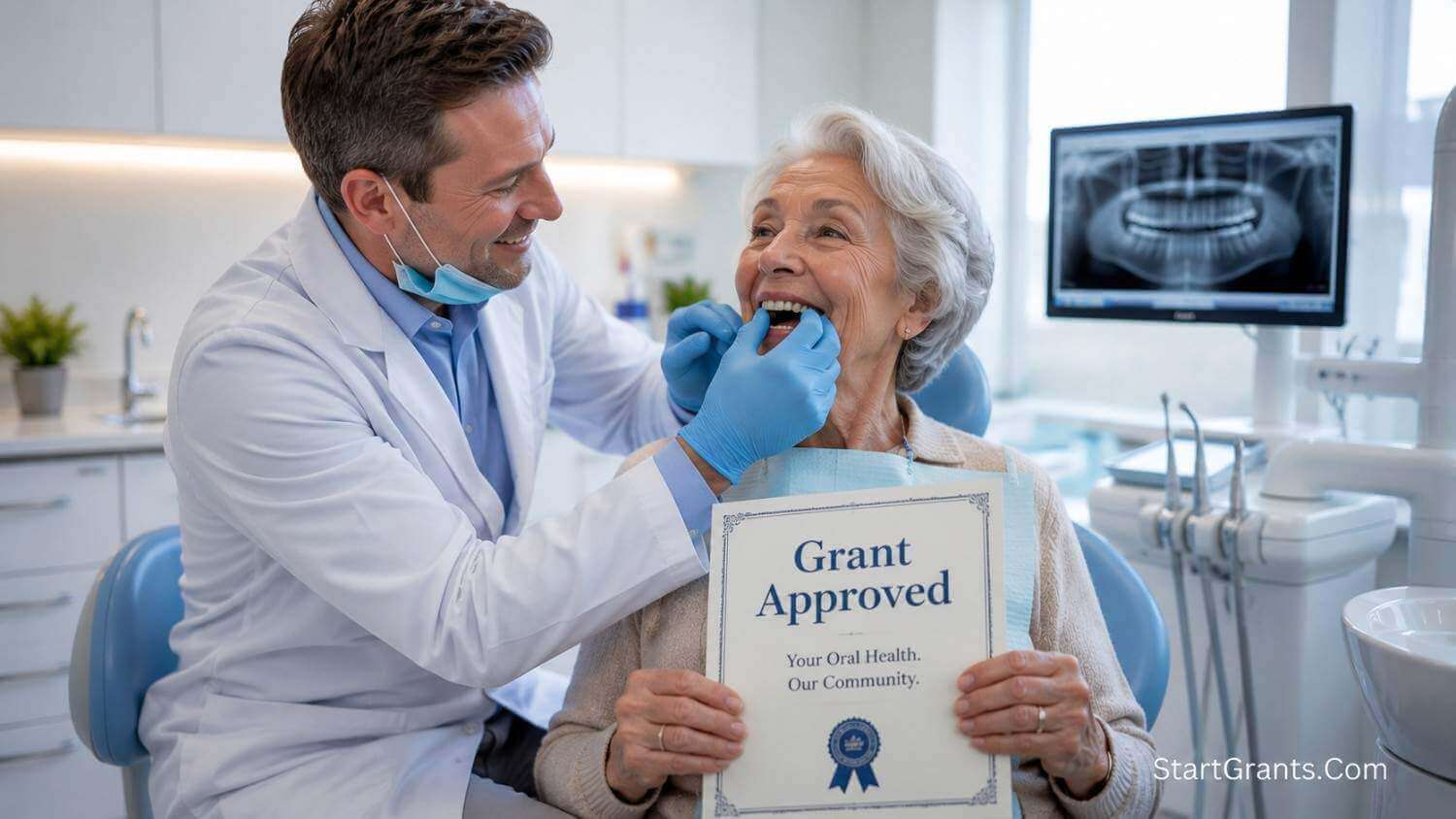
Tooth loss is a severe medical crisis that impacts nutrition, employment, and dignity. Because traditional Medicare does not cover dentures, seniors and low-income individuals must target specific philanthropic grants like the Donated Dental Services (DDS) program.
Phase 1: The Medicare vs. Medicaid Reality
The greatest shock for aging Americans comes when they visit the dentist assuming their federal healthcare will protect them. You must understand the brutal bureaucratic reality: Original Medicare (Part A and Part B) strictly excludes routine dental care, including the fabrication and fitting of dentures. This statutory exclusion was written into the law in 1965, and despite numerous lobbying efforts, it remains in effect today.
If you rely on the government for healthcare, you must pivot your strategy to one of two alternatives:
- Medicaid Dental Coverage: Unlike Medicare, Medicaid is administered jointly by the federal government and individual states. Many states offer comprehensive adult dental benefits under Medicaid that fully or partially cover the cost of extractions and acrylic dentures. You must check your specific state’s Medicaid schedule of benefits.
- Medicare Advantage (Part C): If you do not qualify for Medicaid, you can switch your Original Medicare to a private Medicare Advantage plan during the open enrollment period. Many Part C plans specifically offer “preventive and comprehensive” dental allowances that can absorb $1,000 to $2,000 of the cost of dentures.
Phase 2: Top National Dental Grant Programs
If government insurance is not an option, you must target the massive 501(c)(3) philanthropic endowments that operate nationwide. These organizations exist specifically to prevent the elderly and the disabled from suffering without teeth.
1. The Dental Lifeline Network (DDS Program)
This is the holy grail of dental grants for adults. The Dental Lifeline Network operates the Donated Dental Services (DDS) program. It is a nationwide network of over 15,000 volunteer dentists and 3,000 dental laboratories.
If you are over the age of 65, permanently disabled, or medically fragile (e.g., needing organ transplants or cancer treatment but requiring dental clearance first), you can apply for a DDS grant. If approved, the dentist provides their labor entirely for free, and the volunteer laboratory fabricates your custom dentures at absolutely zero cost to you. Because the value of this grant is so high, waitlists can be long; you must apply immediately.
2. PACE (Programs of All-Inclusive Care for the Elderly)
PACE is a Medicare and Medicaid program designed to keep frail seniors out of nursing homes by providing comprehensive medical and social services in the community. If you are 55 or older and live in a PACE service area, the program interdisciplinary team covers all medically necessary care, which explicitly includes dentistry and dentures to ensure proper nutrition.
Pro-Tip: Navigating Free Dental Clinics
Finding legitimate clinics that offer free or heavily subsidized dentures requires knowing exactly how to search state registries and national directories. To bypass scams and locate verified 501(c)(3) dental charities and DDS programs operating in your specific zip code, watch this excellent step-by-step bureaucratic walkthrough: How to Get Free Dentures Near You:
Phase 3: Synergizing Your Dental Recovery
Acquiring dentures is rarely a standalone procedure. It is usually the final step in a long, painful dental journey. You must strategically layer your funding sources to handle the prerequisites and understand your alternatives.
- The Pre-Requisite (Extractions): Before a dentist can cast molds for your new dentures, they must surgically remove any remaining broken, rotted, or infected teeth. Severe dental infections can be fatal if they spread to the brain or heart. If you are in immense pain and need emergency extractions right now, you must read our crisis guide: How to Fix Bad Teeth With No Money Immediately.
- Cosmetic vs. Medical: It is vital to manage your expectations. Grants for dentures cover removable acrylic prosthetics designed to restore basic function. If you are demanding premium, permanent titanium dental implants or porcelain veneers, you are no longer seeking medical survival; you are seeking luxury aesthetics. For those high-end procedures, you must pivot to a completely different funding ecosystem. Discover the rules for luxury funding in: Cosmetic Dentistry Grants.
Phase 4: The Local Safety Net (Dental Schools & FQHCs)
If you are placed on a multi-year waitlist for the DDS program and your state Medicaid does not cover prosthetics, you must immediately pivot to the local safety net. You do not have to pay private practice retail prices.
University Dental Schools
Every major University College of Dentistry operates public clinics. Because the work is performed by final-year dental students or resident specialists, the cost of dentures is typically slashed by 50% to 60% compared to private clinics. Do not fear the students; every single step of the mold-making and fitting process is meticulously overseen and graded by master professors. You are receiving state-of-the-art care at a fraction of the cost.
Federally Qualified Health Centers (FQHCs)
FQHCs are community health centers funded by the federal government to serve uninsured and low-income populations. By federal law, they must offer a “sliding fee scale” based entirely on your household income compared to the Federal Poverty Level (FPL). If your income is low enough, an FQHC with a dental department can provide extractions and basic dentures for a nominal, highly subsidized fee.
Phase 5: The Muslim Perspective (Tadawi, Riba, & Zakat for Seniors)
For the Muslim community in the United States, eldercare and community support are paramount. When an elderly parent, a struggling single mother, or an impoverished community member loses their teeth, it triggers a crisis of health and dignity. Navigating the American dental billing system to resolve this crisis requires strict adherence to Islamic financial jurisprudence (Shariah) to ensure the restoration of health is achieved ethically.
Tadawi and Karamah (Restoring Dignity)
In Islamic theology, there is a clear distinction between necessary medical treatment (Tadawi) and forbidden cosmetic alteration (Taghyir Khalqillah). Seeking grants to fund premium porcelain veneers to achieve a “Hollywood smile” out of pure vanity is highly problematic. However, losing one’s teeth destroys the ability to eat properly, leads to severe nutritional deficiencies, and causes immense psychological distress and public humiliation.
Therefore, acquiring dentures is a clear, undeniable act of Tadawi (medical treatment) designed to restore the basic human functions of eating and speaking. It is also an act of preserving Karamah (human dignity). Seeking financial grants to fund this essential restoration is 100% Halal and highly encouraged.
The Trap of Dental Financing (Riba)
Because dentures can cost $3,000, private dental offices will aggressively push patients to sign up for medical credit cards like CareCredit. They will lure vulnerable seniors and single mothers with promises of “0% interest for 12 months.”
This is a catastrophic trap of deferred interest. If the patient misses a single payment or fails to pay the balance in full by the end of the promotion, the bank retroactively applies massive compounding interest (often 26% APR or higher) back to the original date of service. In Islam, intentionally signing a contract that contains an interest clause is explicitly Riba, which is strictly Haram (forbidden) and eradicates the spiritual Barakah (blessing) from one’s wealth. Muslim patients must adamantly refuse these Riba-laced dental loans.
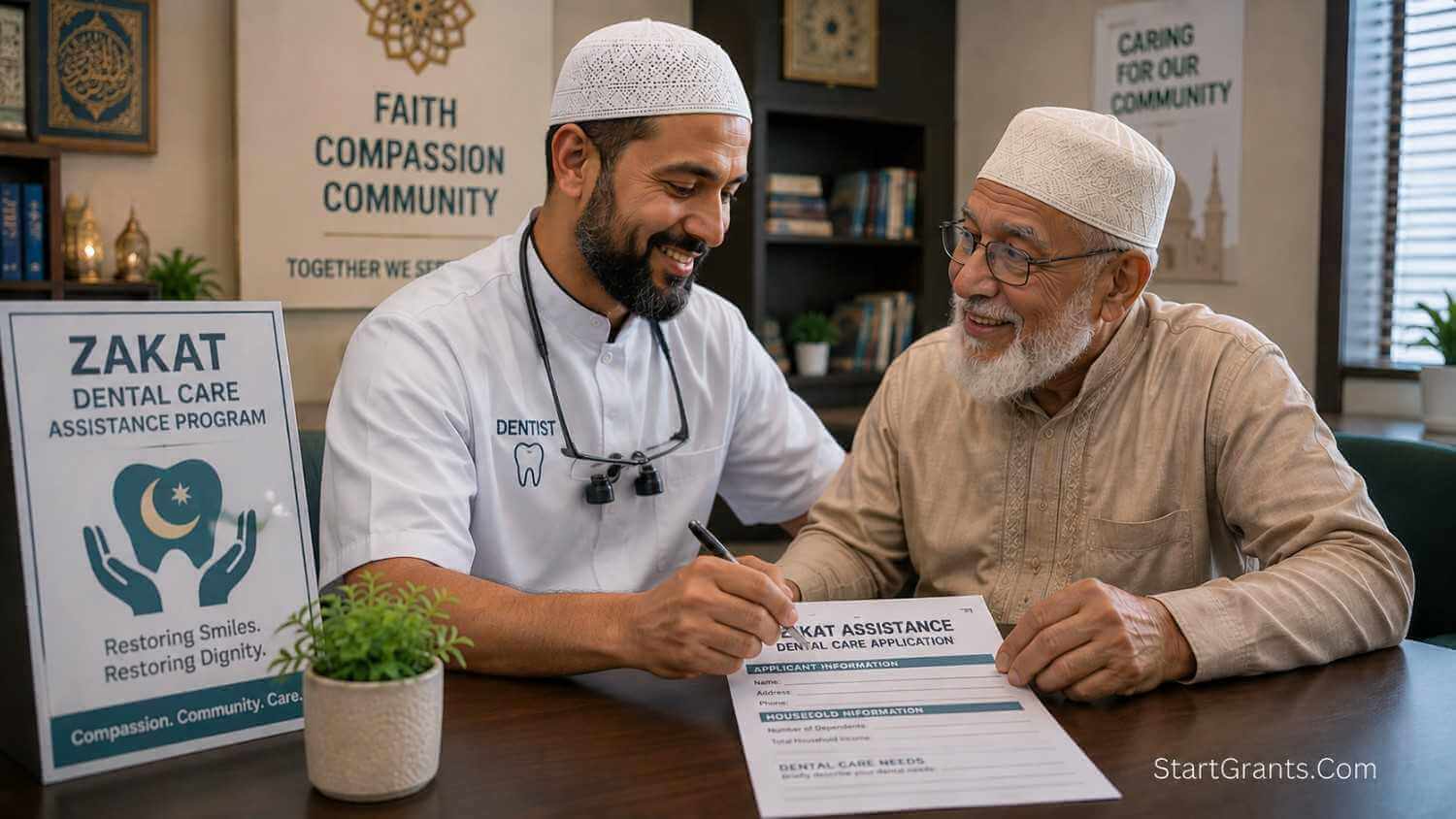
In Islam, restoring a person’s ability to eat and speak properly is a medical necessity (Tadawi). If a senior cannot afford dentures, they are legally entitled to receive community Zakat to fund the procedure, ensuring they avoid the spiritual trap of Riba-laced dental credit cards.
Zakat for Dental Care (Al-Masakin)
If government subsidies fail and the DDS waitlists are closed, what is the Halal solution for an impoverished Muslim senior or single mother who cannot chew their food? This is where the Islamic safety net activates.
An individual who cannot afford basic medical necessities, including essential dental prosthetics, legally falls into the Zakat-eligible categories of Al-Fuqara (the poor) or Al-Masakin (the needy). It is not only permissible but a communal obligation (Fardu Kifayah) for local Masjids, Muslim charities, and wealthy community members to deploy Zakat funds to purchase these dentures for the vulnerable individual.
Using Zakat to restore a senior’s ability to eat is one of the highest manifestations of preserving life (Hifz al-Nafs). By relying on Halal grants (Hibah) and community Zakat, Muslim patients can restore their smiles and their health without ever crossing the forbidden line of Riba-based commercial debt.
Conclusion
Securing grants for dentures requires shifting your strategy away from traditional Medicare and toward highly targeted philanthropic and state resources. By registering for the Donated Dental Services (DDS) program, navigating the Medicaid sliding scales at local FQHCs, and leveraging the immense discounts available at university dental schools, seniors and low-income families can restore their health without plunging into debt.
For the Muslim patient, this journey of physical restoration is also one of spiritual discipline. By recognizing dentures as a Halal medical necessity (Tadawi), fiercely rejecting the predatory trap of Riba-laced dental credit cards, and embracing the divine safety net of community Zakat, you ensure that your ability to smile, eat, and speak is restored with absolute spiritual purity and divine Barakah.
Frequently Asked Questions (FAQs)
Q1: Does Original Medicare cover the cost of dentures?
A: No. Original Medicare (Parts A and B) explicitly excludes coverage for routine dental care, including extractions, cleanings, fillings, and the creation or fitting of dentures. Seniors must rely on Medicaid, Medicare Advantage (Part C) plans, or private philanthropic grants like the Dental Lifeline Network to cover these costs.
Q2: What is the Donated Dental Services (DDS) program?
A: The DDS program, run by the Dental Lifeline Network, is a massive charitable initiative where thousands of volunteer dentists and dental laboratories provide free, comprehensive dental care—including full sets of dentures—to elderly, permanently disabled, and medically fragile individuals who cannot afford treatment.
Q3: Can a single mother get a grant for dentures?
A: Yes. While programs like DDS prioritize seniors and the disabled, single mothers who meet low-income thresholds can access highly subsidized dental care and dentures through Federally Qualified Health Centers (FQHCs), university dental schools, or state Medicaid programs that include adult dental benefits.
Q4: Why is it Haram for a Muslim to use CareCredit to pay for dentures?
A: CareCredit and similar dental financing plans operate on a “deferred interest” model. If the balance is not completely paid off by the end of the promotional period, massive compounding interest is applied retroactively. In Islamic finance, intentionally engaging in a contract that includes an interest clause is classified as Riba, which is strictly forbidden (Haram), even for medical needs.
Q5: Can Zakat money be used to buy dentures for someone?
A: Yes, absolutely. If an individual (such as a senior citizen or impoverished single mother) cannot afford dentures and their lack of teeth is causing physical harm or preventing them from securing a job, they qualify as Al-Masakin (the needy). It is entirely Halal and highly encouraged for the Muslim community to use Zakat funds to pay the dental clinic for their prosthetics.
Disclaimer: The information provided in this article is for educational and informational purposes only. We are not a dental clinic, a Medicare advisory firm, or a religious fatwa council. Medicaid dental benefits and DDS program waitlists vary drastically by state and are subject to constant changes. Always consult directly with your state’s Department of Health for Medicaid eligibility, an FQHC financial counselor, and a qualified Islamic finance scholar regarding Halal medical financing, Riba avoidance, and specific Zakat eligibility.