Last Updated: July 2026 | Author: Munir Ardi
In the aftermath of recent global economic shifts, American families are facing an unprecedented squeeze. The cost of basic physical wellness, safe after-school programs, and summer childcare has skyrocketed, pushing these essential services out of reach for the middle and lower classes. However, millions of families are leaving money on the table simply because they misunderstand the nature of one of America’s oldest institutions.
When most people hear “YMCA,” they envision a commercial health club or a local gym. In reality, the Young Men’s Christian Association is a massive, multi-billion-dollar 501(c)(3) nonprofit organization. Their mandate is community relief, and they deploy millions of dollars annually through the YMCA financial assistance program to ensure that household income is never a barrier to health and youth development.
Before you begin the application process for YMCA subsidies, it is crucial to understand how this organization fits into the broader spectrum of American philanthropy. Anchor your overall funding strategy by reviewing our master pillar guide on Community and Humanitarian Donations.
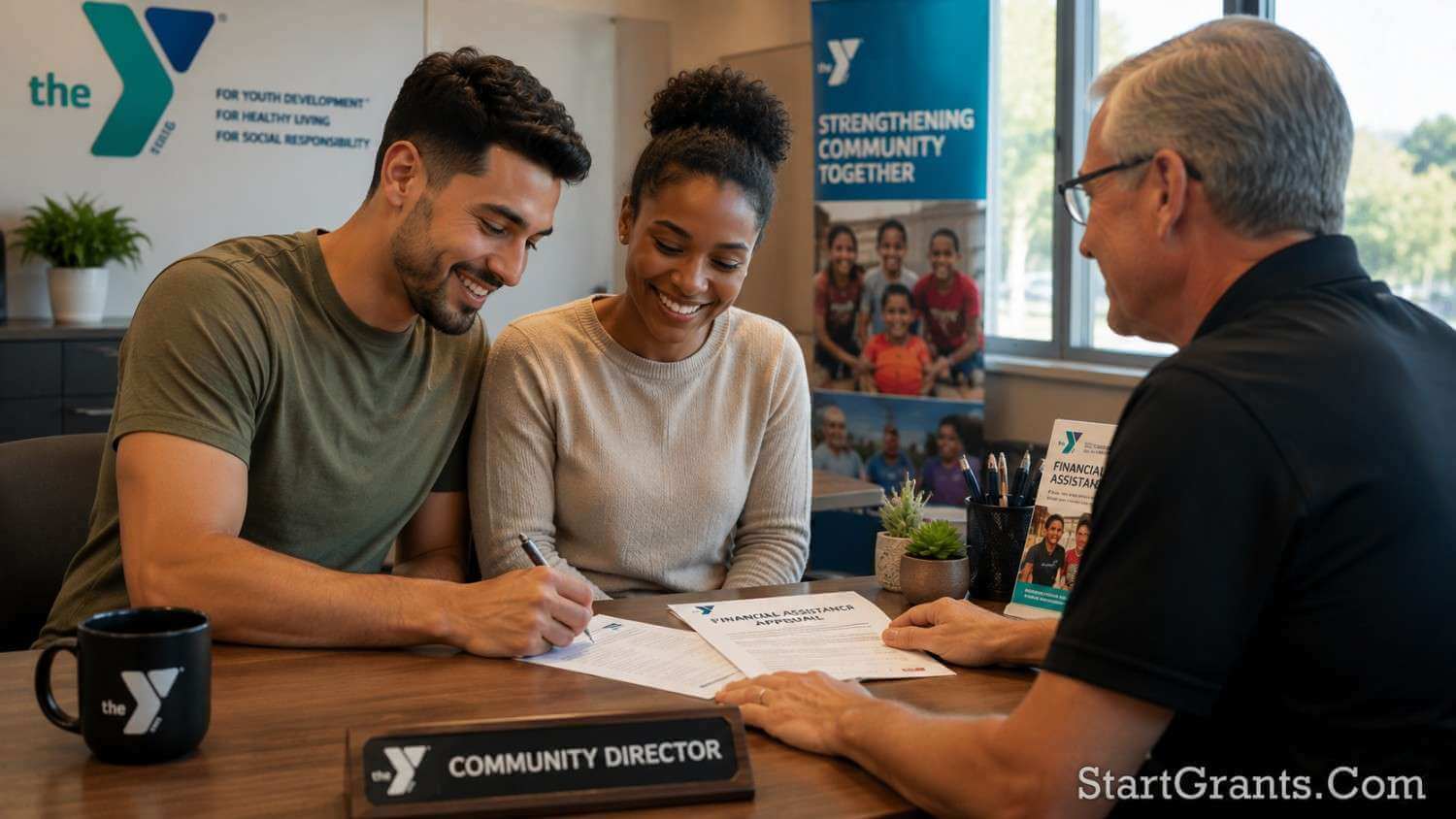
The YMCA is not a commercial health club; it is a massive 501(c)(3) nonprofit organization dedicated to ensuring that income is never a barrier to childcare, wellness, and community support.
Phase 1: Decoding the YMCA “Open Doors” Program
The YMCA operates on a localized level, meaning each regional branch sets its own budget based on local fundraising. However, almost all branches operate a financial assistance initiative commonly referred to as the “Open Doors” program or the “Income-Based Membership” sliding scale.
This program is not a loan. It is a direct community grant (subsidy). Based on your proven household income, the YMCA will subsidize anywhere from 10% to 100% of the costs associated with memberships, youth sports, and childcare. If approved, you will pay a drastically reduced, customized monthly rate that fits your exact budget, allowing your family to access premium facilities without incurring debt.
Phase 2: The Core of the Funding (Childcare & Camps)
While discounted gym access is excellent, the true financial power of the YMCA lies in childcare. The YMCA is the largest provider of childcare in the United States. For a working single mother, the cost of summer camp or after-school care can easily exceed her monthly rent.
Applying for YMCA financial assistance specifically for childcare can save a family thousands of dollars a year. Furthermore, the YMCA actively accepts state-issued Child Care and Development Block Grant (CCDBG) vouchers. By combining your state childcare voucher with a YMCA internal subsidy, you can effectively secure premium, safe childcare for your children at zero out-of-pocket cost, allowing you to return to the workforce.
Phase 3: Synergizing Community Relief
The YMCA is a powerful resource for health and childcare, but it cannot pay your electric bill or stop an eviction. To survive a severe economic hardship, you must “stack” community resources. If you are applying for YMCA assistance, you should simultaneously secure funding from these parallel pipelines:
- For Rent & Utility Shut-offs: The YMCA handles wellness, but the Salvation Army handles impending evictions. Secure your housing by reading our guide to Salvation Army Emergency Financial Assistance.
- For the Elderly (SilverSneakers): The YMCA heavily subsidizes seniors through “Active Older Adult” programs and Medicare-backed SilverSneakers access. Discover more safety nets for seniors in Donate to Save the Elderly.
- For Emergency Transient Housing: Historically, the YMCA and YWCA provided safe, low-cost rooms for travelers. While less common today, some branches still offer emergency transitional housing. Learn the logistics in How to Get Home When Stranded.
Phase 4: The Bureaucratic Application Process & Form
Because the YMCA is distributing limited charitable funds, their auditing process is rigorous. You cannot simply walk in and verbally declare that you are struggling financially. To officially get help from the Y, your very first step is to secure and meticulously fill out the official YMCA financial assistance form. Depending on your local branch, this form can either be downloaded as a PDF directly from their regional website or picked up in person at the front desk.
However, submitting the YMCA financial assistance form is only the beginning. To avoid immediate rejection or bureaucratic delays, you must attach a complete financial dossier to your application. Every local branch is slightly different, but the universal requirements include:
- Your Most Recent 1040 Tax Return: This is the ultimate proof of your annual household income.
- Two Recent Pay Stubs: To prove your current employment status and monthly cash flow.
- Government Assistance Documentation: If you currently receive SNAP (Food Stamps), Medicaid, or SSI, bring the official award letters. Proving you already qualify for federal poverty programs practically guarantees your YMCA approval.
Pro-Tip: Winning the YMCA Subsidy
Navigating the front desk and understanding exactly how the “Open Doors” sliding scale works can be intimidating. To see exactly how to approach the YMCA, what to ask for, and how to secure a heavily subsidized or completely free membership, watch this excellent, practical breakdown: How to Get a FREE YMCA Membership (Most Don’t Know!):
Phase 5: The Muslim Perspective (Christian Origins, Awrah, & Riba)
For Muslim families residing in the United States, utilizing the resources of the “Young Men’s Christian Association” introduces several unique theological, ethical, and financial questions. Navigating this massive community resource requires an understanding of Islamic jurisprudence (Shariah) regarding charity, modesty, and debt.
The “Christian” Question (Is it Halal to Accept?)
The most immediate concern is the name of the organization itself. Can a Muslim accept financial assistance or subsidized childcare from a historically Christian institution?
According to mainstream Islamic scholarship, the answer is Yes. Accepting unconditional community aid from a secular or non-Muslim religious organization falls under the category of Hibah (a gift). The modern YMCA operates as a secular community center; they do not mandate participation in Christian prayers or rituals as a prerequisite for receiving financial assistance or utilizing their gym and childcare facilities. Because the aid is provided without religious conditions or coercion, utilizing the YMCA’s resources is completely Halal.
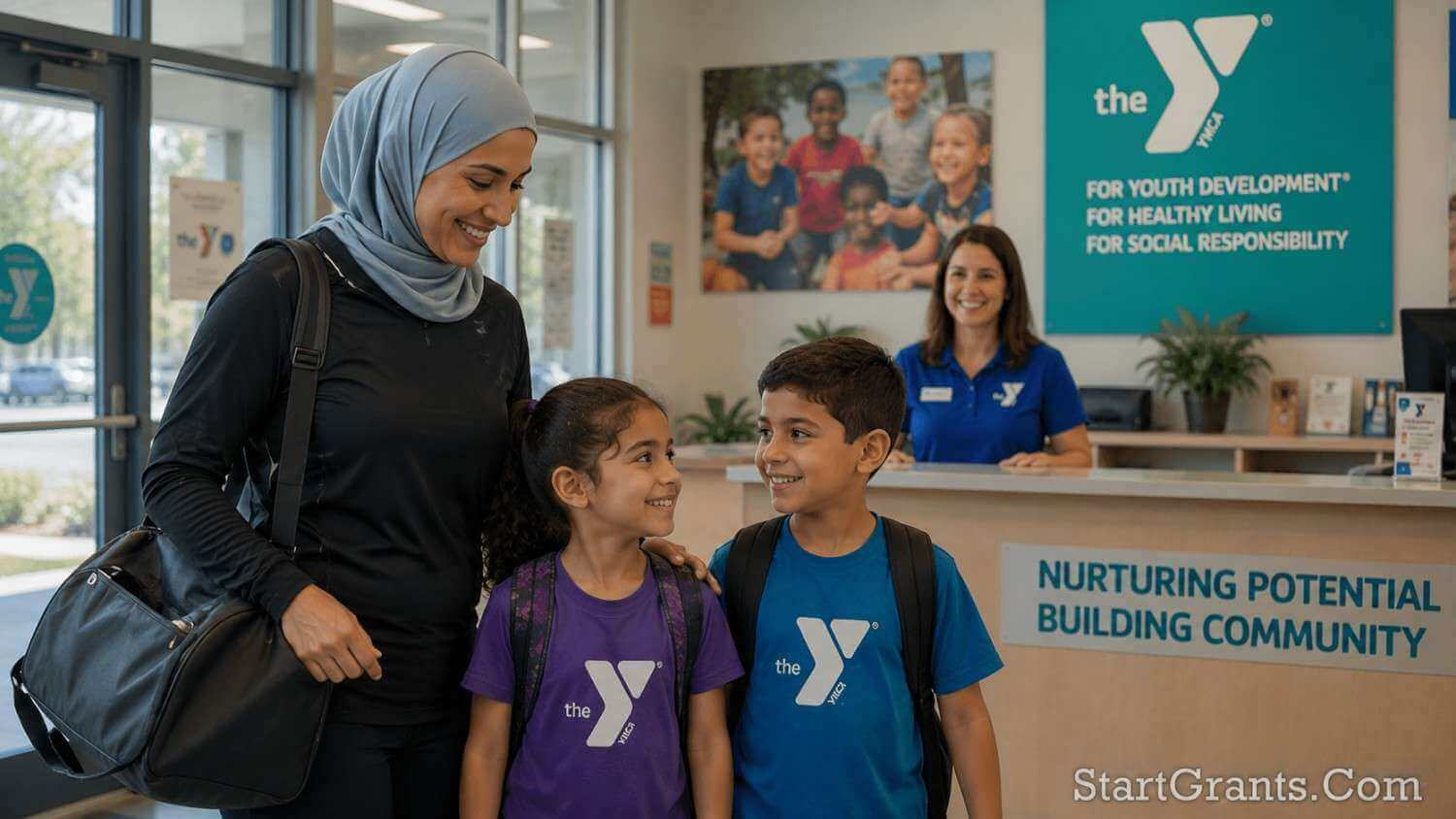
Utilizing community financial assistance allows Muslim families to access vital wellness and childcare programs without relying on Riba-bearing credit card debt, provided they maintain Islamic guidelines regarding modesty (Awrah) within the facilities.
Avoiding the Trap of Riba for Childcare
The true Islamic value of the YMCA financial assistance program lies in its ability to protect a family from Riba (usury/interest).
Childcare and after-school programs are astronomically expensive. Many working Muslim parents, desperate to keep their jobs, resort to putting daycare expenses on high-interest credit cards or taking out personal bank loans to float the costs during the summer. In Islam, intentionally taking on interest-bearing debt is explicitly Riba, which is strictly Haram and eradicates the spiritual Barakah (blessing) from the household’s income.
By aggressively applying for the YMCA’s subsidized childcare grants (Hibah), a Muslim family can secure safe environments for their children entirely debt-free, successfully bypassing the destructive spiritual trap of Riba-laced commercial debt.
Maintaining Awrah and Islamic Modesty
While the financial aspect is Halal, utilizing the physical facilities (such as the gym floor or swimming pools) requires individual spiritual discipline. Islam mandates the guarding of one’s Awrah (modesty). Public swimming pools and co-ed gyms in the West present obvious challenges regarding free-mixing and immodest attire.
Muslim families must navigate this by utilizing specific strategies: attending the gym during low-traffic hours, utilizing “Women-Only” fitness classes or swim hours (which many YMCAs offer), and wearing Shariah-compliant, modest athletic wear (such as burkinis or loose-fitting tracksuits). By taking these precautions, Muslim families can benefit from the physical wellness programs while upholding their Islamic values.
Conclusion
The YMCA is vastly more than a place to lift weights; it is a critical community safety net designed to democratize access to health, wellness, and youth development. By treating your application like a formal financial audit—submitting your 1040 tax returns and recent pay stubs alongside the official YMCA financial assistance form—you can unlock massive subsidies that drastically reduce your family’s monthly expenses.
For the Muslim family, mastering the YMCA assistance program is a highly strategic and ethical move. By securing Halal community grants (Hibah) for childcare instead of relying on Riba-bearing credit cards, and by navigating the facilities with a fierce commitment to Islamic modesty (Awrah), you can ensure your family’s physical health and economic stability while retaining absolute spiritual purity.
Frequently Asked Questions (FAQs)
Q1: Is YMCA financial assistance a loan that I have to pay back?
A: No. The financial assistance provided through the YMCA’s “Open Doors” program is a charitable community grant (subsidy). You do not have to pay it back. Instead, the YMCA uses its donor funds to cover a percentage of your membership or childcare costs, and you simply pay the reduced monthly rate.
Q2: What documents do I need to submit with the YMCA financial assistance form?
A: While it varies slightly by branch, you will universally need to provide proof of your household income. This typically includes your most recent federal 1040 tax return, your last two pay stubs, and documentation of any government assistance you currently receive (such as SNAP, Medicaid, or SSI award letters).
Q3: Can I get financial assistance for YMCA summer camps and childcare?
A: Yes, absolutely. The YMCA sliding scale applies not only to facility memberships but also heavily subsidizes youth sports, after-school programs, and summer day camps, which are critical for working parents.
Q4: Is it Halal for a Muslim to use the Young Men’s Christian Association?
A: Yes, it is Halal. The modern YMCA operates as a secular community service organization. Because they do not force applicants to participate in Christian religious rituals or alter their Islamic beliefs to receive aid or use the facilities, accepting their unconditional financial assistance (Hibah) is completely permissible in Islamic jurisprudence.
Q5: Why should a Muslim use a YMCA grant instead of a credit card for daycare?
A: Using a credit card to pay for expensive daycare and failing to pay the balance off immediately results in compounding interest. In Islam, paying interest is classified as Riba, which is strictly forbidden (Haram). Utilizing a YMCA community grant (Hibah) is a debt-free, Riba-free, and 100% Halal method of securing childcare.
Disclaimer: The information provided in this article is for educational and informational purposes only. We are not a federal agency, a representative of the YMCA, or a religious fatwa council. YMCA financial assistance policies, budget availability, and sliding scale brackets vary significantly by local and regional branches. Always consult directly with your local YMCA Membership Director for specific documentation requirements, and a qualified Islamic finance scholar regarding the acceptance of external Hibah and guidelines for maintaining Awrah in public facilities.