
Last Updated: | Author: Munir Ardi
When a military family experiences a death, the American Red Cross can help transmit verified emergency information and process certain financial-assistance requests through military aid societies. But there is no automatic “Red Cross funeral grant,” and an emergency message does not guarantee leave, airfare, or payment of a funeral-home bill.
The correct route depends on who died. A death in the service member’s family may create an emergency communication and travel need. The death of a service member on active duty triggers the Department of Defense casualty and mortuary process. The death of a veteran may involve Department of Veterans Affairs burial benefits. This guide explains each route and how they fit within broader financial assistance for funeral expenses.
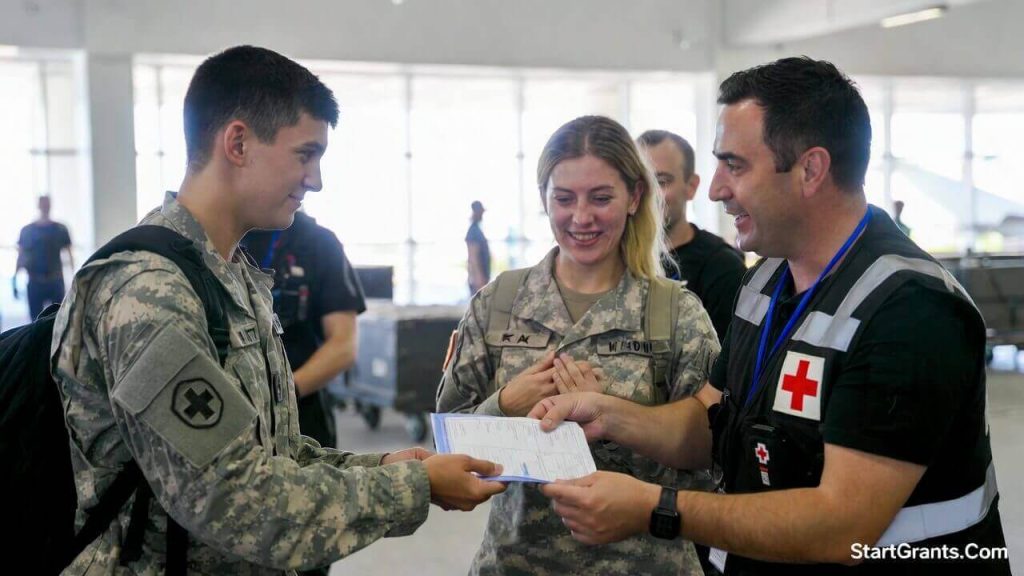
What the American Red Cross Can—and Cannot—Do
The Red Cross Hero Care Network is available 24 hours a day at 1-877-272-7337. Its military-family services include:
- Emergency communication: gathering and transmitting verified information about a death, serious illness, birth, or other qualifying family emergency to a service member’s command.
- Financial-assistance processing: helping eligible service members, retirees, veterans, and family members request assistance through the appropriate military aid society.
- Information and referral: connecting families with military, veteran, community, and behavioral-health resources.
The Red Cross does not command military units, approve leave, determine VA benefits, or guarantee a grant. In many cases, it acts as the communication link or processing liaison while the command or military aid society makes the decision.
How a Hero Care Emergency Message Works
When to request one
A family may request an emergency message when an eligible service member needs to be notified about a death, life-threatening illness, critical injury, birth, or another serious event. Notify the service member’s commander, first sergeant, or chain of command too, if possible. A Red Cross message is useful independent verification, but it is not universally required before a commander can decide emergency leave.
Information to have ready
- Service member’s full legal name
- Branch, rank or pay grade, unit, and duty location
- Date of birth and Social Security number when requested through the secure intake process
- Your relationship to the service member
- Name, location, and contact information for the hospital, hospice, funeral home, doctor, coroner, or medical examiner that can verify the event
- Description of the requested action, such as notification or emergency-leave consideration
The Red Cross contacts an appropriate source, documents what can be verified, and sends the message to the command. It does not “legally certify” the death or issue leave orders. The commander evaluates the message alongside operational requirements and branch policy. If leave is approved, ask the command whether government-funded travel is authorized before buying a commercial ticket.
Emergency Travel and Funeral Assistance
The Red Cross says its partnership with military aid societies can provide financial help for needs including emergency travel, burial of a loved one, and emergency food or shelter. Eligibility, covered amount, required documents, and whether help is a grant or interest-free loan depend on the service-affiliated society and case review.
Do not purchase airfare or commit to funeral services on the assumption that reimbursement is guaranteed. Ask:
- Which military aid society is deciding the request?
- Is the assistance a grant, interest-free loan, or combination?
- Which travel or funeral expenses are approved?
- Will payment go to the applicant or directly to the vendor?
- Is preapproval required?
- What receipts, leave papers, LES, military ID, or budget documents are needed?
Military Aid Societies by Service Branch
Army Emergency Relief
Army Emergency Relief lists both emergency travel and funeral expenses among its areas of assistance. Requests are considered individually. AER’s current emergency-travel airfare policy offers eligible active-duty Soldiers grants capped at $2,000 for travel within the continental United States and $4,000 outside it; costs above the cap may be considered for a zero-interest loan. Do not apply those travel caps to funeral-home expenses.
Navy-Marine Corps Relief Society
The Navy-Marine Corps Relief Society provides eligible active-duty and retired Sailors, Marines, qualifying family members, surviving spouses, and certain reservists with interest-free loans or grants. Its official pages list emergency travel and funeral expenses. When no NMCRS office is accessible or it is outside business hours, the Red Cross may serve as liaison.
Air & Space Forces Aid Society
The Air & Space Forces Aid Society lists funeral expenses, emergency travel, and assistance to surviving dependents among possible Standard Assistance needs. Help may be a no-interest loan or grant. Eligibility and documentation vary; the official site says Red Cross processes AFAS emergency-travel requests.
Coast Guard Mutual Assistance
Coast Guard members and eligible families should contact Coast Guard Mutual Assistance or their servicing personnel/support office. Cross-servicing agreements may allow another military aid society or the Red Cross to help with intake when the usual office is unavailable. Confirm the current eligible expense and repayment terms directly.
Key distinction: these organizations are nonprofit military aid societies. Their assistance is not the same as VA burial allowances, DoD survivor entitlements, or Red Cross disaster assistance.
If a Service Member Dies on Active Duty
Do not begin by searching for a Red Cross grant. The military service’s casualty and mortuary affairs program should notify and support the primary next of kin. A casualty assistance officer or branch-equivalent representative is assigned to explain benefits, coordinate required paperwork, and connect survivors with mortuary, legal, financial, and grief support.
Death gratuity
The Department of Defense death gratuity is a $100,000 tax-free payment to eligible survivors when a member dies on active duty or in certain reserve statuses. The cause of death does not change the amount. Its purpose is to meet immediate financial needs before other survivor benefits become available; it is not restricted only to funeral costs and should not be described as a Red Cross payment.
SGLI and other survivor benefits
Servicemembers’ Group Life Insurance is separate from the death gratuity. Coverage and beneficiary designation determine the claim. Survivors may also need guidance on unpaid pay and allowances, Survivor Benefit Plan issues, dependency and indemnity compensation, education benefits, housing, and health coverage. The casualty assistance officer should explain applicable programs rather than asking the family to navigate them alone.
Mortuary services and funeral honors
For an active-duty death, the service coordinates care and transportation of the remains under its mortuary process. The family’s casualty assistance representative explains available funeral and burial support. Do not privately arrange transport of remains before speaking with the representative.
VA Burial Benefits for Eligible Veterans
The American Red Cross does not administer VA burial allowances. An eligible person who paid a veteran’s funeral or burial expenses and will not be reimbursed by another source may qualify under VA rules.
Current published allowance amounts
- Service-connected death on or after September 11, 2001: maximum burial allowance of $2,000. VA may reimburse certain transportation costs for burial in a VA national cemetery.
- Eligible non-service-connected death on or after October 1, 2025: $1,002 burial allowance and $1,002 plot allowance when the plot allowance applies.
These are maximum or set allowances, not a promise that every veteran or applicant qualifies. Service connection is a VA determination. A cancer diagnosis, Agent Orange exposure, burn-pit exposure, or PACT Act coverage does not by itself establish that the death is service-connected. If cancer was involved, our guide to funeral-cost assistance after a cancer death explains additional options without assuming VA eligibility.
National cemetery benefits
For an eligible burial in a VA national cemetery, benefits can include the gravesite, opening and closing, perpetual care, a government headstone or marker, burial flag, and Presidential Memorial Certificate. They do not necessarily pay the family’s funeral-home bill, casket, urn, viewing, flowers, obituary, or travel. Eligible cremated remains may also be inurned or buried.
To schedule a burial, the family or funeral director can call the National Cemetery Scheduling Office at 800-535-1117. Pre-need eligibility can simplify future arrangements but does not reserve a particular gravesite.
DD Form 214: Important, but Not the Only Possible Proof
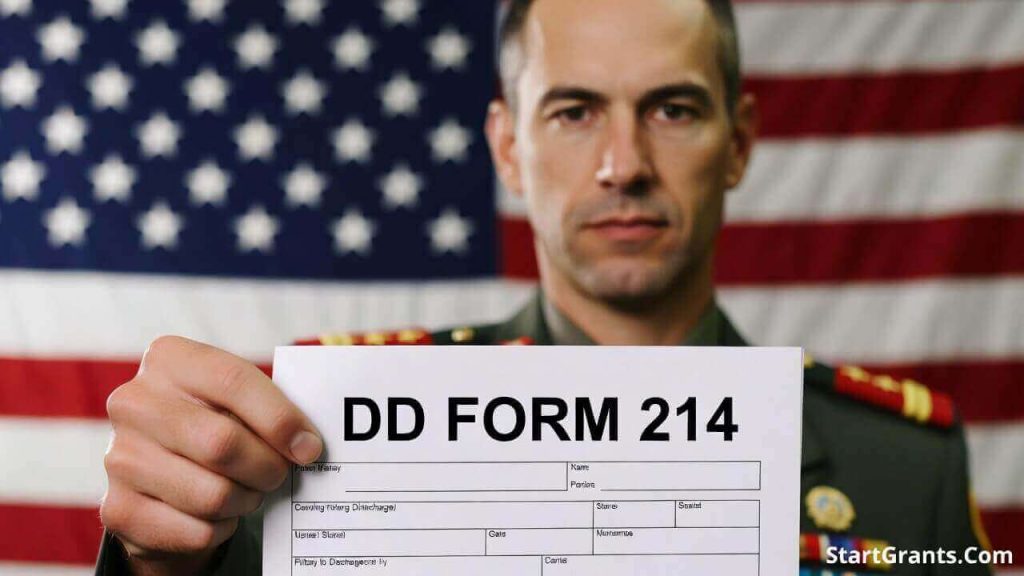
The draft’s claim that every agency, charity, and funeral director always requires a DD Form 214 was too absolute. A DD Form 214 is commonly used to verify recent military separation, but older veterans may have an earlier equivalent document, active-duty deaths follow current service records, and agencies can sometimes verify service directly.
If burial is requested in a VA national cemetery and the document is missing, contact the National Cemetery Scheduling Office first; it can work with the National Personnel Records Center. For a burial outside a federal cemetery, next of kin can submit an emergency service-record request through the National Archives. Do not delay every application while waiting for one document if the responsible agency offers another verification route.
Military Funeral Honors
Eligible veterans can receive military funeral honors upon request. The core ceremony generally includes folding and presenting the U.S. flag and playing Taps, with detail composition depending on eligibility and service policy. The family usually asks the funeral director, who contacts the appropriate service branch. Honors do not mean that all civilian funeral or cemetery costs are paid.
Other Support When Military Benefits Leave a Gap
TAPS—the Tragedy Assistance Program for Survivors—offers grief support, peer connections, seminars, resources, and benefits navigation to people grieving a military or veteran death. Its public mission should not be described as a guaranteed funeral-grant program.
Local charities may consider the remaining expense, but funding varies. Our directory of charities that may help with funeral costs distinguishes verified financial programs from organizations that only provide referrals.
If the household cannot afford basic disposition even after VA or military resources, contact the county before signing a funeral contract. Local indigent burial programs may impose provider, income, estate, or service restrictions. See our guide to funeral assistance for low-income families.
Muslim Perspective: Military Benefits and Janazah Planning
A Muslim military family may need to coordinate two systems quickly: the military or VA process and local Janazah requirements. Ask the casualty assistance officer, military chaplain, funeral director, and mosque Janazah coordinator to communicate with one another before arrangements are finalized.
- Request a Muslim chaplain or faith accommodation: installation chaplains can help communicate religious needs even when the assigned chaplain is not Muslim.
- Explain body-care requirements early: discuss ghusl, kafan, same-gender attendants, handling, viewing preferences, and timing with the authorized mortuary team.
- Do not assume burial within 24 hours is always possible: medical examination, transport from overseas, permits, cemetery schedules, and military procedures can affect timing. Seek qualified religious guidance when delay is unavoidable.
- Ask about cemetery compatibility: confirm whether the selected national, state veterans, private, or Muslim cemetery can meet the family’s religious preferences.
- Review aid terms: AER, NMCRS, AFAS, or CGMA assistance may be a grant, interest-free loan, or combination. Families wishing to avoid debt should ask clearly before accepting.
- Use community help carefully: a mosque may provide volunteers, negotiated Janazah rates, sadaqah, or hardship assistance. Zakat eligibility is case-specific and should be discussed with the fund administrator and a trusted scholar.
The family may accept earned government or military benefits without treating them as a loan, but StartGrants does not issue a religious ruling. A Muslim chaplain or qualified scholar can assess questions about insurance proceeds, death gratuity, Zakat, debt, and estate distribution.
Reduce Funeral-Home Costs Without Losing Military Honors
The FTC Funeral Rule applies when purchasing from a covered funeral provider. Families can ask for prices by phone, receive a General Price List, select individual services, use a third-party casket or urn without a handling fee, and choose direct cremation or immediate burial when appropriate. Funeral honors and VA memorial items do not require an expensive funeral package.
Direct-cremation prices vary substantially; do not rely on a universal $1,000–$1,500 claim. Obtain comparable itemized quotes and separate funeral-home costs from cemetery, transportation, obituary, flowers, clergy, death certificates, and memorial reception expenses.
Documents That May Be Requested
- Military ID and service member’s identifying and unit information
- Emergency verification contact information
- Leave authorization or emergency-leave paperwork when applicable
- Leave and Earnings Statement or retirement income information
- Budget, bank balance, insurance, and vendor estimate for means-tested aid
- Death certificate or temporary verification
- DD Form 214 or equivalent proof of service for veteran benefits
- Itemized funeral-home, cemetery, and travel estimates
- Receipts showing who paid when requesting reimbursement
- VA claim, casualty-assistance, SGLI, or military aid society case numbers
A Practical Action Plan
- Family death affecting a service member: notify the chain of command and contact Hero Care at 1-877-272-7337.
- Active-duty service member death: work with the assigned casualty assistance officer before arranging transport or major services.
- Veteran death: contact the funeral director and VA National Cemetery Scheduling Office if national cemetery burial is desired.
- Identify the applicable aid society and ask whether the decision is a grant or loan.
- Check DoD, VA, SGLI, employer, Social Security, and other survivor benefits separately.
- Request itemized funeral prices before committing.
- Apply to county or charitable programs before paying when preapproval is required.
- If a verified gap remains, use a transparent fundraiser. Our guide explains how to ask for funeral donations respectfully.
Frequently Asked Questions
Does the American Red Cross pay funeral bills?
The Red Cross can help eligible military families process financial-assistance requests through military aid societies, including certain burial needs. Approval, amount, covered expense, and whether help is a grant or loan depend on the applicable society and case.
Does a Red Cross emergency message guarantee emergency leave?
No. The message provides verified information to help the command decide. The commander retains authority under branch policy and operational requirements.
Who can call the Hero Care Network?
Family members, service members, and other appropriate callers can initiate requests involving eligible active-duty members and specified Guard, Reserve, academy, ROTC, overseas DoD civilian, and other categories. Hero Care confirms whether the case qualifies.
Is Red Cross financial assistance always a grant?
No. Depending on the military aid society and case, assistance may be a grant, interest-free loan, or combination. Ask for the written terms before accepting.
Does the VA pay the entire veteran’s funeral?
No. VA may provide eligible cash allowances and national cemetery or memorial benefits, but funeral-home services, casket, urn, flowers, viewing, and other expenses are not automatically paid in full.
Is a DD Form 214 always required?
It is common proof for veteran benefits, but an earlier equivalent document or agency verification may be accepted. Active-duty deaths use current service records. Ask the responsible agency how to verify service.
What happens when a service member dies on active duty?
The service’s casualty and mortuary program assigns a representative to the next of kin. Eligible survivors may receive the $100,000 tax-free death gratuity and other separate benefits, including SGLI when coverage applies.
Can a Muslim military funeral receive military honors?
Yes, religious Janazah arrangements and eligible military funeral honors can be coordinated. Discuss body care, timing, cemetery, honors, and faith accommodations with the casualty representative, chaplain, funeral director, and mosque coordinator.
Important disclaimer: StartGrants.com is an independent information portal. It is not affiliated with, endorsed by, or an agent of the American Red Cross, Department of Defense, Department of Veterans Affairs, any military branch, military aid society, charity, funeral provider, insurer, or religious organization. Eligibility, funding, benefit amounts, service areas, and procedures can change. Confirm current rules and obtain written approval from the official organization before booking travel, signing a funeral contract, or accepting a loan. This article provides general information, not legal, tax, military, financial, insurance, funeral-directing, or religious advice.