Last Updated: | Author: Munir Ardi
Help paying for dentures is available through some charitable programs, insurance benefits, and reduced-cost clinics, but there is no universal government denture grant. What you can receive depends on your coverage, financial circumstances, health needs, and local availability. A donated treatment plan, an insurance benefit, a clinic discount, and a loan are different arrangements.
Start with a dental assessment and a written estimate. Then check existing coverage, eligible donated-care programs, and local clinics before borrowing. This page focuses on full or partial dentures and their related costs. Our broader guide to dental patient assistance programs covers assistance for other dental needs.
Understand the Treatment Before Comparing Financial Help
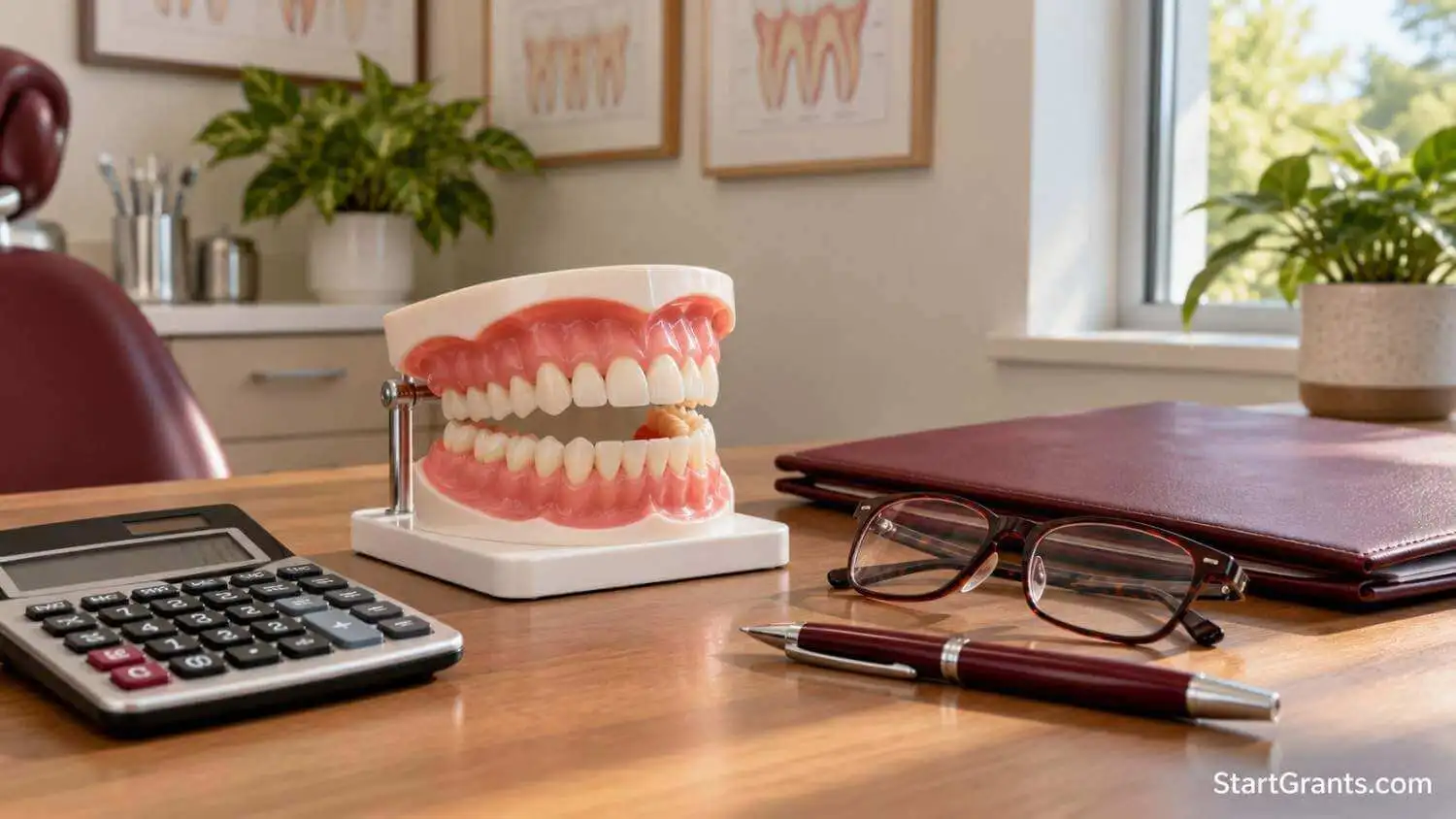
Missing teeth can make eating or speaking more difficult. A dentist can assess your mouth and explain whether a full denture, partial denture, repair, or another treatment is appropriate. Do not assume every remaining tooth must be removed.
The American Dental Association explains removable partial dentures, which replace some missing teeth, and full and immediate denture options. Conventional dentures follow healing; immediate dentures can be placed when teeth are removed but may need relining or replacement after healing. Some overdentures use retained teeth or implants for support.
Implants are not automatically a cosmetic luxury, and dentures are not always made from the same materials. Clinical suitability and program coverage are separate questions. Ask the dentist to explain a functional, affordable plan and any alternatives.
Request an Itemized Estimate, Not Just a Denture Price
A single national price range cannot reliably describe your case. Ask whether the estimate includes:
- Examination, X-rays, and treatment planning.
- Any necessary extractions, infection treatment, or other preparation.
- Impressions, laboratory work, and the upper or lower appliance you need.
- Immediate dentures, later dentures, or both, if relevant.
- Fitting visits, adjustments, relining, repairs, and follow-up care.
- What you would owe after insurance, a discount, or donated services.
Ask which services are required now, which are optional, and how long the estimate remains valid. Include travel and time away from work in your budget. If coverage is denied, request the reason in writing before deciding how to proceed.
Compare the Main Ways to Get Help Paying for Dentures
| Route | Type of assistance | What to confirm |
|---|---|---|
| Donated Dental Services | Volunteer treatment for eligible patients | Eligibility, local intake status, waitlist, and treatment plan |
| Medicaid | State-specific dental benefits | Denture coverage for your eligibility category |
| Medicare Advantage or dental insurance | Payment for covered services | Network, benefit limits, approval rules, and remaining charges |
| PACE | Team-approved care within a comprehensive program | Care-level eligibility, service area, and premiums |
| Dental schools or community clinics | Reduced-cost services or discounts | Whether dentures are offered and how appliance fees are charged |
Programs, coverage, and appointment availability can change. The official sources below explain these routes. A directory listing or application form does not guarantee free dentures.
Donated Dental Services: Check Eligibility and Local Intake
Dental Lifeline Network’s Donated Dental Services application page describes donated care for people who cannot afford treatment and meet a qualifying category: age 65 or older, permanent disability, or medically necessary dental care. Available dental benefits must be exhausted first, and participation is generally limited to once.
Dentures may be part of a volunteer dentist’s plan, but applying does not guarantee a particular appliance. The organization’s volunteer information describes coordination with laboratories for dentures and other restorations.
Check the current DDS state directory before applying. Intake may be restricted or closed locally. Follow the current instructions for your address rather than assuming a national program accepts every applicant.
The national application page warns that waits can last several months to a year or more. Final acceptance follows a dentist’s consultation, and some complex services may not be available. The DDS FAQ states that the program does not provide emergency treatment.
Prepare the requested financial, medical, and dental information. Use official submission channels for personal documents. Before accepting a referral, discuss travel, repeat visits, the proposed treatment, and follow-up arrangements.
A Missouri Example
The Missouri DDS page currently accepts routine applications only from listed counties. It describes additional application pathways for qualifying veterans and people whose physician documents that dental problems prevent essential medical treatment. These exceptions allow an application; they do not guarantee treatment. Recheck the page for the current county list.
Medicaid: Verify Denture Benefits in Your State
Medicaid’s dental coverage guidance explains that states determine adult dental benefits. Eligibility for Medicaid does not automatically mean that full dentures, partial dentures, repairs, or replacements are covered.
Ask your Medicaid plan or a participating dental provider:
- Does my eligibility category cover the denture recommended by my dentist?
- Are preparation, extractions, fitting, and adjustments covered separately?
- Is prior authorization required before work begins?
- Are there replacement intervals, benefit limits, or excluded materials?
- Which office accepts my exact coverage and is taking new patients?
For Missouri readers, MO HealthNet’s dental page distinguishes comprehensive benefits for certain categories from limited adult benefits. Its March 2026 fee-for-service guide specifically excludes dentures from the additional adult trauma services it describes. Do not assume being a senior or having an extraction establishes denture coverage.
Medicare and Other Insurance: Coverage Is Not a Grant
Original Medicare generally does not cover dentures. Some dental services qualify when linked to certain covered medical treatments, but that does not create a general denture benefit. If tooth loss is related to cancer treatment or another medical condition, ask your medical team and dentist to clarify which services, if any, qualify.
Medicare Advantage plans may offer additional dental benefits. Check the actual Evidence of Coverage and request an estimate for your procedure. There is no universal $1,000–$2,000 denture allowance. A $0 plan premium does not mean every service is free.
For any dental insurance, confirm provider participation, deductibles, coinsurance, annual limits, waiting periods, and rules for replacing an existing denture. Ask for the estimated patient balance before fabrication begins. Paying premiums for a new policy may not solve an immediate treatment need.
Medicare Open Enrollment runs October 15 through December 7, generally for changes effective January 1 of the next year. Compare medical and prescription coverage alongside dental benefits before switching. Our guide to dental assistance for seniors on Medicare explains these broader coverage decisions.
PACE: A Route for People with Broader Care Needs
PACE is a comprehensive care program that may include dentistry. Eligibility requires age 55 or older, residence in a participating service area, state-certified nursing home-level care needs, and the ability to live safely in the community with its support.
Ask the PACE team whether it would approve the denture you need. Medicaid participants do not pay a monthly PACE premium; Medicare participants without Medicaid may owe long-term care and drug premiums. Team-approved care has no deductibles, copayments, or coinsurance. PACE is not a standalone denture grant or available to everyone age 55 and older.
Dental Schools and Community Health Centers
Ask Dental Schools for a Complete Quote
The National Institute of Dental and Craniofacial Research lists dental schools as a possible source of reduced-cost care. There is no verified nationwide rule that dentures cost 50%–60% less. Ask the school whether its clinic accepts your case, what screening costs, and how treatment is scheduled.
Confirm who provides the care, what supervision is used, how many visits are expected, and whether laboratory work and adjustments are included. Reduced cost is not the same as free treatment. NIDCR itself does not provide dental financial assistance.
Community Clinic Discounts May Not Cover the Appliance
HRSA health centers adjust service fees based on income and family size. Use HRSA’s health center locator, then confirm that a location provides dentures or referrals.
The denture itself is not automatically included in a sliding-fee discount. HRSA’s FAQ explains that dentures are not subject to the standard sliding-fee requirements for services. A center determines how to charge for them and must explain out-of-pocket costs. Ask separately about the examination, fitting visits, appliance, and laboratory fees.
A single parent or another adult who does not meet DDS criteria can still investigate these routes and state coverage. Family status alone does not establish entitlement to a grant or free dentures.
Extractions, Repairs, and Offers Advertised as Grants
If you have severe pain or signs of infection, arrange prompt assessment rather than waiting for a denture application. For swelling that interferes with breathing or swallowing, call 911 or seek emergency medical care. NHS guidance describes these infection warning signs; this U.S. article uses 911. Our guide to urgent dental care when you cannot pay covers that immediate need.
If an existing denture is uncomfortable, ask whether adjustment, repair, or relining is appropriate before assuming it must be replaced. The ADA advises follow-up for persistent soreness or irritation. Ask how those visits will be paid for.
If an offer calls itself a denture or implant grant, request the total price and the amount you must pay. Check whether it requires a paid upgrade, credit application, or particular provider. Our guide to cosmetic dentistry grants and discounts explains how to assess these offers.
For tooth loss caused by abuse, a survivor-specific program may be relevant. Our guide to dental assistance after domestic violence explains Give Back a Smile and other pathways. It is not a general program for every cause of tooth loss.
A Muslim Perspective
For Muslim readers, discuss necessary treatment with a dentist and financial arrangements with the appropriate adviser. Avoid assuming that a particular restoration is religiously prohibited or approved solely because it is called cosmetic or restorative.
Ask a trusted mosque or charity whether it offers sadaqah support, assesses zakat eligibility, or can arrange a qard hasan loan. Difficulty paying for dentures does not automatically establish zakat eligibility. Ask a qualified scholar about your circumstances and any proposed payment to the dental provider.
If avoiding riba is important to you, review the actual financing contract. The CFPB’s medical financing guidance recommends checking assistance and insurance before borrowing. Deferred-interest promotions can generate interest if their conditions are not met; there is no universal APR or identical trigger for every product.
Ask about interest, fees, total repayment, and what happens if a payment is late. A qard hasan loan is still repayable. Charitable help also requires clear communication about eligibility, approved expenses, and whether additional costs remain. This section provides questions to consider, not a fatwa or a promise of funding or spiritual outcomes.

Frequently Asked Questions
Does Original Medicare cover dentures?
Generally no. Limited coverage for dental services connected to covered medical treatment does not create a general denture benefit. Confirm the proposed services with your providers.
Is Donated Dental Services a cash grant?
No. DDS arranges donated treatment for eligible patients. The volunteer dentist determines the treatment plan, and an application does not guarantee dentures.
Can a single parent get help paying for dentures?
Possibly, through eligible state coverage, community clinics, dental schools, or a suitable charitable program. Being a single parent does not automatically qualify someone for free dentures.
Are dentures automatically discounted at a health center?
No. The appliance is not automatically included in the standard sliding-fee requirements. Ask the center about its denture charges and discounts before treatment.
Can I get help if insurance will not cover my dentures?
Ask for the denial reason, check any applicable review process, and compare donated care or reduced-cost clinics. Confirm eligibility and the full remaining cost before committing.
How should I assess financing for dentures?
Review interest, fees, promotional conditions, and total repayment after checking assistance options. For Islamic finance guidance, consult a qualified scholar about the actual contract.
Can zakat be used to help pay for dentures?
That depends on individual eligibility and the proposed arrangement. Ask the charity and a qualified scholar; inability to pay does not automatically establish eligibility.