Last Updated: May 2026 | Author: Munir Ardi
For most families, discovering that their child needs orthodontic work brings an immediate sense of financial dread. In the United States, the average cost of traditional metal braces ranges from $3,000 to $7,000. Unfortunately, because many insurance companies classify orthodontics as a “cosmetic” procedure rather than a medical necessity, parents are often left paying the entire bill out of pocket.
If you are struggling to afford basic dental care, we highly recommend exploring our overarching directory on dental patient assistance programs. However, if you are specifically dealing with severe misalignments, overbites, or crooked teeth that are affecting your child’s quality of life, there is specialized hope.
In this 2026 guide, we will break down the top national charities offering free braces for kids, how to navigate the strict Medicaid approval process, and the specific Islamic rulings regarding orthodontic modifications.
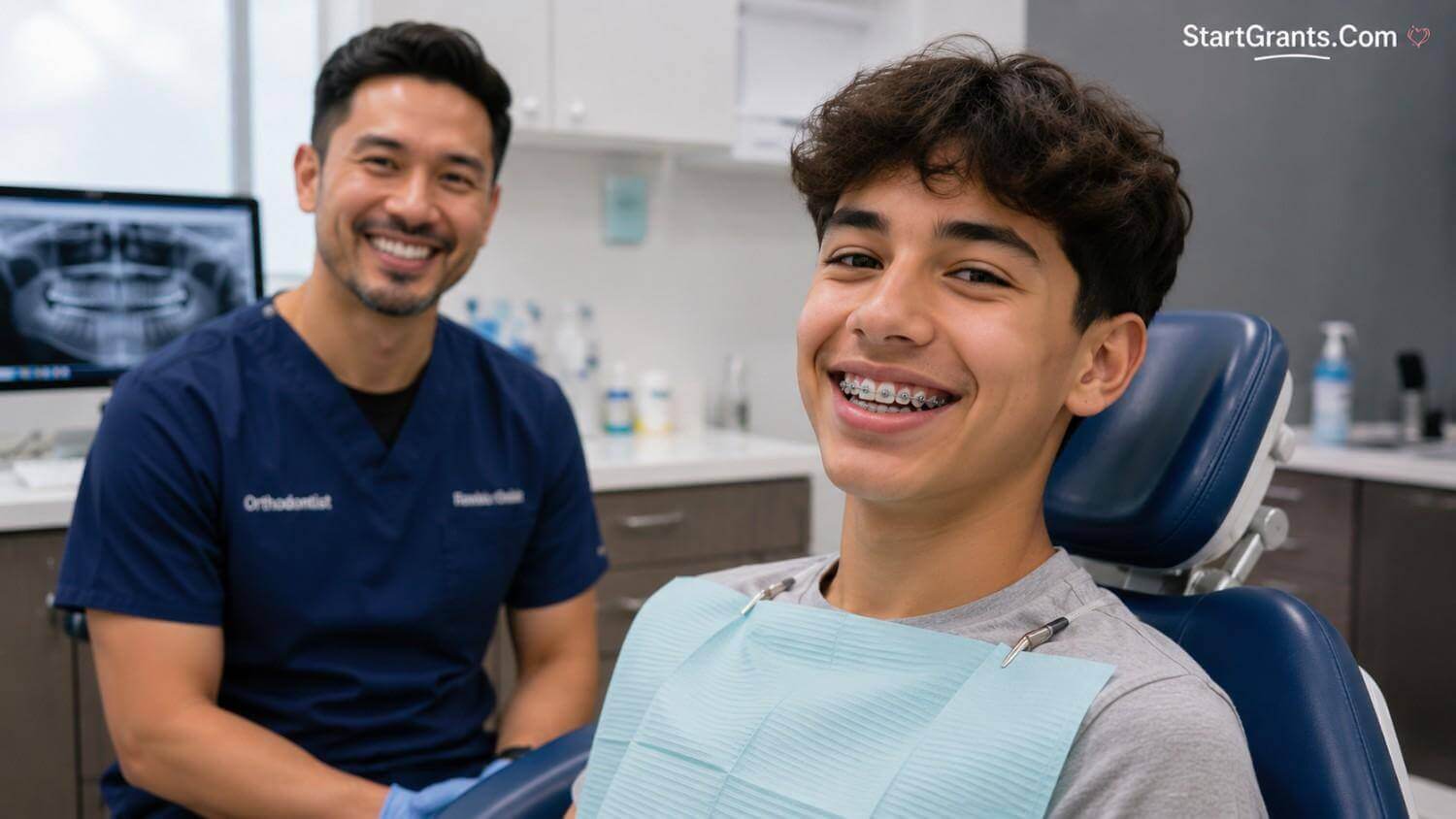
Orthodontic care is often viewed as a cosmetic luxury, but for children with severe dental misalignments, braces are a medical necessity that restores their ability to chew and speak properly.
Phase 1: Medicaid and CHIP (The Medical Necessity Rule)
If your child is currently enrolled in Medicaid or the Children’s Health Insurance Program (CHIP), you might already have a pathway to free braces. However, Medicaid absolutely will not pay for braces if the goal is simply to give your child a “prettier smile.”
To get Medicaid to cover the full cost of orthodontics, your child’s dentist must prove “Medical Necessity.” This means the misalignment of their teeth is causing a physical or severe psychological problem. Qualifying conditions typically include:
- Cleft palate or cleft lip complications.
- Severe overbites, underbites, or crossbites that prevent the child from chewing food properly.
- Impacted teeth that are causing chronic pain or destroying neighboring teeth.
- Speech impediments directly caused by jaw or tooth misalignment.
Action Step: You must request a comprehensive evaluation from an orthodontist who accepts Medicaid. They will take X-rays and molds, and submit a “pre-authorization request” to the state proving that the braces are required for your child’s medical health, not their vanity.
Phase 2: Top Charitable Orthodontic Programs
If you do not qualify for Medicaid, or if Medicaid denies your pre-authorization because the issue is deemed “cosmetic,” you can turn to private 501(c)(3) non-profit organizations. These charities partner with volunteer orthodontists across the country to provide free braces for low-income kids.
1. Smiles Change Lives (SCL)
Smiles Change Lives is one of the most prominent orthodontic charities in the US. They promote access to orthodontic care for children whose families cannot afford the full cost of braces.
The Requirements:
* Children must be between the ages of 7 and 18.
* The family’s taxable income must fall below their specific financial guidelines (generally 200% of the Federal Poverty Level).
* The child must have excellent oral hygiene (no unfilled cavities) and not be wearing braces currently.
* Note: While the braces and treatment are free, families are usually required to pay a non-refundable $30 application fee and a mandatory $650 financial investment if accepted.
2. Smile for a Lifetime Foundation
This international non-profit organization provides orthodontic scholarships to children who face financial challenges. They operate through local chapters across North America. Their goal is to reach individuals with financial challenges, special situations, and orthodontic needs. Applications require letters of recommendation and proof of financial hardship.
Pro-Tip: Preparing Your Charity Application
To understand exactly what these charitable organizations look for during the vetting process and how to increase your chances of approval, watch this brief explanation detailing the program requirements:
Phase 3: Dental Schools and Emergency Clinics
If waitlists for charitable programs are too long, your best immediate alternative is an accredited university dental school. Universities with orthodontic residency programs often offer braces at a massive discount (sometimes 50% less than a private practice). The care is provided by licensed dentists who are training to become orthodontic specialists, closely supervised by expert faculty.
Additionally, if your child’s dental misalignment is causing severe decay, acute infections, and immediate pain, waiting for an orthodontic grant is not a viable option. For emergency situations that require immediate clinical intervention, we strongly urge you to consult our crisis guide on how to fix bad teeth with no money immediately to find local sliding-scale clinics and emergency extraction resources.
Phase 4: The Muslim Perspective (The Fiqh of Braces)
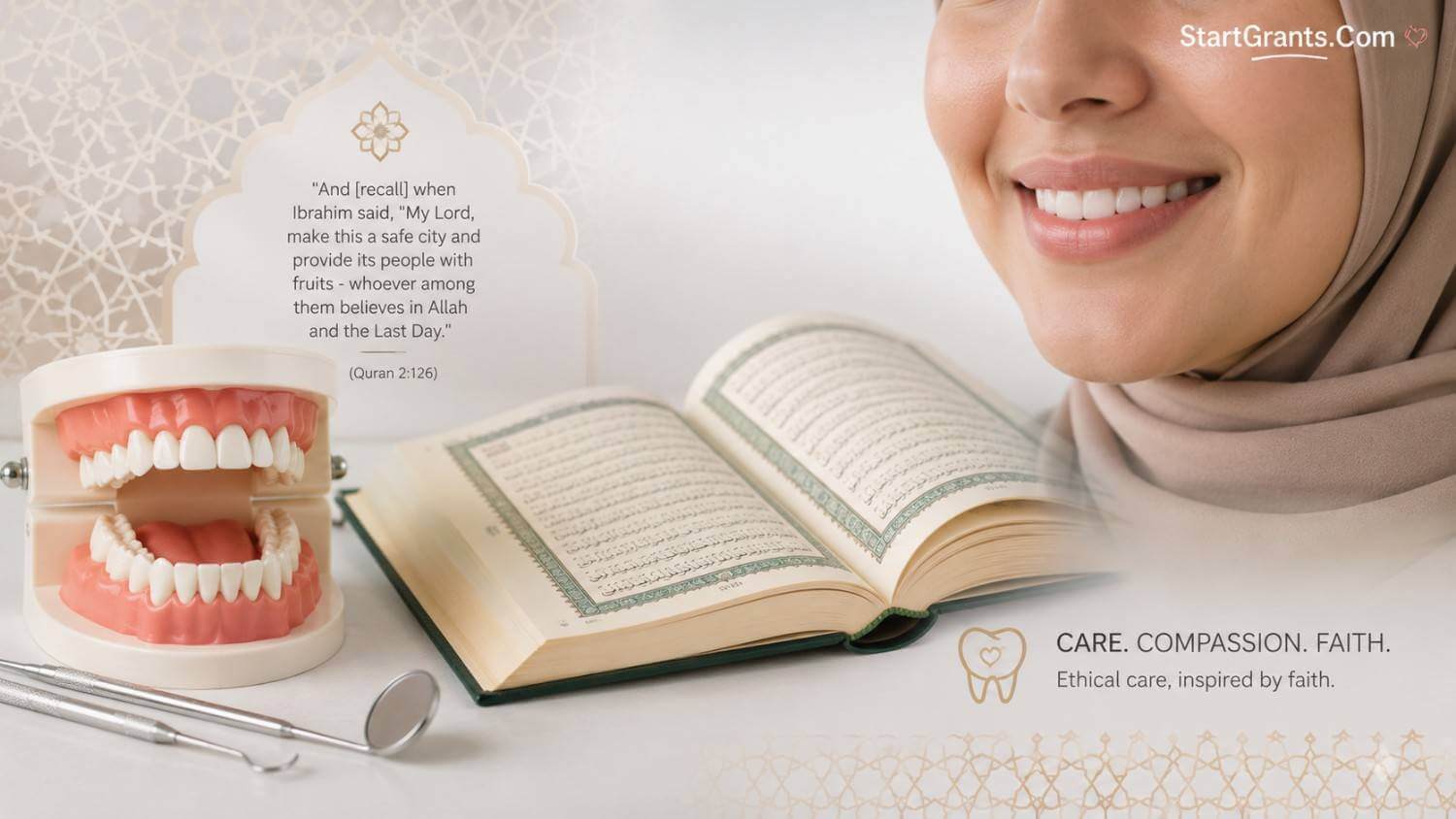
Islamic jurisprudence makes a clear distinction between altering Allah’s creation for pure vanity and utilizing orthodontic treatment to correct a physical defect or alleviate pain.
For Muslim parents, navigating cosmetic procedures involves strict adherence to Islamic jurisprudence (Fiqh). Islam places a heavy emphasis on preserving the natural human form created by Allah, leading to common questions about whether braces are permissible (Halal) or forbidden (Haram).
The Prohibition of Vanity (Al-Mutafallijat)
The hesitation often stems from a well-known authentic Hadith where the Prophet Muhammad (PBUH) cursed women who file their teeth to create gaps for beauty (al-mutafallijat lil-husn), explicitly stating that they are “altering Allah’s creation.” During that era, creating gaps between the front teeth was a cosmetic trend to appear younger and more attractive. Islamic scholars universally agree that undergoing painful dental procedures purely for vanity, without any medical or psychological need, is Haram.
The Permissibility of Medical Correction (Tadawi)
However, Islamic scholars make a distinct, unbending exception for medical treatment (Tadawi) and the correction of defects. If a child’s teeth are severely crooked, protruding, or misaligned to the point where it causes physical harm (difficulty eating, biting the inner cheek, speech impediments) or severe psychological distress (being aggressively bullied or suffering from extreme social anxiety), getting braces is 100% Halal and permissible.
In this scenario, braces are not considered “altering Allah’s creation for beauty,” but rather returning the teeth to their normal, functional state and treating a defect. Islam encourages seeking medical treatment, and parents should not let their children suffer physical or emotional pain out of a misunderstanding of this Fiqh ruling.
Conclusion: Restoring Smiles and Health
Providing your child with necessary orthodontic care does not have to result in crippling debt. By aggressively pursuing Medicaid pre-authorizations for medical necessity, applying to national non-profits like Smiles Change Lives, or utilizing local dental schools, low-income families can secure the treatment their children need.
Whether you are navigating the complex American healthcare system or ensuring your family’s medical choices align with Islamic ethical standards, securing braces for a child with severe dental defects is a noble pursuit of health, dignity, and proper physical function.
Frequently Asked Questions (FAQs)
Q1: Will Medicaid pay for Invisalign instead of metal braces?
A: Almost never. Even if your child qualifies for Medicaid orthodontics due to medical necessity, the state will only authorize the most cost-effective treatment, which is traditional metal braces. Invisalign is universally viewed by state insurance as a cosmetic upgrade.
Q2: Can adults get free braces from these charity programs?
A: It is highly unlikely. Programs like Smiles Change Lives and Medicaid CHIP are strictly dedicated to children and teenagers (usually capping at age 18 or 21, depending on the state). If you are an adult seeking to improve your smile, you should explore alternative financing options through our guide on cosmetic dentistry grants, or rely on sliding-scale community clinics.
Q3: Are there any hidden costs with free braces charities?
A: Yes. While the orthodontist’s labor and the hardware are donated, most charities require the family to have “skin in the game” to ensure they show up for the multi-year appointments. This usually involves a non-refundable application fee (around $30) and a mandatory financial contribution (often between $500 and $700) before treatment begins.
Q4: What happens if my child loses their Medicaid coverage while wearing braces?
A: This is a major risk. If your income increases and you lose Medicaid eligibility mid-treatment, the state will stop paying the orthodontist. You will then be personally responsible for negotiating a payment plan with the doctor to finish the treatment or have the braces removed.
Q5: Is it Halal to get braces just because my teeth are slightly crooked?
A: If the slight crookedness causes absolutely no physical pain, eating difficulty, or psychological distress, and the desire for braces is purely driven by cosmetic vanity or chasing a “Hollywood smile,” many conservative Islamic scholars advise against it. However, if the crookedness causes genuine emotional distress or lowered self-esteem, it transitions from a cosmetic issue to treating psychological harm, which is generally deemed permissible.
Important Disclaimer: StartGrants.com is an independent information portal. We are not a dental clinic, insurance provider, or religious fatwa council. Dental grant availability varies by state. Always consult with a licensed orthodontist regarding medical necessity and your local religious scholar regarding personal Fiqh inquiries.