Last Updated: | Author: Munir Ardi
Replacing a failed furnace, boiler, or heat pump can be financially overwhelming—especially when the home has no safe heat. Government help does exist, but there is no single federal “central heating grant” that every homeowner can claim. The right route depends on your income, location, housing status, the condition of the equipment, and whether the work is an emergency or part of a larger energy upgrade.
This guide explains the programs that may help in 2026, what each one actually pays for, and how to avoid losing time on outdated tax-credit or rebate claims. For a broader overview of insulation, windows, appliances, and heating assistance, see our energy-efficiency grants for homeowners guide.
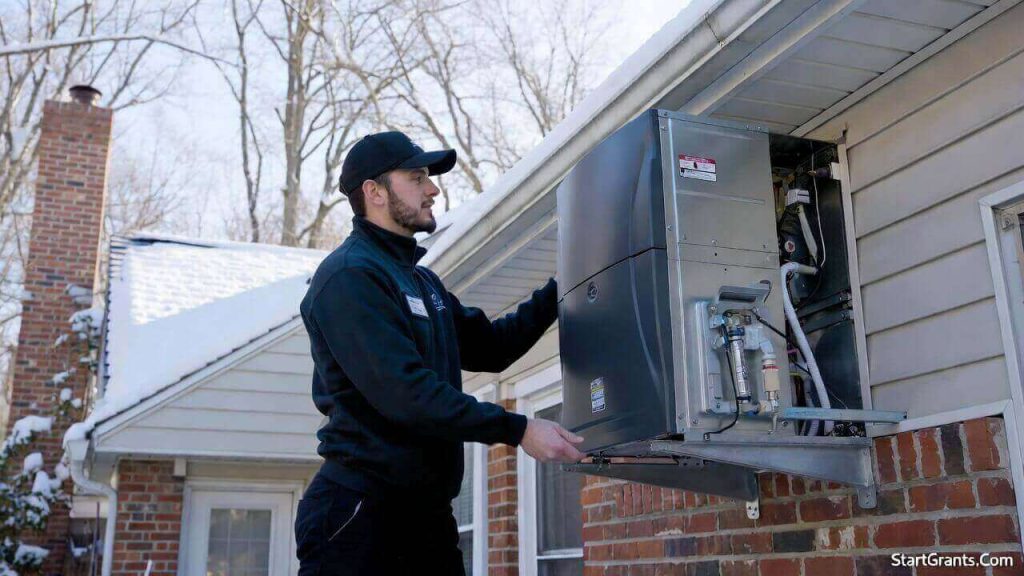
There Is No Universal Central Heating Grant
Online advertisements often use the phrase “government heating grant” as if it were one national cash benefit. In practice, federal money is administered through different programs with different purposes:
| Program | What it may help with | Important limitation |
|---|---|---|
| LIHEAP | Energy bills, fuel, crisis assistance, weatherization, and in some states minor energy-related repairs | Heating repair or replacement is not offered in every state and is not automatically approved |
| Weatherization Assistance Program (WAP) | A whole-home energy audit and approved measures, which can include cleaning, tuning, repairing, or replacing heating equipment | The local energy audit—not the applicant—determines the work scope |
| HOMES rebates | Whole-home projects designed to achieve measurable energy savings | Availability, rebate design, contractors, and eligible measures vary by state or territory |
| HEEHR rebates | Eligible high-efficiency electric equipment for low- and moderate-income households | Current federal guidance generally does not allow new rebates for switching from non-electric heating to a heat pump |
| Utility and local programs | Rebates, income-qualified repairs, financing, or emergency replacement | Funding can open and close during the year |
Some households qualify for more than one program, but “stacking” is not automatic. Administrators must prevent the same project cost from being reimbursed twice, and each program may impose its own contractor, inspection, income, and preapproval rules.
If You Have No Heat, Start With LIHEAP Crisis Assistance
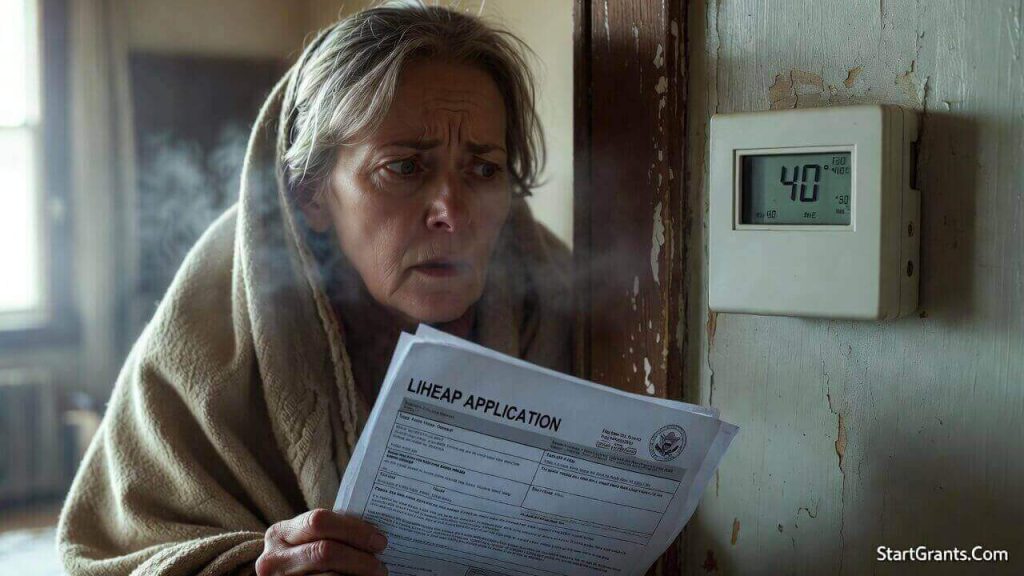
The federal Low Income Home Energy Assistance Program, commonly called LIHEAP, sends funding to states, tribes, and territories. According to the official LIHEAP Clearinghouse, local programs may help with home-energy bills, energy crises, weatherization, and minor energy-related home repairs.
That wording matters. LIHEAP is not a national promise of a free furnace. A state’s crisis policy may cover a repair, safety inspection, temporary heat, fuel delivery, or replacement when no safe repair is possible. Another state may limit crisis assistance to bills or fuel. Benefit limits, application dates, documentation, and definitions of an emergency differ.
What to do today
- Use the official LIHEAP local-office search tool, or call the Energy Assistance Hotline at 1-866-674-6327.
- Say clearly that the home has no safe primary heat, if that is true. Mention children, an older adult, a disability, or a medically vulnerable household member because crisis prioritization may consider household risk.
- Ask whether the office has a heating-equipment crisis benefit, which repairs are allowed, and whether it must assign or approve the contractor.
- Gather identification, proof of household income, utility or fuel information, a lease or ownership document, and any red-tag, inspection, or contractor diagnosis requested by the agency.
- Do not authorize paid work until the program confirms its preapproval rules in writing.
Renters may qualify for LIHEAP, but a landlord normally owns the furnace or boiler. Equipment work may require the owner’s permission and must comply with local landlord-tenant law. Ask the LIHEAP office and local housing agency what applies rather than paying for the owner’s equipment without written authorization.
Weatherization Can Include Heating-System Work
The U.S. Department of Energy’s Weatherization Assistance Program provides energy-efficiency services to qualifying low-income households. It is a service program, not a check sent to the homeowner. Applicants normally work through a state-designated local provider, and waiting lists are common.
Under DOE guidance, a weatherization project can include cleaning, tuning, repairing, or replacing heating and cooling equipment when the energy audit and program rules justify the measure. Combustion-safety testing and safe venting are also part of the whole-house approach. Replacement is not guaranteed merely because equipment is old.
DOE’s general eligibility framework allows households at or below 200% of the federal poverty level, while a state may use an approved LIHEAP income standard. States give priority to certain households, including older adults, people with disabilities, families with children, and households with high energy burdens. Check the official WAP application instructions for the provider serving your county.
A heating upgrade often works better after air leaks and insulation problems are addressed. Otherwise, a new system may be oversized or forced to compensate for a leaky building shell. Our guides to government help with home insulation and assistance for energy-efficient windows explain those related measures.
HEEHR Heat-Pump Rebates Changed in 2026
The High-Efficiency Electric Home Rebate program—previously promoted under the HEEHRA or Home Electrification name—can offer substantial point-of-sale rebates in participating jurisdictions. Statutory caps include up to $8,000 for an eligible heat pump for space heating and cooling, subject to household income, project cost, state design, product rules, and available funding. The maximum is not a guaranteed payment.
A major rule change took effect on May 29, 2026. Under DOE Program Notice 26-2, new HEEHR reservations for HVAC and appliance replacements generally must replace existing electric equipment with more efficient electric equipment. The current design removed the prior allowance for fuel switching from non-electric equipment. In plain language, a household should not assume HEEHR will pay to replace an existing gas, oil, or propane furnace with a heat pump.
The updated guidance also requires insulation and air-sealing work before a heating or cooling upgrade unless the home is already insulated and sealed to a state-specified level approved by DOE. Previously approved projects may be treated under transitional rules, so households with an existing reservation should ask their program administrator—not cancel it based on a general article.
HEEHR is still not open in every jurisdiction. Start with DOE’s current Home Energy Rebates directory, then follow the link to the official state, tribal, or territorial administrator. Avoid contractors who use the phrase “up to $8,000” as if it were an approval letter.
HOMES Rebates Take a Whole-Home Approach
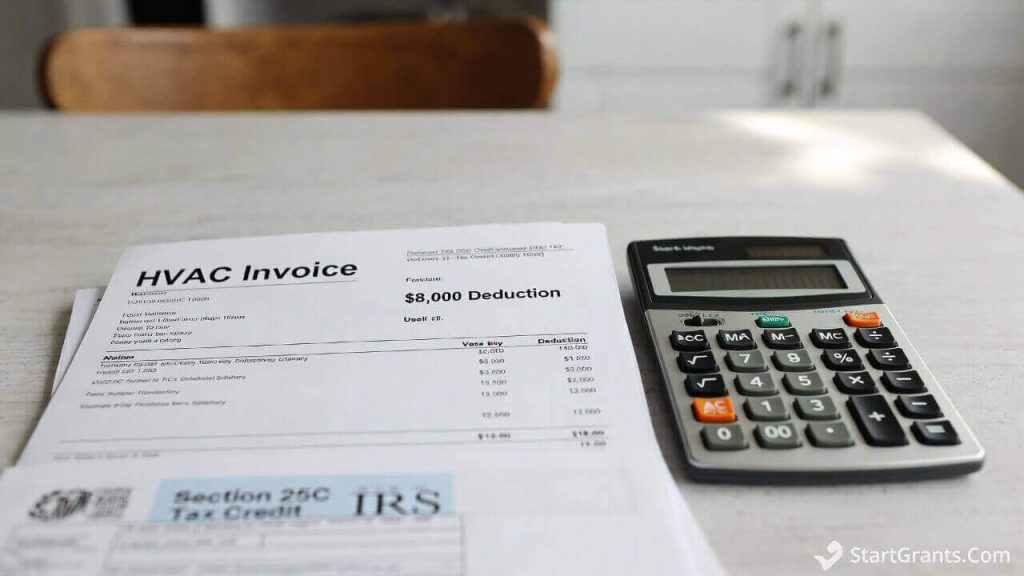
The Home Owner Managing Energy Savings program, or HOMES, supports whole-home projects that produce modeled or measured energy savings. DOE describes rebates of up to $8,000, depending on income, project design, and energy savings. State programs may set lower amounts, approved measures, contractor networks, audit requirements, and customer cost shares.
A furnace, boiler, or heat pump may be part of a qualifying HOMES package, but HOMES is not a universal equipment coupon. The project normally must meet the local program’s savings threshold and documentation process. Get confirmation before demolition, purchase, or installation. Also ask whether the program can be combined with utility rebates or WAP without duplicating the same cost.
If your goal is a broader low-carbon renovation rather than only an emergency repair, see government programs for greener homes.
The Federal Heat-Pump Tax Credit Is Not Available for New 2026 Work
Many websites still claim that homeowners can receive a federal tax credit of up to $2,000 for a heat pump through 2032. That is outdated. The IRS now states that the Energy Efficient Home Improvement Credit applies only to qualifying improvements placed in service through December 31, 2025.
If you completed eligible work in 2025, consult the 2025 Form 5695 instructions or a qualified tax professional. For equipment first placed in service in 2026, do not include that old $2,000 credit in the project budget. State tax incentives and utility rebates may still exist, but they have separate rules.
Choose the System That Fits the Home—not a Headline
No federal rule requires every household to replace a furnace or boiler with a heat pump. The best solution depends on climate, electricity and fuel prices, existing ducts or radiators, electrical capacity, insulation, comfort needs, and available incentives.
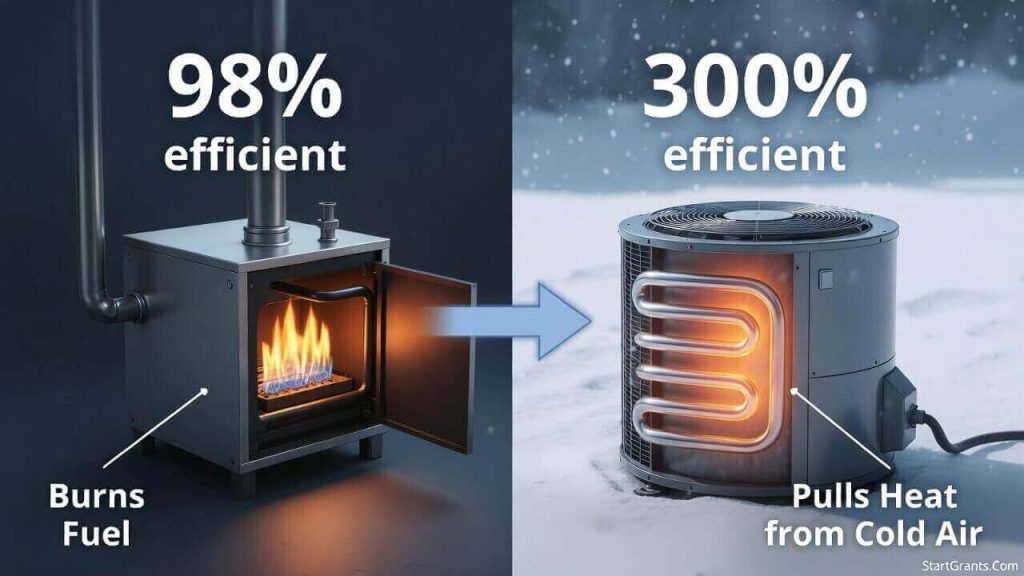
- Furnace: Uses ducts and heated air. Repair or replacement may be eligible under WAP, LIHEAP crisis, HOMES, utility, or local programs if their rules allow it.
- Boiler: Serves radiators or hydronic systems. Replacing it with a ducted heat pump may require extensive additional work, so obtain a full design rather than comparing equipment prices alone.
- Ducted heat pump: Can provide heating and cooling through ducts. Proper sizing and duct condition are essential.
- Ductless mini-split: Can work well where ducts do not exist, but room layout and indoor-unit placement matter.
- Dual-fuel system: Combines a heat pump with a combustion backup. The switchover temperature should be calculated for the home, equipment, climate, and energy prices—not copied from a universal internet setting.
Modern cold-climate heat pumps are designed and tested for low temperatures, but that does not mean every model performs identically in every home. ENERGY STAR recommends that contractors calculate the heating and cooling load using ACCA Manual J and correctly size the system. If you are primarily seeking a furnace rather than a heat pump, our low-income furnace assistance guide covers additional local routes. A heat pump also provides cooling, so households facing dangerous summer temperatures may find relevant options in our air-conditioning assistance guide.
What to Verify Before Signing a Heating Contract
A rebate does not protect you from a badly designed or overpriced project. Request an itemized proposal and verify:
- the Manual J heating and cooling load and, for ducted systems, the duct assessment;
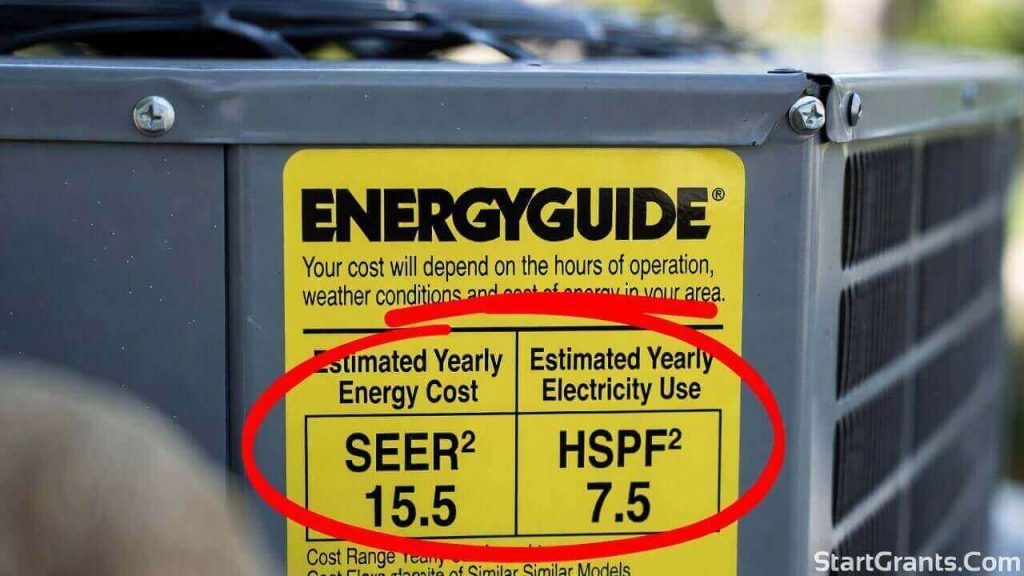
- the exact indoor and outdoor model numbers and their certified matched-system rating;
- cold-weather capacity, backup-heat design, controls, and expected operating strategy;
- whether the electrical panel, wiring, ducts, chimney, venting, or radiators require additional work;
- permit, inspection, disposal, warranty, and maintenance responsibilities;
- which incentive has issued written preapproval and which costs remain yours;
- the cash price, financed price, annual percentage rate, fees, payment schedule, and total of payments.
Refrigerant-circuit work should be performed by a properly qualified technician. Under EPA Section 608 rules, technicians need certification for installation or service work that could release regulated refrigerant. Local licensing, code, permit, warranty, and rebate requirements may impose additional conditions.
Muslim Perspective: Seeking Warmth Without Financial Harm
Keeping a home safely heated protects life, health, and family wellbeing. Muslim households can use public benefits and nonprofit assistance while still asking careful questions about financing and privacy. There is no single religious ruling that fits every program or contract, so the practical first step is to identify what kind of help is being offered.
Separate grants and rebates from debt
LIHEAP benefits, WAP services, and approved rebates normally do not need to be repaid when the recipient follows program rules. They are different from a loan. Ask the administrator whether any amount can become repayable after a sale, failed inspection, early move, inaccurate application, or other event.
If financing is offered, request the full written contract before agreeing. Review interest, fees, late charges, prepayment terms, contractor markups, collateral, and total payments. Property Assessed Clean Energy financing, where available, is generally repaid through a property-tax assessment and can place a lien or priority claim connected to the property. The Consumer Financial Protection Bureau warns that PACE can raise tax or escrow payments and complicate sale or refinancing.
Because Islamic views on interest-bearing debt and specific financing structures require contract-level analysis, it is more accurate to take the documents to a trusted scholar or qualified Islamic-finance adviser than to label every program “halal” or “haram” in advance. Ask about any interest-free hardship plan, charitable grant, utility payment arrangement, or genuinely Sharia-compliant alternative available locally.
Ask the local Muslim community for practical support
A mosque, zakat committee, Islamic charity, refugee-support organization, or mutual-aid group may help with an emergency repair, temporary lodging, space heaters approved for indoor use, transportation, translation, or contractor referrals. Funds and eligibility vary, and assistance is never guaranteed. Bring the same written diagnosis and estimate used for LIHEAP or WAP so the organization can understand the need.
Protect modesty and household privacy
Energy audits and installations require workers to enter the home. Households can ask in advance for an appointment window, identification, shoe covers, notice before entering bedrooms, and—when staffing allows—a technician or chaperone arrangement that supports the family’s comfort. Safety inspection requirements still need to be completed, but respectful scheduling is a reasonable request.
A Practical Application Roadmap
- Document the problem. Photograph model and serial numbers, thermostat readings, red tags, damage, and any written contractor diagnosis. Never enter an unsafe mechanical area to take a photo.
- Handle an emergency first. Contact LIHEAP crisis assistance, 211, the utility, and local emergency-management or housing resources when the home lacks safe heat.
- Apply to WAP. Even if crisis assistance resolves the immediate failure, weatherization may address insulation, air leakage, duct, or combustion-safety problems.
- Check the official state rebate portal. Confirm whether HOMES or HEEHR is open, which equipment qualifies, and whether an approved contractor or preinstallation assessment is required.
- Ask utilities and local government. Search your electric and gas utility, city, county, community-action agency, housing department, and state energy office.
- Get written, itemized bids. Compare the same scope and do not let a contractor subtract an unapproved rebate from the advertised price.
- Coordinate benefits before work starts. Obtain written permission to combine programs and identify which program pays each cost.
- Keep the complete file. Save applications, approval letters, bids, invoices, permits, equipment certificates, inspection results, payment records, and warranties.
Save This Central Heating Assistance Checklist
- [ ] Record whether the problem is a no-heat emergency, a safety failure, or a planned efficiency upgrade.
- [ ] Contact LIHEAP crisis assistance and the local WAP provider before authorizing work.
- [ ] Confirm that the official state, tribal, territorial, utility, or local program is currently accepting applications.
- [ ] Ask whether an audit, approved contractor, permit, inspection, or written preapproval is required.
- [ ] Obtain an itemized bid with exact equipment model numbers, load calculations, and all financing terms.
- [ ] Get written approval before demolition, purchase, installation, or combining multiple incentives.
- [ ] Keep approvals, invoices, inspection records, equipment certificates, and warranties.
Frequently Asked Questions
Can the government pay for a complete central heating system?
Possibly, but not through a universal federal entitlement. A local WAP, LIHEAP crisis, utility, HOMES, or other program may pay some or all approved costs when the household and project meet its rules. An audit or written approval normally determines the scope.
Does LIHEAP give everyone a free furnace?
No. LIHEAP policies vary by state, tribe, or territory. Some crisis programs can repair or replace heating equipment; others focus on bills, fuel, or shutoff prevention. Contact the local administrator and ask specifically about heating-equipment crisis assistance.
Will WAP replace an old furnace or boiler?
It can, when a local energy audit and program rules justify repair or replacement. Age alone does not guarantee replacement. WAP may instead approve tuning, safety work, air sealing, insulation, duct work, or another cost-effective measure.
Can I receive an $8,000 HEEHR rebate to replace a gas furnace with a heat pump?
Do not assume so. DOE guidance effective May 29, 2026 generally limits new HVAC replacement rebates to replacing existing electric equipment with more efficient electric equipment. Previously reserved projects may have transitional treatment, and the local program must confirm eligibility.
Is the $2,000 federal heat-pump tax credit available in 2026?
No for equipment first placed in service in 2026. The IRS says the Energy Efficient Home Improvement Credit ended for improvements placed in service after December 31, 2025. Eligible 2025 projects are subject to the 2025 rules.
Can renters apply for heating assistance?
Renters can apply to LIHEAP and may receive WAP services, subject to local rules. Work on landlord-owned equipment normally requires owner permission, and programs must follow rental-property requirements.
Must I install a heat pump instead of a furnace?
No federal rule requires every household to choose a heat pump. Program eligibility, local code, climate, building design, energy prices, and the home’s existing distribution system should guide the decision.
Can I install the system myself and claim a rebate?
Do not assume a do-it-yourself installation qualifies. Rebate programs, permits, warranties, and local codes may require an approved contractor, and refrigerant-circuit work that could release regulated refrigerant requires an EPA-certified technician.
Can I combine a grant, rebate, and utility incentive?
Sometimes. Each administrator must allow the combination, and the same project cost cannot be reimbursed twice. Obtain written coordination and preapproval before purchasing equipment or starting work.
Final Takeaway
The most reliable route is to match the need to the program: LIHEAP for an immediate energy crisis, WAP for an audited low-income whole-home upgrade, HOMES for verified energy savings, and HEEHR for eligible electric-equipment improvements in participating jurisdictions. Verify eligibility before signing a contract, because program names, funding, and technical rules can change.
Important disclaimer: StartGrants.com is an independent information portal. It is not a government agency, program administrator, grantmaker, rebate provider, utility, contractor, engineer, lender, law firm, tax adviser, or religious authority. StartGrants.com does not issue grants, rebates, loans, benefits, equipment, legal advice, tax advice, engineering advice, financial advice, or fatwas. Program availability, deadlines, income limits, covered equipment, award amounts, contractor rules, inspections, and repayment or clawback terms can change. Verify every opportunity with the responsible agency or sponsor before authorizing work, and seek qualified professional guidance for your circumstances.