Last Updated: May 2026 | Author: Munir Ardi
In most parts of the United States, owning a reliable vehicle is not a luxury; it is an absolute necessity for survival. Public transportation is often highly inadequate outside of major metropolitan centers, meaning that without a car, getting to work, taking children to school, or accessing medical care becomes nearly impossible.
For low-income families, a sudden mechanical breakdown—like a blown transmission or a failed alternator—can trigger a catastrophic cycle of poverty. If you cannot afford the $800 repair bill, you cannot drive to work. If you cannot get to work, you lose your job, which inevitably leads to eviction.
Understanding how the philanthropic safety net operates is crucial during a financial crisis. (For a broader view of emergency assistance programs, review our comprehensive guide to donations and fundraising.) Fortunately, there are specific organizations designed to break this cycle. In this 2026 guide, we will explore the top charities that help with car repairs, programs that provide free refurbished vehicles, and how to successfully navigate their strict application processes.
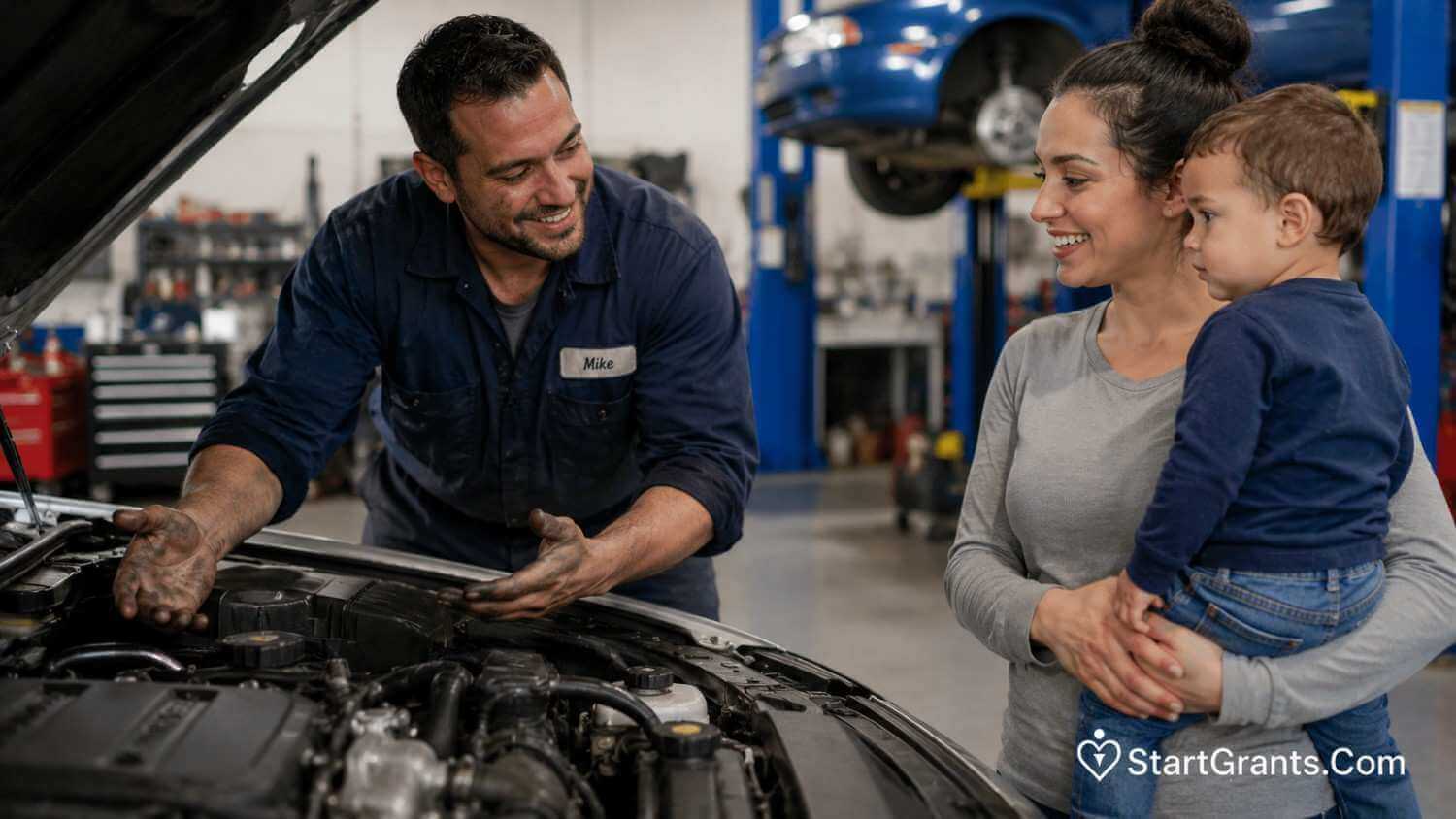
For low-income families, a sudden mechanical breakdown can mean losing a job. Fortunately, several non-profit programs exist to subsidize emergency car repairs and keep families on the road.
Phase 1: The Two Types of Vehicle Charities
When searching for automotive assistance, you must first understand the difference between organizations that liquidate cars and organizations that distribute cars.
To fund their operations, many major non-profits rely on the public to donate old vehicles. However, if you look at the best car donation programs nationwide, you will find that most of them do not give the cars to people. For example, if you read our Make-A-Wish car donation breakdown or our Purple Heart car donation review, you will see that these charities sell the donated cars at wholesale auctions to fund wishes for sick children or build homes for wounded veterans.
If you are a family in need of a vehicle, you must bypass those liquidation charities and target the highly specialized “Direct Placement” and “Repair Assistance” non-profits listed below.
Phase 2: Charities That Donate Free Cars
Direct placement charities accept gently used vehicle donations, use their own network of mechanics to ensure the cars are safe and reliable, and then hand the keys directly to a thoroughly vetted family in need.
- Vehicles for Change (VFC): Operating primarily in the Mid-Atlantic region (Maryland, Virginia, Michigan), VFC is the gold standard for direct car placement. They award refurbished cars to families transitioning from welfare to work. Recipients usually pay a highly subsidized fee (often under $1,000) and are given a low-interest loan to help them build their credit score while securing transportation.
- 1-800-Charity Cars: As one of the original and largest car donation charities in America, they provide free vehicles to struggling families, victims of domestic violence, disabled veterans, and those transitioning out of homeless shelters. You can apply directly through their online portal, FreeCharityCars.org.
- Good News Garage: Founded in Vermont and operating throughout New England, this organization repairs donated cars and provides them to low-income families to help them move forward in their lives and reach economic self-sufficiency.
Pro-Tip: Seeing the Impact
Applying for a free car requires patience, as waitlists can be long. Watch this news segment detailing exactly how organizations like Vehicles for Change operate and the life-changing impact a set of keys can have on a struggling family:
Phase 3: Charities That Help with Car Repairs
If you already own a car but simply cannot afford to replace the brakes, fix the transmission, or pass a state safety inspection, applying for a repair grant is much faster than waiting on a list for a free vehicle.
- Modest Needs: Modest Needs is an incredibly powerful non-profit that provides “Self-Sufficiency Grants.” They specifically target individuals who are living just above the poverty line—people who are working hard but would be plunged into poverty by a sudden, unexpected expense. If you have a legitimate quote from a mechanic, Modest Needs will often pay the auto shop directly to get your car back on the road.
- Local Community Action Agencies: Funded by the federal Community Services Block Grant (CSBG), your local Community Action Agency often has emergency discretionary funds designed to help low-income workers maintain employment. This frequently includes vouchers to pay for emergency car repairs.
- The United Methodist Church (UMC) & Faith-Based Garages: Many local churches operate volunteer-run “Car Care Ministries.” In these programs, retired mechanics or mechanically inclined congregation members offer their labor for free on weekends to fix cars for single mothers and the elderly, requiring the recipient only to pay for the wholesale cost of the physical parts.
Phase 4: The Muslim Perspective (Zakat for Transportation)
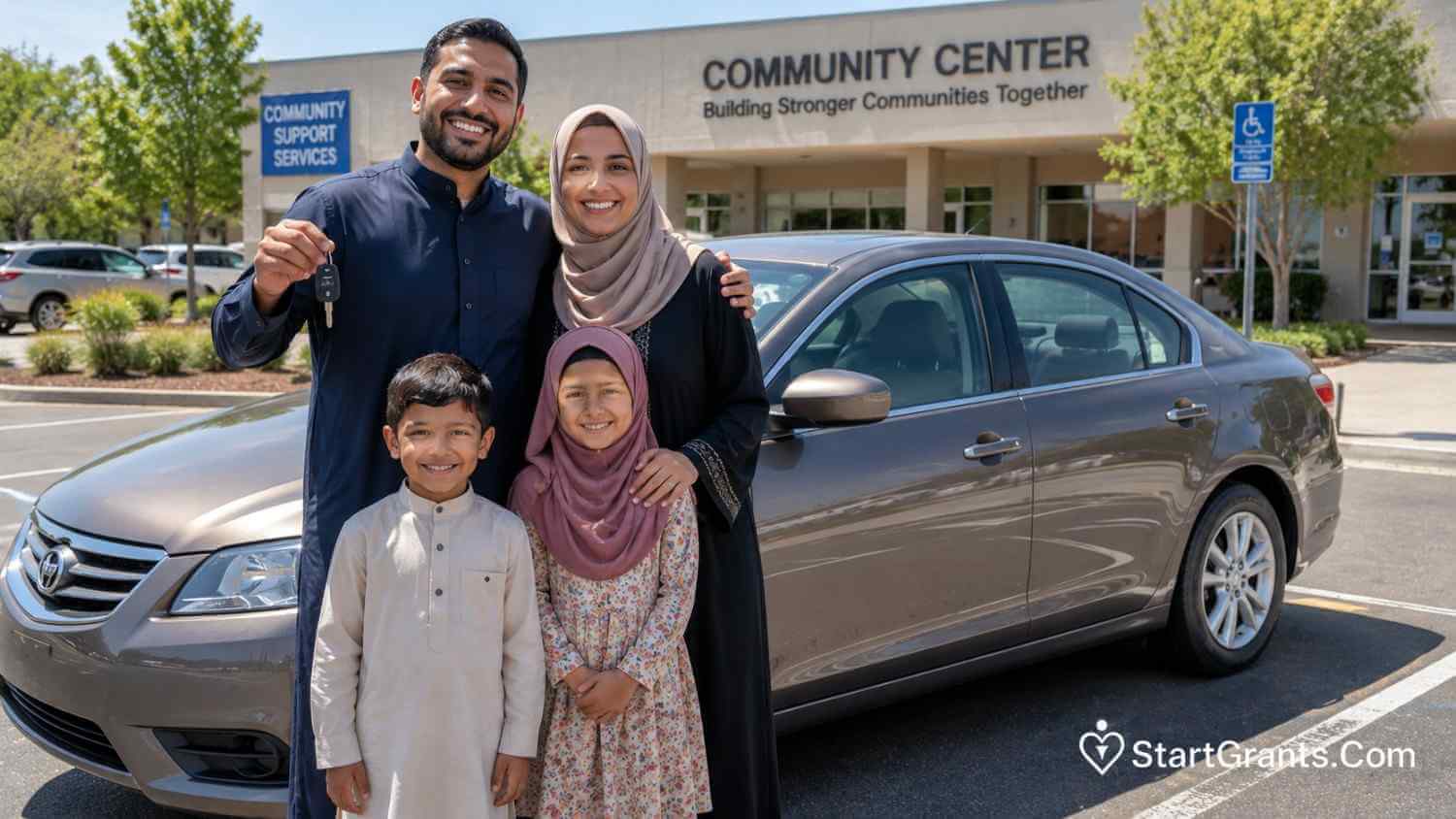
Under Islamic jurisprudence, families whose lack of transportation threatens their livelihood may qualify for Zakat assistance to repair or acquire a vehicle.
For Muslim families facing a transportation crisis, mainstream secular charities are not the only avenue for relief. The Islamic financial system of Zakat is specifically designed to alleviate sudden economic distress.
Are Car Repairs Zakat-Eligible?
Under Islamic jurisprudence, a reliable vehicle is considered a basic necessity for sustaining a livelihood in modern society, not a luxury. If a sudden car breakdown prevents a primary breadwinner from commuting to their job—putting the family at risk of eviction or extreme debt—they may qualify for Zakat under the category of Al-Gharimin (those overwhelmed by debt or severe financial distress).
Where to Apply: Families should immediately contact their local Mosque’s Zakat committee or regional Islamic social services, such as ICNA Relief or Muslim Family Services. When submitting an application, present the official repair estimate from your mechanic and proof of income. Many Zakat committees will bypass giving you cash and pay the mechanic directly, ensuring your vehicle is safely repaired so you can continue earning a Halal income and providing for your dependents.
Phase 5: How the Application Process Works
Because the demand for free cars and repair grants vastly exceeds the supply, charities enforce incredibly strict vetting processes. You cannot simply call a charity and ask for a car; you must prove your necessity.
To ensure your application is approved, prepare the following documentation before you apply:
- Proof of Employment (or Verifiable Job Offer): Most direct-placement charities will only give a car to someone who needs it to get to work. You must prove you have a job to sustain the insurance and gas costs.
- Valid Driver’s License: You must have an active, non-suspended driver’s license in your state.
- Clean Driving Record: Charities will not award a free vehicle to an individual with recent DUIs (Driving Under the Influence) or severe reckless driving charges.
- Financial Hardship Verification: You will need to provide recent pay stubs, tax returns, or proof of enrollment in government assistance programs (like SNAP or TANF) to prove you meet the low-income threshold.
- The Mechanic’s Estimate: If you are applying for a repair grant (like through Modest Needs), you must provide a formalized, written quote from a certified automotive repair shop detailing exactly what is broken and how much it costs to fix.
Conclusion: Restoring Your Mobility
A broken vehicle should not dictate the trajectory of your family’s financial future. Whether you need a completely refurbished car from an organization like Vehicles for Change, an emergency repair grant from Modest Needs, or Zakat assistance from your local Islamic Center, the philanthropic safety net is there to catch you.
Gather your documentation, obtain written mechanic estimates, and apply to these specialized charities to restore your mobility, safeguard your employment, and reclaim your independence.
Frequently Asked Questions (FAQs)
Q1: How long does it take to get a free car from a charity?
A: The waiting period varies wildly depending on your region and the charity’s current inventory. Because demand is so high, waitlists can range from 30 days to over a year. If you need immediate transportation to keep your job, it is highly recommended to seek emergency car repair grants or public transit vouchers while you wait on the vehicle list.
Q2: Do charities pay for routine maintenance like oil changes and tires?
A: Generally, no. Major charities like Modest Needs focus their funding on sudden, catastrophic breakdowns (like a blown transmission or a cracked radiator) that threaten your immediate livelihood. Routine maintenance (oil changes, wiper blades, standard tire replacements) is considered a predictable cost of ownership and is rarely covered by grants.
Q3: Will a charity fix my car if I don’t have a job?
A: It is much harder, but not impossible. Many charities prioritize applicants who need their car to commute to an active job. However, if you need the car to attend vital medical treatments (like dialysis), or if you are an elderly individual requiring transportation for basic survival, specific faith-based ministries and Community Action Agencies will often make exceptions.
Q4: Can I choose the type of car a charity gives me?
A: No. Charities distribute vehicles based on what the public donates to them. You will receive a reliable, safe, heavily inspected used car, but you cannot dictate the make, model, or color. Charities do try to match the size of the car to the size of your family (e.g., providing a minivan to a single mother with four children).
Q5: Do I have to pay taxes on a free car I receive from a charity?
A: No. Receiving a vehicle from a verified 501(c)(3) charity is considered a charitable gift, not earned income. Therefore, it is generally not subject to federal or state income taxes. However, you are entirely responsible for paying the state registration fees, title transfer fees, and securing immediate auto insurance.
Important Disclaimer: StartGrants.com is an independent information portal. We do not provide cars, repair grants, or direct financial assistance. Always verify program requirements, waitlist times, and eligibility directly with the non-profit organization.