Last Updated: | Author: Munir Ardi
Yes, you can donate a car or another eligible vehicle to benefit Make-A-Wish. The safest starting point is the official Make-A-Wish car donation page, where you select your local chapter and follow that chapter’s approved donation service. Make-A-Wish says many chapters work with ARS Car Donation Services, Charitable Auto Resources (CARS), or Car Donation Foundation, which does business as Wheels For Wishes. The operator, accepted vehicles, title instructions, pickup schedule, and amount ultimately benefiting the chapter can therefore vary.
This is a charitable vehicle donation, not a grant, government benefit, or program that gives the donated car directly to a wish family. The vehicle is generally picked up, evaluated, repaired when appropriate, and resold; proceeds then benefit the participating Make-A-Wish chapter. Before donating, compare the structure with other reputable car donation programs and their operating models.

Some Make-A-Wish chapters use Wheels For Wishes, while others use ARS Car Donation Services or CARS. Confirm the operator shown for your local chapter before submitting vehicle information.
How Make-A-Wish Car Donations Work
Make-A-Wish’s national page directs donors to a participating local chapter rather than presenting one universal intake form. That distinction matters: Wheels For Wishes is a recognized partner for many chapters, but it is not the exclusive operator for every Make-A-Wish chapter or every state.

A donation operator normally coordinates pickup and resale. Administrative, towing, repair, and sale costs may affect how much ultimately reaches the participating chapter.
| Donation service named by Make-A-Wish | Role | What the donor should verify |
|---|---|---|
| ARS Car Donation Services | Handles vehicle intake, pickup, and remarketing for participating chapters. | That the local Make-A-Wish page sends you to ARS and provides the current state-specific paperwork instructions. |
| Charitable Auto Resources (CARS) | Administers vehicle donations for participating nonprofit organizations and chapters. | The named beneficiary, accepted vehicle type, pickup terms, and title-transfer directions. |
| Wheels For Wishes | Car Donation Foundation’s vehicle donation program serving participating Make-A-Wish chapters and other children’s charities. | That proceeds in your service area currently benefit the intended Make-A-Wish chapter; the beneficiary is not identical in every location. |
Why the local-chapter check is essential: even an established national donation brand may support a different charity in a particular service area. Enter through Make-A-Wish’s own chapter directory, confirm the beneficiary displayed on the operator’s form, and save a screenshot or PDF of that confirmation.
Step-by-Step Donation Process
1. Start with Make-A-Wish, not a search advertisement
Open the official Make-A-Wish vehicle donation page, locate your chapter, and use its “visit” link. This reduces the chance of submitting your vehicle to an unrelated lead-generation site or an operator that does not support your intended chapter.
2. Confirm the beneficiary and operator
Read the donation form before entering sensitive information. It should identify the nonprofit beneficiary and the organization processing the donation. If the form is unclear, contact the Make-A-Wish chapter through contact details published on wish.org.
3. Ask whether the vehicle is acceptable
Passenger cars and trucks are commonly considered, including many nonrunning vehicles. Motorcycles, boats, recreational vehicles, trailers, heavy equipment, and severely damaged vehicles may be reviewed case by case. Acceptance depends on the operator, location, towing feasibility, documentation, condition, and likely resale value. Do not rely on a universal “all vehicles accepted” promise.
4. Follow the exact title and lien instructions
Most transactions require proof that you own the vehicle and authority to transfer it. A missing title is not handled the same way everywhere: some operators can help with duplicate-title or power-of-attorney paperwork, while other chapters require the donor to obtain a replacement title first. If a lien still appears on the title, ask the lienholder and operator what release documentation is required. Do not sign the title until you receive the operator’s state-specific instructions.
5. Schedule pickup and obtain a handover record
The approved operator arranges towing or pickup. Some chapter pages advertise no-cost pickup, but scheduling time is local rather than nationally guaranteed. Ask whether any circumstance could create a donor charge, who will collect the vehicle, which documents and keys must be present, and what receipt you will receive at pickup.
6. Complete state transfer steps
License-plate removal, notice-of-sale forms, registration cancellation, title assignment, and insurance timing differ by state. Follow your state motor-vehicle agency’s instructions and the operator’s written directions. Keep copies of the signed title, pickup receipt, transfer notice, and any confirmation number. Do not cancel insurance solely because the tow truck arrived; confirm when ownership and liability have transferred under your state’s rules.
7. Keep the final tax acknowledgment
If the vehicle is sold, the charity or its authorized agent should issue the acknowledgment required by federal tax rules. The receipt handed over at pickup may not be the final document showing the gross sale proceeds.
What to Verify Before the Tow Truck Arrives
| Check | Why it matters | Evidence to retain |
|---|---|---|
| Local chapter and beneficiary | The same donation brand can serve different beneficiaries by area. | Chapter page and completed donation confirmation. |
| Vehicle identification | The year, make, model, VIN, mileage, location, and condition affect acceptance and remarketing. | Photos, odometer reading, VIN record, and form submission. |
| Title and lien status | A title error or unresolved lien can delay or prevent a lawful transfer. | Title copy, lien release if required, and written signing instructions. |
| Pickup terms | Pickup timing and vehicle-access requirements vary. | Dispatcher name, scheduled window, towing company, and pickup receipt. |
| State transfer obligations | Plate, registration, notice, and insurance rules are state-specific. | DMV or motor-vehicle-agency filing confirmation. |
| Tax acknowledgment | The deductible amount is governed by IRS rules, not an estimate in an advertisement. | Form 1098-C or equivalent acknowledgment and Form 8283 when required. |
Where the Vehicle and Sale Proceeds Go
Make-A-Wish says its partner services arrange to have donated vehicles picked up, repaired, and resold, with proceeds benefiting the donor’s local participating chapter. That does not mean the donated vehicle is normally given to a child or family, and it does not mean 100% of the sale price reaches the chapter.
Towing, auction or sale, repair, processing, and administrative expenses may be paid from the transaction. The percentage returned can also differ by operator and chapter. For example, the current Make-A-Wish Connecticut vehicle donation page states that its ARS partner returns 60% to 80% of the gross selling price to that chapter; that chapter-specific disclosure should not be applied to other states or operators.
Ask these questions before donating:
- Which legal organization will receive title to the vehicle?
- Which Make-A-Wish chapter is the named beneficiary?
- How are towing, repair, auction, and administration expenses handled?
- Will the operator disclose the gross sale price and the amount benefiting the chapter?
- Who will issue the tax acknowledgment and answer title questions?
IRS Rules for a Vehicle Donation Deduction
A vehicle donation may qualify for a federal charitable contribution deduction, but it is not a tax credit and it does not create a dollar-for-dollar reduction of your tax bill. The IRS generally requires an individual to itemize deductions on Schedule A to deduct a charitable contribution and requires the contribution to be made to a qualified organization. You can check an organization’s status with the IRS Tax Exempt Organization Search.
| Situation | General federal rule | Documentation |
|---|---|---|
| Charity sells the vehicle for more than $500 | The deduction is generally limited to the smaller of the vehicle’s fair market value or the charity’s gross sale proceeds. | A timely Form 1098-C or equivalent acknowledgment is generally required; Form 8283 also applies when the deduction threshold is met. |
| Vehicle sells for $500 or less | The donor may generally deduct the lesser of $500 or the vehicle’s fair market value, subject to basis and other rules. | Keep a compliant written acknowledgment and records supporting fair market value. |
| Charity significantly uses or materially improves the vehicle | An exception to the gross-proceeds limit may apply if the acknowledgment contains the required certification and details. | The acknowledgment must describe the intended use or improvement and certify the required facts. |
| Deduction exceeds $500 but not $5,000 | Additional noncash-contribution reporting applies. | IRS Publication 4303 directs donors to complete Section A of Form 8283 and attach required documents. |
| Deduction exceeds $5,000 | Section B of Form 8283 applies; a qualified appraisal may be required when the deduction is not limited to gross proceeds. | Review the current forms and instructions with a qualified tax professional. |
For a claimed deduction above $500, the acknowledgment is generally due within 30 days of the vehicle’s sale, or within 30 days of the contribution when a qualifying exception applies. Review the current IRS Publication 4303, A Donor’s Guide to Vehicle Donations, Form 1098-C information, and Form 8283 information. Tax results depend on the sale, your basis, fair market value, whether you itemize, and your individual return.
Protect Your Privacy and Limit Post-Donation Problems
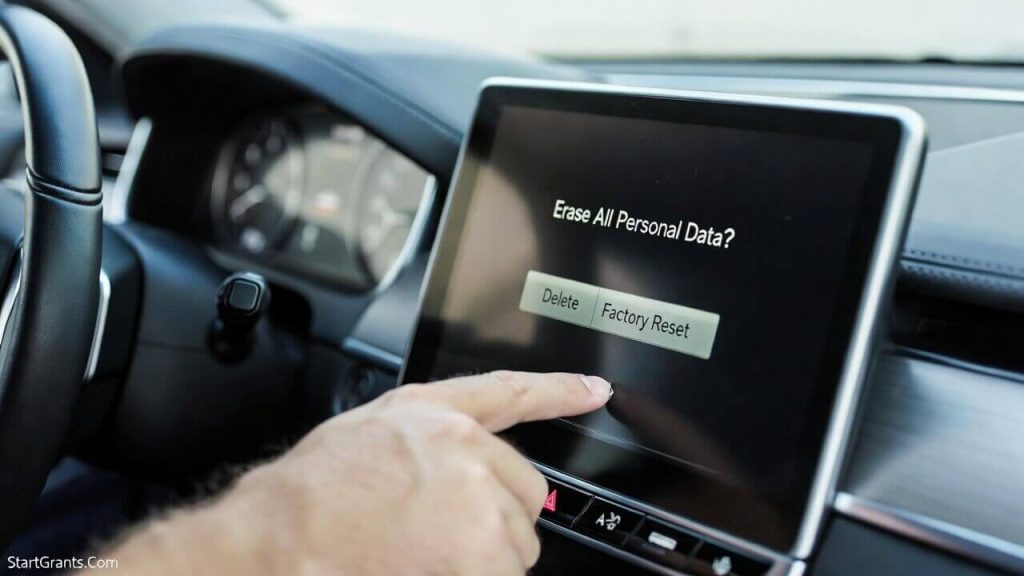
Before pickup, remove personal items and erase saved contacts, addresses, access codes, and paired devices from the vehicle’s infotainment system.
- Remove personal documents, garage remotes, toll tags, parking permits, and insurance cards.
- Delete paired phones, saved contacts, navigation history, home addresses, gate codes, and digital subscriptions.
- Photograph the vehicle, VIN, odometer, title, and condition immediately before pickup.
- Ask your state agency whether plates stay with the seller or vehicle; do not assume one rule applies nationwide.
- File any required notice of transfer or release of liability and retain confirmation.
- Confirm the effective transfer date before canceling insurance or registration.
Comparing Make-A-Wish with Other Donation Options
Make-A-Wish is a mission-specific choice for donors who want proceeds to support wishes for children with critical illnesses. It is still wise to compare the chapter’s operator, expense disclosure, title support, pickup coverage, and tax-document process with alternatives.
Depending on the cause you want to support, review how a Goodwill vehicle donation may work through a participating local organization, how a Salvation Army car donation should be verified locally, or how a Purple Heart vehicle donation supports a different charitable mission. Public-media supporters can also examine the KQED vehicle donation process. These are donor-side comparisons; articles about receiving a free car, repair assistance, or gas cards serve a different search intent and are not substitutes for evaluating a charitable donation.
Common Mistakes and Car Donation Scams to Avoid
- Assuming every Wheels For Wishes donation benefits Make-A-Wish in every state. Verify the beneficiary shown for your area.
- Starting from a paid search ad without checking wish.org. A similar name or logo does not prove authorization.
- Signing the title before receiving instructions. Incorrect assignments can delay the transfer or require replacement documents.
- Believing “free towing” means no conditions ever apply. Confirm acceptance and pickup terms for your vehicle and location.
- Claiming an advertised retail value as the deduction. The sale outcome and IRS rules normally control the maximum deductible amount.
- Failing to complete state transfer steps. A tow receipt alone may not satisfy your state’s notice, plate, or registration requirements.
- Leaving personal data or toll devices in the vehicle. Clear physical and digital information before handover.
Save This Make-A-Wish Car Donation Checklist
- [ ] Enter through wish.org and select the correct local chapter.
- [ ] Confirm the donation operator and named nonprofit beneficiary.
- [ ] Ask whether the vehicle, condition, and location are acceptable.
- [ ] Obtain written title, lien-release, plate, and transfer instructions.
- [ ] Remove belongings, toll tags, access devices, and saved digital data.
- [ ] Photograph the vehicle, VIN, odometer, title, and pickup condition.
- [ ] Keep the pickup receipt and state transfer confirmation.
- [ ] Wait for the final Form 1098-C or equivalent acknowledgment.
- [ ] Confirm the deduction and filing documents with current IRS guidance or a tax professional.
A Muslim Perspective: Donating a Vehicle Responsibly
A Muslim donor may view a vehicle contribution as voluntary charity (sadaqah) intended to support children with critical illnesses. Whether a particular arrangement is appropriate, however, depends on the actual ownership, contract, beneficiary, and use of proceeds; this article does not issue a fatwa.
If the vehicle has an outstanding loan or lien, do not transfer it without the lienholder’s authorization and the documents required by state law. A donor concerned about riba should review the financing agreement and any payoff obligation separately from the charitable donation. It is not accurate to say that every previously financed car is religiously unsuitable to donate, nor should a tax deduction be confused with interest income.
To reduce uncertainty (gharar), confirm the legal recipient, the participating Make-A-Wish chapter, how the operator handles expenses, and what records you will receive. A tax deduction can coexist with a charitable intention, but questions about intention, zakat treatment, restricted charitable funds, or an interest-bearing payoff should be discussed with a qualified Islamic finance scholar. Title, liability, and tax questions should also be reviewed with an attorney, state motor-vehicle agency, or tax professional as appropriate.
Frequently Asked Questions
Can I donate a car directly to Make-A-Wish?
You can donate a vehicle to benefit a participating Make-A-Wish chapter, but an approved vehicle-donation service normally handles intake, pickup, resale, and tax documentation. Start at Make-A-Wish’s official car donation page and follow the link for your local chapter.
Is Wheels For Wishes the only Make-A-Wish car donation operator?
No. Make-A-Wish says many chapters work with ARS Car Donation Services, Charitable Auto Resources (CARS), or Car Donation Foundation doing business as Wheels For Wishes. The service assigned to your chapter can differ by location.
Does Wheels For Wishes benefit Make-A-Wish in every state?
No. Its current beneficiary can vary by service area. Verify the beneficiary displayed for your location and use the operator linked from your local chapter’s page on wish.org.
Can I donate a nonrunning car?
Many participating services consider nonrunning cars, but acceptance is not guaranteed. The operator may evaluate the vehicle’s location, condition, documentation, towing access, and expected resale or salvage value before accepting it.
Can I donate a car without a title?
Possibly, but the answer depends on the state and operator. Some services can assist with duplicate-title or power-of-attorney paperwork, while others require a replacement title before the donation can be completed.
Is pickup always free?
Participating Make-A-Wish vehicle donation pages commonly advertise no-cost pickup, but you should confirm acceptance and written pickup terms for your vehicle and location before authorizing the donation.
Does 100% of the sale price go to Make-A-Wish?
Do not assume that it does. Towing, repair, auction, processing, and administrative expenses may be deducted, and the amount or percentage benefiting a chapter can vary by operator and agreement.
How is the tax deduction for a donated car calculated?
If the charity sells the vehicle, the deduction is generally limited to the smaller of its fair market value or the charity’s gross sale proceeds. If it sells for $500 or less, the deduction is generally the lesser of $500 or fair market value, subject to other IRS rules and exceptions.
When should I receive Form 1098-C?
For a claimed deduction above $500, the charity generally must provide Form 1098-C or an equivalent acknowledgment within 30 days of the sale. If a qualifying use or improvement exception applies, the deadline is generally 30 days after the donation.
What should I do after the vehicle is picked up?
Keep the pickup receipt, complete any state-required notice of sale or release of liability, follow the state’s plate and registration rules, confirm when insurance may be canceled, and retain the final tax acknowledgment with your records.
Bottom Line
A Make-A-Wish car donation can convert an unwanted vehicle into support for a participating chapter’s work with children who have critical illnesses. The reliable route is simple: begin at wish.org, verify the chapter and operator, follow state-specific title and transfer instructions, and keep the final IRS acknowledgment. Avoid universal claims about Wheels For Wishes, pickup times, title exceptions, or deduction amounts because each depends on location, operator, vehicle, and tax facts.
Important disclaimer: StartGrants.com is an independent information portal. It is not affiliated with Make-A-Wish, a government agency, charity, vehicle donation operator, application administrator, tax adviser, law firm, state motor-vehicle agency, lender, or religious authority. StartGrants.com does not accept vehicles, arrange towing, issue tax documents, provide tax or legal advice, or issue fatwas. Beneficiaries, operators, vehicle acceptance, pickup availability, title requirements, tax rules, and other terms can change. Verify the current arrangement with Make-A-Wish, the named donation operator, your state motor-vehicle agency, and the IRS, and seek qualified professional guidance for your circumstances.