Last Updated: | Author: Munir Ardi
If you cannot afford fuel for a necessary trip, start with a local referral service, the organization responsible for the trip, or your health coverage. Some local charities may provide a gas card or voucher, but there is no national application that guarantees free gas cards for low-income families. Medical transportation and job-training support can sometimes cover travel in other ways. Ask what is available, who qualifies, and whether approval is needed before you drive.
This guide focuses on paying for fuel when a household already has access to a vehicle. Our car donation programs overview covers the wider vehicle-donation cluster. If you need a car rather than gas, use the donated-car application guide instead.
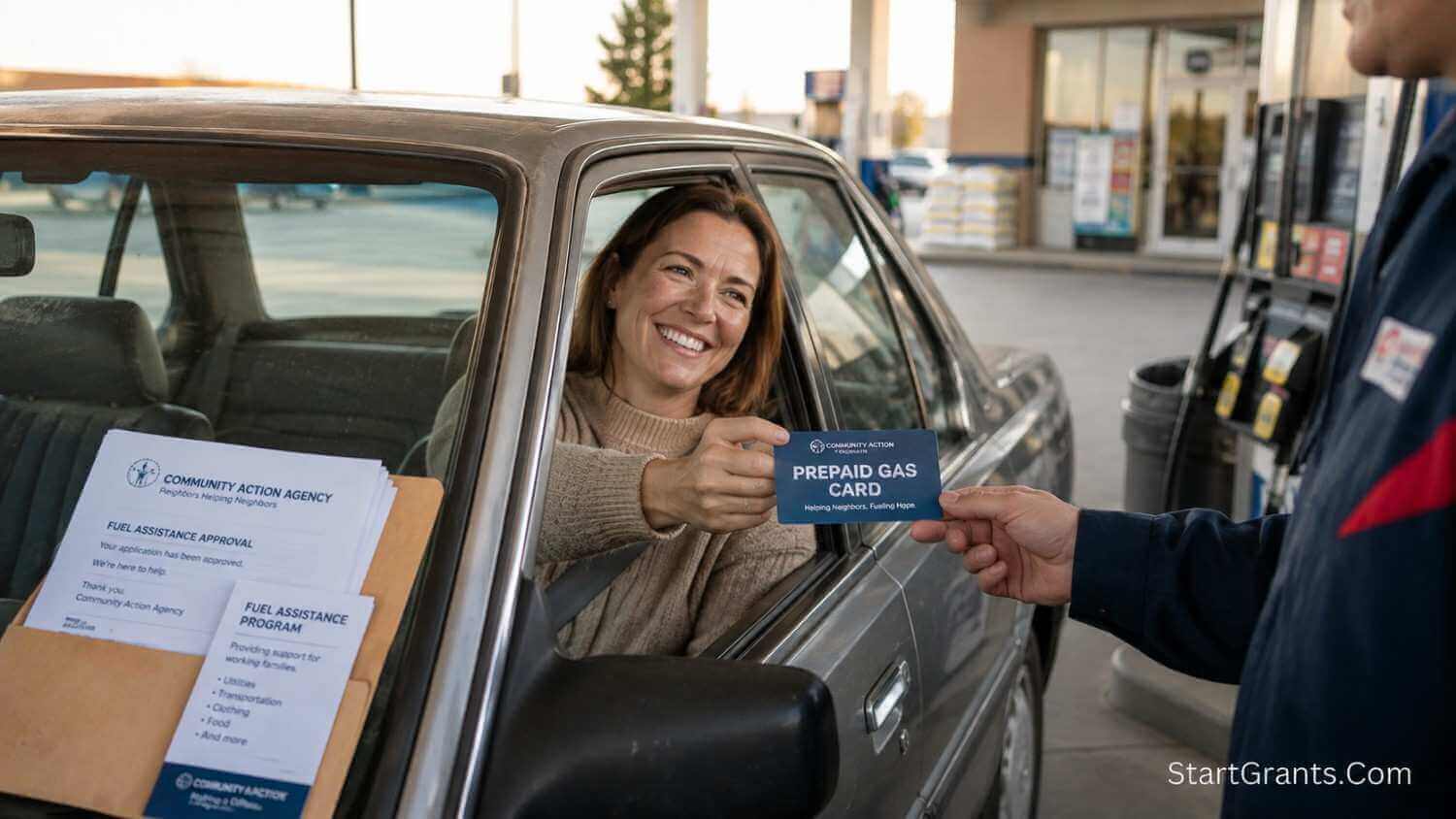
A local agency may know whether short-term fuel or transportation help is available nearby.
Start with the trip you need to make
Fuel assistance is usually tied to a particular need and a particular provider. For a medical appointment, ask your Medicaid plan about non-emergency medical transportation (NEMT). For work or training, ask the program that enrolled you. For an immediate local need, request referrals through 211 and a Community Action Agency. Keep a backup such as a bus route or a ride if no fuel voucher is available.
| Need | First contact | What to ask |
|---|---|---|
| Urgent local trip | 211 or a local Community Action Agency | Are any fuel vouchers, rides, or bus passes currently funded? |
| Covered medical visit | Medicaid plan or NEMT coordinator | Can my trip be arranged, or can an approved driver receive mileage reimbursement? |
| Job training | American Job Center or training caseworker | Are transportation supportive services available for my enrollment? |
Availability, form of help, and preapproval rules differ by locality and operator. This comparison does not promise a card or reimbursement.
1. Ask 211 and local agencies about current help
211 connects people to local services and can point you toward transportation resources. Tell the specialist your ZIP code, destination, date, whether you can drive, and whether a bus or shared ride would work. Ask for an agency name and its own application instructions. A 211 referral is not a promise that a gas card is in stock.
You can also locate a Community Action Agency through the National Community Action Partnership directory. Ask whether the local agency has a transportation or work-support program and whether it provides fuel vouchers, transit passes, or referrals. Federal Community Services Block Grant funding does not mean every agency has a gas-card budget or can issue a card immediately.
Faith and neighborhood organizations
Local Salvation Army offices, St. Vincent de Paul conferences, congregations, and independent charities may help with emergency travel when they have funds. They set their own coverage, proof, and appointment rules. Search the exact local office and ask what is offered today; a national brand name alone does not establish a local gas-card program. Vehicle donation to a charity is a separate activity and should not be mistaken for fuel aid to a recipient.
2. Ask Medicaid about necessary medical transportation
Federal Medicaid rules require states to ensure necessary transportation for beneficiaries to and from covered care. That requirement is described in 42 CFR 431.53. How you receive the transportation differs: the program may arrange a ride, use a broker, or allow reimbursement for approved personal-vehicle mileage. A gas card is not an automatic federal Medicaid benefit, and NEMT is not for an ordinary work commute.
Before the appointment, contact the member-services number on your Medicaid card or your plan’s transportation coordinator. Ask if the trip is eligible, how far in advance you must book, whether your own driver can be reimbursed, what paperwork is needed, and whether a medical professional must confirm the appointment. If you already traveled, ask whether retroactive payment is permitted; do not assume it is. The CMS NEMT booklet provides background for the benefit; your state or plan gives the operative trip rules.
3. Check job-training and public-benefit transportation services
If you are enrolled in job training, ask your American Job Center or case manager about supportive services for transportation. The U.S. Department of Labor describes WIOA workforce programs delivered through American Job Centers. Local eligibility, available funding, and the training plan determine whether a bus pass, ride, mileage support, or another expense can be approved. The program does not give everyone a weekly gas card.
If you receive TANF, ask your state or tribal caseworker whether your plan includes work-related transportation and whether assistance covers a particular trip or expense. Explain how the ride affects your approved employment activity. Document the response before buying fuel. Assistance through TANF, WIOA, Medicaid, and a charity follows different rules; one should not be represented as an unrestricted fuel grant.
What to bring when you ask for a voucher
A provider may request identification, proof of address or income, a job-interview notice, training schedule, medical appointment confirmation, or a brief explanation of the trip. If you plan to drive, it may also ask for a valid license, registration, and insurance. Requirements vary; call before sending bank statements, medical details, or other sensitive records.
- Explain the trip: state the date, distance, destination, and why it cannot be postponed.
- Ask what form of help is available: a gas card, provider-arranged ride, bus pass, mileage reimbursement, or no funding at present.
- Confirm timing: ask if approval must be issued before the trip and how receipts or mileage are documented.
- Use a backup: check transit and trusted rides if no agency can commit in time.
If the barrier is bigger than an empty tank
Fuel alone will not solve an unsafe or broken vehicle. If you already own a car that needs work, see our guide to vehicle repair assistance. Compare any proposed repair with the car’s condition and your budget. If a trip cannot be completed safely, ask the referring agency about a ride or transit alternative.
A Muslim Perspective

Local community assistance can help households reach work or medical care when available.
If fuel costs threaten a needed trip, a local mosque or charity may know of sadaqah, a small gift, a ride, or an interest-free loan (qard hasan). Ask who funds the assistance and whether repayment is required. If you are considering a fuel credit card, read the contract, interest provisions, fees, and due date before applying. Zakat eligibility and permitted spending depend on the household, the administrator, and scholarly interpretation; do not assume every shortfall qualifies. A qualified local scholar can advise on religious questions, including financing and insurance. Follow applicable vehicle and insurance laws and protect your family’s privacy when requesting help.
Avoid misleading offers
There is no verified national program that mails gas cards to every low-income household. The FTC warns about government grant impersonators who request account details or up-front payment. Do not pay someone to unlock a supposed federal fuel card. Verify the agency using its own website or published number, and never share a payment card with an unsolicited caller. For help today, prioritize the specific trip and the organization responsible for it.
Frequently Asked Questions
Will the federal government mail me a free gas card?
There is no general federal program that mails gas cards to all low-income households. Ask 211 and local service providers about currently available transportation assistance.
Can Medicaid pay for gas for a medical appointment?
Medicaid must ensure necessary transportation to covered care. Your state or plan may arrange a ride or allow approved personal-vehicle mileage reimbursement; a gas card is not guaranteed. Ask the plan before traveling.
Can I get a gas card to attend job training?
Possibly, if your local workforce or public-benefit program covers the trip and approves the expense. A weekly gas card is not an automatic WIOA or TANF benefit.
What proof should I bring to request a fuel voucher?
Ask the provider first. It may request identification, the trip date and destination, proof of income or program enrollment, and driving documents if you will use a car.
Does 211 guarantee an emergency gas voucher?
No. 211 helps connect callers with local resources, but a referred organization decides eligibility and whether it has current funding.
Can an Islamic charity use zakat to help with transportation?
That depends on the charity’s zakat policy and the recipient’s circumstances. Ask the local administrator whether the need and proposed use qualify, and consult a qualified scholar if religious guidance is needed.