Last Updated: | Author: Munir Ardi
Families who need a car can apply to selected charities, but a free vehicle is never guaranteed. Some organizations donate cars, some offer low-cost vehicles or loans, and many programs operate only in specific places. Start by checking a program’s current application status, location, eligibility, and the costs you would still have to pay.
This guide covers getting transportation as a recipient. If you are comparing charities as a vehicle donor, use our guide to car donation programs. For repair help rather than replacement, see charities that may help with car repairs and donated vehicles.
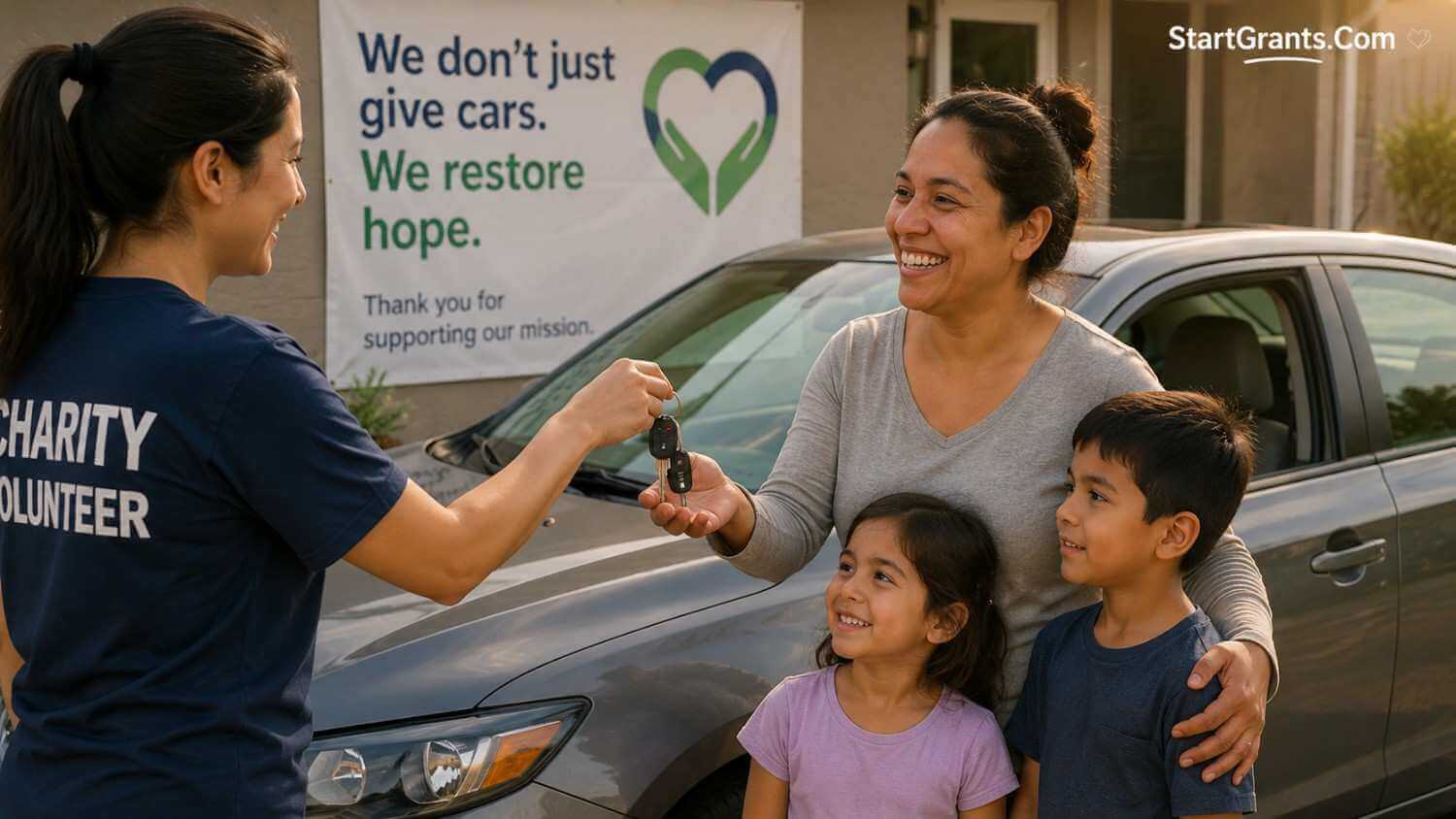
Reliable transportation can make work, school, and medical appointments easier to reach; availability of donated vehicles varies by area.
How donated-car programs work
A donated car may be transferred to an eligible recipient after a charity assesses it, or the charity may sell it to fund its services. A donor’s possible tax deduction does not mean the charity has a ready supply of vehicles for applicants. The IRS explains donor rules separately; applicants should focus on the recipient program’s actual terms. Check an organization’s tax-exempt status with the IRS.
Programs to check before applying
| Program | Current recipient route | Important limit |
|---|---|---|
| Vehicles for Change | Maryland sponsoring-agency referral | New applications paused; fee and additional vehicle costs apply |
| Free Charity Cars | Online vehicle request form | No guarantee or fixed wait; recipients pay ownership costs |
| Local nonprofits | Ask a local social-service agency for referrals | Programs, funding, and eligibility vary locally |
Program status and fees can change. Confirm details with the operator before sharing documents or making plans.
Vehicles for Change: check the pause first
The official Vehicles for Change recipient page says its Keys to Independence program serves Maryland and has temporarily paused new applications while it works through a backlog. It anticipates reopening in spring 2027 if inventory permits. Applicants normally need an approved sponsoring-agency referral, a Maryland license, qualifying income, at least 30 hours of work a week or a verifiable job offer, and the ability to insure the car. The operator lists a $950 program fee plus title, registration, and tag fees. That 30-hour requirement belongs to this program; it is not a universal rule.
Free Charity Cars: apply through its current form
The official Free Charity Cars vehicle request form says applying is free, requires no public profile, and never asks for payment card details. Review its program FAQ before submitting; the operator says applications are deleted after three months and applicants may reapply. The charity reviews requests when a suitable donated vehicle becomes available nearby. It does not promise a particular vehicle or deadline. Its FAQ says recipients are responsible for insurance, title, registration, and maintenance, and that applications are private to staff. Sharing your situation on social media is suggested by the operator but consider your own safety and privacy before posting.
Local transportation options
Ask a community action agency, workforce organization, domestic-violence advocate, or local social-service office whether it knows of a current vehicle placement, repair, transit pass, or affordable-loan program. Ask for the exact operator, geographic coverage, current intake status, and any repayment terms. A vehicle loan and a donated car have different obligations. For questions specifically about government car claims, see whether government agencies give away cars.
How to prepare a strong application
- Identify your transportation barrier. Explain the job, job offer, caregiving, schooling, or health trip you cannot reliably reach. Use specific routes and schedules.
- Confirm eligibility on the official site. Check location, employment rules, referrals, license and driving-record requirements, and whether intake is open.
- Gather only requested documents. These may include identification, income or job-offer proof, a driver’s license, insurance quote, and a short explanation of need. Send sensitive records only through the verified operator’s process.
- Budget for ownership. Estimate insurance, fuel, inspections, title and registration, tires, and repairs. Ask what is covered, whether there is a warranty, and when title transfers.
- Maintain a backup route. A donation may take an unknown time. Ask the local agency about transit, shared rides, or help with an existing car while you wait.
A Muslim Perspective
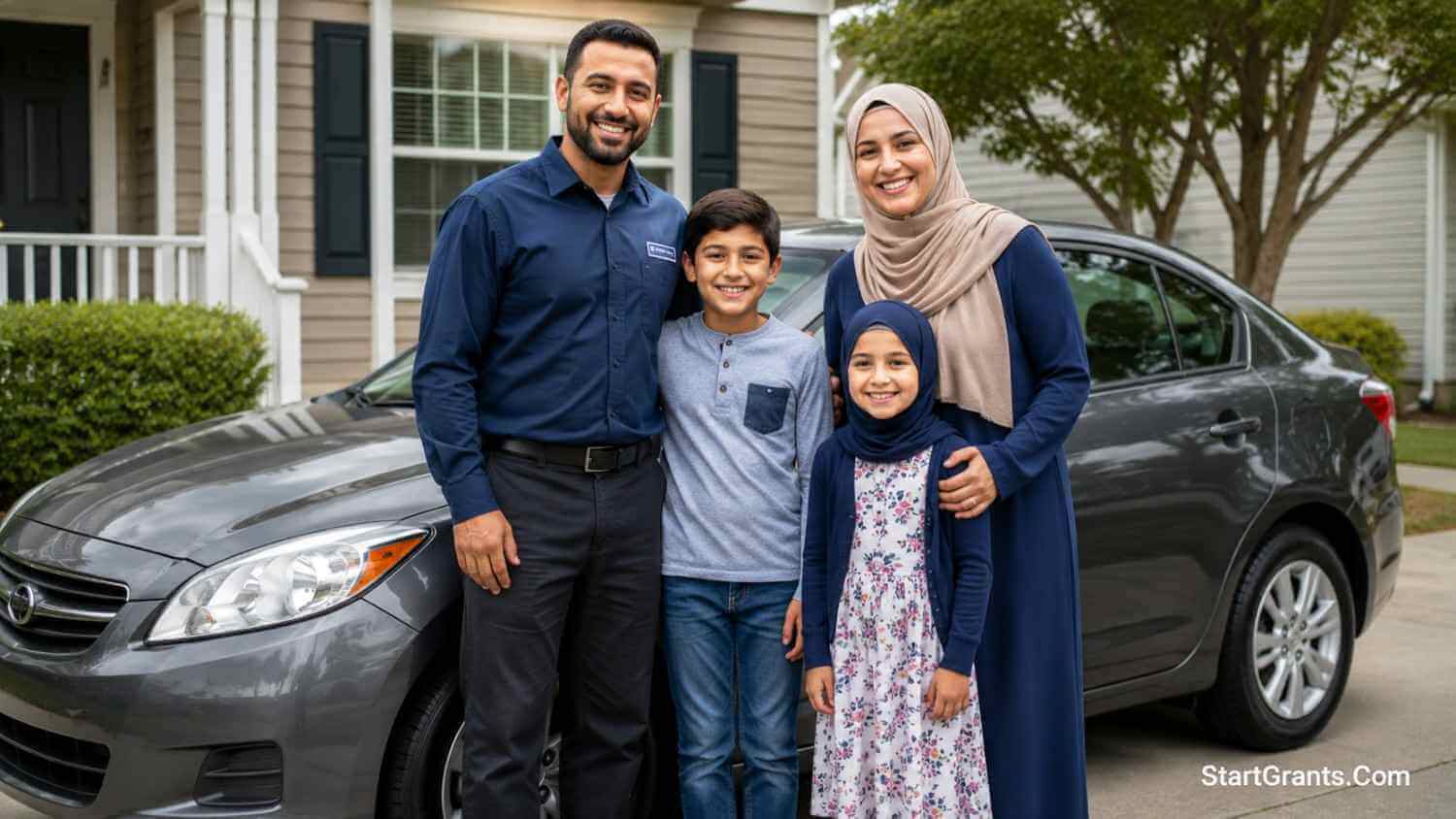
Charitable help with transportation may support a family’s practical needs.
A family may consider sadaqah or other community support when transportation is necessary for work and care. Eligibility for zakat depends on the donor’s rules and the recipient’s circumstances; ask a qualified local scholar or zakat administrator. If a program offers financing instead of a gift, read the repayment terms carefully and seek appropriate advice. Protect the privacy of anyone whose story is shared to request help.
Watch for scams and misleading offers
A demand for a wire transfer, gift card, or payment to release a supposedly approved vehicle is a warning sign. The FTC warns about government-grant scams. Check the exact website and payment policy of the named program: Free Charity Cars explicitly does not request a card to apply, while Vehicles for Change discloses a genuine program fee for approved recipients. A fee alone is therefore not proof of fraud, and an unsolicited guarantee is not proof of approval. Use the IRS organization search to check a nonprofit’s status, and confirm how your information will be used.
What to do next
Start with a verified program that serves your location. Apply to Free Charity Cars if its terms fit, monitor Vehicles for Change if you live in Maryland and need a referral when intake resumes, and ask local agencies about other transportation solutions. Keep a realistic ownership budget and do not base an urgent job or medical trip on a promised donation. If your existing car only needs work, explore repair assistance before replacing it.
Frequently Asked Questions
Is there a federal program that gives free cars to low-income families?
There is no general federal free-car grant for individual families. Charitable vehicle programs and local transportation assistance have separate eligibility rules and limited availability.
Is Vehicles for Change accepting applications?
Its Keys to Independence program says new applications are temporarily paused and anticipates reopening in spring 2027 if inventory permits. It serves Maryland through sponsoring-agency referrals and charges a program fee; check the official page for updates.
Does Free Charity Cars charge an application fee?
No. Its official vehicle request page says the application is free and does not ask for a payment card. Recipients must cover insurance, title, registration, and ongoing vehicle costs.
Can I qualify if I am unemployed or have bad credit?
Rules depend on the organization. Vehicles for Change requires at least 30 hours of work per week or a verifiable job offer, while other organizations evaluate their own applicants. A free vehicle is different from a financed vehicle, for which a lender may check credit.
How long will it take to receive a car?
There is no dependable national wait time. Free Charity Cars says availability depends on suitable local donations and warns that people with an immediate need should not rely on its program alone.
Will receiving a donated car affect my taxes or public benefits?
The answer depends on the transfer, the benefit program, and your circumstances. Do not assume a car is always tax free or has no effect on benefits; ask your benefits administrator and a qualified tax adviser before accepting it.
Can I sell or repair a donated vehicle?
Check the signed transfer agreement, title, any restrictions, and warranty before accepting or selling a car. If you already own a vehicle needing repair, explore local repair assistance separately; Free Charity Cars says it does not fund repairs to cars applicants already own.