
Last Updated: June 2026 | Author: Munir Ardi
Whether you are rapidly transitioning out of a shelter, escaping a dangerous domestic situation, or simply moving into your first apartment on a brutally tight budget, staring at empty rooms can be overwhelming. Furnishing an entire home from a retail store can easily cost thousands of dollars—capital that most working-class families simply do not have on hand.
When you are sleeping on the floor and eating standing up, you do not have time to wait six months on a bureaucratic charity waitlist. You need solutions today. Fortunately, a massive cultural shift toward “zero-waste” living, combined with robust emergency charity networks, has made it easier than ever to locate high-quality, free goods. The trick is knowing exactly which digital networks and local agencies to tap into.
Before you begin your search, it is helpful to understand the massive logistics network behind donated goods. To see exactly where charities get their inventory and how it flows into the community, review our master guide on who accepts furniture donations.
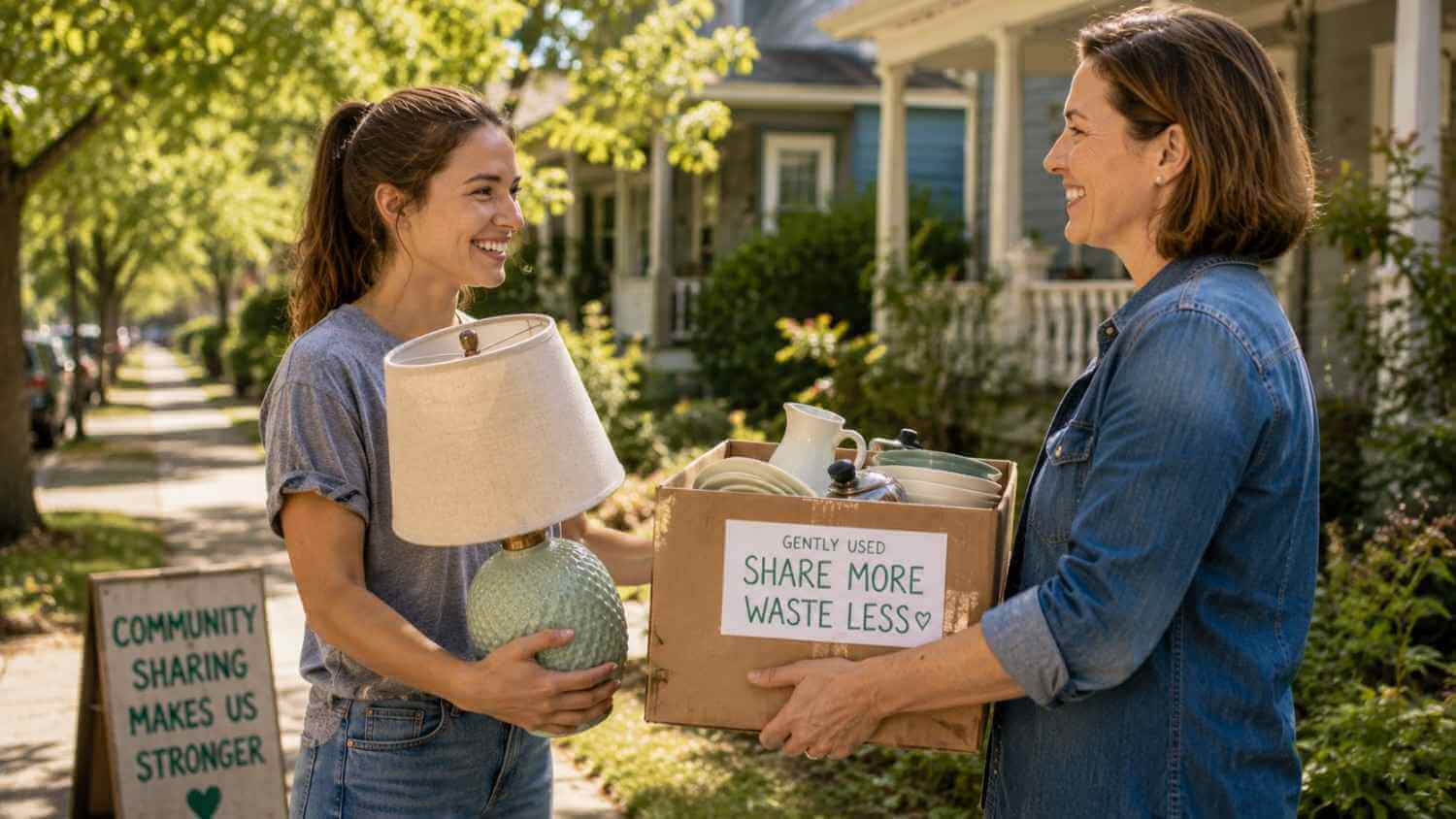
Community sharing networks are the fastest way to discover free household items instantly without dealing with charity waitlists.
Phase 1: The Hyper-Local Digital Networks (Immediate Results)
If you are looking for quick places to discover free household items instantly, your smartphone is your most powerful weapon. Every single day, thousands of perfectly good sofas, dining sets, and microwaves are given away simply because the previous owner is moving or redecorating and does not want to pay junk removal fees.
1. The Buy Nothing Project
The Buy Nothing Project is a global network of hyper-local community groups (mostly hosted on Facebook or their proprietary app). The rule is simple: everything is given away for free, with no bartering or trading allowed. Neighbors post items they no longer need, and you simply comment to claim them. Because these groups are restricted to specific neighborhoods, you can often pick up an item within an hour of it being posted.
2. Freecycle and Craigslist “Free” Section
Freecycle.org operates as a grassroots, non-profit bulletin board dedicated to keeping usable items out of landfills. You can search your local town’s board for free items or post an “Wanted” ad explaining what you need. Similarly, the “Free Stuff” section on Craigslist is a goldmine for heavy furniture (like couches and dressers) that people need removed immediately.
Pro-Tip: Mastering Digital Sourcing
Full-time furniture flippers make a living by securing the best free items before anyone else even sees them. Watch this tactical masterclass, How to find FREE furniture | 10 tips from full time flippers, to learn their insider secrets on navigating digital marketplaces and claiming high-quality pieces instantly:
Phase 2: Government and Non-Profit Rapid Response
While digital networks are great for individual items, if you need to furnish an entire apartment immediately due to a crisis (such as a fire or fleeing abuse), you need institutional help.
1. Call 211 for Emergency Essential Services
Funded by the government and the United Way, 211.org is a free, confidential service that connects citizens to essential local assistance. By dialing 2-1-1 on your phone, an operator will instantly search a localized database to find state-funded “Diversion Programs” or rapid-rehousing grants that provide emergency funds specifically to buy furniture and household goods.
2. Charity Voucher Programs (Salvation Army & Goodwill)
While massive charities like Goodwill and the Salvation Army operate thrift stores that sell items, they also maintain emergency social service departments. If you have a referral from a social worker, police department, or religious leader proving you have suffered a sudden crisis, these organizations can issue a material voucher. This allows you to walk into their retail stores and acquire the items you need for $0. To understand the scale of these networks, read our breakdown on how the Goodwill donation pickup system supports local communities.
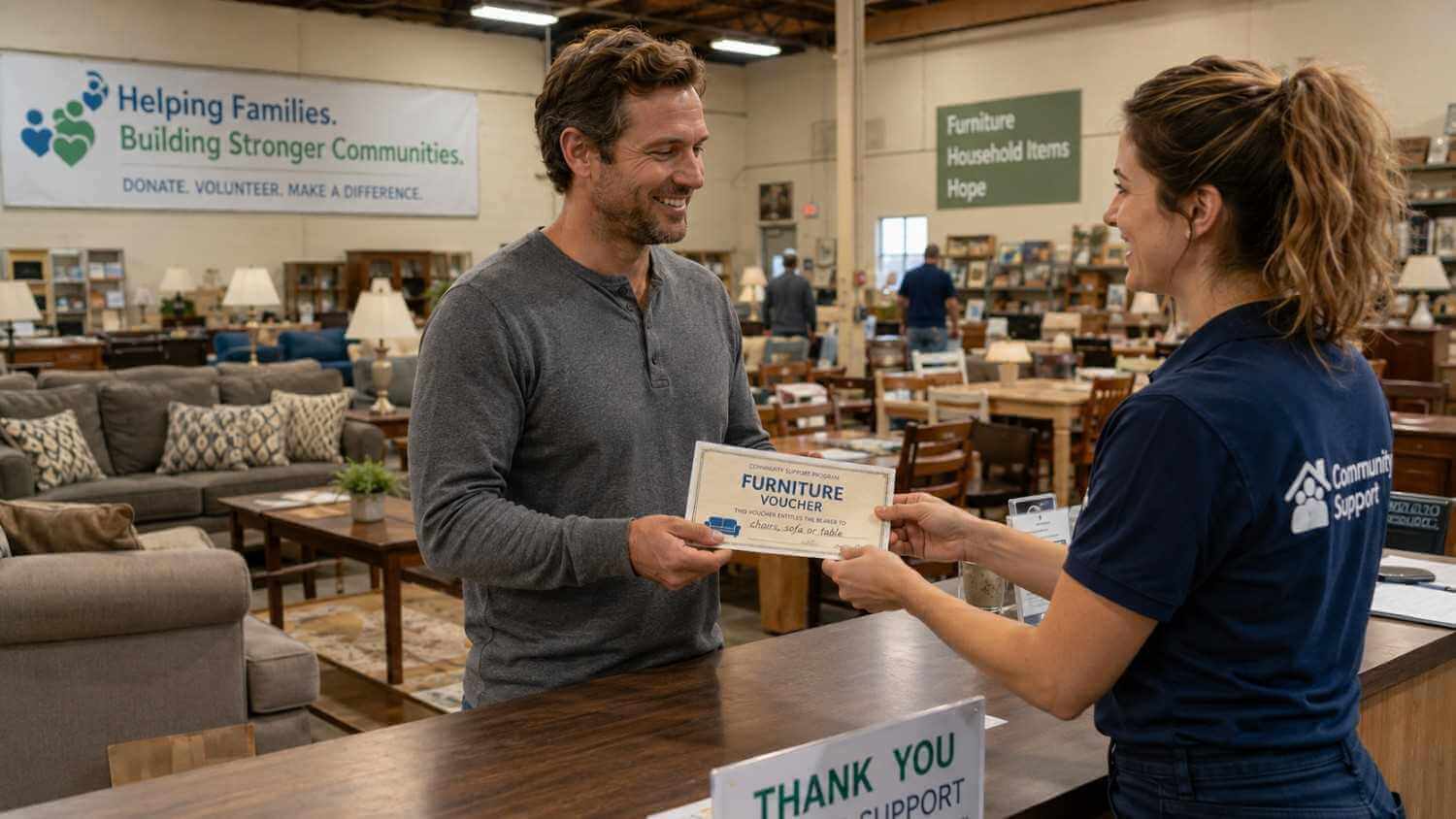
Organizations like the Salvation Army and local Community Action Agencies provide emergency furniture vouchers to families in crisis.
3. Habitat for Humanity ReStores
If you cannot find items completely for free, Habitat for Humanity ReStores are your next best option. They sell heavily discounted, high-quality building materials, appliances, and furniture. Local housing programs frequently partner with ReStores to provide deeply discounted or fully subsidized goods for low-income families.
Phase 3: Prioritizing the Essentials (The Free Bed)
When you are starting from zero, you must prioritize health and safety over aesthetics. You can survive for months without a dining room table or a TV stand, but you cannot survive without a safe place to sleep.
Because sleeping on the floor causes severe physical and cognitive issues (especially for children), specific charities exist exclusively to solve this problem. If your family lacks proper sleeping arrangements, halt your general furniture search and immediately consult our dedicated guide on the best options to get free beds for low income families.
Phase 4: The Muslim Perspective (Hifz al-Mal & Avoiding Riba)
In Islamic teachings, protecting your family’s wealth (Hifz al-Mal) and avoiding financial exploitation are absolute obligations. When a Muslim family moves into an empty apartment, the psychological pressure to furnish the home quickly is intense. This desperation is exactly what predatory retailers exploit.
1. The Riba Trap in “Rent-to-Own” Furniture
Storefronts offering “Zero Credit Check” or “Rent-to-Own” (RTO) furniture are designed to trap desperate families. These contracts are heavily laced with Riba (usury). You may agree to pay $25 a week for a living room set, but the exorbitant, compounding interest rates mean you will eventually pay triple the actual value of the furniture. In Islam, engaging in a Riba-based contract is strictly Haram (forbidden) and brings spiritual devastation to the household.
2. The Gharar in “Furniture Protection Plans”
Furthermore, these retail contracts often force you to buy mandatory “insurance” or protection plans. Because you are paying for an unknown future event that may never happen, and the company profits heavily from your lack of claims, this involves Gharar (excessive uncertainty and deception), which is also prohibited in Islamic commercial law (Fiqh al-Muamalah).
3. Halal Relief via Hibah and Zakat
There is immense Barakah (blessing) in utilizing the community resources mentioned above. Receiving a free sofa from a neighbor via the Buy Nothing Project is classified as Hibah (a pure gift) and is completely Halal. If community resources fail, Muslim families should turn to legitimate Islamic charities like Islamic Relief USA or local Masjids. These institutions use Zakat funds to protect the vulnerable from debt, ensuring your home is furnished cleanly and safely without angering the Creator.
Phase 5: Tactical Safety and Inspection Protocols
While getting free furniture is a massive financial relief, bringing used items into your home carries inherent risks. You must protect your sanctuary.
- The Bed Bug Threat: Never accept a used mattress from a curb or an unverified source. Bed bugs can infest your entire apartment building and cost thousands of dollars to exterminate. Always thoroughly inspect the seams of any upholstered item (sofas, chairs) with a flashlight before loading it into your vehicle.
- Check for Recalls: If you receive a free crib, high chair, or electronic appliance, look for the manufacturer’s label. Run the model number through the official Consumer Product Safety Commission (CPSC) website to ensure it hasn’t been recalled for safety hazards.
- Meet Safely: If picking up an item from Craigslist or Facebook Marketplace, never go alone. Meet in a public place if possible, or execute the pickup during daylight hours. Many police departments offer their well-lit parking lots as “Safe Exchange Zones.”
Pro-Tip: Inspecting Used Furniture
Bringing a free sofa into your home is a major win, but an undetected bed bug infestation can cost you thousands of dollars to eradicate. Before you load any upholstered item into your vehicle, watch this crucial visual guide, How to Check Used Furniture for Bed Bugs, so you know exactly which hidden seams and crevices to inspect to keep your family safe:
Conclusion
You do not need to go into crippling, interest-bearing debt to furnish your home. The resources to transform an empty house into a comfortable, functional home are already surrounding you. By aggressively tapping into local digital sharing networks like the Buy Nothing Project, utilizing government 211 portals for emergency charity vouchers, and prioritizing essential items safely, you can secure everything you need for $0. Protect your family’s financial future by rejecting predatory retail loans, and start scanning your local community networks today.
Frequently Asked Questions (FAQs)
Q1: What is the fastest app to find free household items?
A: The “Buy Nothing” app and Facebook Marketplace (using the “Free” filter) are generally the fastest. Because they are hyper-local, you can often coordinate a pickup with a neighbor within minutes of an item being posted.
Q2: Can I get free furniture delivered to my house?
A: Usually, no. Most digital sharing platforms and charity voucher programs require you to transport the item yourself. However, specific organizations like Sleep in Heavenly Peace (for children’s beds) and certain local Furniture Banks may offer delivery services if you prove you lack transportation.
Q3: How do I get a voucher for the Salvation Army?
A: You typically cannot walk into a Salvation Army thrift store and ask for free items directly. You must contact their Family Services department or be referred by a social worker, police officer, or disaster relief agency (like the Red Cross) to receive an authorized material voucher.
Q4: Is it safe to pick up free appliances from the curb?
A: It is highly risky. Appliances left on the curb have been exposed to weather and may have frayed wiring or broken compressors. It is much safer to source appliances directly from an owner via Freecycle or a community group where you can ask why the item is being given away.
Q5: Is it Halal to accept household items from non-Muslim charities?
A: Yes. Accepting physical household items or material vouchers from secular organizations, neighbors, or charities like Goodwill is considered accepting a gift (Hibah). As long as you are not signing a contract that involves Riba (interest) or Gharar (unethical uncertainty), it is completely Halal.


