
Last Updated: May 2026 | Author: Munir Ardi
When facing a massive spring cleaning project, a cross-country move, or the daunting task of clearing out an estate, the name that immediately comes to most people’s minds is Goodwill. For over a century, Goodwill has been the undisputed titan of the thrift retail industry, transforming donated clothing, books, and household goods into job training programs and employment placement services for millions of individuals.
Because of their massive brand recognition, homeowners naturally assume that scheduling a free Goodwill donation pick-up is as simple as making a phone call and waiting for a truck to arrive. However, in 2026, the logistics of charitable pick-ups have drastically changed. Due to skyrocketing fuel costs, severe labor shortages, and strict liability regulations, getting a heavy-duty box truck to arrive at your residential driveway requires strategic planning.
If you want to secure the full support of a Goodwill donation pick-up, you must first understand how their decentralized network operates, what specific high-value items they are willing to deploy a truck for, and the strict staging protocols you must follow to prevent your items from being rejected at the curb. (To ensure your donation strategy aligns with all available charitable avenues, please review our comprehensive guide to donations and fundraising.)
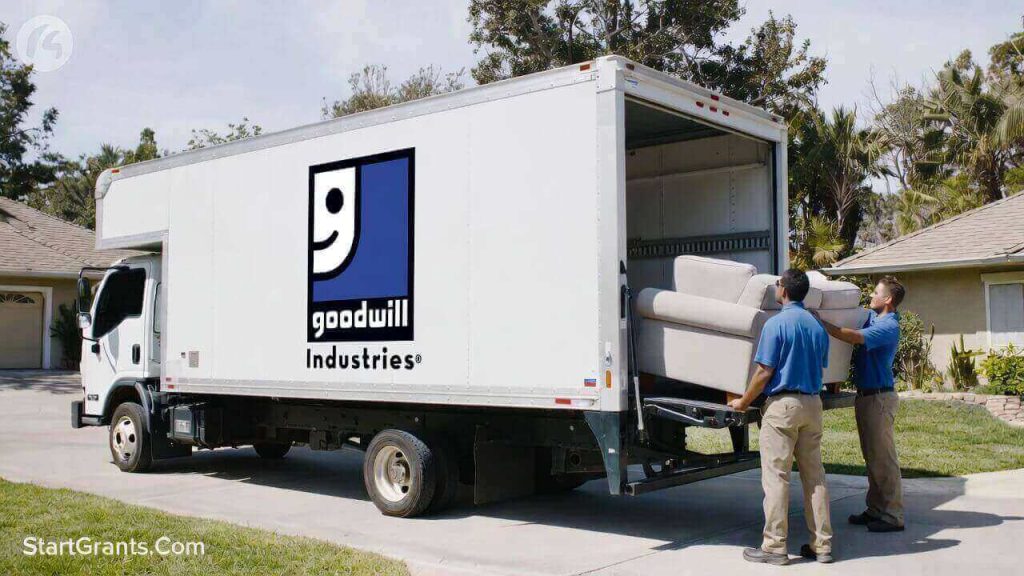
Securing a Goodwill donation pick-up in 2026 is convenient, but you must adhere to localized rules and strict staging protocols.
Phase 1: The Decentralized Reality of Goodwill
The most common mistake donors make is assuming Goodwill operates like a single, monolithic corporate entity with universal rules. It does not.
Goodwill Industries International is comprised of more than 150 independent, community-based organizations across the United States and Canada. This means that Goodwill of Southern California operates under an entirely different budget, leadership team, and logistical infrastructure than Goodwill of Greater New York.
Because they are independently operated, their residential pick-up policies vary wildly by zip code.
- Suburban and Rural Branches: Many localized branches in suburban areas still maintain a fleet of box trucks and happily offer free residential pick-ups for large furniture and multi-room donations.
- Urban Branches: Conversely, many Goodwill organizations in densely populated metropolitan areas have completely eliminated free residential pick-ups. The costs of maintaining commercial trucks, paying high insurance premiums, and navigating city traffic simply outweigh the resale value of the donated goods.
Before you start dragging heavy furniture to your driveway, your very first step must be to utilize the official Goodwill Locator to find your specific regional headquarters and verify if they still operate a fleet of collection trucks.
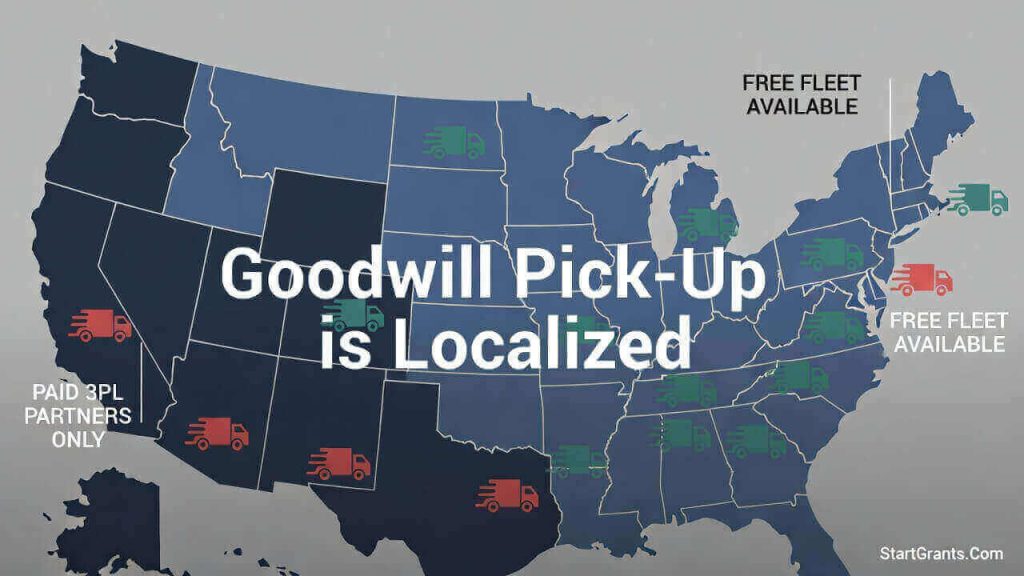
Goodwill is decentralized. Always use the official locator to verify if your specific regional headquarters still operates a free collection fleet.
Phase 2: How to Guarantee “Full Support” for a Pick-Up
If your local Goodwill does operate a truck fleet, you are still competing with hundreds of other residents for a very limited number of pick-up slots. To guarantee your request is approved by the dispatch office, your donation must be worth the charity’s time, fuel, and labor costs.
Goodwill dispatchers prioritize pick-ups based on volume and retail value. You will receive full scheduling support if your donation falls into one of these three categories:
1. The Estate Cleanout
Goodwill highly prioritizes whole-house cleanouts. If an elderly relative has passed away or is transitioning into an assisted living facility, the resulting donation usually includes entire bedroom sets, dining tables, intact living room furniture, and dozens of boxes of clothing and housewares. Because this guarantees a massive influx of retail-ready inventory for a single stop, dispatchers will frequently prioritize these massive requests.
2. High-Value Structural Furniture
A truck will not be dispatched to pick up two bags of old t-shirts and a toaster; you must drop those off at a local donation bin yourself. To justify the cost of the truck, you must be donating large, high-value structural items. Pristine condition solid-wood dining tables, clean mid-century modern dressers, and high-quality leather sofas are highly sought after by thrift store managers.
3. Corporate and Office Liquidations
If your business is upgrading its office space or moving to a remote work model, Goodwill is incredibly eager to secure commercial donations. Bulk donations of gently used ergonomic office chairs, heavy-duty filing cabinets, and intact conference tables are highly profitable items for their retail floors.
Phase 3: The Acceptance List (What They Actually Want)
Even if you successfully schedule a pick-up for your heavy furniture, the drivers are legally obligated to inspect every item before loading it. If you attempt to mix banned, hazardous, or unsellable items into your donation pile, the driver will reject those specific items, or potentially cancel the entire pick-up.
Before you start loading your furniture or packing your clothing, understanding what thrift store managers can actually resell is crucial to maximizing your charitable impact. To help you categorize your donation pile and avoid instant rejections at the curb, watch this practical guide detailing the essential “Do’s and Don’ts” of Goodwill donations:
The “Approved” List
Alongside your large furniture, drivers will happily load boxes of the following items:
- Clothing and Soft Goods: Washed, gently used clothing, shoes, belts, purses, and intact linens.
- Small Appliances: Microwaves, blenders, coffee makers, and toasters that are 100% functional and clean.
- Media and Entertainment: Books, vinyl records, board games (with all pieces included), and flat-screen televisions (must be modern LED/LCD, fully working, and include the power cord).
The “Banned” List (Instant Rejection)
To protect their workers and avoid massive landfill disposal fees, Goodwill drivers will strictly reject:
- Used Mattresses and Box Springs: Due to the severe financial threat of bed bug infestations and strict state sanitation laws, almost zero thrift stores will take a bed. You must review specialized state recycling programs to learn who accepts mattress donations.
- Large Built-In Appliances: Unlike home improvement charities, Goodwill generally does not accept massive, hard-wired appliances like built-in dishwashers, massive HVAC units, or old water heaters. For these items, you should pivot your strategy toward scheduling specialized Habitat for Humanity donations.
- Hazardous Materials and Recalls: Baby cribs, car seats, old CRT (tube) televisions, wet or moldy furniture, and any household chemicals or leftover paint are universally banned.
Phase 4: The Third-Party Logistics (3PL) Partnership
If you live in a dense urban environment and discover that your local Goodwill branch has permanently discontinued its free residential box truck fleet, do not panic. The non-profit sector has rapidly adapted to modern logistical challenges.
Instead of turning away valuable donations, many regional Goodwill organizations have formed official partnerships with specialized Third-Party Logistics (3PL) companies and commercial junk removal franchises.
ReSupply and College Hunks Hauling Junk
Two of the most prominent national partners for Goodwill are ReSupply (a veteran-operated logistics network) and College Hunks Hauling Junk & Moving.
- The “White-Glove” Advantage: Unlike traditional charity volunteers who are legally forbidden from entering your home, these professional 3PL crews are fully insured to navigate your interior staircases, disassemble heavy bedroom sets, and remove massive items directly from your living room or high-rise apartment.
- The Cost Factor: Because you are utilizing a premium, commercial moving service, this pick-up is not free. You will pay a fee based on the volume of the items or the time required to load them.
- The Charity Guarantee: The vital distinction between these official partners and a standard dump service is that they guarantee your usable items will be safely transported directly to the local Goodwill (or a similar verified 501(c)(3) charity). They handle all the heavy lifting, keep your items out of the landfill, and ensure you still receive your official tax deduction receipt.
Phase 5: The Curbside Staging Protocol
If you are fortunate enough to live in a region where Goodwill still operates its own free fleet, you must adhere to their incredibly strict liability protocols. Because their drivers are not commercial movers, they operate under the exact same insurance restrictions detailed in our comprehensive guide on scheduling a furniture donation pick up.
To ensure your items are successfully loaded and not left abandoned on your lawn, execute the following staging protocol:
- The “No In-Home” Rule: Goodwill drivers will not cross the threshold of your front door. You must physically move all heavy dressers, dining tables, and boxes of clothing into a ground-level, easily accessible staging area. A fully cleared, open garage is the absolute best option.
- Driveway Staging and Weather: If you must stage your items on an uncovered driveway, you are at the mercy of the weather. Goodwill will instantly reject a wet sofa or water-damaged particleboard furniture due to the severe risk of toxic mold. If there is any chance of rain, you must tightly cover your items with heavy-duty waterproof tarps.
- Box It Up: Do not leave loose shoes, scattered books, or individual kitchen utensils on your driveway. All small household goods and clothing must be securely packed in heavy-duty cardboard boxes or tied plastic trash bags. Drivers operate on strict 15-minute timetables and will not pack your items for you.
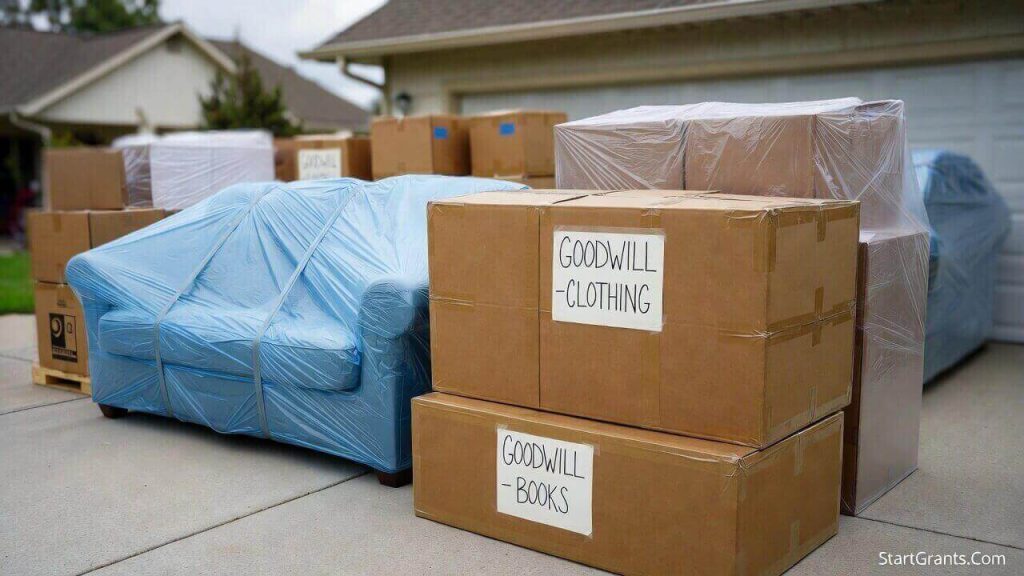
To ensure a successful handover, box up all loose items and tightly cover upholstered furniture with heavy-duty tarps if staging outdoors.
Phase 6: The Handover and IRS Tax Receipts
The primary financial incentive for dealing with the logistical hurdles of a massive donation pick-up is the tax deduction. When you donate a house full of gently used furniture and clothing to Goodwill, the total value can easily equate to thousands of dollars.
When the Goodwill driver or the 3PL partner loads your items, they will hand you a standardized, blank donation receipt signed by the organization.
- Determine Fair Market Value (FMV): Goodwill will not appraise your items. It is your legal responsibility to determine the FMV—the price a willing buyer would pay for the item in its current condition at a thrift store. You cannot claim the original retail price of a sofa you purchased ten years ago.
Determining the correct valuation of your noncash gifts is the most important step for your tax records. Because charities cannot legally appraise your items, the responsibility falls on you. Watch this official tutorial from Goodwill on exactly how to value your donated clothing and household goods to file IRS Form 8283 accurately this April:
- Photographic Evidence: Before you stage your items in the garage, take clear, well-lit photographs of every single piece of furniture and every open box of clothing. If you are ever audited, these photos serve as irrefutable proof to the IRS that the items existed and were in “good, used condition” when donated.
- IRS Form 8283: If the total claimed value of your donated property exceeds $500, the law requires you to file IRS Form 8283 (Noncash Charitable Contributions) alongside your annual tax return. Accurate record-keeping is the only way to maximize the financial return on your charitable generosity.
Conclusion (The Ultimate Donation Strategy)
Securing a Goodwill donation pick-up in 2026 requires understanding that this massive organization is not a single entity, but a localized network with vastly different logistical capabilities. If you are clearing out an estate or donating high-value structural furniture, utilizing their free residential fleet (if available in your zip code) is an incredible way to support job training programs while clearing your home.
However, you must be prepared for the realities of modern charity logistics. You must follow strict curbside staging protocols, pack your smaller items securely, and be willing to utilize their paid 3PL partners (like ReSupply or College Hunks) if you live in a dense urban area or physically cannot move the furniture yourself.
Always remember to document your items meticulously with photographs and file IRS Form 8283 to legally maximize your tax write-off.
Ultimately, if you discover that your local Goodwill branch cannot accommodate your timeline, or if they reject your specific items, do not give up. There is a massive network of alternative non-profits eager for your items. To explore every available option, including veterans’ organizations and specialized shelters, consult our comprehensive master guide on who accepts furniture donations to find the perfect charitable match for your specific logistical needs.
Frequently Asked Questions (FAQs)
Q1: Does Goodwill offer free residential donation pick-ups?
A: It depends entirely on your zip code. Because Goodwill is a network of independent regional organizations, policies vary. Many suburban branches still operate free truck fleets for large furniture and estate cleanouts. However, many urban branches have discontinued free residential pick-ups and now partner with paid third-party logistics (3PL) companies. You must check your local branch’s website.
Q2: Will Goodwill drivers come inside my house or apartment?
A: No. If your local Goodwill operates a free charity truck, the drivers are legally forbidden from entering your home or navigating stairs due to strict corporate liability and worker’s compensation insurance policies. You must move all items to a ground-level staging area, such as an open garage or driveway.
Q3: What items will Goodwill absolutely NOT pick up?
A: Goodwill drivers will strictly reject used mattresses and box springs (due to bed bug laws), old CRT (tube) televisions, massive built-in appliances (like HVAC units or dishwashers), baby cribs, car seats, and any hazardous materials like leftover paint or harsh cleaning chemicals.
Q4: Do I need to box up my clothing and small items for a pick-up?
A: Yes. Drivers operate on strict, tight schedules and will not pack loose items for you. All clothing, shoes, books, and small housewares must be securely packed in heavy-duty cardboard boxes or tied plastic trash bags before the truck arrives.
Q5: How far in advance should I schedule a Goodwill pick-up?
A: Because free charity truck fleets are small and cover massive regions, you should request your pick-up at least two to four weeks in advance. Do not wait until the week you are moving out to call the dispatch office, as their schedules fill up incredibly fast.
Q6: Can I leave my items outside the Goodwill center after hours?
A: No. Leaving items outside a donation center after hours is considered illegal dumping. Items left in the rain or exposed to the elements overnight become unsellable and cost the charity money to dispose of in a landfill. Always donate during official operating hours.
Q7: Is my Goodwill donation tax-deductible?
A: Yes, Goodwill is a registered 501(c)(3) nonprofit. You can deduct the Fair Market Value (FMV) of your items. For donations totaling over $500, the IRS requires you to file Form 8283. If an individual item is valued over $5,000, you will need a professional appraisal.
Q8: How does donating to Goodwill align with the Islamic concept of Sadaqah?
A: In Islam, giving charity is not limited to money; providing usable goods to those in need is a form of Sadaqah (voluntary charity). By donating high-quality items to organizations like Goodwill, you are practicing Ihsan (excellence)—giving from what you would be happy to use yourself. This fulfills the mandate to support the community and can be a source of Barakah (blessing) in your home. You can explore more about the ethics of giving and its spiritual rewards through resources like Sadaqah: Charity Ever-Flowing.
Important Disclaimer: StartGrants.com is an independent information portal. We are not a government agency and do not provide direct grants or products. Always verify the current status of programs with the providing organization.