
Last Updated: | Author: Munir Ardi
Searching for “housing grants for disabled women” can lead to pages that promise free government money. The reality is more complicated—and more useful once you know where to look. The federal government does not operate one universal cash-grant program reserved for women with disabilities. Legitimate help more often comes as a rent subsidy, an income-restricted apartment, an accessible unit, a home-repair grant for a narrowly defined group, or local assistance with deposits and moving costs.
This guide explains the strongest starting points in the United States, what each program actually provides, and how to request disability-related accommodations during the application process. For a broader overview of programs that are not disability-specific, also see our home grants and housing assistance guide for low-income families.
First, Understand What “Housing Grants” Usually Means
Most applicants will not receive a check from HUD to spend on any home or apartment they choose. Instead, assistance usually falls into one of these categories:
- Tenant-based rental assistance: A voucher helps pay eligible rent in the private market.
- Project-based assistance: The subsidy is attached to a particular apartment or property.
- Public housing: A local public housing agency (PHA) owns or manages income-restricted units.
- Home modification or repair assistance: A limited program pays for eligible safety or accessibility work, often only for homeowners who meet age, income, location, or veteran requirements.
- Emergency or local aid: A charity, Continuum of Care, or local government may help with shelter, deposits, arrears, or moving expenses when funds are available.
Disability can make someone eligible for a targeted program or a reasonable accommodation, but it does not automatically place every applicant at the top of a waiting list. Sex, disability, income, household composition, immigration eligibility, homelessness status, and local preferences are separate factors under different programs.
Best Federal Rental-Housing Paths for Women With Disabilities
1. Housing Choice Vouchers (Section 8)
The Housing Choice Voucher program helps eligible low-income households rent privately owned housing. HUD funds the program, but approximately 2,000 local PHAs administer applications, waiting lists, eligibility decisions, inspections, and payments. The subsidy is normally paid to the landlord—not handed to the tenant as unrestricted grant money.
Household income and composition, local limits, eligible immigration status, screening rules, and funding availability matter. A tenant’s share is calculated by the PHA and is often based on adjusted income; it is not always exactly 30% of gross income. Start with HUD’s current Housing Choice Voucher tenant guidance, then contact each PHA serving an area where you could realistically live.
2. Mainstream Vouchers
Mainstream vouchers are a special-purpose form of voucher assistance for households that include a non-elderly person with a disability. Under HUD’s program rules, the qualifying household member generally must be at least 18 and under 62 when admitted. Availability is local; not every PHA has an open Mainstream waiting list, and having a disability does not bypass income and other program requirements.
3. Section 811 Supportive Housing for Persons With Disabilities
Section 811 supports rental housing for very-low-income and extremely-low-income adults with disabilities. It is frequently misrepresented as an individual grant. HUD generally provides capital or rental-assistance funding to nonprofit developers, property owners, or state housing agencies. A prospective resident applies through a participating property, state referral system, health or human-services partner, or local housing agency—not through a personal Grants.gov application.
Section 811 has more than one funding structure. In HUD’s Project Rental Assistance model, residents are generally extremely low-income and the household must include an adult with a disability; states may add eligibility and referral requirements. Other Section 811 properties may use different income criteria. Supportive services may be available, but residents generally cannot be forced to accept services as a condition of occupancy. Review HUD’s official Section 811 program description and ask the state housing agency how tenant referrals work locally.
4. Public Housing and Project-Based Apartments
Public housing serves eligible low-income families and individuals, including people with disabilities. Project-based rental assistance can also reduce rent in privately owned subsidized properties. Because the subsidy stays with the property, applicants should contact each property manager about vacancies and its own waiting list.
Use the HUD Resource Locator to identify nearby PHAs and subsidized properties. The locator does not confirm that a unit is vacant, so call the management office and ask:
- Is the waiting list open?
- Are mobility-, hearing-, or vision-accessible units available?
- Does the property maintain a separate accessible-unit or transfer list?
- How can I request help completing the application?
- Which documents establish income, household members, and disability-related need?
Homeowners: Programs That May Pay for Accessibility Work
Rental assistance and home-repair funding are different. If you own the home, check these narrowly targeted programs before paying a grant finder.
USDA Section 504 Home Repair
USDA’s Section 504 program can provide loans to very-low-income homeowners in eligible rural areas to repair, improve, modernize, or remove health and safety hazards. As of this review, the maximum standard loan is $40,000 at a fixed 1% interest rate for up to 20 years. The standard grant is limited to eligible homeowners age 62 or older who cannot repay a loan and must be used to remove health and safety hazards. The maximum standard grant is $10,000, with different limits for qualifying presidentially declared disaster repairs. Location, ownership, income, repayment ability, and property rules all apply. Check the current USDA Section 504 page before relying on any dollar amount.
VA Specially Adapted Housing Grants
Women veterans and service members with certain qualifying service-connected disabilities may be eligible for a Specially Adapted Housing (SAH) or Special Home Adaptation (SHA) grant. These are genuine individual housing grants, but they are not available for every disability or every veteran. The VA publishes the disability criteria, current fiscal-year maximums, and application options on its disability housing grants page.
Local Home-Modification Programs
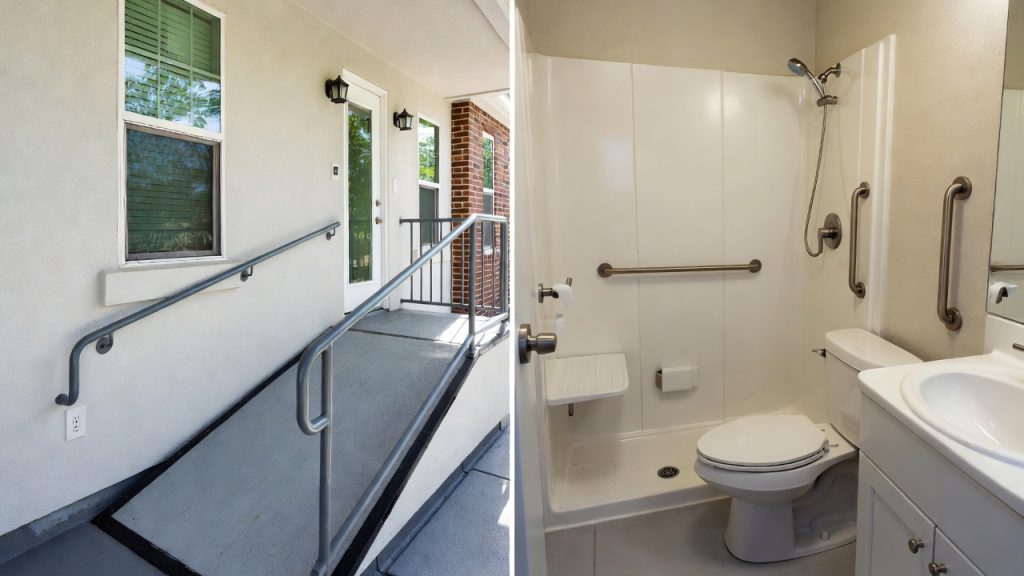
City and county rehabilitation programs, state assistive-technology programs, Medicaid transition initiatives, Area Agencies on Aging, Habitat for Humanity affiliates, and Rebuilding Together affiliates may help with ramps, bathroom changes, grab bars, or safety repairs. These services are not nationally uniform. Some are grants, some are deferred or forgivable loans, some require owner contributions, and some are volunteer repair projects.
A local Center for Independent Living can help identify disability resources and advocate for community living. Medicaid’s Money Follows the Person and Home- and Community-Based Services pathways may support eligible people moving out of institutions, but Medicaid generally does not become an ongoing rent program. Services and allowable transition costs vary by state.
Your Fair Housing and Accessibility Rights
The Fair Housing Act prohibits housing discrimination because of disability and sex, along with race, color, national origin, religion, and familial status. Other laws, including Section 504 of the Rehabilitation Act and the Americans with Disabilities Act, can apply to particular federally assisted housing programs or public entities. The ADA does not govern every private apartment in the same way, so avoid relying on the phrase “ADA housing” alone.
Reasonable accommodations
A reasonable accommodation is a change, exception, or adjustment to a rule, policy, practice, or service that may be necessary for a person with a disability to use and enjoy housing equally. Depending on the facts and program, examples can include:
- help using an online-only application or communication in an accessible format;
- an exception to a no-pets rule for a disability-related assistance animal;
- an assigned parking space near an accessible entrance;
- additional voucher-search time when disability-related barriers make the search longer;
- approval of a live-in aide when the aide is necessary and program requirements are met; or
- a transfer to an accessible unit when one becomes available.
An accommodation request does not require special legal words. Put it in writing, explain the disability-related change you need, and keep a copy. When the disability or need is not obvious, the provider may request reliable information that verifies the disability-related need, but should not demand unrelated medical records. Approval is not automatic if the request would impose an undue financial and administrative burden or fundamentally alter a program.
Reasonable modifications
A reasonable modification is a physical change, such as a ramp or grab bar. In conventional private housing, the Fair Housing Act often requires the owner to permit an eligible modification while the tenant pays for it. In federally assisted housing covered by Section 504, the provider can have a greater duty to pay for necessary structural changes unless doing so would create an undue financial and administrative burden or fundamental alteration. Ask which law and funding source applies before accepting responsibility for the bill.
Assistance animals
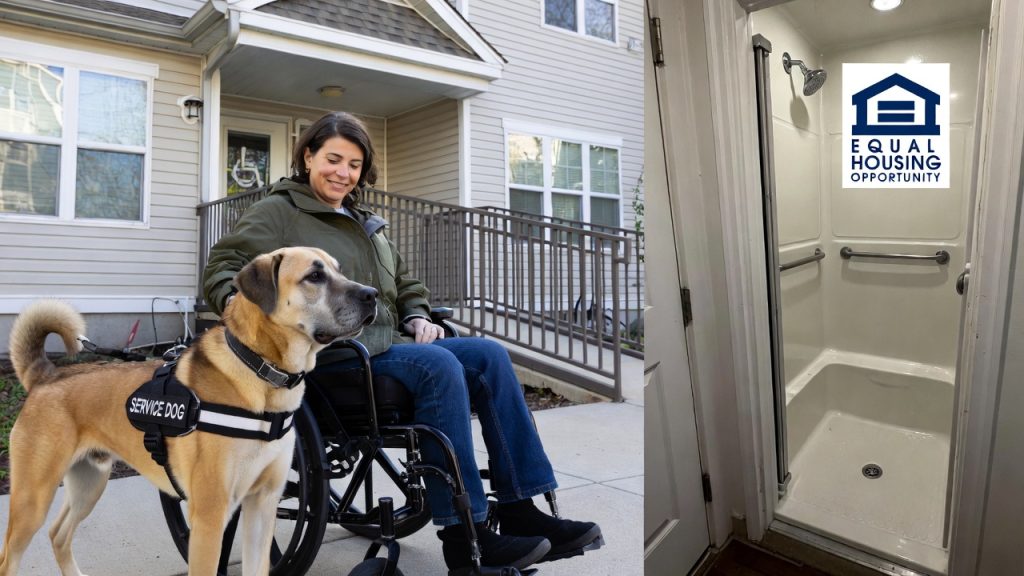
A disability-related assistance animal is not treated as a pet under fair-housing rules. A housing provider generally may not charge pet rent or a pet deposit for an approved assistance animal, although the resident can still be responsible for damage caused by the animal. Documentation rules depend on whether the disability and disability-related need are apparent. Internet certificates purchased without a reliable therapeutic relationship do not automatically prove a need.
Read HUD’s housing information for people with disabilities. If you believe a provider discriminated against you, HUD accepts complaints online and at 1-800-669-9777 through its housing-discrimination portal.
How to Apply Without Losing Months to the Wrong Program
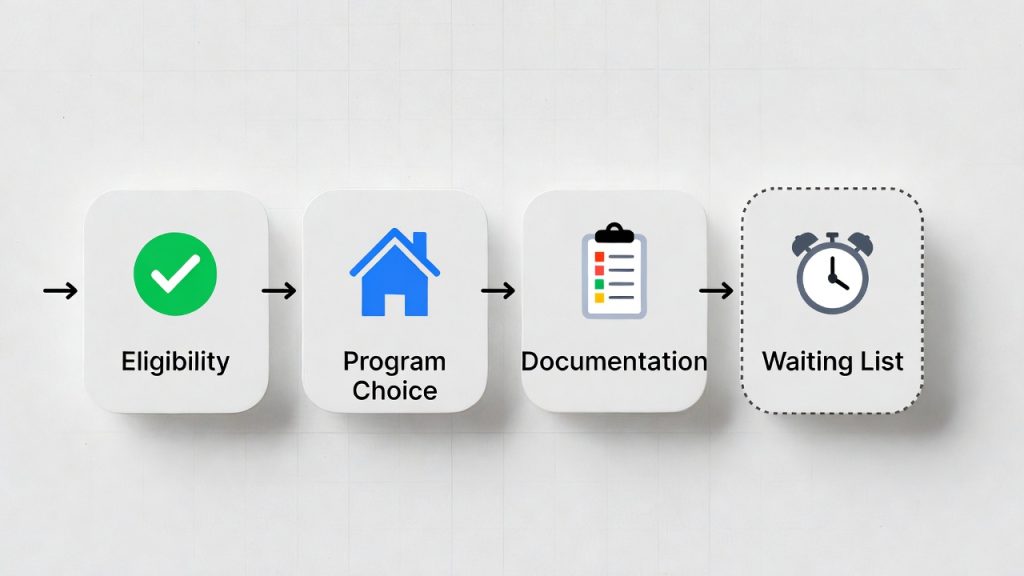
- Define the immediate need. Decide whether you need emergency shelter, rent assistance, a long-term subsidy, an accessible unit, a transfer, or a home modification.
- Build a local list. Contact every relevant PHA, Section 811 referral partner, subsidized property, Continuum of Care access point, and Center for Independent Living. Do not assume one agency applies for all programs.
- Request application accommodations early. Ask for telephone, paper, in-person, interpreter, large-print, screen-reader-compatible, or representative assistance when disability makes the standard process difficult.
- Gather only the documents requested. Common items include identification, income and benefit records, household information, current lease or homelessness documentation, and limited verification of disability or accommodation need.
- Track every application. Record the program, confirmation number, date, contact person, waiting-list status, and next update deadline. Respond promptly to renewal notices.
- Ask for a written decision. If denied, read the notice for an informal review, hearing, grievance, or appeal deadline. A denial from one program does not mean every housing program will deny you.
Help With Deposits, Moving Costs, and Housing Crises
A voucher does not necessarily pay a security deposit, application fee, utility deposit, furniture, or moving truck. Ask the PHA, Continuum of Care, community-action agency, disability organization, and local charities which flexible funds are currently open. Our guides to moving and housing-expense assistance and finding help with moving expenses in the USA explain additional places to check. Availability and eligible expenses remain local.
If you are homeless or about to lose housing, call 211 or use 211.org to locate shelter, coordinated entry, legal aid, and local rental resources. Tell the intake worker about mobility, communication, medication, personal-care, transportation, and accessible-bathroom needs. A 211 referral is not a promise of a same-day unit.
Pregnancy can create additional medical and space needs but does not automatically produce maximum priority in every housing program. If both disability and pregnancy affect your situation, review housing assistance options for pregnant women and ask each agency how it documents household size and local preferences.
Young adults with disabilities leaving foster care may have access to time-limited Family Unification Program or Foster Youth to Independence pathways through participating child-welfare agencies and PHAs. Learn more in our guide to housing help connected to foster care, then confirm local participation.
Safety Planning and VAWA Housing Protections
Women with disabilities can face heightened barriers when leaving abuse, including dependence on a caregiver, inaccessible shelters, financial control, or threats involving medication and assistive equipment. In HUD-covered housing, the Violence Against Women Act (VAWA) provides protections for survivors of domestic violence, dating violence, sexual assault, and stalking. A survivor may be able to request an emergency transfer, lease bifurcation, confidentiality, or continued voucher assistance, but a requested transfer is not guaranteed if no safe unit is available.
Review HUD’s current VAWA housing rights. If danger is immediate, call 911. For confidential safety planning, contact the National Domestic Violence Hotline at 800-799-SAFE (7233), text START to 88788, or visit TheHotline.org. If internet activity may be monitored, use a safer device when possible.
Muslim Perspective: Housing Help With Dignity, Accessibility, and Faith
Muslim women with disabilities do not have to choose between applying for public assistance and seeking support from their faith community. HUD programs are public programs, and the Fair Housing Act protects applicants from discrimination based on both religion and disability. Receiving a lawful rental subsidy is not the same as taking out a loan; however, financing contracts, deferred-payment repair programs, and “forgivable” loans can contain interest, liens, recapture clauses, or occupancy requirements that deserve careful review.
Practical steps for Muslim applicants
- State access needs plainly. Ask whether an accessible unit has space and a safe layout for prayer, medication, mobility equipment, or a live-in aide. A disability-related request should explain the connection between the disability and the accommodation.
- Ask about privacy and care preferences. If personal care is involved, request a female assessor, aide, interpreter, or caseworker when available. An agency may not always be able to provide one immediately, so discuss safe alternatives rather than missing an application deadline.
- Verify halal and religious accommodations. A shelter’s claim to be “faith-friendly” does not automatically guarantee halal food, prayer privacy, accessible wudu facilities, or transportation to a mosque. Ask specific questions before arrival.
- Use Muslim disability resources accurately. MUHSEN promotes disability inclusion and can help families identify more accessible Muslim-community resources, but it should not be described as a national housing-grant program.
- Check culturally sensitive transitional housing. ICNA Relief operates transitional housing for women in selected locations and describes culturally sensitive case management in a halal environment. Space, geography, disability support, immigration rules, age limits, and other eligibility criteria vary; some facilities cannot safely serve people who require nursing or intensive care.
- Treat zakat as local, conditional help. A mosque or zakat committee may help with rent, deposits, utilities, or urgent accessibility needs, but eligibility and payment methods are not automatic. Ask what documentation is required, whether payment goes to the applicant or vendor, and whether receiving other benefits affects the local decision. For a personal religious ruling, consult a qualified scholar who understands the complete transaction.
Use Muslim-community help as an additional layer—not a replacement for HUD, a PHA, disability legal aid, coordinated entry, or emergency services. If a religious organization cannot meet accessibility or safety needs, accepting help from a non-Muslim public or nonprofit provider can still be the safest practical route.
Common Mistakes and Scam Warning Signs
- Searching only for “grants.” Also search for vouchers, project-based rental assistance, accessible apartments, home modification, coordinated entry, and housing stabilization.
- Applying on Grants.gov as an individual for Section 811. Section 811 funding applications are generally for eligible organizations or state housing agencies; residents use local property or referral systems.
- Assuming SSI or SSDI guarantees approval. A benefit award may help document income or disability, but each housing program applies its own definition and eligibility rules.
- Paying an application “processor.” Government housing applications do not require payment to a private grant finder. Never send gift cards, cryptocurrency, or remote computer access.
- Sharing complete medical files too early. Provide the verification needed for eligibility or accommodation, not unrelated diagnosis and treatment records.
- Ignoring loan or lien language. “Assistance” may be repayable after sale, refinance, relocation, or failure to satisfy an occupancy period.
Frequently Asked Questions
Are there federal housing grants specifically for disabled women?
No universal federal cash grant is reserved solely for disabled women. Federal help usually comes through income-based vouchers, public or project-based housing, Section 811 properties, or narrowly targeted repair programs. Women may qualify based on disability, income, age, veteran status, homelessness, or other program criteria.
Does receiving SSI or SSDI automatically qualify me for Section 8 or Section 811?
No. An SSI or SSDI record may help document income or disability, but the housing agency or property still applies its own income, household, age, immigration, screening, waiting-list, and program rules.
What is the difference between Section 8 and Section 811?
The Housing Choice Voucher program is broad rental assistance administered by local PHAs. Section 811 supports particular housing and project rental assistance for low-income adults with disabilities, often through properties, state agencies, and referral partners. Neither program is a general-purpose personal cash grant.
Can a mental health condition count as a disability for housing protection?
It can. Fair-housing protections can cover a physical or mental impairment that substantially limits one or more major life activities. A particular housing program may use an additional statutory definition, so eligibility for one program is not automatic.
Can I request help completing a housing application?
Yes. If disability makes the standard process difficult, you can request a reasonable accommodation such as an accessible format, communication aid, paper or telephone option, extra time when appropriate, or help from an authorized representative.
Can a voucher include space for a live-in aide?
A PHA may approve a live-in aide and an appropriate unit size when the aide is necessary as a reasonable accommodation and program requirements are satisfied. Request it in writing and provide limited verification of the disability-related need. Approval of an extra bedroom is not automatic in every case.
Can a landlord charge pet fees for an approved assistance animal?
Generally, no. An approved disability-related assistance animal is not a pet, so pet rent and pet deposits generally do not apply. The resident can still be responsible for actual damage caused by the animal.
Are halal housing grants or zakat funds guaranteed for disabled Muslim women?
No. Some mosques and Muslim charities provide zakat, emergency aid, or transitional housing, but funding, geography, eligibility, accessibility, and permitted uses vary. Verify the program directly and ask a qualified scholar about any financing contract that raises religious concerns.
A Realistic Action Plan
- Contact the PHAs serving every area where you could live and ask specifically about HCV, Mainstream vouchers, public housing, accessible-unit lists, and reasonable-accommodation procedures.
- Search the HUD Resource Locator, then call properties directly about vacancies and application rules.
- Contact a Center for Independent Living and your state housing agency for Section 811 referrals and home-modification leads.
- If homeless or at imminent risk, call 211 and request the local coordinated-entry access point.
- For rental, mortgage, or homebuying questions, find a HUD-participating housing counseling agency or call 800-569-4287.
- Keep copies of every application and accommodation request, and calendar all renewal, hearing, and appeal deadlines.
Important disclaimer: StartGrants.com is an independent information portal. It is not a government agency, housing authority, law firm, lender, religious authority, or grant provider, and it does not award money or guarantee housing. Program funding, waiting lists, eligibility, and rules can change. Verify current details with the administering agency before submitting personal information, signing a contract, or making a financial decision. This article provides general information, not legal, financial, medical, or religious advice.


Hi, I cant work because I have fibromyalgia and TMJ which I live in pain daily in bed most of the time.I also have bipolar depression.which my doctor is dr bose 887-2121 I have been with him for 25 years.my insurance is not in is network.he has me stable.but I still have a hard time with the low side of it. starting over with some other doctor is risky. they usually put me on some other kinds of meds.which, in fact, has put me the stress center.i was married for 42 years to an abusive man emotionally and mentally.and I am trying to heal I M GOING TO FAMILY FIRST ON 2/9/2018 I HAVE BEEN DIVORCED SINCE 2015 I DO RECIEVE ALIMONY WHICH IS 1600 A MONTH ITS HARD FOR ME TO PAY MEDICAL BILLS.I HOPE YOU CAN HELP THANKS
I am a 59 year old disabled woman living in South Carolina. I have a rare disease that is autoimmune and attacks my entire body. I will never work again. I have extensive medical expenses. My disease has broken almost all my bottom teeth off at the gum line and I am not a candidate for dentures because my gums change too frequently. I have profound hearing loss also requiring Because of moisture all the hardwood floors have curved or bowed up (causing me to fall twice already). My husband is working again after retiring twice, trying to keep up with my needs. I have had to have 56 surgeries, I also had 4 strokes and 1 heart attack. I take 48 pills and 2 injections every day. My medication alone is costly enough. I don’t know which kind of Grant to apply for can you please help me in some way?