
Last Updated: May 2026 | Author: Munir Ardi
If you are currently searching for a guide that tells you to print out a donation request letter and walk into your local Bed Bath & Beyond store, you are reading dangerously outdated information.
The corporate philanthropy landscape has shifted dramatically. In 2023, Bed Bath & Beyond filed for bankruptcy, closed all of its physical brick-and-mortar stores across the United States, and was subsequently acquired by the e-commerce giant Overstock.com (now operating as Beyond, Inc.).
Does this mean the era of securing high-quality home goods, bedding, and kitchenware for your nonprofit is over? Absolutely not. It simply means the rules of engagement have completely changed. (For a complete overview of the modern corporate giving landscape, ensure you review our comprehensive guide to donations and fundraising.)
In 2026, securing corporate sponsorships for domestic violence shelters, homeless transition programs, and community housing initiatives requires a purely digital strategy. You must pivot from asking local store managers to navigating massive e-commerce Corporate Social Responsibility (CSR) portals. This comprehensive master guide will break down the new reality of Beyond, Inc., explain the critical importance of in-kind home goods donations, and provide you with the top alternative retailers to target for your immediate community needs.
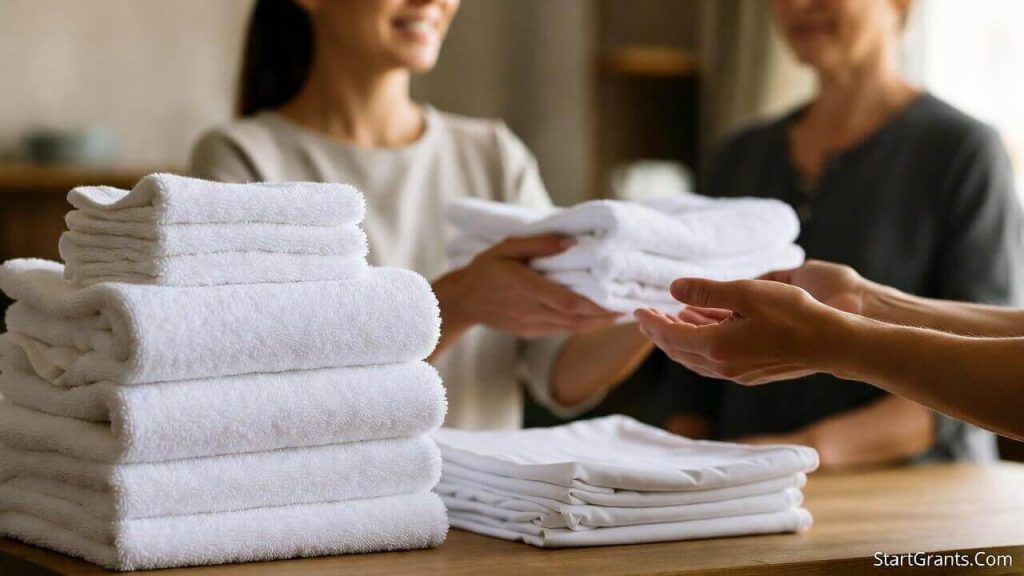
Securing brand-new home goods restores dignity to families transitioning into emergency shelters.
Phase 1: The 2026 Reality Check (What Happened to Bed Bath & Beyond?)
To successfully request donations, you must understand the corporate structure of the company you are pitching. The legacy Bed Bath & Beyond, famous for its massive blue coupons and ceiling-high stacks of towels, no longer exists in the physical world.
The Transition to Beyond, Inc.
The brand was rescued and resurrected purely as a digital entity under the corporate umbrella of Beyond, Inc. (formerly Overstock.com). Because there are no longer local store managers to speak with, the hyper-local “community goodwill” budgets that used to exist at the retail level have been completely centralized.
The Centralization of Corporate Giving
When a corporation transitions to a 100% e-commerce model, their philanthropic strategy shifts from supporting local neighborhood events (like a high school car wash or a local raffle) to supporting massive, national-scale initiatives.
- The New Focus: E-commerce giants prefer to partner with large, established 501(c)(3) organizations (such as the American Red Cross, Habitat for Humanity, or national housing coalitions).
- The Donation Format: They are far less likely to mail a physical box of random unsold merchandise to a small local charity. Instead, corporate giving is now handled through centralized digital grants, employee matching programs, or bulk liquidations to national charity hubs.
If your organization is a small, local startup, trying to crack the centralized digital fortress of a billion-dollar e-commerce brand might not yield immediate results. You must understand the specific value of what you are asking for, and strategically broaden your targets.
Phase 2: The Critical Need for In-Kind Home Goods Donations
Before we discuss the tactical methods of applying to e-commerce portals or alternative retailers, we must establish why home goods donations are so fiercely competitive.
For specific types of nonprofit organizations, securing physical items (in-kind donations) is significantly more valuable than receiving a small cash check.
The Organizations That Rely on Home Goods
- Domestic Violence Shelters: When individuals flee abusive situations, they often leave with nothing but the clothes on their backs. Shelters desperately need constant supplies of new, unused bath towels, bed sheets, pillows, and basic hygiene products.
- Homeless Transition Programs: Moving a veteran or a family from the streets into permanent housing is only the first step. They need pots, pans, silverware, shower curtains, and small appliances to actually make the empty apartment functional.
- Disaster Relief Hubs: Following a hurricane, flood, or fire, displaced families need immediate, tangible comforts. Clean bedding and basic kitchenware are the cornerstones of disaster recovery.
The Psychology of “New” vs. “Used”
Many nonprofits rely on local community drives to collect used blankets and second-hand kitchenware. While helpful, providing a family in crisis with brand-new, high-quality items directly from a corporate retailer provides a massive psychological boost. It restores dignity. When you write your corporate grant proposal, you must emphasize this emotional and psychological impact. You are not just asking for “inventory”; you are asking for the tools to rebuild a family’s dignity.
Before you begin navigating massive e-commerce portals, you must expand your search radar. Securing physical goods requires knowing exactly where to look. Watch this excellent breakdown by a nonprofit expert detailing the top sites and methods to find in-kind donations and physical inventory for your organization:
Phase 3: How to Request Donations from E-Commerce Giants (The Digital Strategy)
Since you can no longer walk into a Bed Bath & Beyond to ask for a donation, your entire approach must adapt to the digital age. Pitching massive e-commerce corporations (like Beyond, Inc., Wayfair, or Amazon) requires a highly professionalized, data-driven approach.
Navigating the CSR Portals
Large digital retailers use third-party software platforms (such as Benevity, CyberGrants, or YourCause) to filter the thousands of requests they receive daily.
- The Automation Wall: There is no human reading your initial submission. An algorithm scans your application to verify your Employer Identification Number (EIN) against the IRS database. If your 501(c)(3) status is pending or revoked, you are automatically denied.
- The Mission Match: The system will ask you to categorize your nonprofit. If the corporation’s current CSR focus is “Housing Equity,” and you select “Youth Sports,” your application will likely be filtered out immediately.
The Focus on “Overstock” and “Damaged Packaging”
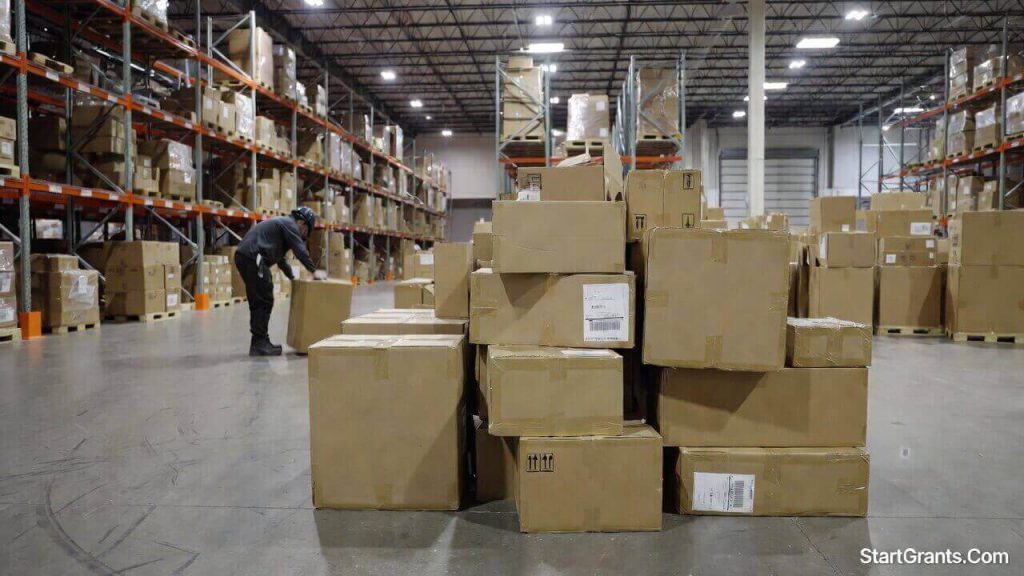
E-commerce giants donate overstock items to clear warehouse space and gain valuable tax deductions.
The most effective way to secure physical inventory from an e-commerce company is to ask for what they cannot sell. In your digital proposal, explicitly request donations of “overstock items,” “discontinued product lines,” or “items with damaged retail packaging.” E-commerce warehouses spend millions of dollars storing unsold inventory. By donating it to your registered charity, they clear valuable warehouse space and receive a tax write-off at the wholesale value of the goods.
Mastering the Corporate Pitch
Before you hit “submit” on any digital portal, you must understand the core psychology of corporate giving. E-commerce companies do not donate based on guilt or pity; they donate for tax efficiency and brand marketing.
To ensure your digital application survives the automated filters and catches the eye of the CSR director, you must review our master blueprint on how to ask businesses for donations. That guide will teach you exactly how to structure your proposal, how to phrase your request for maximum impact, and how to offer digital marketing visibility to your corporate sponsors.
Phase 4: The Top 5 Bed Bath & Beyond Alternatives for Home Goods
When a local domestic violence shelter or a homeless transition program needs fifty bath towels and twenty sets of twin-sized bed sheets by next Friday, waiting six months for a national e-commerce grant is not a viable option. You need local, brick-and-mortar alternatives that still operate community-level giving programs.
Here are the top five retail and corporate alternatives to target for physical home goods in 2026:
1. Target (Community Engagement & Gift Cards)
Target has consistently maintained a strong presence in local philanthropy. While massive corporate grants are handled online through the Target corporate community giving and grants programs, individual Target Store Directors often have discretionary budgets to support 501(c)(3) organizations operating directly within their immediate neighborhood.
- The Strategy: Approach the Store Director early in the morning on a weekday. Instead of asking for a box of blankets, ask for a $100 to $250 Target Gift Card. You can then use this gift card to purchase exactly the home goods you need from their clearance or overstock sections, maximizing the value of the donation.
2. Walmart (The “Spark Good” Local Grants)
Walmart operates one of the most accessible local grant programs in the United States, currently managed through their official Spark Good Local Community Grants portal.
- The Strategy: These grants range from $250 to $5,000 and are awarded locally. Your organization must be verified through their Spark Good portal. Once verified, you can apply directly to the specific Walmart Supercenter or Neighborhood Market closest to your facility. If approved, the funds are typically distributed as a digital gift card, which is perfect for buying bulk kitchenware, small appliances, and bedding.
Since relying on local Bed Bath & Beyond stores is no longer an option, mastering the Walmart Spark Good Local Grant program is mandatory for community organizers. Watch this step-by-step tutorial on how to navigate their new portal and secure up to $5,000 in local funding to purchase your immediate home goods and essentials:
3. IKEA (Showroom Displays and Sustainable Giving)
If your nonprofit is furnishing transitional apartments or refugee housing, IKEA is an incredible, often-overlooked resource. IKEA has a massive corporate commitment to sustainability and circular business models.
- The Strategy: They do not want their showroom displays or slightly damaged furniture ending up in landfills. Connect with the local store’s marketing or sustainability manager. Propose a partnership where your nonprofit acts as a designated recipient for “as-is” or floor-model textiles, rugs, and furniture.
4. Kohl’s (Community and Family Focus)
Kohl’s has a long-standing history of supporting family and pediatric charities through their Kohl’s Cares program. They carry extensive lines of bedding, bath accessories, and kitchen essentials.
- The Strategy: While their national hospital partnerships are locked in, local stores often participate in community volunteer programs. If you can get a team of Kohl’s associates to volunteer at your facility, the corporation often provides a corresponding financial grant to your organization, which you can use to buy their home goods.
5. The Secret Hack: Local Hospitality Suppliers and Hotels
This is the ultimate insider tactic for securing massive quantities of bedding and towels. Do not just look at retail stores; look at the hospitality industry.
- The Strategy: Hotels are required to cycle out their linens, pillows, and towels incredibly frequently to maintain brand standards. A towel that a hotel considers “unusable” due to a minor snag is still a perfectly clean, high-quality, and highly valuable item for an animal rescue shelter or a homeless outreach program. Contact the General Manager or the Director of Housekeeping at large local hotels and ask to become the designated charity for their discarded linens.
Phase 5: Crafting the “Home Goods” Pitch
Whether you are emailing a local hotel manager or uploading a PDF to a corporate portal, the way you write your donation request for physical items requires a specific psychological approach. You must make it financially logical for the business to give you their inventory.
Requesting “Unsellable” Inventory
Never ask a business for their newest, top-tier retail merchandise. That is their primary source of profit. Instead, your proposal should specifically request items that have lost their retail value but retained their functional value.
- Ask for items with damaged retail packaging (a perfectly good toaster inside a crushed cardboard box).
- Ask for overstock or discontinued product lines that are taking up valuable warehouse space.
- Ask for customer returns that cannot legally be resold as new but are still in excellent condition.
By framing your request this way, you solve a problem for the business: you help them clear out dead inventory, save them disposal fees, and provide them with a charitable tax receipt for the wholesale value of the goods.
Phase 6: Matching Corporate Partnerships and Housing Synergy
For major nonprofits, community development is rarely a single-issue project. If you are building a new facility, you need two distinct types of corporate sponsors: the ones who build the structure, and the ones who fill the interior.
Understanding this synergy allows you to write incredibly powerful grant proposals. When you apply for a grant to purchase home goods, you must prove to the retailer that the physical building is already fully funded and supported by other major corporate players.
The “Holistic Community Development” Strategy
Imagine your nonprofit is renovating a transitional housing facility for homeless veterans.
- The Interior: You target Walmart, IKEA, and local hotels for the beds, the linens, the kitchen appliances, and the bathroom supplies.
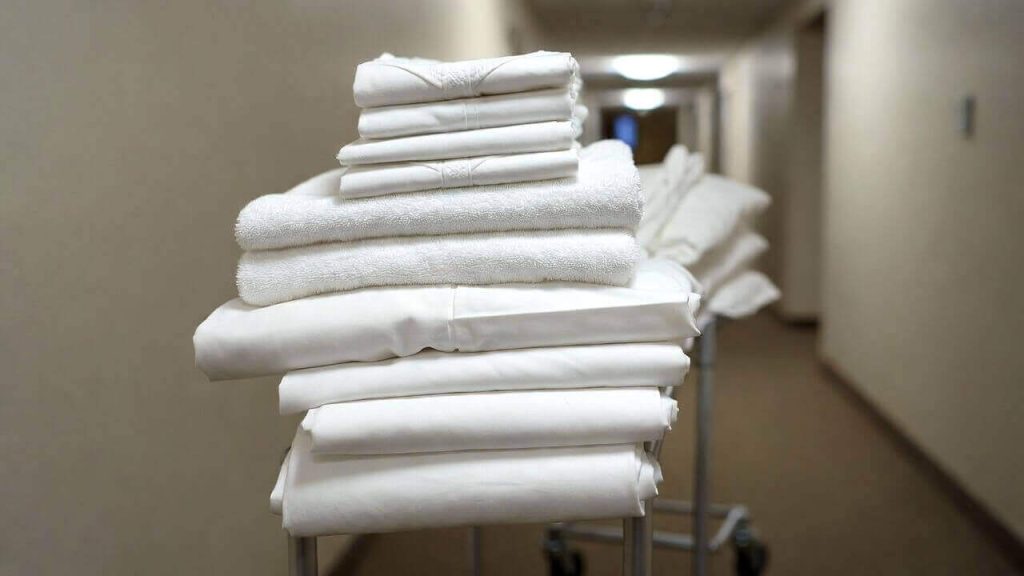
Local hotels constantly cycle out perfectly clean linens, making them the ultimate local donation source.
- The Exterior/Structure: However, to actually repair the roof, fix the plumbing, and build the wheelchair ramps, you cannot ask a home goods store. You must secure massive funding for raw materials like lumber, drywall, and power tools.
To fund the structural side of your community projects, you must master the art of the construction grant. We highly recommend reviewing our complete breakdown of The Home Depot donation request and grant programs. By combining a Home Depot grant for the physical construction with a Walmart or IKEA grant for the interior furnishings, your nonprofit can fully execute a massive community housing initiative from start to finish.
Conclusion & Your Strategic Master Checklist
The closure of Bed Bath & Beyond’s physical stores did not end corporate donations for home goods; it simply moved the battlefield online to Beyond, Inc., and shifted the local focus to alternative retailers like Target, Walmart, and IKEA.
In 2026, securing new bedding, clean towels, and essential kitchenware for your domestic violence shelter or homeless transition program requires a multi-pronged approach. You must be prepared to navigate centralized e-commerce CSR portals for massive bulk donations, while simultaneously executing local, face-to-face requests at big-box retailers and neighborhood hotels for immediate, smaller-scale needs.
Before you launch your next campaign to furnish a community facility or restock an emergency shelter, run your strategy through this final Master Checklist:
- The Reality Check: Have you removed legacy Bed Bath & Beyond store managers from your outreach list and pivoted to their digital parent company, Beyond, Inc.?
- The “Unsellable” Pitch: Are you specifically asking alternative retailers for “overstock,” “damaged packaging,” or “as-is” display items rather than their newest retail merchandise?
- The Hospitality Hack: Have you contacted the General Manager or Executive Housekeeper of at least three large local hotels to request their cycled-out linens and towels?
- The Digital Verification: If you are applying to a national e-commerce portal, is your 501(c)(3) status actively verified and in good standing with the IRS to survive the automated screening process?
- The Holistic Partnership: Have you clearly articulated how this donation of interior home goods fits into the broader picture of your community housing project (and mentioned your other corporate sponsors)?
By treating corporate and hospitality donors as strategic partners who need to offload excess inventory for a tax benefit, rather than treating them like endless charity ATMs, you will secure the vital home goods your organization desperately needs.
Frequently Asked Questions (FAQs)
Q1: Can I still ask my local Bed Bath & Beyond for a donation?
A: No. Bed Bath & Beyond closed all of its physical retail stores following its 2023 bankruptcy. The brand is now owned by Beyond, Inc. and operates entirely as an e-commerce platform. All donation requests must now be routed through centralized, digital corporate portals rather than local store managers.
Q2: What is the best alternative store to ask for bedding and towel donations?
A: For local, immediate needs, Target and Walmart (through their Spark Good program) are excellent alternatives as they still empower local store directors to issue community grants or gift cards. For massive, ongoing needs, establishing a partnership with the housekeeping directors at large local hotels is the most effective way to secure high-quality, cycled-out linens and towels.
Q3: Do online retailers like Wayfair or Overstock donate furniture?
A: Yes, but they rarely donate to small, localized charities or individuals. Massive e-commerce home goods retailers typically partner with large national or global 501(c)(3) organizations (like Habitat for Humanity) to handle bulk liquidations of overstock, returned, or slightly damaged furniture. You must apply through their corporate CSR portals.
Q4: How do I ask a store for unsellable or damaged merchandise?
A: Frame your request as a business solution. Explain to the store manager that your 501(c)(3) nonprofit can accept items with crushed retail packaging, discontinued lines, or “as-is” floor models. Emphasize that donating these items to your organization saves the company disposal fees, clears valuable warehouse space, and provides them with a charitable tax receipt for the wholesale value of the goods.
Q5: Why are in-kind home goods donations better than cash for shelters?
A: For organizations like domestic violence shelters or disaster relief hubs, receiving brand-new, high-quality physical items (like clean bed sheets, pillows, and kitchenware) provides an immediate psychological and emotional boost to clients in crisis, restoring their dignity. Furthermore, businesses are often much more willing to part with excess inventory (which costs them wholesale prices) than to write a direct cash check.
Q6: How can Islamic non-profits utilize corporate home goods donations for their programs?
A: While physical items received from corporate grants are not classified as Zakat, Islamic non-profits should pursue them to distribute as general Sadaqah (charity). If your Islamic 501(c)(3) operates a domestic violence shelter or refugee resettlement program, securing these corporate goods directly fulfills the Islamic mandate of sheltering Al-Masakin (the needy) and Ibn Al-Sabil (the wayfarer). You can explore successful models of this through organizations like ICNA Relief’s Transitional Housing programs.
Important Disclaimer: StartGrants.com is an independent information portal. We are not a government agency and do not provide direct grants or products. Always verify the current status of programs with the providing organization.