Last Updated: June 2026 | Author: Munir Ardi
Extreme heatwaves are no longer just a seasonal discomfort; they are a severe public health crisis that escalates year after year. For low-income families, seniors living on fixed incomes, and individuals with underlying medical conditions, surviving the blistering summer months without adequate cooling is quite literally a matter of life and death. The Centers for Disease Control and Prevention (CDC) continuously reports that extreme heat is one of the leading causes of weather-related fatalities in the United States.
Unfortunately, purchasing a brand-new air conditioning unit—or simply keeping up with exorbitant summer electricity bills—is often financially impossible for those living paycheck to paycheck. If you find yourself having to choose between buying groceries and turning on the AC, you are not alone, and more importantly, financial help is available.
Before exploring the specific cooling programs and emergency relief funds detailed in this comprehensive guide, it is highly recommended that homeowners understand the broader federal landscape of residential upgrades by reviewing our main directory on energy efficiency grants for homeowners. Establishing a foundational understanding of how federal money flows into home improvement will drastically increase your chances of securing aid.
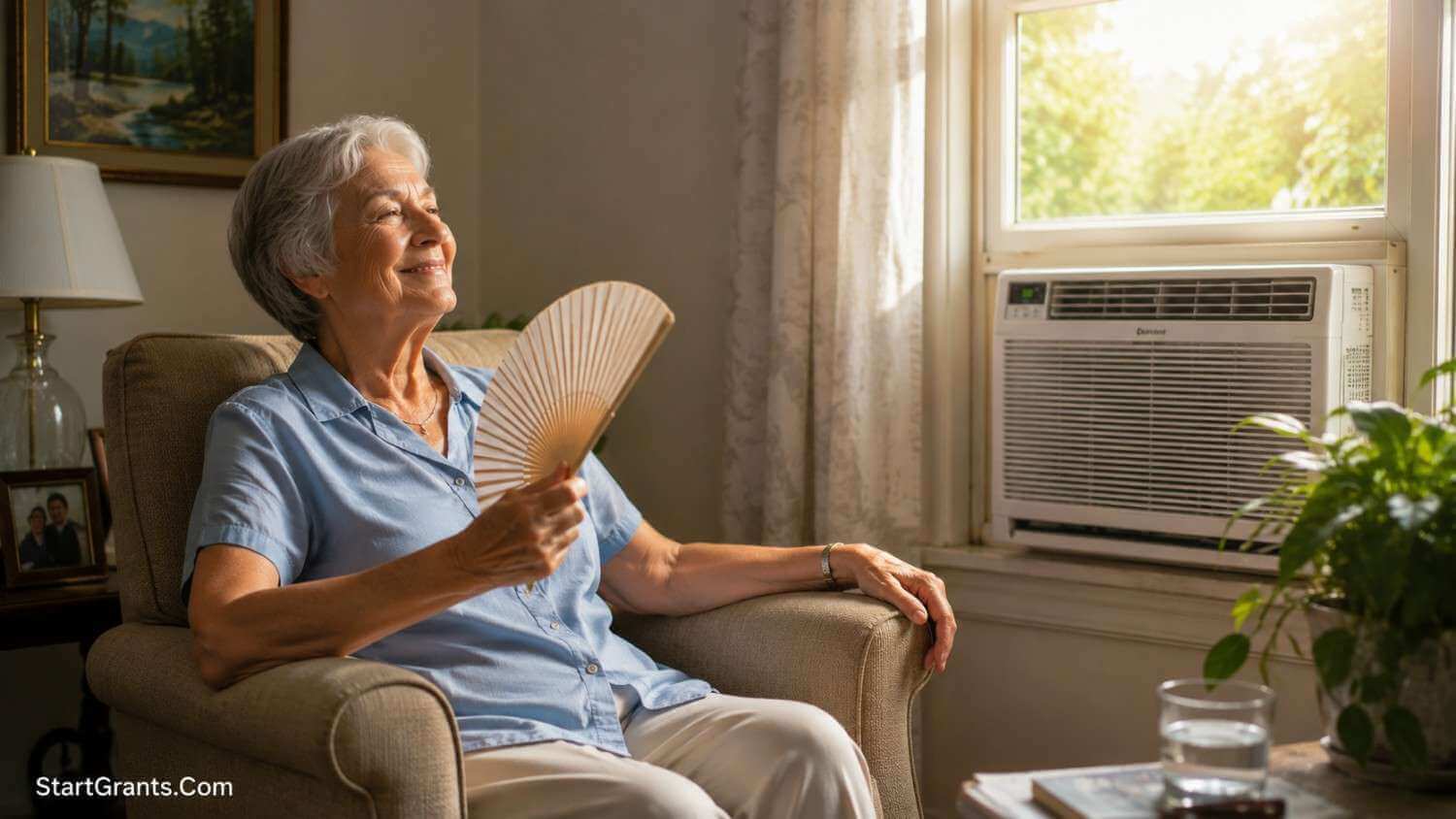
Government grants like LIHEAP provide critical cooling assistance and free AC units to vulnerable families during dangerous summer heatwaves.
Phase 1: The Urgent Need for Cooling Assistance
Air conditioning is frequently misunderstood as a luxury. However, in regions where temperatures routinely soar above 90°F (32°C) with high humidity, cooling systems are essential medical lifelines. High temperatures can exacerbate cardiovascular and respiratory diseases. Vulnerable demographics, such as children under the age of five and adults over the age of 65, are particularly susceptible to heat exhaustion and heatstroke.
Because the stakes are so high, both the federal government and private non-profit organizations have developed extensive financial assistance programs to ensure that income inequality does not dictate who survives a summer heatwave.
Pro-Tip: Recognizing the Deadly Signs of Extreme Heat
Before seeking financial assistance, it is crucial to understand how extreme temperatures physically affect vulnerable family members. Watch this essential medical breakdown, What are the signs and symptoms of heat stroke vs. heat exhaustion? Here’s what you need to know, to quickly identify life-threatening emergencies during a summer heatwave:
Phase 2: Federal Government Grants (The Heavy Hitters)
The federal government allocates billions of dollars annually to individual states to help vulnerable populations manage extreme temperatures. These federally backed initiatives should be your primary targets when seeking robust, long-term funding.
1. LIHEAP (Low Income Home Energy Assistance Program)
LIHEAP is the crown jewel of federal energy assistance. While historically recognized for helping families with winter heating bills, a significant portion of LIHEAP funding is dedicated to Cooling Assistance during the summer months. Because LIHEAP is federally funded but state-administered, the exact benefits vary depending on where you live.
Depending on your state’s specific implementation, LIHEAP funds can be utilized to:
- Pay Past-Due Summer Electricity Bills: Direct payments are made to your utility provider to prevent imminent power shut-offs.
- Provide Free Air Conditioners: Some state agencies use LIHEAP funds to distribute free window air conditioning units or portable fans to eligible households.
- HVAC Repair and Replacement: In severe cases, funds can be used to repair or entirely replace a broken central air conditioning system.
Eligibility criteria: To qualify, your household income must generally fall below 150% of the federal poverty level, or 60% of your state’s median income. Priority processing is strictly given to households with elderly members, young children, or individuals with documented medical conditions (like severe asthma or COPD) that are exacerbated by heat.
2. WAP (Weatherization Assistance Program)
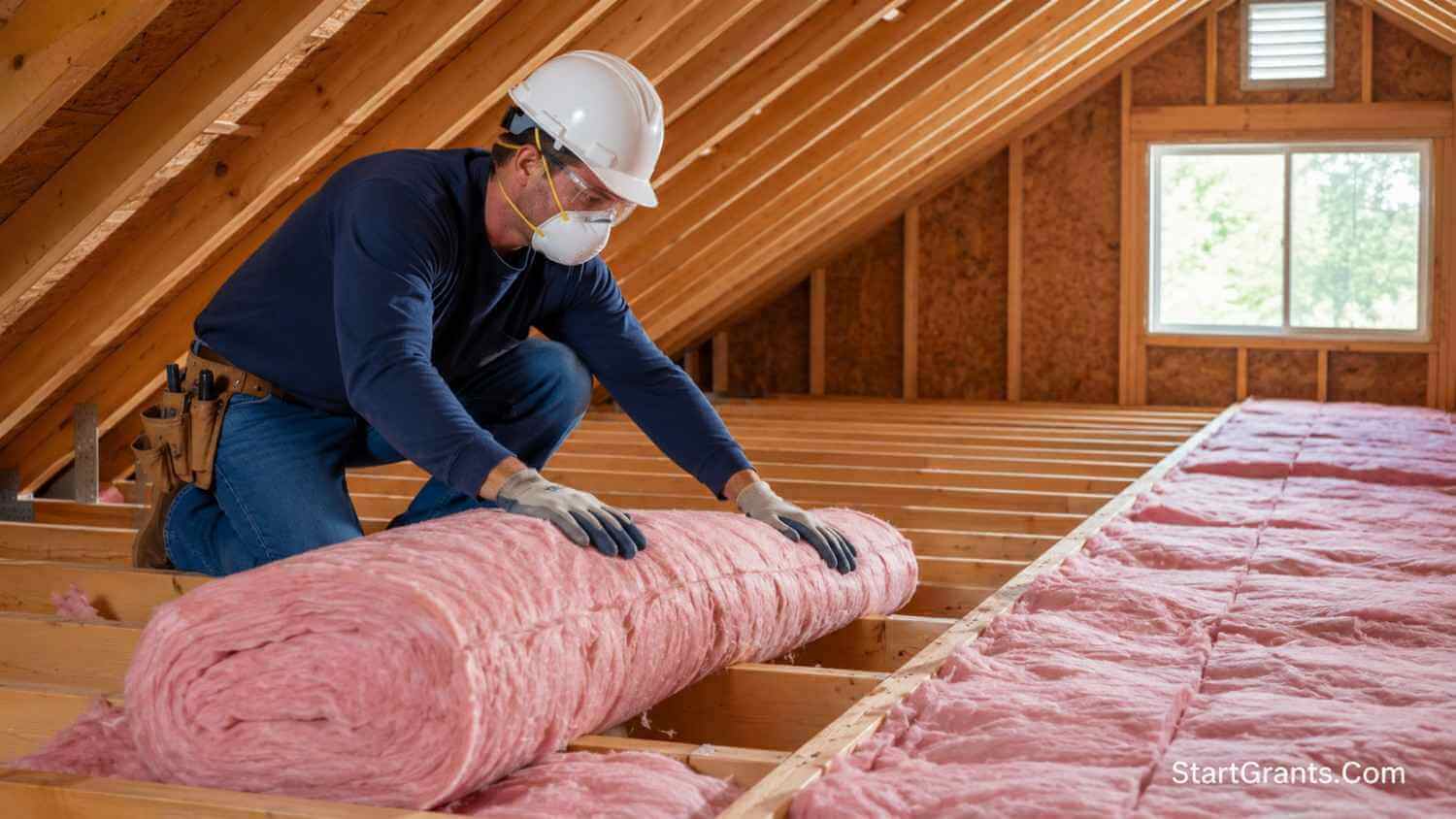
Sealing your home through the Weatherization Assistance Program (WAP) ensures your air conditioning system operates efficiently without wasting electricity.
A brand-new air conditioner is practically useless if the cold air it produces immediately escapes through unsealed cracks, thin walls, and poorly insulated roofs. The Department of Energy’s Weatherization Assistance Program (WAP) focuses on making your home structurally and thermally efficient.
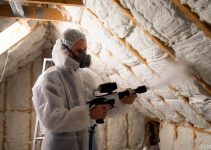
WAP does not typically provide the AC unit itself; instead, it provides the structural integrity required to make your cooling system affordable to run. WAP funds are frequently combined with a government grant for home insulation. By sealing the building envelope, adding attic insulation, and repairing ductwork, WAP can reduce your summer energy consumption by up to 30%.
Furthermore, weatherization experts might determine that your windows are the primary source of heat gain. In such cases, they may recommend combining your weatherization efforts with grants for energy-efficient windows. These upgrades trap the cold air inside permanently, drastically lowering your future utility bills and easing the strain on your HVAC system.
Phase 3: State, Local, and Utility Company Relief Programs
If you do not qualify for federal grants, your next step should be evaluating state-level relief and programs offered directly by your utility providers.
Utility Forgiveness and Payment Plans
Almost all major utility companies have internal hardship programs. If you are behind on your bills due to high AC usage, you can request to be placed on a “Levelized Billing” plan, which smooths out your payments so you don’t face massive spikes in July and August. Additionally, many states have “Summer Disconnection Moratoriums,” which are laws that make it illegal for utility companies to shut off your electricity during a declared heatwave, regardless of how much money you owe.
Medical Baseline Allowances
If someone in your home requires an air conditioner for medical reasons (such as a heart condition or severe respiratory illness), your doctor can sign a Medical Baseline Allowance form. Submitting this form to your utility company often grants you a significantly lower electricity rate, making it much easier to afford the cost of running your AC continuously.
Pro-Tip: Navigating the LIHEAP Application Process
Securing federal utility funds requires navigating specific application procedures and gathering the correct documentation. Although this program is frequently highlighted for winter, the application structure remains highly consistent for summer cooling. Watch this helpful tutorial, How to Apply for LIHEAP: Winter Heating Help 2025, to learn exactly how to prepare and submit a successful application:
Phase 4: Non-Profit and Charity Assistance (Immediate Relief)
Federal and state programs are highly effective, but they suffer from long waiting lists and complex bureaucratic application processes. If you are facing an immediate heat crisis today, local charities are your best frontline defense.
- The Salvation Army: Through their annual “Beat the Heat” initiatives, many local Salvation Army chapters purchase and distribute free box fans or window AC units to low-income seniors and vulnerable families. They also operate cooling shelters during peak heat hours.
- St. Vincent de Paul: This widespread Catholic charity operates on a community level and frequently assists with emergency utility bill payments. If you receive a disconnection notice, St. Vincent de Paul can often intervene by pledging a payment directly to the utility company on your behalf.
- Community Action Agencies (CAAs): Your local CAA is the central hub for discovering hyper-local non-profit grants designed specifically for your county’s residents.
Strategic HVAC Planning: Maintaining comfortable home temperatures requires year-round foresight. If your central system requires a complete seasonal overhaul this summer, do not wait for winter to realize your furnace is also broken. Ensure you simultaneously review options to get a government grant to install central heating before the winter freeze inevitably arrives.
Phase 5: The Muslim Perspective (Hifz al-Nafs & Avoiding Riba)
For Muslim families residing in the United States and facing dangerous heatwaves, acquiring adequate cooling is not a mere luxury or aesthetic upgrade (Tahsiniyyat). It is a fundamental necessity required to protect life and health, thereby fulfilling one of the highest core objectives of Islamic law (Maqasid al-Shariah) known as Hifz al-Nafs (the Preservation of Life).
1. The Dangerous Trap of Haram Financing
When the heat becomes unbearable and children or elderly parents are suffering, desperate families often turn to toxic financial products to purchase AC units. This desperation leads to taking out Payday Loans, swiping high-interest credit cards (often carrying an oppressive 25%+ Annual Percentage Rate), or signing up for commercial home appliance financing that includes exploitative warranties.
These conventional financial systems are inherently tied to Riba (usury and interest), and the obscure terms and conditions often involve Gharar (deceptive uncertainty). In Islam, engaging in Riba—whether paying it or receiving it—is strictly forbidden (Haram) and is considered one of the major sins.
Attempting to solve a physical crisis by entangling your family in Riba brings spiritual ruin and actively destroys the Barakah (divine blessings) within the household. Financing your family’s survival through interest-bearing debt is a trap that must be avoided at all costs.
2. The Halal Sanctity of Hibah and Zakat
Fortunately, there are perfectly Halal alternatives. Pursuing government assistance programs like LIHEAP or WAP is completely permissible and Halal. These federal and state funds are awarded as pure Hibah (gifts or grants) aimed at protecting the welfare of citizens. They demand zero repayment and involve absolutely no interest.
Furthermore, if federal aid is exhausted or if you do not meet the government’s stringent income brackets, Muslims should immediately seek assistance from legitimate Islamic charitable organizations. These institutions operate funds sourced purely from Zakat (obligatory alms) and Sadaqah (voluntary charity).
Reputable national organizations such as Islamic Relief USA and ICNA Relief frequently offer emergency financial assistance, disaster relief, and utility bill relief for low-income families. Turning to these community pillars ensures that you receive the cooling assistance you desperately need without the spiritually destructive burden of Riba.
Phase 6: Step-by-Step Application Guide
Securing financial assistance for air conditioning requires prompt action and organized documentation. Follow these steps to expedite your approval:
- Gather Your Documents: You will need a government-issued ID, Social Security cards for all household members, proof of income for the last 30 days (pay stubs or SSI letters), and a copy of your most recent electricity bill.
- Obtain Medical Documentation: If anyone in your home suffers from a heat-sensitive medical condition, obtain a signed letter from their primary care physician. This pushes your application to the front of the line.
- Contact Your Local CAA: Search online for your state’s “Community Action Agency.” They are the gatekeepers for LIHEAP and WAP applications.
- Apply Early: Do not wait for the peak of a July heatwave to apply. Funds operate on a strict first-come, first-served basis and often deplete quickly.
Conclusion: Stay Cool, Stay Safe
Financial assistance for air conditioning exists, and it is actively saving lives every summer. Whether you are navigating the robust federal offerings of LIHEAP, seeking out a local charity for an emergency window unit, or relying on Halal Zakat funds to protect your family without compromising your faith, there are pathways to relief. Be proactive, gather your documentation, and reach out to your local support agencies today to secure your family’s safety and comfort.
Frequently Asked Questions (FAQs)
Q1: Can I get a free AC unit directly from the government?
A: Yes. Depending on your state’s specific guidelines, the federal LIHEAP program provides a “Cooling Assistance” component which can include the direct distribution of free window AC units to qualifying low-income households, particularly those with vulnerable family members.
Q2: Does LIHEAP actually cover summer electric bills, or just winter heating?
A: While originally designed for heating, many states now allocate a significant portion of their LIHEAP funding specifically to help pay summer electricity bills. This is designed to prevent utility companies from shutting off your power during deadly extreme heatwaves.
Q3: Are there medical exemptions to get priority for AC grants?
A: Absolutely. Households with a member who requires medical equipment powered by electricity, or individuals suffering from conditions like severe asthma, COPD, or cardiovascular disease, receive immediate priority processing for cooling assistance and utility protection.
Q4: Can I apply for both LIHEAP and the Weatherization Assistance Program (WAP)?
A: Yes, and it is highly encouraged. By applying for both, you can use LIHEAP to pay for your immediate summer cooling bills or AC repairs, while WAP will seal and insulate your home to ensure your future energy bills remain permanently low.
Q5: Is it Halal to accept government grants to pay for my air conditioning?
A: Yes. Government grants such as LIHEAP and WAP are classified as ‘Hibah’ (gifts) and do not require repayment or involve interest (Riba). Accepting this aid to protect your family’s health (Hifz al-Nafs) is completely permissible and Halal in Islamic jurisprudence.