Last Updated: | Author: Munir Ardi
Most postpartum assistance is not a cash grant. Help usually comes through Medicaid or insurance coverage, hospital financial assistance, income-based clinic fees, paid-leave or disability benefits, cash-assistance programs, and local grant-funded services. The right starting point depends on whether the urgent problem is medical care, mental health treatment, lost income, hospital debt, food, transportation, infant supplies, or help at home.
Postpartum Support International (PSI), hotlines, and peer groups can provide support and referrals, but they should not be described as national grants that pay therapy bills. For assistance focused primarily on baby supplies, use our broader free baby stuff for low-income families guide.
Start With the Right Type of Postpartum Assistance
| Immediate need | Best first place to check | What to request | Important limit |
|---|---|---|---|
| Medical visits, medication, or physical therapy | Medicaid or health plan | Postpartum eligibility, network providers, referral, authorization, and cost-sharing rules | Extended eligibility does not guarantee payment for every service |
| Uninsured or high-deductible care | HRSA-funded health center or hospital financial counselor | Sliding-fee discount, financial assistance, or a no-interest payment plan | Services and eligibility differ by facility |
| Mental health treatment | Health plan, health center, or licensed clinician | Therapy, psychiatry, medication management, telehealth, and reduced fees | Peer support and hotlines do not replace clinical treatment |
| Doula or help at home | Medicaid plan, Healthy Start, community program, or provider | Covered visits, grant-funded spaces, sliding fees, or installments | Most grants fund the service provider, not cash for the family |
| Lost wages | Employer, state leave agency, disability insurer, or TANF office | Paid leave, disability benefits, FMLA, or cash assistance | Medical coverage does not replace wages |
| Food, pumps, diapers, or child care | WIC, health plan, diaper bank, or state child-care agency | Program benefits, covered equipment, or material assistance | These are not interchangeable general-purpose grants |
Coverage, program funding, provider availability, and benefit rules can change. Verify current details directly with the agency, plan, facility, or organization.
1. Confirm Medicaid or Insurance Coverage
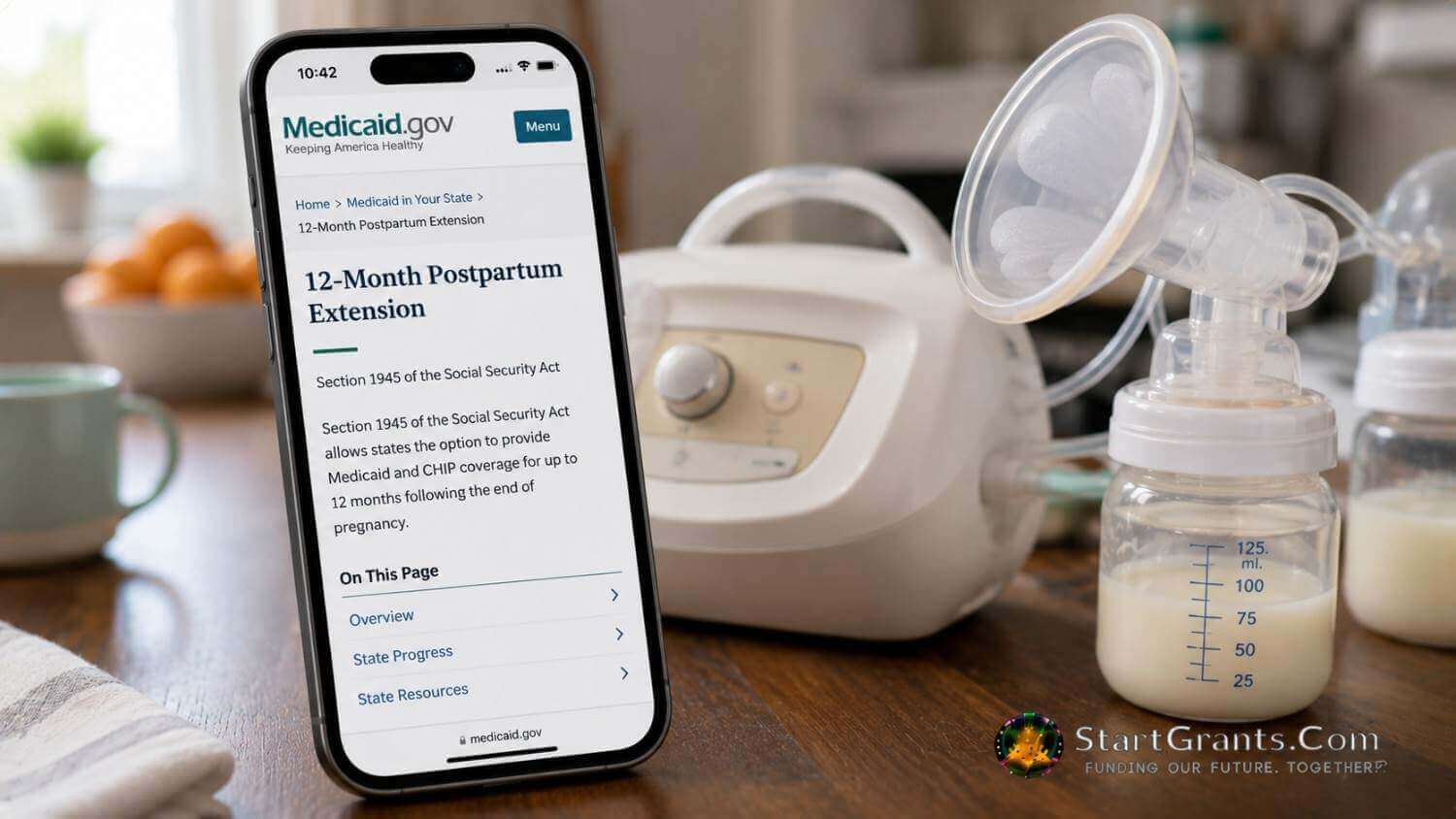
States may extend pregnancy-related Medicaid and CHIP coverage through 12 months after the pregnancy ends. This option has been adopted widely, but the current status and implementation details should be checked on the official CMS postpartum coverage page and state map. Arkansas materials still reflect a shorter postpartum period for its pregnancy eligibility category, although a person may qualify through another Medicaid category.
In a state using the extension, a person enrolled in the applicable Medicaid or CHIP pregnancy coverage generally receives continuous coverage through the extended postpartum period even if income changes. Residency and other program rules still matter. Report address changes, respond to notices, and confirm that the state has correctly updated the eligibility end date.
Services Worth Checking With the Plan
- Postpartum, primary-care, and specialist visits
- Screening and treatment for depression, anxiety, trauma, or substance use disorders
- Therapy, psychiatric care, and prescription medication
- Treatment of high blood pressure, diabetes, infection, anemia, or other complications
- Pelvic-floor or other physical therapy when covered and medically necessary
- Lactation counseling and breastfeeding equipment
- Contraceptive and reproductive health services
- Transportation, care management, home visiting, or special plan benefits where available
If a claim or authorization is denied, request the written notice, clinical or benefit reason, records used in the decision, appeal instructions, and deadline. A verbal statement from a clinic is not proof that a plan will pay.
2. Find Affordable Postpartum Mental Health Care
Free emotional support and clinical treatment are different services. A peer group or hotline can help someone feel less alone and connect them with resources, but diagnosis, prescription medication, psychotherapy, and other treatment should come from appropriately licensed professionals.
Use the Insurance or Medicaid Provider Directory
Call the plan and ask for available in-network clinicians who treat perinatal mood and anxiety disorders. Ask about therapy, psychiatry, medication coverage, telehealth, copayments, referral requirements, and urgent appointments. If the directory is inaccurate or no listed clinician can accept a new patient, ask member services to locate an available provider and document the request.
Use an Income-Based Health Center
HRSA-funded health centers serve patients with or without insurance and maintain sliding-fee discount programs based primarily on income and family size. Services differ by site. Use the official Find a Health Center directory and ask the selected location about behavioral health, postpartum visits, medication management, telehealth, fees, and documents.
Use Free Support and Referral Services
Postpartum Support International provides peer support, online groups, a HelpLine, and a directory of perinatal mental health providers and groups. PSI’s HelpLine is not a crisis hotline, and its public services should not be presented as a nationwide program that pays an applicant’s therapy bill. Confirm insurance, fees, qualifications, and current availability directly with any listed provider.
The HRSA National Maternal Mental Health Hotline provides free and confidential support by phone, text, and chat at any time. Counselors can listen and connect callers with local resources. The hotline does not replace 911, 988, or ongoing care from a licensed clinician.

3. Look for Grant-Funded Doula and Home-Support Programs
A postpartum doula may provide nonclinical support with infant-care education, feeding routines, adjustment at home, emotional support, light meal preparation, and limited household tasks. A doula does not replace a nurse, therapist, lactation clinician, pediatrician, or emergency care.
Some state Medicaid doula benefits include postpartum visits. A local Healthy Start project may also provide postnatal care coordination or doula services. These services depend on local design, funding, service area, enrollment rules, and open spaces. Use HRSA’s Healthy Start program page to identify a nearby project and ask what is currently offered.
If no public benefit applies, ask community doula organizations and individual providers about grant-funded spaces, sliding fees, trainee services, installments, and cancellation terms. Our companion guide explains how to look for financial assistance for doula and midwife services.
4. Replace Lost Income During Recovery
Medical coverage pays healthcare providers; it does not replace a paycheck. Evaluate income options separately:
- Employer benefits: Ask human resources about paid parental leave, accrued sick or vacation time, short-term disability coverage, donated leave, and documentation.
- State paid family and medical leave: Some states and the District of Columbia operate paid family or medical leave programs. Benefit amounts, contribution histories, covered workers, job protection, and application windows differ. Use the Department of Labor paid-leave map to reach the current state agency.
- FMLA: Eligible employees of covered employers may receive up to 12 workweeks of unpaid, job-protected leave for qualifying family and medical reasons, with continued group health coverage under the same terms. Employer coverage, employee eligibility, available leave, and certification rules apply.
- Short-term disability: This is insurance, not a government grant. A postpartum physical or mental condition may qualify only if the claimant had applicable coverage and meets the policy’s disability definition, evidence requirements, waiting period, exclusions, and deadline.
- TANF: State TANF programs may provide cash assistance to eligible low-income families. Postpartum status alone does not guarantee eligibility. Review our guide to TANF assistance for pregnant and postpartum families.
If returning to work depends on infant care, contact the state child-care agency early because waiting lists, provider availability, and copayments can delay placement. Our guide explains government child-care subsidies for infants.
5. Reduce Everyday Postpartum Costs
Breastfeeding Equipment and Support
Most Marketplace and other non-grandfathered health plans cover breastfeeding support, counseling, and equipment, but a plan may specify the pump type, supplier, timing, rental or purchase arrangement, and authorization requirements. Medicaid procedures vary by state and plan. Contact the plan before purchasing and follow our steps for requesting a breast pump through Medicaid or insurance.
Food and Nutrition
WIC serves eligible pregnant, breastfeeding, and non-breastfeeding postpartum participants, along with infants and young children. It provides approved supplemental foods, nutrition education, breastfeeding support, and referrals—not unrestricted cash. Eligibility periods and food packages depend on participant category and program rules. See what WIC covers for newborns and postpartum parents.
Diapers and Household Supplies
SNAP and WIC generally do not pay for diapers. Diaper banks, community action agencies, faith communities, and local nonprofits may help, subject to service-area and inventory rules. Use our directory of emergency diaper assistance programs.
Transportation and Meals
Ask a Medicaid managed-care plan whether non-emergency medical transportation is available for covered appointments. Some health plans offer limited meals after an eligible hospital discharge or through a special care-management benefit, but meal delivery is not standard in every plan. Confirm eligibility, authorization, participating vendors, and the number of covered meals.
6. Apply for Hospital Financial Assistance
Tax-exempt hospital organizations must maintain a written financial assistance policy for emergency and other medically necessary hospital care. The policy must explain eligibility criteria, how assistance is calculated, and how to apply. This does not guarantee free care for every applicant, and independent physicians or other providers may be outside the hospital’s policy.
Ask the billing office for:
- The financial assistance policy and plain-language summary
- The application and documentation checklist
- An itemized bill
- A list of providers included in or excluded from the policy
- A review of insurance processing and coding before establishing a payment plan
- A written decision and appeal instructions
- Information about collection activity while an application is being reviewed
The IRS hospital financial assistance page explains the federal requirements. For an application and bill-review sequence, see help paying hospital bills after childbirth.
If the baby received neonatal intensive care, ask the hospital social worker about newborn coverage, hospital assistance, transportation, lodging, and SSI screening when medically and financially appropriate. NICU admission alone does not create automatic SSI eligibility. Our separate guide covers financial assistance for NICU parents.
7. Use Home Visiting and Local Care Coordination
Evidence-based home-visiting programs can connect eligible families with nurses, social workers, or other trained professionals during pregnancy and early childhood. Services and eligibility are local and may include parenting education, screening, care coordination, referrals, and help addressing transportation or housing needs. They are services, not unrestricted grants.
Ask the health department, prenatal or postpartum clinic, pediatric office, Medicaid plan, or 211 whether a Maternal, Infant, and Early Childhood Home Visiting program or another home-visiting provider serves your ZIP code. Confirm whether visits are voluntary, who receives your information, which records are created, and whether virtual visits are available.
Save This Postpartum Assistance Checklist
[ ] Address urgent physical or mental health symptoms first.
[ ] Confirm Medicaid or insurance enrollment and the coverage end date.
[ ] Verify network, referral, authorization, and medical-necessity rules.
[ ] Book medically necessary care without waiting for a grant search.
[ ] Contact a health center or hospital financial counselor if cost is a barrier.
[ ] Check employer leave, state benefits, disability coverage, FMLA, and TANF separately.
[ ] Apply for WIC, covered feeding equipment, diaper help, transportation, and child-care assistance as needed.
[ ] Ask about Healthy Start, home visiting, and local postpartum doula programs.
[ ] Keep bills, applications, denial letters, reference numbers, names, dates, and submission confirmations.
A Muslim Perspective
Postpartum depression, anxiety, trauma, and physical complications are health concerns—not evidence of weak faith or personal failure. Muslim families can seek licensed medical and mental health care while also requesting culturally responsive treatment, a female clinician when available, interpreter support, privacy, halal meals, and appropriate family involvement. Emergency needs may limit who is available, so discuss preferences early without delaying necessary care.
A hospital discount, charitable payment, zakat or sadaqah assistance, or genuine gift is different from an interest-bearing loan. If a family wants to avoid riba, it can first request hospital financial assistance, an adjusted bill, a written zero-interest installment plan, or qard hasan through a trusted community organization. Medical credit cards and deferred-interest products require careful review because missed deadlines can create substantial interest or fees.
A mosque or Muslim charity may arrange meals, transportation, temporary child care, counseling support, or financial help, but availability and zakat eligibility are not automatic. Explain other coverage and assistance honestly, protect medical information, and use restricted donations as an amanah for their stated purpose. StartGrants.com does not issue fatwas; consult a qualified scholar about a specific contract or zakat question.
Frequently Asked Questions
How long does Medicaid last after pregnancy?
Many states use the federal option to continue applicable pregnancy-related Medicaid or CHIP coverage through 12 months after the pregnancy ends. State implementation and eligibility details can change, and Arkansas materials still reflect a shorter period for its pregnancy category. Confirm the current coverage end date with the state agency or plan.
Are there grants that pay for a postpartum doula?
Sometimes, but most are locally funded service programs rather than cash grants. Check the Medicaid plan, nearby Healthy Start project, health department, and community doula organizations. Ask about service-area restrictions, enrollment deadlines, covered visits, fees, and current openings.
Does Postpartum Support International pay for therapy?
PSI offers free peer support, online groups, a HelpLine, and a provider directory. Its public services should not be presented as a nationwide therapy-bill grant. Ask the health plan, a sliding-fee clinic, hospital, or individual provider about financial assistance for clinical treatment.
Will health insurance pay for postpartum meal delivery?
Meal delivery is not a standard benefit in every health plan. Some plans may offer limited meals after an eligible hospital discharge or through a special benefit. Ask about eligibility, authorization, participating vendors, the number of meals, and current availability.
What is the National Maternal Mental Health Hotline?
It is a free and confidential HRSA service available 24 hours a day, seven days a week by call, text, or chat. Call or text 1-833-TLC-MAMA for support and referrals. For immediate danger, call 911; for a mental health or suicide crisis, call or text 988.
Can postpartum depression qualify for FMLA leave?
It can when the condition meets the FMLA definition of a serious health condition and both the employee and employer meet FMLA requirements. The employer may request medical certification. FMLA is generally unpaid, and available leave may be reduced by FMLA time already used in the same leave year.
Will Medicaid pay for pelvic-floor physical therapy?
It may, but coverage is not automatic. The state program and plan must cover the service, and payment may depend on medical necessity, a referral or prescription, authorization, visit limits, and use of an enrolled provider. Verify these details before treatment.
Can postpartum depression qualify for short-term disability?
Potentially. The claimant must have applicable coverage and satisfy the policy’s definition of disability, evidence requirements, waiting period, exclusions, benefit limits, and claim deadline. A diagnosis alone does not guarantee payment.
Can a home-visiting program provide cash assistance?
Usually not. Home-visiting programs generally provide education, screening, care coordination, and referrals rather than unrestricted cash. A home visitor may help identify separate benefits or emergency resources available in the family’s community.
Bottom Line
Postpartum financial help works best when each expense is matched to the correct program. Use Medicaid or insurance for covered care, a health center or hospital policy for reduced medical costs, licensed professionals for treatment, grant-funded community programs for local services, employment or state programs for lost income, and WIC or material-aid organizations for specific household needs. Keep written records and appeal coverage or assistance decisions when they appear inconsistent with published rules.
Important Disclaimer: StartGrants.com is an independent information portal. It is not a government agency, health plan, healthcare provider, hospital, grantmaker, benefits administrator, crisis service, lender, tax adviser, or religious authority, and it does not award postpartum assistance. Coverage, eligibility, funding, provider availability, and program rules can change. Confirm current information directly with the responsible agency, plan, facility, employer, or organization. This article provides general information and does not replace individualized medical, mental health, insurance, legal, tax, or religious advice.