
Last Updated: | Author: Munir Ardi
If your baby is in the neonatal intensive care unit (NICU), start by asking the hospital social worker or case manager to help you confirm the baby’s health coverage, screen for Supplemental Security Income (SSI), request hospital financial assistance, and identify help with lodging, transportation, meals, parking, and time away from work. There is no single national NICU grant that pays every family’s expenses, but several programs may reduce different parts of the financial burden.
This guide focuses specifically on financial and practical support during and after a NICU stay. For a broader directory of infant supplies and family benefits, visit our free baby stuff for low-income families guide.
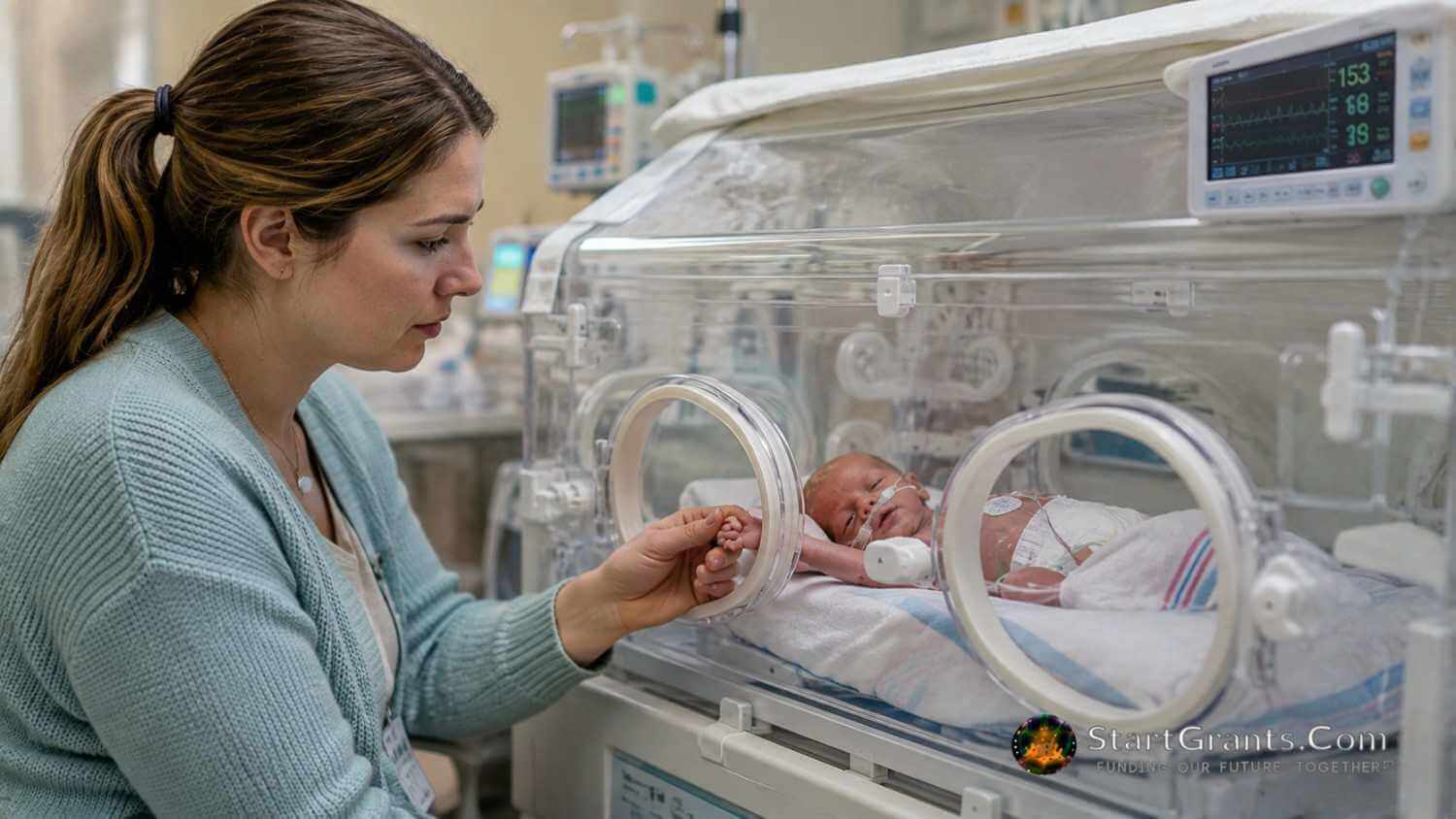
A Financial Assistance Roadmap for NICU Families
| Priority | What to request | Where to start | Important limit |
|---|---|---|---|
| Health coverage | Enroll the newborn and confirm the effective date | Employer plan, Marketplace, Medicaid, or CHIP | Deadlines and retroactive-coverage rules vary |
| SSI screening | Screen for low birth weight or another qualifying disability | Social Security Administration | Medical and financial rules apply; approval is not automatic |
| Hospital bills | Financial assistance, discounts, itemized bills, and a no-interest plan | Hospital financial counselor or billing office | Each provider may bill separately |
| Daily expenses | Lodging, meals, fuel, parking, and transportation | NICU social worker, Ronald McDonald House, local nonprofits | Availability, distance rules, and capacity vary |
| Employment | FMLA, state paid leave, disability benefits, or employer leave | Employer human resources office and state labor agency | Federal FMLA is unpaid and has eligibility requirements |
| Discharge needs | Equipment, prescriptions, feeding support, follow-up care, and transportation | Discharge planner, insurer, Medicaid plan, WIC, and pediatrician | Prior authorization and network rules may apply |
Programs and coverage rules can change. Confirm eligibility, current funding, deadlines, and covered services directly with the agency, insurer, hospital, or nonprofit.
Enroll Your Baby in Health Coverage Promptly
Do not assume that the hospital automatically enrolls a newborn in a parent’s private health plan. The U.S. Department of Labor explains that employer-sponsored group plans generally provide a special enrollment period of at least 30 days after birth. Marketplace plans generally allow 60 days after birth. Coverage can usually begin on the baby’s birth date when enrollment is completed within the applicable window. Review the current Department of Labor special-enrollment guidance and HealthCare.gov Special Enrollment Period rules.
Contact the plan as soon as possible, record the representative’s name and reference number, and ask exactly which documents are required. If both parents have coverage, ask how coordination of benefits will work. Also confirm that the hospital, neonatologists, laboratories, ambulance providers, and follow-up clinicians are treated under the plan’s network rules.
Medicaid and CHIP
Medicaid and the Children’s Health Insurance Program (CHIP) are state-administered. Eligibility, income limits, applications, and coverage details differ by state. A baby born to a mother who had Medicaid on the date of delivery is generally treated as eligible for Medicaid through the first birthday under the federal deemed-newborn rule, provided applicable residency requirements are met. Families should still give the state requested information and confirm that the baby has been added to the case. See the official Medicaid continuous-eligibility information.
If the mother did not have Medicaid at delivery, apply rather than assuming the NICU stay creates automatic eligibility. Depending on the state and the family’s circumstances, Medicaid may consider retroactive eligibility for qualifying medical expenses from a limited period before the application month. Ask the state Medicaid agency about its current policy; retroactive coverage is not identical in every state.
Some states also have disability-related pathways for children who need an institutional level of care, sometimes called a Katie Beckett or TEFRA pathway. These are state options—not a single nationwide benefit—and waiting lists, functional criteria, premiums, and parental-income treatment can differ.
Ask for an SSI Screening
SSI is a federal benefit administered by the Social Security Administration (SSA). It is not a hospital grant. A child must meet applicable disability rules, and SSI also has income, resource, citizenship or qualifying-noncitizen, and residency requirements. SSA may count some parental income and resources while a child lives at home.
SSA’s current childhood disability listing recognizes certain low birth weights as medically qualifying. A baby may meet the listing by weighing less than 1,200 grams at birth regardless of gestational age, or by meeting the applicable weight threshold below. Use the official SSA low-birth-weight criteria when discussing a claim.
| Gestational age at birth | Birth weight at or below |
|---|---|
| 37–40 weeks | 2,000 grams |
| 36 weeks | 1,875 grams |
| 35 weeks | 1,700 grams |
| 34 weeks | 1,500 grams |
| 33 weeks | 1,325 grams |
| 32 weeks | 1,250 grams |
A baby who does not meet this table may still qualify under another disability listing or through an individualized disability evaluation. SSA can make presumptive-disability payments for certain conditions while it completes a decision, generally for up to six months, but those payments are not guaranteed.
When a child is in a medical facility for a full calendar month and Medicaid or private insurance pays more than half the cost of care, the federal SSI payment is generally limited to $30 for that month, plus any applicable state supplement. Countable income can reduce it further. The amount may change after discharge, so promptly report admission, discharge, address, household, income, and resource changes to SSA. Review SSA’s hospitalized-child SSI explanation.
Request Hospital Financial Assistance and a Bill Review
Insurance coverage does not guarantee that a NICU stay will be affordable. Ask every billing entity whether it offers financial assistance, charity care, an uninsured or prompt-pay discount, or a no-interest payment plan. Nonprofit hospitals must maintain a written financial assistance policy under federal tax rules, but eligibility and covered providers differ. Use the hospital’s official website or financial counselor to obtain the policy and application.
Request itemized bills and compare them with the insurer’s explanations of benefits. A hospital bill may not include separate charges from neonatologists, radiologists, anesthesiologists, laboratories, ambulance companies, or other clinicians. Ask whether the hospital’s assistance decision also applies to those groups. Our detailed guide to help paying hospital bills after childbirth explains applications, appeals, payment plans, and billing reviews.
Emergency departments covered by the Emergency Medical Treatment and Labor Act (EMTALA) must provide an appropriate medical screening examination and stabilizing treatment for an emergency medical condition without delaying care to ask about payment. EMTALA does not make the resulting care free. See the CMS EMTALA overview.
Check Surprise-Billing Protections
The federal No Surprises Act limits many unexpected out-of-network bills for emergency services and certain services at in-network facilities. It does not cover every charge, and federal protections generally do not apply to ground ambulance bills. State protections may be broader. If a bill appears incorrect, contact the insurer first and use the official CMS No Surprises consumer resources.
Consider Pediatric Medical Grants Carefully
Private foundations may help with specific expenses, but they are not automatic NICU cash benefits. Read current rules before sending personal or medical information.
| Program | Potential help | Key limits to verify |
|---|---|---|
| UnitedHealthcare Children’s Foundation | Qualifying child medical expenses not fully covered by commercial insurance | Child must be age 16 or younger, commercial insurance and income rules apply, and awards are subject to eligibility and available funds. Current published maximums are $5,000 annually and $10,000 lifetime per child. |
| First Hand Foundation | Eligible future clinical care, medical equipment, or care-related travel | Applications follow funding cycles and documented criteria. The foundation does not pay past bills; NICU-parent travel may be considered under its travel category. |
Foundation criteria, cycles, funding levels, and application availability can change. Verify the current official rules before applying.
Ask About Lodging, Transportation, Meals, and Parking
Daily expenses can become a major burden when a NICU is far from home. Ask the NICU social worker whether the hospital offers parking validation, meal vouchers, fuel cards, public-transit passes, family lodging, sibling care referrals, or emergency assistance funds. These are usually local benefits with limited inventory, not guaranteed national entitlements.
Ronald McDonald House programs provide lodging near participating hospitals, but availability, distance requirements, referrals, and family eligibility are set locally. The organization states that families stay at no cost or may be asked for a donation of up to $25 per day. Find and contact the relevant house through the official Ronald McDonald House Charities chapter locator.
Also ask whether the baby’s Medicaid managed-care plan provides non-emergency medical transportation for covered appointments. Transportation benefits and advance-notice rules vary by state and plan.
Protect Income and Employment Where Possible
Eligible employees may use up to 12 workweeks of unpaid, job-protected leave under the federal Family and Medical Leave Act (FMLA) for bonding after birth or to care for a child with a serious health condition. Eligibility depends on the employer’s coverage, the employee’s length of service, hours worked, and worksite requirements. Group health coverage continues under the same terms during qualifying FMLA leave, but the employee may still owe their normal premium share. Review the Department of Labor FMLA guidance.
FMLA itself does not provide wages. Ask human resources about paid parental leave, paid sick leave, donated leave, short-term disability for the recovering parent, employee-assistance funds, and flexible or intermittent schedules. State paid-family-leave or temporary-disability programs may provide partial wage replacement where available. If medical complications began during pregnancy, our guide to financial help during medically required pregnancy bed rest covers related income and leave paths.
Plan for Discharge Before the Baby Goes Home
Ask for a written discharge plan early. It should identify prescriptions, feeding supplies, durable medical equipment, home nursing if ordered, follow-up specialists, early-intervention referrals, transportation needs, and the people responsible for prior authorizations. Confirm which provider supplies each item and what the family might owe.
If pumping is part of the feeding plan, ask the insurer or Medicaid plan what breast-pump type is covered, whether a prescription is required, and which suppliers are in network. See our step-by-step guide to getting a breast pump through Medicaid. WIC may provide nutrition services, breastfeeding support, approved foods, and referrals, but it is not a general cash program; our newborn WIC coverage guide explains the boundaries.
The transition home may also create needs that are not included in a hospital bill. Our guide to postpartum care assistance covers recovery support without treating every service as a grant.
Crowdfunding, Privacy, and Public Benefits
Crowdfunding can help with travel, meals, housing, and unpaid bills, but it also exposes sensitive information. Share only details you have permission to disclose. Avoid posting medical record numbers, insurance identifiers, full birth dates, addresses, or documents that could enable identity theft.
Do not assume online donations can never affect means-tested benefits. The result can depend on who owns or controls the account, when money is received, how long it is retained, and the program’s income and resource rules. Before raising funds in an applicant’s name, ask SSA, the state Medicaid agency, or a qualified benefits counselor how contributions should be structured and reported. Keep complete records of deposits and expenses.
Save This NICU Financial Assistance Checklist
[ ] Add the baby to health coverage before the applicable deadline.
[ ] Confirm the coverage effective date and obtain the baby’s member ID.
[ ] Ask the NICU social worker for Medicaid, CHIP, and SSI screening.
[ ] Request the hospital financial assistance policy and application.
[ ] List every separate provider that may send a bill.
[ ] Ask about lodging, parking, meals, fuel, and transportation help.
[ ] Review FMLA, employer leave, and state paid-leave options.
[ ] Obtain a written discharge plan and confirm prior authorizations.
[ ] Check any secondhand medical or infant equipment for recalls and instructions.
[ ] Report required income, resource, address, admission, and discharge changes to benefit agencies.
A Muslim Perspective
NICU families may receive hospital discounts, zakat or sadaqah, nonprofit grants, crowdfunding gifts, or payment-plan offers. These are not all the same type of transaction. A genuine gift, charitable payment, or hospital bill reduction ordinarily does not create an interest-bearing debt. A financing product or medical credit card may include interest, deferred-interest terms, fees, or collection consequences.
Ask for every payment arrangement in writing. If possible, first request financial assistance, an adjusted bill, or a clearly documented no-interest installment plan. Do not label a product halal or haram based only on its marketing name. Families with questions about a specific contract should show the actual terms to a qualified scholar and, when appropriate, a consumer-finance adviser.
A mosque or Muslim charity may use zakat, sadaqah, or a general benevolence fund to assist an eligible family, but financial hardship alone does not establish automatic zakat eligibility under every organization’s policy. Describe other insurance, hospital aid, or fundraising honestly; follow the charity’s documentation rules; and use restricted funds for their stated purpose. Protecting the baby’s privacy and handling donated money as an amanah are important parts of seeking community support.

Questions to Ask the NICU Social Worker
- Who can help add my baby to insurance or apply for Medicaid or CHIP?
- Should my baby be screened for SSI, including presumptive disability?
- How do I apply for hospital financial assistance, and which providers does it cover?
- Are lodging, parking, meal, fuel, or transportation resources available?
- Which grants accept applications for future care or travel?
- Who will coordinate equipment, prescriptions, referrals, and authorizations before discharge?
- Does the hospital have a family advisory council, peer-support program, interpreter, or benefits counselor?
- What deadlines should I put on my calendar today?
Frequently Asked Questions
Is there a federal grant specifically for every NICU parent?
No. There is no single federal NICU grant automatically available to every family. Depending on eligibility, help may come from insurance, Medicaid or CHIP, SSI, hospital financial assistance, employer or state leave programs, and nonprofit support for specific medical or travel expenses.
Can a premature baby qualify for SSI?
Possibly. A baby may medically qualify under SSA’s low-birth-weight criteria or another disability rule, but SSI also has income, resource, residency, and citizenship or qualifying-noncitizen requirements. Ask SSA to screen the claim rather than assuming approval or ineligibility.
How much SSI can a baby receive while in the NICU?
When a child is in a medical facility for a full calendar month and Medicaid or private insurance pays more than half the cost of care, the federal SSI payment is generally limited to $30 for that month, plus any applicable state supplement. Countable income can reduce the payment, and the amount may change after discharge.
Does Medicaid automatically cover every baby in the NICU?
No. NICU admission alone does not create one nationwide automatic-coverage rule. A baby born to a mother who had Medicaid at delivery is generally eligible through the first birthday under the deemed-newborn rule, subject to applicable requirements. Other families must apply through their state’s Medicaid or CHIP process or another available pathway.
Can insured families apply for hospital financial assistance?
Yes. A hospital’s policy may allow insured patients to receive help with deductibles, coinsurance, or other eligible balances. Approval, income limits, documentation, and the providers covered by the policy vary, so request the written policy and application.
Does FMLA pay parents during a NICU stay?
No. Federal FMLA provides eligible employees with unpaid, job-protected leave and continued group health coverage under the same terms. Paid parental leave, sick leave, short-term disability, or a state paid-leave program may replace some wages when applicable.
Can a nonprofit pay an old NICU bill?
It depends on the program. Some foundations help with eligible medical expenses, but First Hand Foundation states that it funds future care rather than past bills. Verify each program’s current rules, application cycle, insurance requirements, and eligible expense dates before applying.
Can crowdfunding affect SSI or Medicaid?
It can, depending on who owns or controls the funds, when money is received, how long it is retained, and the benefit program’s rules. Ask SSA, the state Medicaid agency, or a qualified benefits counselor before funds enter an applicant-owned account, and report contributions when required.
Where should NICU parents ask for immediate nonmedical help?
Start with the NICU social worker or case manager. Ask specifically about family lodging, parking assistance, meal vouchers, transportation, fuel cards, emergency funds, peer support, and local nonprofit referrals because these resources are usually location-specific and may have limited availability.
Bottom Line
The most effective approach is to work on several tracks at once: secure the baby’s coverage, request an SSI screening when appropriate, apply for hospital financial assistance, document every bill, ask for help with daily expenses, protect employment rights, and build a written discharge plan. Keep copies of applications and decisions, record every deadline, and ask for an appeal when a denial appears inconsistent with the program’s written rules.
Important Disclaimer: StartGrants.com is an independent information portal. It is not a government agency, hospital, insurer, law firm, financial adviser, grantmaker, or benefits administrator, and it does not award NICU assistance. Eligibility, funding, coverage, tax treatment, and program availability can change. Confirm current rules directly with the responsible agency, insurer, hospital, employer, or nonprofit. This article provides general information and does not replace medical, legal, benefits, tax, or financial advice for an individual case.