Last Updated: | Author: Munir Ardi
If you have only a few diapers left—or none at all—call 211 and check the National Diaper Bank Network directory first. These services can help you find a local diaper bank, pantry, family resource center, or partner agency. Diaper assistance is usually local and inventory is not guaranteed, so call before traveling and confirm that the provider has your child’s size.
This page focuses on finding diapers quickly, understanding local application rules, and identifying which public benefits can or cannot help with diaper costs. For formula, clothing, cribs, car seats, and other essentials, use our parent guide to free baby stuff for low-income families.
Why Diaper Assistance Is Needed
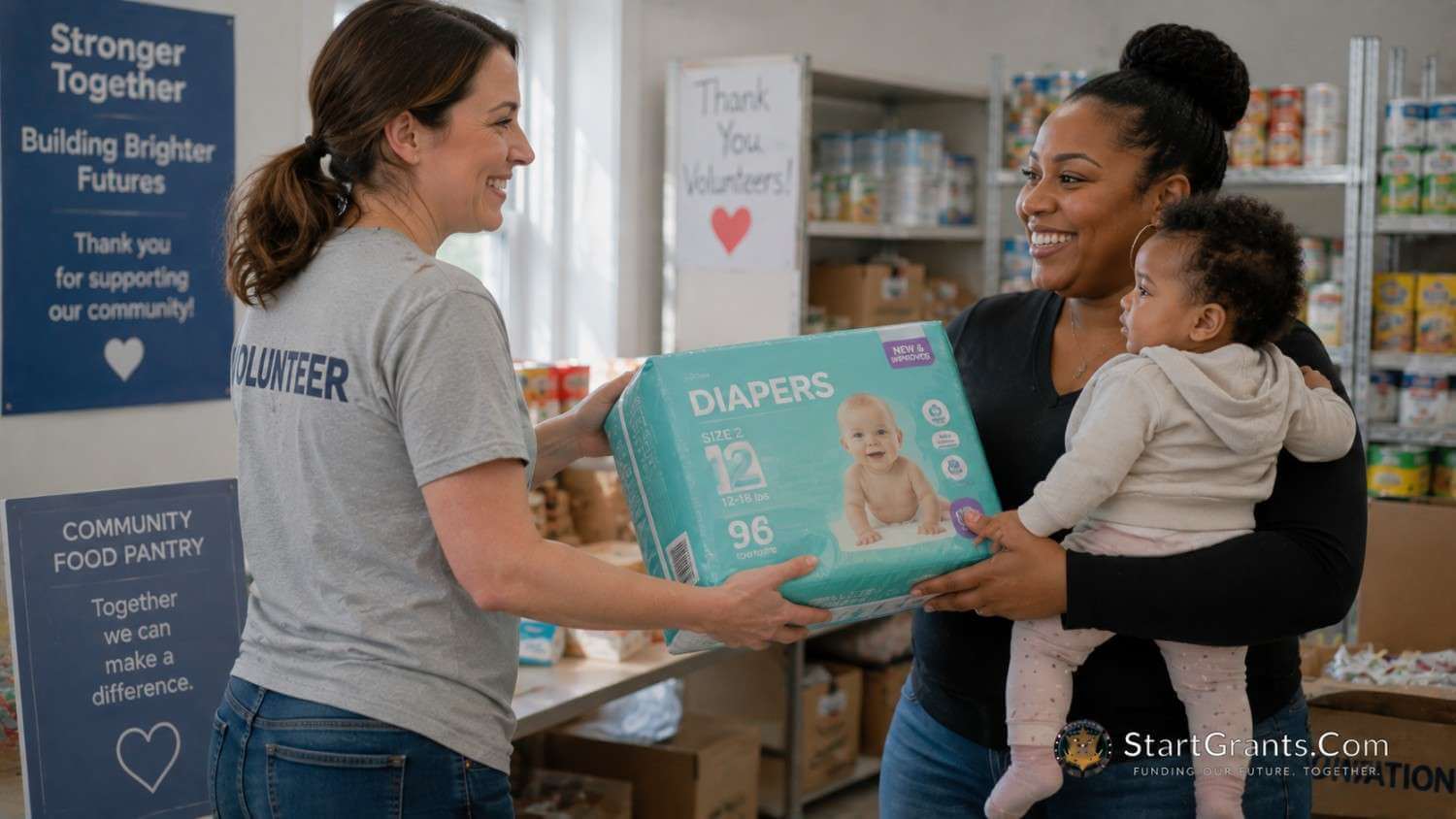
“Diaper insecurity” means a household cannot consistently obtain enough diapers to keep a baby or young child clean and dry. The NDBN Diaper Check 2026 reported diaper insecurity in 40% of surveyed U.S. households with children who wear diapers. Among surveyed low-income households—defined in the report as income at or below 200% of the federal poverty guideline—the figure was 62%. These survey findings describe a serious national problem, but they do not mean that every family automatically qualifies for local assistance.
The same report found that 85% of surveyed households using child care had to send diapers with their child. A shortage can therefore affect a child’s care and a caregiver’s ability to work or attend school. Diapers should also be changed regularly to limit prolonged skin contact with urine or stool.
There is no single federal “free diaper grant” open to every parent. Most help comes from community diaper banks, nonprofit partners, local initiatives, health-care referrals, and donated-goods pantries.
Where to Find Emergency Diaper Assistance Near You
1. Call 211 or Search 211 Online
The National Diaper Bank Network’s official Get Help Now page directs families to call 211 or search 211.org. Give your ZIP code or county and ask the specialist to search for diapers, children’s basic needs, material assistance, food pantries, and family resource centers.
A 211 specialist can identify possible resources, but cannot guarantee that a provider has diapers in stock. If the first referral cannot help, ask for another provider or the next scheduled distribution.
2. Use the National Diaper Bank Network Directory
NDBN’s current directory lists more than 240 community-based member diaper banks. The network says its members collectively serve nearly 320,000 children each month. The national organization generally directs families to local members rather than mailing diapers to individual applicants.
Many diaper banks distribute through partner agencies such as food pantries, clinics, shelters, and family-service nonprofits. A directory address may be an office or warehouse rather than a public pickup site. Open the member’s website or call for current instructions.
3. Contact Food Pantries and Family Resource Centers
A pantry that primarily distributes food may also carry diapers, wipes, training pants, period products, or baby toiletries. Ask community action agencies, family resource centers, neighborhood pantries, maternal-and-child-health programs, Early Head Start resource coordinators, domestic violence programs, and pregnancy or parenting organizations.
If you also need clothing, review these free baby clothes programs. That sibling page covers clothing sources in greater detail, while this page remains focused on diapers.
4. Ask Health-Care and Social-Service Staff for a Referral
Contact your child’s pediatric office, community health center, hospital social-work department, WIC clinic, Medicaid care manager, home visitor, or public health nurse. Ask whether the office distributes emergency supplies or can refer you to a provider with current inventory. Do not assume that a clinic has samples or that a hospital supplies a month of diapers after birth.
Our guide to baby supplies hospitals may provide explains why take-home policies differ by facility.
5. Check Faith-Based and Community Organizations
Churches, mosques, synagogues, and other community organizations may operate baby closets, emergency funds, or partner pantries. Availability and participation rules vary. Ask whether assistance is open to people outside the organization’s faith community and whether any activity is required.
Catholic Charities services are managed by local agencies, so supplies are not uniform nationwide. Use our guide to Catholic Charities baby-supply assistance to locate and verify a regional program before traveling. Muslim family-service organizations may also operate local pantries or emergency funds, but verify the service area, current inventory, and application rules directly with the organization.
How to Apply Without Wasting a Trip
Every provider sets its own service area, schedule, eligibility rules, and supply limit. There is no national NDBN rule guaranteeing a full month’s supply or a particular diaper count.
| Ask About | Why It Matters | What to Confirm |
|---|---|---|
| Inventory | Sizes can run out. | Child’s size, wipes, cream, or training pants |
| Service area | Programs may restrict help by ZIP code or county. | Address rules and accepted proof |
| Access method | Some banks distribute only through partners. | Appointment, referral, registration, or walk-in |
| Documents | Requirements differ by provider. | ID, address, child record, income, benefits, or referral |
| Pickup rules | Distribution may occur only on certain days. | Time, frequency, proxy pickup, and waitlist |
Program inventory and requirements can change. Verify every detail with the local provider.
Can SNAP, WIC, TANF, or Medicaid Pay for Diapers?
SNAP Does Not Pay for Diapers
USDA’s SNAP eligible-items guidance excludes hygiene items and household supplies. SNAP EBT food benefits therefore cannot pay for diapers or wipes. If they are in the same cart as eligible groceries, use another accepted payment method for the diaper products.
WIC Provides Nutrition Benefits, Not Diapers
WIC provides supplemental foods, nutrition education, breastfeeding support, and referrals. Diapers, wipes, and diaper cream are not part of the USDA WIC food packages. A WIC clinic may still refer families to a local diaper provider. See what WIC covers for newborns for the program’s actual food and feeding-support scope.
TANF Cash Assistance May Help With Household Purchases
TANF is administered by states. It is not a nationwide diaper-distribution program, but a household receiving TANF cash assistance may be able to use cash benefits for essential purchases, subject to state rules and access restrictions. Benefit amounts and eligibility vary. Review your state program and our overview of TANF benefits for pregnant women and families.
Medicaid May Cover Medically Necessary Incontinence Supplies
Routine diapers for an infant are generally treated as a household expense. Coverage may be possible when an enrolled child has a diagnosed condition causing incontinence beyond what is developmentally expected and the supplies are medically necessary. Under Medicaid’s EPSDT benefit, states must provide Medicaid-coverable, medically necessary services for enrolled children under 21, but medical-necessity decisions and supply procedures remain case-specific.
Do not rely on a universal minimum age. Ask the child’s clinician to document the condition, then call the Medicaid plan about prescriptions, prior authorization, quantity limits, and approved suppliers. Use Medicaid.gov’s state Medicaid and CHIP contacts if you need the correct agency.
Can You Get Free Cloth Diapers?
Possibly. Cloth diapers can reduce repeat purchases, but they require reliable washing, drying, safe storage, and enough supplies between wash cycles. They may not be practical for every household, and child-care providers may have their own rules.
The Cloth Option application page describes its current eligibility, distribution, and return terms. Read those terms before applying because availability can depend on inventory and location. You can also ask a local diaper bank whether it offers cloth-diaper kits or lending assistance.
What to Do If You Run Out After Hours
Call 211 even if local agencies are closed and ask for the next available provider. You can also ask a trusted relative, friend, neighbor, or established parent-support group for a few diapers until a pantry opens. If you already have a purpose-made cloth diaper and cover, follow the manufacturer’s washing and use instructions.
Do not improvise with a plastic bag, plastic wrap, duct tape, exposed safety pin, or loose absorbent material. These can create suffocation, choking, circulation, and skin-injury hazards. If a diaper rash is severe, worsening, accompanied by fever, blistering, pus, oozing, or crusted sores, or does not improve, contact the child’s health-care professional. The American Academy of Pediatrics provides general diaper-rash guidance.
A Muslim Perspective
Receiving donated diapers from a government agency, secular nonprofit, church, mosque, or community pantry is ordinarily material assistance rather than an interest-bearing loan. Confirm whether the supplies are a gift, whether any repayment is expected, and whether participation in an activity is required. Families concerned about a specific condition can consult a trusted qualified scholar.
A household experiencing genuine financial hardship may ask a mosque or Muslim charity whether zakat, sadaqah, or a general benevolence fund can help with diapers. Eligibility is not automatic: each organization applies its own recipient, documentation, geographic, and distribution rules. Protect the family’s privacy by sharing only information the program legitimately needs, and ask how documents will be stored.
Frequently Asked Questions
What is the fastest way to find free diapers near me?
Call 211 and ask for emergency diaper assistance, then check the National Diaper Bank Network member directory. Call the local provider before traveling because stock, service areas, appointments, and distribution dates change.
Can I buy diapers or wipes with SNAP EBT?
No. SNAP pays for eligible food items and does not cover diapers, baby wipes, or other hygiene and household products.
Does WIC pay for diapers?
No. WIC provides supplemental foods, nutrition services, breastfeeding support, and referrals, not diapers. A WIC clinic may still refer you to a local diaper bank or family resource program.
How many diapers will a diaper bank give me?
There is no national amount. The number depends on the local program, the child’s size, available inventory, funding, and how often the program permits pickup. Diaper-bank assistance is often supplemental rather than a complete monthly supply.
Do I need identification, proof of income, or citizenship documents?
Requirements vary by provider. Some programs request identification, proof of address, a child record, income information, or a partner referral; others require less. Ask before visiting and share only the documents the provider requires.
Will Medicaid pay for my child’s diapers?
Medicaid generally does not pay for routine infant diapers. It may cover medically necessary incontinence supplies for an enrolled child whose diagnosed condition causes incontinence beyond what is developmentally expected. State and health-plan rules, prescriptions, quantities, suppliers, and prior authorization vary.
Can I receive free cloth diapers?
Possibly. The Cloth Option accepts applications for cloth-diaper assistance, and some local diaper banks offer cloth programs. Inventory, application terms, training, loan periods, and return requirements can vary.
Can a church, mosque, or other faith-based pantry help?
Some faith-based organizations provide diapers, hygiene supplies, baby closets, emergency funds, or referrals, but services and participation requirements are local. Call first and ask what is available and whether assistance is open to people outside the organization’s faith community.