Last Updated: | Author: Munir Ardi
To find clothing assistance for low-income families, start with 211, your child’s school, and local community clothing closets. Ask for the specific items you need, such as winter coats, school uniforms, shoes, maternity clothes, or interview outfits. Some programs give clothing directly; others require a referral or provide a voucher for an approved store. Availability, sizes, and eligibility vary by location.
You do not need to wait until you qualify for a government benefit to ask a nonprofit about clothing. However, a national charity’s name does not guarantee that every branch offers free clothes. Confirm the service, appointment rules, and stock before traveling.
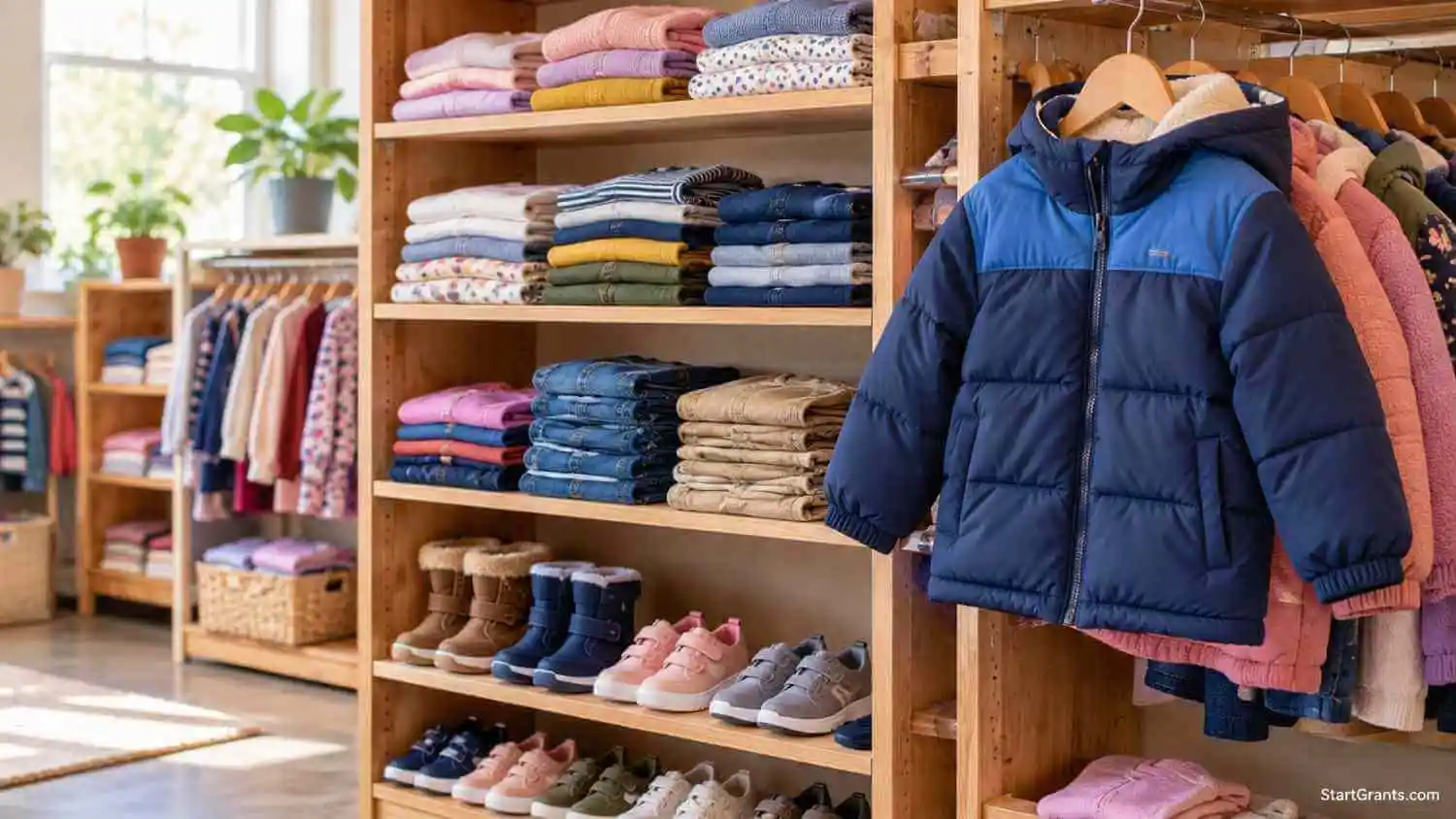
Where to Start When Your Family Needs Clothes
- Make a short clothing list. Include each person’s size, shoe size, the most urgent items, and any deadline. Identify uniform colors or work requirements.
- Call 211 or search its local directory. Request clothing closets, clothing vouchers, school uniform assistance, or winter coat distributions in your ZIP code.
- Ask an existing support contact. A school counselor, case manager, shelter worker, or employment counselor may know programs that accept referrals.
- Call the provider before visiting. Confirm whether it serves your household and currently has the sizes you need.
- Keep a backup referral. If one program is out of stock, ask where else you can try and when its next distribution is scheduled.
211 provides confidential information and referrals to local services; it is not itself a clothing grant program. Local directories may list different categories: for example, Colorado 211 lists general, work, winter, baby, children’s, maternity, and voucher assistance.
What to say: “My family needs clothing, including coats and shoes. Do you provide free clothing or vouchers? Which area do you serve, and do I need an appointment or referral?” Explain your sizes, location, and deadline; you do not need to share sensitive documents just to ask about a service.
Compare the Main Types of Clothing Assistance
| Type of help | What you may receive | What to check |
|---|---|---|
| Community clothing closet | Donated clothing selected from available stock | Service area, sizes, hours, visit limits |
| Charity store voucher | Credit for approved purchases at a specified store | Referral, value, expiration, eligible items |
| School or children’s program | Uniforms, school clothes, shoes, or coats | Participating schools, age or grade, application dates |
| Employment clothing program | Interview or work clothing | Employment needs, referral, appointment |
| State or tribal clothing benefit | A program-specific allowance or restricted card | Residency or citizenship, eligibility, open application period |
| Disaster assistance | Emergency goods or eligible financial assistance | Disaster-related loss, location, program rules |
Availability note: These are service categories, not guaranteed awards. Local inventory, funding, and application periods can change. Free clothing, store vouchers, cash benefits, and restricted clothing grants are different forms of assistance.
Local Charities and Community Clothing Closets
The Salvation Army
Contact the social services office or community center serving your area, rather than assuming a thrift-store cashier can approve assistance. Ask whether the office offers clothing directly or issues store vouchers and which circumstances qualify.
Local rules differ. The Honolulu Community Assistance Center describes clothing vouchers with a case manager or social worker referral and availability tied to inventory. The Scranton Salvation Army lists emergency clothing voucher assistance when funding is available, with an intake appointment and documentation. These are local examples, not nationwide eligibility rules.
Find the office near you through the Salvation Army’s official website. Before accepting a voucher, check the designated store, spending limit, expiration date, and whether shoes or new undergarments are included.
Society of St. Vincent de Paul
Ask a local Catholic parish whether it has a St. Vincent de Paul conference, or search for the organization and your city. The national organization directs people seeking help to local conferences and does not provide direct assistance itself.
Ask your local conference whether clothing or thrift-store vouchers are available. Confirm its service boundaries and assessment process, including whether a meeting or home visit is requested. Do not assume all conferences offer the same items or assistance frequency.
Goodwill employment clothing programs
Goodwill stores generally sell donated goods; a donation center is not automatically a free clothing distribution site. Contact the local organization’s career services team about interview clothing, partner referrals, or vouchers.
For example, Lincoln Goodwill’s Job Outfitters program provides interview and employment clothing vouchers through local partners. That program does not establish a nationwide Goodwill benefit. Ask your regional organization what is available and whether you need to participate in a service first.
Churches, community centers, and neighborhood closets
Ask 211 about verified closets at churches, community centers, shelters, and neighborhood nonprofits. Some offer direct access to clothing, while others use referrals, appointments, or scheduled distributions. A religious congregation may offer referrals even if it has no clothing closet.
For a giveaway found on social media, confirm the event through the organizer’s official contact details. Check whether it is a distribution for people needing clothes or a collection event for donors; those serve different purposes.
School Clothes, Uniforms, Coats, and Children’s Shoes
Start with your child’s school
Contact the counselor, social worker, or family liaison. Explain the missing items, sizes, and any uniform rules. Ask about a school closet, community referral, or upcoming distribution. If clothing costs are interfering with attendance, tell the school rather than waiting for the next seasonal event.
If your family is experiencing homelessness or unstable housing, ask to speak with the district’s McKinney-Vento liaison about eligibility and enrollment support. The National Center for Homeless Education explains immediate enrollment protections. This is an education access program, not a guaranteed clothing allowance.
Assistance League’s Operation School Bell
Operation School Bell supports children through programs developed by local Assistance League chapters, including new school clothing. Contact the local chapter or school to check participating schools, referral procedures, and current availability. Grades, service areas, and the type of help differ.
Operation Warm and One Warm Coat
Operation Warm states that it cannot provide coats or shoes directly to individual families. Its request route is for organizations. Ask your child’s school or community agency whether it participates or knows another local coat provider.
One Warm Coat also directs individual requests to local nonprofit partners. Donated coats are distributed free through that network, but partner stock is not guaranteed. Use the linked page’s locator, then contact the partner before visiting. Operation Warm and One Warm Coat are separate organizations.
Request the child’s actual coat and shoe sizes. Also ask about socks, gloves, and weather-appropriate layers when needed. For uniforms, describe required colors and styles; a general clothing voucher may not cover the school’s specific requirements.
Interview and Work Clothing
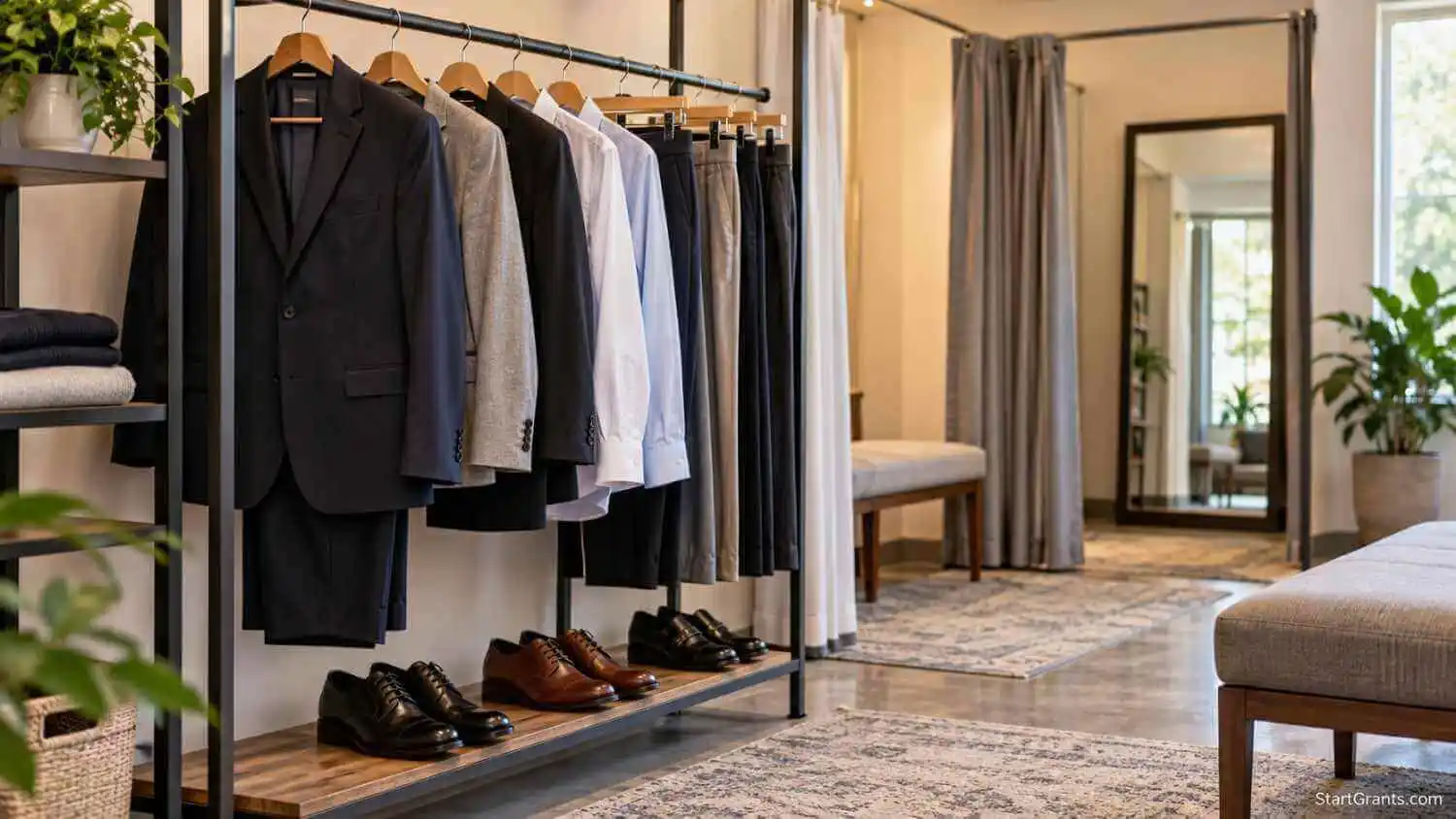
Dress for Success offers women interview clothing and employment support. Most network members use referrals, and local offices explain how to access services. Contact the location serving you about an upcoming interview and any required referral.
After starting work, ask whether additional clothing support is available. The national information does not promise every client a complete week’s wardrobe. Selection depends on the local service and stock.
Other job seekers can ask their local Goodwill career center, community closet, or American Job Center about referrals and supportive services. Explain whether you need a suit, scrubs, a uniform, or specific footwear. If reimbursement is offered, obtain approval before purchasing; a referral is not a promise that the cost will be covered.
Government, Foster Care, and Tribal Clothing Assistance
TANF and state clothing allowances
Temporary Assistance for Needy Families is federally funded and administered by states and tribes, which set their own eligibility rules. Ask your benefits office about cash assistance, a clothing allowance, or emergency support for your household. There is no uniform national August clothing grant or standard clothing EBT card.
Closed program example: West Virginia’s 2026 School Clothing Allowance application period closed at 11:59 p.m. on July 27, 2026, because funding was exhausted. As of this article’s update, it is not accepting new applications for that cycle. The state directs families to local offices for other programs. Do not treat an old announcement or a planned deadline as proof that applications remain open.
SNAP does not pay for clothing. USDA’s SNAP information states that benefits cannot be spent on nonfood items. A separate cash benefit delivered through an EBT card has its own rules; it is not the same as the card’s SNAP balance.
Foster and kinship care
Ask the child’s assigned caseworker about initial clothing needs, maintenance payments, supplemental allowances, and reimbursement procedures. Virginia lists an annual supplemental clothing allowance alongside foster care maintenance payments, illustrating one state’s approach.
Amounts and access vary by placement and jurisdiction. A relative caring for a child informally may have a different assistance route from a licensed foster caregiver. There is no verified nationwide promise of a new wardrobe within 48 hours. Ask about approval, eligible expenses, and receipts before spending your own money.
Tribal clothing programs
The Chickasaw Nation Youth Clothing Grant currently lists eligible Chickasaw citizens ages 3-18, including residents and citizens living at large. It provides a nonreloadable $350 Visa card once per school year, with applications listed from June 1 through May 31. The published processing estimate is 6-8 weeks, so it is not a same-day emergency option.
Check permitted purchases and the current application requirements directly with the Nation. For the detailed program pathway, read our Chickasaw Nation clothing grant guide. Other tribal citizens should ask their own tribe about available programs; this benefit is not open to every low-income household.
Clothing Help After a Fire or Disaster
Contact the American Red Cross or a local disaster relief organization about immediate needs. Assistance may include emergency services, financial support, or referrals, depending on the response and your circumstances. Explain that clothing was lost and provide household sizes.
For a qualifying major disaster, federal rules allow eligible FEMA Other Needs Assistance to address disaster-related clothing losses. Check the declaration, covered location, deadline, and application instructions through DisasterAssistance.gov.
A house fire does not automatically qualify for FEMA assistance, and neither FEMA nor the Red Cross guarantees an immediate clothing-coded debit card. Keep records of losses and assistance received, and follow the specific award’s spending and documentation instructions.
What to Ask and What to Bring
Requirements differ. A clothing closet might ask only for basic intake information, while a state benefit or funded voucher program may require identity, income, household, or residency documents. Call first; do not assume every provider requires original birth certificates or Social Security cards.
- Ask about eligibility: Service area, household or age limits, and whether a referral is required.
- Ask about documents: Which records are needed, whether copies are accepted, and what alternatives are available if records were lost.
- Ask about access: Appointments, languages, accessibility, pickup arrangements, and transportation referrals.
- Ask about voucher rules: Store, expiration, eligible merchandise, returns, and whether purchases require preapproval.
- Ask about repeat assistance: Visit limits, waiting periods, and exceptions; there is no universal six-month rule.
If you lack identification, a fixed address, or an SSN, explain the barrier privately and ask which services you can access. Immigration and documentation requirements depend on the particular program. Do not rely on blanket claims that all government aid requires the same status or that every charity asks no questions.
Share sensitive information only through the provider’s verified intake process. Do not publish identification documents, benefits cards, or children’s personal details in a public group. A legitimate referral should not require your EBT PIN or payment to an unrelated person to “release” free clothing.
A Muslim Perspective
A local mosque or Muslim community organization may provide donated clothing, general charitable assistance, or referrals. Ask which services currently operate and whether they can meet needs such as modest clothing, larger sizes, or winter layers. Availability should be confirmed rather than assumed.
For a documented local example, ICNA Relief Louisiana lists clothing and shoes among supplies clients can request by appointment and says applicants do not need to be refugees to qualify. This does not establish the same service or eligibility at every ICNA Relief office.
Sadaqah-funded clothing distributions and zakat assistance have different purposes and eligibility rules. Needing clothing does not automatically establish zakat eligibility. Ask the administering organization about its assessment and consult a qualified scholar for religious questions. Zakat Foundation explains that financial need alone does not make every applicant eligible. Respect recipients’ privacy, provide truthful information, and ask permission before sharing their stories or photos.
If You Also Want to Donate Clothing
This article focuses on receiving clothing. If you have usable garments your household no longer needs, verify where they are accepted using our clothes donation drop-off guide. A collection bin is not necessarily a place to request free clothes.
For donor recordkeeping and tax valuation, see the parent guide on how to value clothing donations. Valuing a gift for tax purposes is separate from qualifying to receive clothing assistance.
Frequently Asked Questions
Do I need a Social Security number to get free clothes?
There is no single rule for every program. Ask the provider whether an SSN is required, why it is needed, and whether another form of identification is accepted. Public benefits and community clothing closets can have different requirements.
Can I get help with school uniforms?
Some school and community programs provide uniforms or referrals, depending on local funding and stock. Give the school counselor the required colors, styles, and sizes. Ask about current assistance rather than assuming every back-to-school event supplies uniforms.
How often can my family receive clothing assistance?
The provider sets its own visit or award limits. Ask about waiting periods, household limits, and emergency exceptions. A once-per-school-year tribal benefit does not establish the schedule for a community closet or store voucher.
What if we need new underwear or socks?
Ask explicitly for new, packaged items and whether a voucher covers them. Inventory and store acceptance policies vary. Do not assume every thrift store has these items or that the provider keeps a separate supply.
Can disaster survivors get clothing assistance?
Local disaster organizations may offer goods, financial help, or referrals after assessing the situation. FEMA assistance depends on a qualifying declaration and program eligibility. A fire or flood does not automatically guarantee a clothing grant or immediate debit card.
Can adults without children receive clothing help?
Some community closets and employment programs serve adults without children. Others focus on children or specific groups. Ask for adult clothing or work clothing referrals and confirm the provider’s eligibility rules.
Where can I find maternity clothes or baby clothing?
Ask 211, a family resource center, or a community clothing closet about maternity and baby clothing. Confirm sizes and current availability. A referral from a health or nutrition program is different from that program paying for clothing.
What if I cannot travel to a clothing closet?
Ask whether the provider allows an authorized person to pick up items or offers another access arrangement. A school social worker or case manager may know transportation resources. Delivery and school pickup are not guaranteed.
Can I buy clothes with SNAP benefits?
No. SNAP benefits cannot pay for clothing because it is a nonfood purchase. If your EBT card also carries a separate cash benefit, ask the administering agency about that benefit’s permitted uses.
Important disclaimer: StartGrants.com is an independent information portal, not a government agency or clothing assistance provider. We do not issue grants, vouchers, clothing, or benefit decisions. Confirm eligibility, availability, documentation, and application dates directly with the administering organization. Religious information is general educational content, not a fatwa.