
Last Updated: | Author: Munir Ardi
WIC can help an eligible newborn with infant formula when needed, breastfeeding support, nutrition education, and referrals to health and community services. It may also provide a breast pump or other breastfeeding aid under local policies. WIC does not use one fixed nationwide list of formula brands, container sizes, or pump models, and it does not pay for diapers, wipes, clothing, cribs, or medical bills.
Benefits are prescribed for the enrolled participant and loaded for specific benefit periods. Your WIC agency determines the exact food package after assessing the baby’s age, feeding method, nutrition needs, and any required medical documentation. For help beyond WIC, see our broader guide to free baby stuff for low-income families.
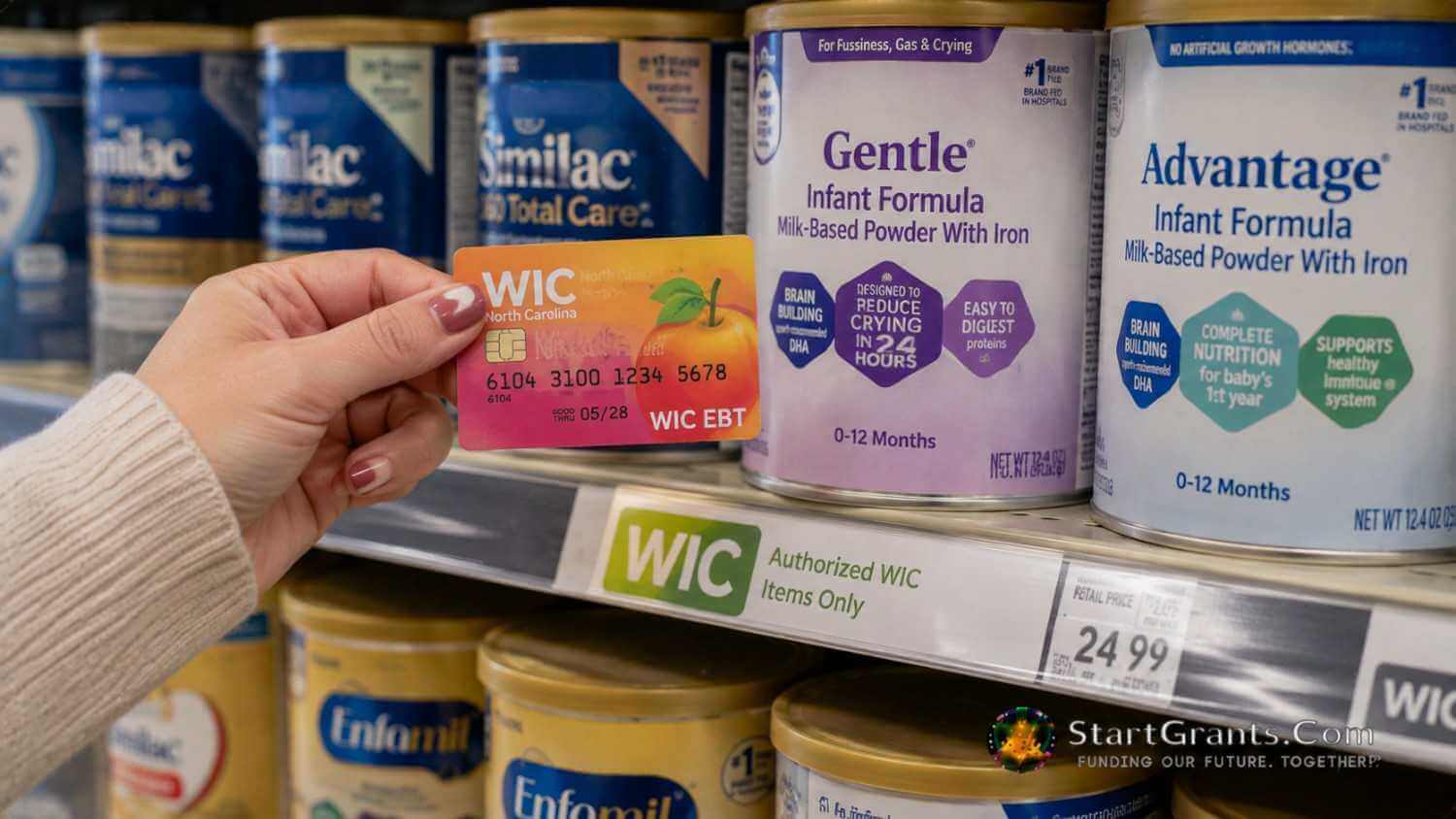
What WIC Covers for a Newborn at a Glance
WIC is the Special Supplemental Nutrition Program for Women, Infants, and Children. The USDA Food and Nutrition Administration explains that WIC provides supplemental foods, personalized nutrition education, breastfeeding support, and referrals. It is not a cash grant or a general-purpose shopping benefit. Review the official USDA WIC overview for the current federal framework.
| Need | What WIC may provide | Important limit |
|---|---|---|
| Infant feeding | An age- and feeding-category-specific infant formula package when formula is part of the feeding plan | WIC is supplemental and may not cover all formula a baby consumes |
| Breastfeeding | Counseling, education, peer or trained-staff support, and potentially a breast pump or other aid | Equipment is based on need, availability, and local policy |
| Nutrition support | Nutrition assessment, education, and feeding guidance | This does not replace medical care from the baby’s clinician |
| Other services | Referrals to health care and community resources | A referral is not a guarantee that another program will approve assistance |
Benefits and procedures vary among state, territorial, Tribal, and local WIC agencies. Confirm your package with the agency that issued it.
How Much Infant Formula Can WIC Provide?
Federal rules set maximum monthly allowances in reconstituted fluid ounces. These are ceilings, not promises that every infant will receive that amount. A package can be adjusted to the baby’s feeding category and assessed needs, and the number of physical containers varies by formula form and package size. The current federal figures are summarized in the USDA’s Snapshot of WIC Food Packages for Infants.
| Feeding category | Birth through 3 months | 4 through 5 months | What this means |
|---|---|---|---|
| Fully formula-fed | Up to 806 reconstituted fl oz/month | Up to 884 reconstituted fl oz/month | The highest federal allowance category, subject to package tailoring |
| Partially breastfed | Up to 364 reconstituted fl oz/month | Up to 442 reconstituted fl oz/month | A smaller formula package paired with breastfeeding support |
| Fully breastfed | No WIC formula | No WIC formula | The infant receives breastfeeding support; the enrolled parent may receive an enhanced food package |
These figures are federal maximums for the specified ages, not guaranteed monthly issuance. Do not convert them into a nationwide can count. Formula concentration, physical form, container size, state contract, and individual tailoring affect what appears on the benefit list.
Why the Approved Brand, Form, and Size Matter
WIC state agencies generally use competitively bid infant-formula contracts. That is why one state may issue a different primary brand from another. Your benefit list may specify powder, liquid concentrate, or ready-to-feed formula and an exact container size. A product from the same brand family can still be rejected at checkout if its type or size does not match the benefit.
Check the WIC app, printed shopping list, or EBT balance before shopping. If the approved product is unavailable, contact the WIC clinic rather than substituting on your own. Store employees cannot rewrite the prescribed benefit.
What If the Baby Needs a Specialty Formula?
WIC may provide certain exempt infant formulas or WIC-eligible nutritionals when the program’s rules are met. Federal requirements generally call for medical documentation for these products, and the WIC agency decides whether the request fits the program. Ask the baby’s clinician and WIC clinic which form must be completed; a prescription alone may not contain every detail the agency requires. See the official WIC food-package regulatory requirements.
If the baby has persistent vomiting, poor weight gain, blood or mucus in stool, diarrhea, significant feeding distress, or another concerning symptom, contact the baby’s health care professional. Do not switch repeatedly, dilute formula to make it last longer, or use homemade formula. Follow the label’s preparation instructions and the FDA’s infant-formula safety guidance.
If the WIC package does not meet the full monthly need, the separate guide to baby formula assistance programs covers other verified starting points without implying that WIC guarantees unlimited formula.
Breastfeeding Support and Breast Pumps
WIC breastfeeding services can include one-to-one guidance, counseling, educational materials, peer support, and help from trained staff. The federal WIC breastfeeding page also identifies breastfeeding aids such as breast pumps as part of available support.
A pump is not an automatic benefit for every participant, and WIC offices do not all issue the same model. The clinic may consider whether the parent is returning to work or school, separated from a hospitalized infant, establishing milk supply, or facing another breastfeeding need. Depending on local policy, an agency may lend a hospital-grade pump or provide a manual or personal electric pump.
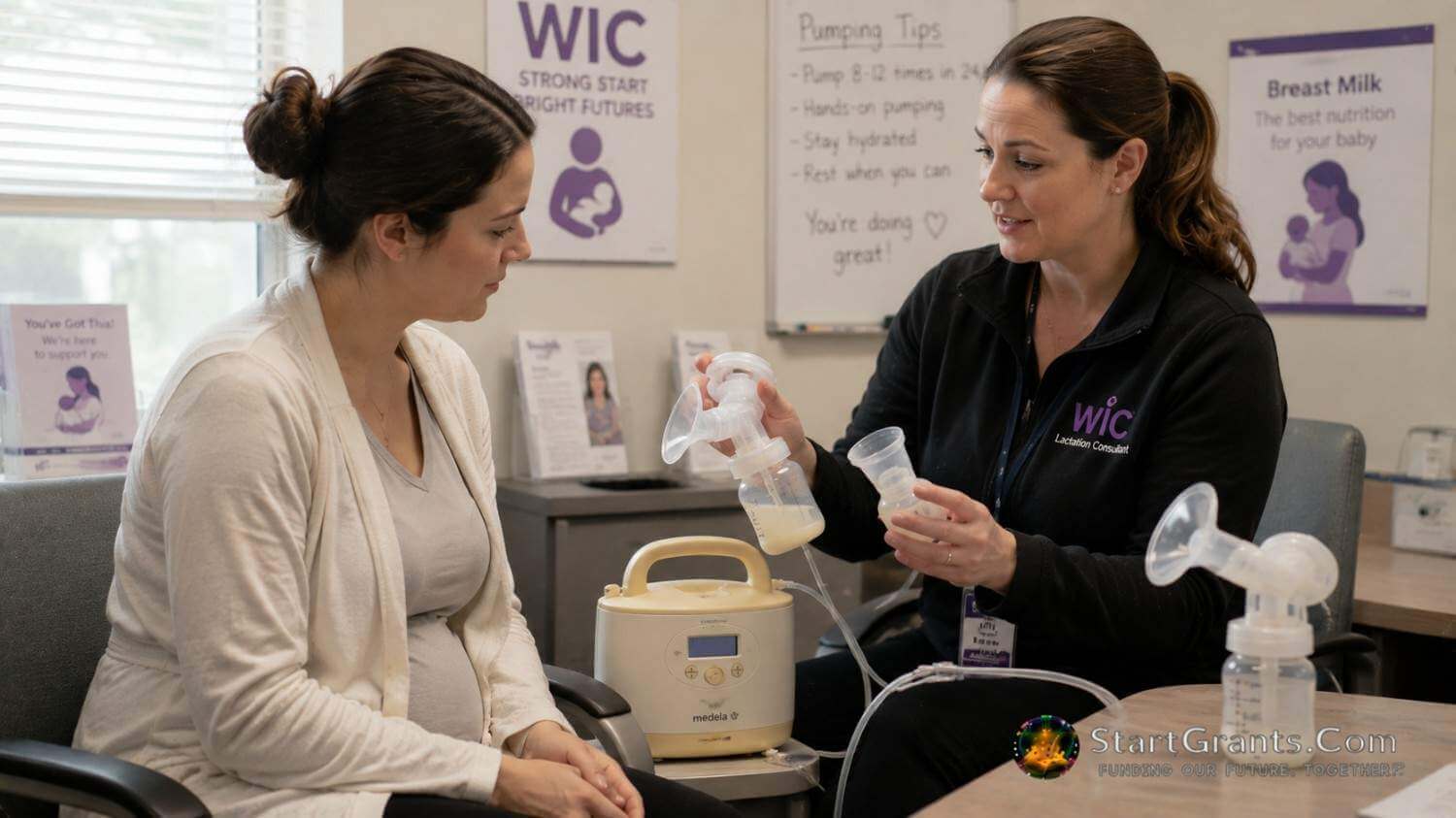
Health insurance may be another route because pump coverage rules are separate from WIC. For the Medicaid process, timing, prescription rules, and suppliers, use our focused guide to getting a breast pump with Medicaid.
What Changes When the Baby Turns 6 Months?
WIC’s standard infant packages change at 6 months. In addition to formula when applicable, infants ages 6 through 11 months can receive infant cereal and infant fruits and vegetables. Fully breastfed infants can also receive infant meats. State agencies may offer an option that replaces some or all jarred infant fruits and vegetables with a cash-value benefit for eligible fruits and vegetables, so the shopping format can differ by location.
The benefit change does not determine whether an individual baby is developmentally ready for complementary foods. Discuss feeding readiness, allergies, texture progression, and medical concerns with the baby’s clinician. Continue to follow the exact foods, sizes, and quantities listed on the current WIC benefits.
What the Postpartum or Breastfeeding Parent May Receive
The baby’s package and the parent’s package are separate. An eligible postpartum participant may receive foods such as fruits and vegetables, whole grains, milk or another approved dairy option, eggs, beans or peanut butter, and other items specified by the state agency. The exact package depends in part on pregnancy or postpartum category and breastfeeding status.
Federal eligibility periods also differ: eligible non-breastfeeding postpartum participants may receive WIC through six months after pregnancy ends, while eligible breastfeeding participants may receive benefits through the infant’s first birthday. Eligibility must still be certified by the local agency. Review the current USDA WIC eligibility rules.
Who Is Eligible and How Do You Add a Newborn?
WIC eligibility generally requires the applicant to be in a covered category, live in the state or service area, meet income rules, and be found at nutritional risk by a qualified professional. Participation in Medicaid, SNAP, or TANF may establish income eligibility under adjunctive eligibility rules, but it does not automatically finish WIC enrollment or determine the food package.
- Use the official WIC agency locator to find the agency serving your address.
- Tell the clinic that the baby has been born and needs to be added or certified.
- Ask what to bring. A clinic may request identity, address, income or program-participation information, and infant records, but accepted documents vary.
- Complete the nutrition assessment and discuss whether the baby is fully breastfed, partially breastfed, or formula-fed.
- Before shopping, review the benefit start and end dates and the exact approved products.
Do not wait for the first pediatric visit if feeding assistance is urgent. Call the WIC clinic promptly and ask about its earliest appointment and any temporary procedures. WIC is administered through state, territorial, Tribal, and local agencies, so appointment methods and document alternatives are not identical nationwide.
How to Avoid Problems at Checkout
- Check the benefit balance before shopping; benefits generally expire at the end of their assigned period.
- Match the brand, product name, form, container size, and quantity exactly.
- Use the state WIC app’s scanner when available, but confirm the final purchase against the benefit list.
- Separate WIC-approved items from personal purchases if that makes the transaction easier to review.
- Read the receipt before leaving and keep it while resolving a missing or incorrectly charged benefit.
- Call the number on the EBT card or contact the WIC clinic when the listed item is rejected; do not share the card PIN.
What WIC Does Not Cover for a Newborn
WIC food benefits do not purchase diapers, wipes, bottles, pacifiers, clothing, laundry products, cribs, car seats, medicine, over-the-counter products, or hospital bills. A clinic may refer families to organizations that provide some of these items, but a referral is separate from the WIC food package and does not guarantee approval or inventory.
For an immediate diaper shortage, follow the local-search steps in emergency diaper assistance near you. For medical and recovery costs after delivery, see postpartum financial-help options. These pages address different needs and should not be treated as WIC benefits.
Save This WIC Newborn Checklist
[ ] Find the WIC agency that serves your address.
[ ] Ask how to add or certify the newborn and what documents are accepted.
[ ] Explain the baby’s current feeding method and any medical formula need.
[ ] Confirm the approved formula brand, form, size, quantity, and benefit dates.
[ ] Ask what breastfeeding counseling and pump options are available locally.
[ ] Check the EBT balance or WIC app before each shopping trip.
[ ] Contact the clinic before substituting a rejected or unavailable formula.
[ ] Ask for referrals if you also need diapers, a crib, clothing, or medical-bill help.
A Muslim Perspective
WIC assistance is a public nutrition benefit, not an interest-bearing loan: an eligible participant does not borrow the food benefit or repay it with interest. Receiving it therefore should not be described as taking on riba. Still, StartGrants.com does not issue religious rulings, and families with case-specific concerns can consult a qualified scholar they trust.
WIC approval also does not certify every product as halal. If an infant formula or nutrition product raises an ingredient concern, review the label and manufacturer information, then discuss safe alternatives with the baby’s clinician and WIC nutrition professional. Do not delay medically necessary feeding or change a prescribed formula without appropriate clinical advice. A local zakat committee, sadaqah fund, or community charity may help with costs WIC does not cover, but each organization decides eligibility and use of funds.
Protect personal information as an amanah: apply through the official WIC agency, ask why documents are needed, and do not send benefit-card numbers, PINs, or medical records to unverified social-media accounts.
Frequently Asked Questions
Does WIC cover all the formula a newborn needs?
No. WIC is a supplemental nutrition program. Federal rules set maximum monthly allowances, but the issued amount depends on the baby’s age, feeding category, assessed needs, formula form, and package tailoring. Confirm the exact product and quantity on the current benefit list.
How many cans of formula does WIC provide each month?
There is no reliable nationwide can count. WIC allowances are defined in reconstituted fluid ounces, while the number of containers depends on powder, concentrate, or ready-to-feed form, container size, contract brand, age, feeding category, and individual package.
Can WIC pay for any infant formula brand?
No. State agencies generally specify contract brands and approved products, forms, and sizes. Specialty or exempt formula may require medical documentation and WIC approval. Buy only what appears on the current benefit list.
Does WIC provide free breast pumps?
WIC may provide or lend a breast pump when the local agency determines that it is appropriate and has equipment available. Pump type, eligibility, ownership, return rules, and timing vary, so ask the clinic directly. Health insurance may offer separate coverage.
Does WIC cover diapers and wipes?
No. Diapers and wipes are not WIC foods and cannot be purchased with WIC food benefits. A clinic may refer a family to a diaper bank or community organization, but that assistance is separate and not guaranteed.
What foods does WIC add when a baby turns 6 months?
Standard packages for infants ages 6 through 11 months can include infant cereal and infant fruits and vegetables; fully breastfed infants can also receive infant meats. Formula continues when applicable. State options and the exact benefit list can vary.
Does Medicaid, SNAP, or TANF enrollment automatically enroll a baby in WIC?
No. Participation in one of those programs may establish income eligibility under WIC rules, but the family must still contact the WIC agency and complete its certification process, including the nutrition assessment and other applicable requirements.
Can WIC help if my baby needs a specialty formula?
Possibly. WIC may cover certain exempt infant formulas or WIC-eligible nutritionals when program requirements are met. Medical documentation is generally required, and the agency determines whether the requested product can be issued.
When do a newborn’s WIC benefits start?
Timing depends on certification, appointment availability, and the benefit period assigned by the local agency. Contact the clinic as soon as possible after birth, ask how to add the baby, and confirm the start and expiration dates before shopping.
Bottom Line
For a newborn, WIC primarily covers supplemental formula when appropriate, breastfeeding support, nutrition services, and referrals. It does not provide a universal number of cans or guarantee a particular pump. The safest next step is to contact the official WIC agency serving your address, complete the newborn’s certification, and shop from the exact current benefit list.
Important Disclaimer: StartGrants.com is an independent information portal. It is not the USDA, a WIC agency, a medical provider, or a benefit issuer. WIC eligibility, food packages, contract formulas, equipment, appointment procedures, and local referrals can change. Confirm current benefits with your WIC agency and seek guidance from the baby’s health care professional for feeding, formula, or medical concerns.