
Last Updated: | Author: Munir Ardi
Quick answer: Families who need help paying for infant care should check two different pathways: state, territory, or Tribal child care assistance funded through the Child Care and Development Fund (CCDF), and a local Early Head Start program. CCDF generally helps an eligible family pay an approved provider and may require a copayment. Early Head Start provides no-cost child development and family services to eligible pregnant people and families with children under age 3, but available slots and service models vary locally.
Neither option is an automatic nationwide benefit. Income limits, approved activities, priority groups, waitlists, provider participation, and family fees depend heavily on the agency administering the program. Start with your state or territory’s official child care assistance office and the official Early Head Start locator. For a broader directory of baby supplies and benefit programs, see free baby stuff for low-income families.
Understand the Two Main Infant Care Pathways
| Feature | CCDF Child Care Assistance | Early Head Start |
|---|---|---|
| What it is | A state, territory, or Tribal subsidy program that helps eligible families pay participating providers | A federal-to-local early childhood program providing child development and family services |
| Typical age range | Children under 13 under the federal framework, with state rules for infant care | Pregnant people and children from birth to age 3 |
| Family cost | A copayment or provider charge may apply; rules vary | No cost to eligible enrolled families |
| Where care occurs | At an eligible participating center, family child care home, or sometimes a relative’s home | Center-based, home-based, family child care, or locally approved options |
| Availability | Funding, priorities, and waitlists vary by jurisdiction | Local enrollment capacity and program options vary |
Program rules and availability change. Use this comparison to choose where to apply, then verify current local terms.
How CCDF Child Care Subsidies Work
CCDF is federal funding administered through states, territories, and Tribes. Families usually apply through a local or statewide agency rather than to the federal government. The agency determines eligibility, authorizes a level of care, and pays all or part of the approved amount to a participating provider. The family may owe a copayment and, depending on local policy and the provider’s rate, other disclosed charges.
The federal framework generally covers children under age 13 who reside with a parent or caregiver who is working, attending job training or education, or receiving or needing protective services. A lead agency can set additional rules within federal law. The federal income ceiling is 85% of state median income, but a state may use a lower entry limit. Meeting an income limit does not guarantee immediate assistance when funding is limited. Review the governing federal framework in 45 CFR 98.20.
Common Eligibility Factors
- The child’s age and residence;
- household income and family size;
- the parent or caregiver’s work, education, training, or qualifying protective-services circumstance;
- the number and schedule of care hours needed;
- citizenship or eligible immigration status for the child receiving assistance, when required; and
- the program’s priority categories and available funding.
Do not assume that Medicaid, SNAP, WIC, or TANF enrollment automatically produces a child care subsidy. An agency may use participation in another program to simplify verification or establish priority, but it can still require a separate application. Families receiving cash assistance can review TANF eligibility and application rules for pregnant women. WIC provides nutrition services and referrals, not regular daycare payments; see what WIC covers for newborns.
What Will Your Family Have to Pay?
A subsidy may not make infant care completely free. Ask for a written explanation of every amount you may owe:
- the agency-assigned family copayment;
- any difference between the provider’s private rate and the agency payment, if local rules allow it;
- registration, supply, late-pickup, meal, or activity fees;
- charges for days the child is absent; and
- when the amount can change after an income or schedule update.
The 2026 federal rule no longer requires a universal 7% cap, but it does not force every state to raise fees. Ask whether your jurisdiction caps copayments, exempts families below a certain income, or waives fees for protective-services cases or other priority groups. Do not pay an application broker or anyone promising guaranteed approval; use the administering agency’s official application channel.
How Long Eligibility Lasts
Federal CCDF regulations generally require at least 12 months of eligibility once a child is approved, even if income rises during that period, as long as it does not exceed the federal exit threshold and the family remains otherwise eligible. Temporary changes in work, training, or education generally should not cause immediate termination. If a parent experiences a non-temporary job loss or stops an approved activity, a state that ends assistance on that basis must provide a continuation period of at least three months to allow the parent to resume an activity. Read the current rules in 45 CFR 98.21.
Reporting duties still matter. Ask which changes must be reported, by what deadline, and whether the agency offers online reporting. If pregnancy complications interrupt employment, the separate guide to financial help during pregnancy-related bed rest covers leave, disability, and benefit pathways without assuming that a childcare authorization will continue unchanged.
Early Head Start for Infants and Toddlers
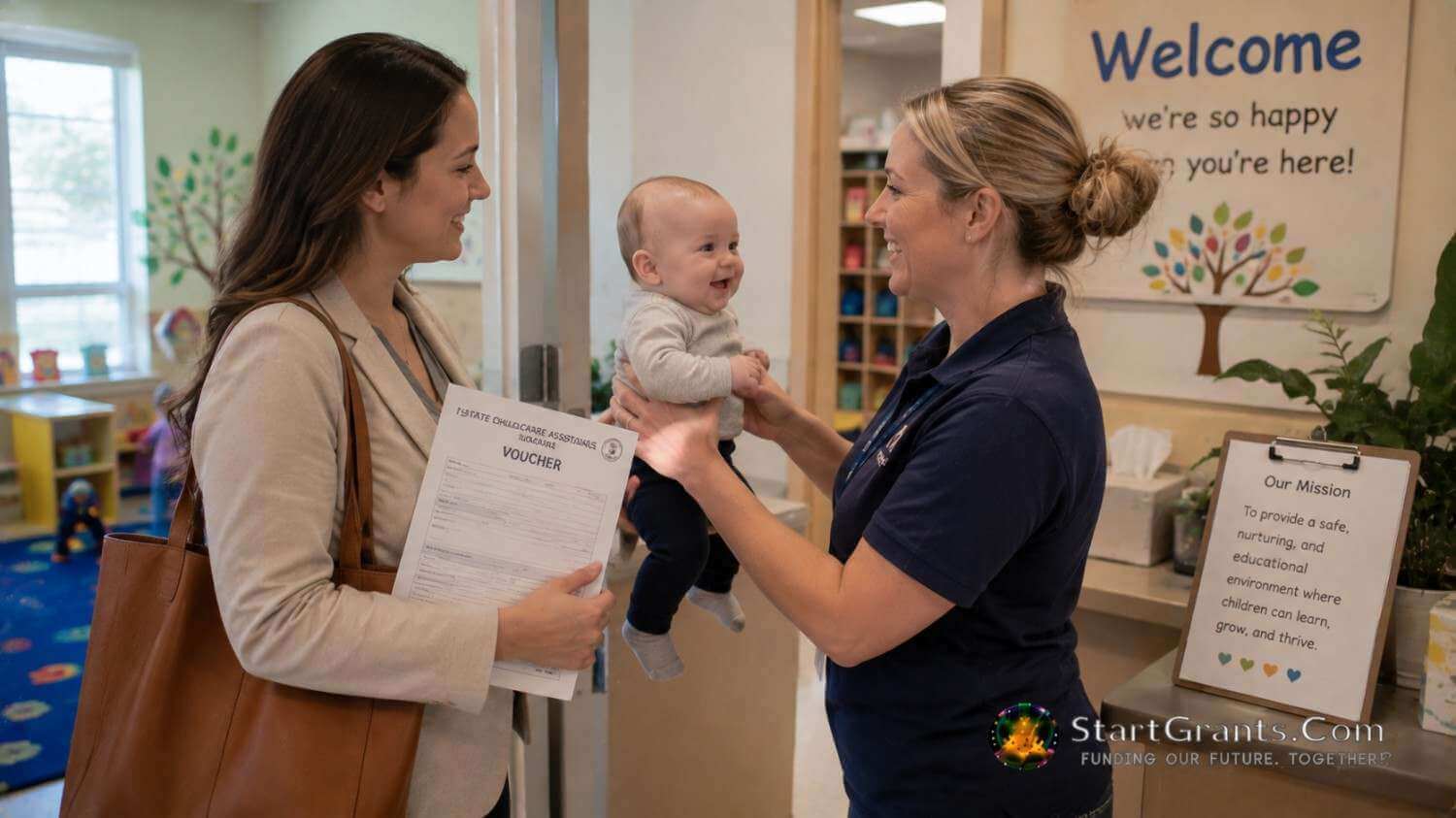
Early Head Start serves pregnant people and families with children from birth to age 3 through local programs. Services may include early learning, developmental support, family services, health and nutrition coordination, and help connecting with community resources. Eligible families do not pay for Early Head Start services.
Income at or below the federal poverty guidelines is one pathway. A child may also be categorically eligible because the family receives TANF, Supplemental Security Income, or SNAP, or because the child is in foster care or the family is experiencing homelessness. Eligibility does not guarantee a slot. Programs must follow selection criteria and may maintain waiting lists. Use the official Head Start application and program locator, contact nearby programs, and ask about center-based, home-based, and family child care options.
Why Eligible Families May Still Wait
Child care subsidy agencies and Early Head Start programs often serve priority groups first. Priorities can include families with very low incomes, children with disabilities, children experiencing homelessness, families involved with protective services, or parents who are working or participating in required activities. Exact categories and definitions are local.
If the program has a waitlist, ask for written confirmation, your application date, whether you must renew your place, and which changes must be reported. Ask whether there are expedited procedures for homelessness, domestic violence, protective-services involvement, or another urgent circumstance. Apply to Early Head Start and CCDF separately when you may qualify for both; applying to one does not usually create an application for the other.
How to Apply for Infant Child Care Assistance
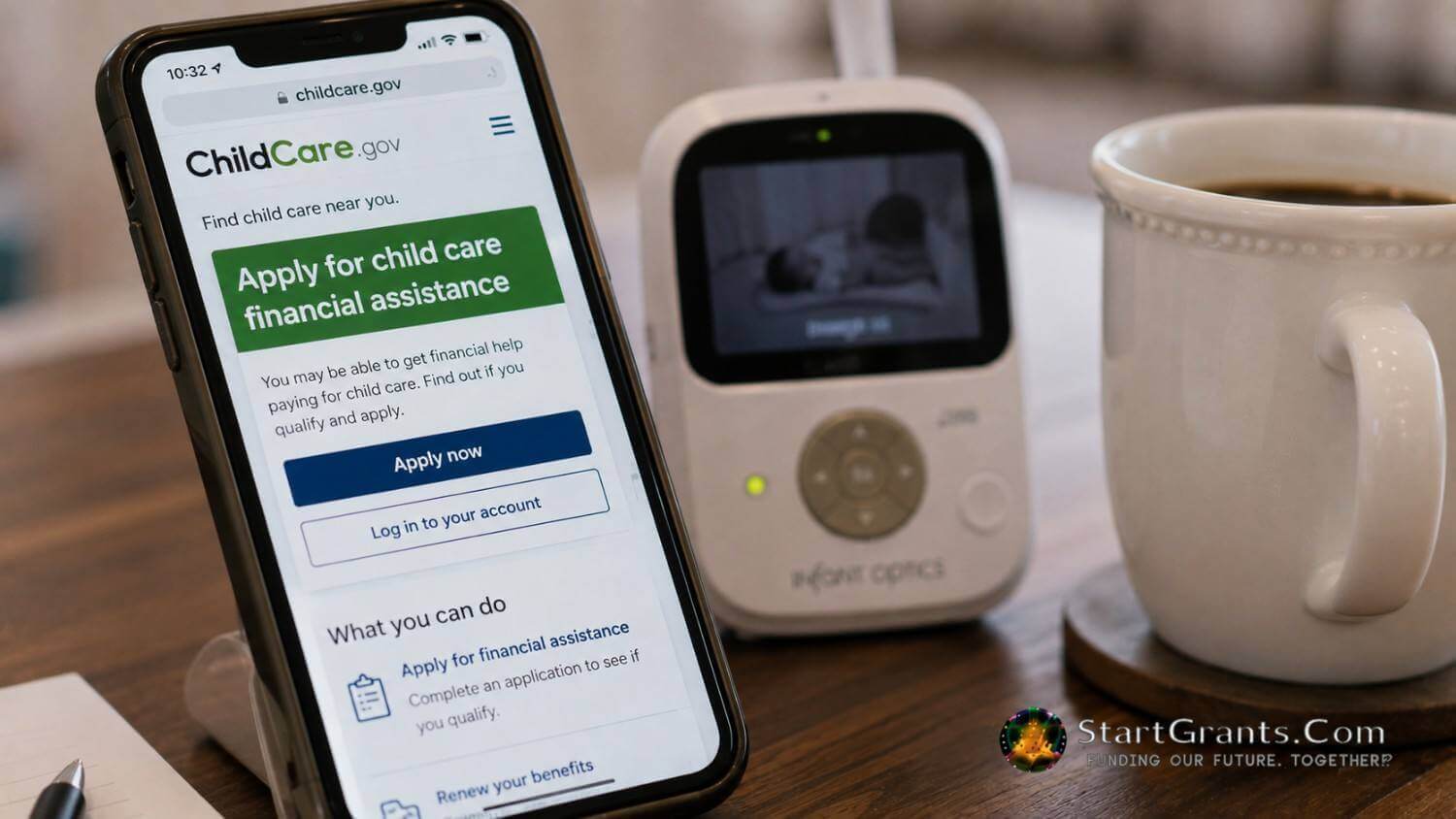
- Find the official agency. Use the ChildCare.gov financial assistance directory to reach your state or territory’s program. Tribal families can also ask the relevant Tribal lead agency.
- Ask whether you can apply before birth. Some agencies will accept an application or place a pregnant applicant on a list; others need the child’s birth information before authorizing care.
- Gather documents. The agency may request identity, residence, household composition, income, work or school schedules, employer or education verification, and information about the child. Request a list rather than guessing.
- Submit through the official channel. Save the confirmation page, reference number, date, and copies of uploaded documents.
- Respond to requests promptly. Ask how missing documents affect the filing date and whether alternative proof is acceptable.
- Apply to Early Head Start separately. Contact each practical local program because service models, boundaries, and openings differ.
- Document the decision. Keep the approval, denial, copayment calculation, authorized schedule, renewal date, and appeal instructions.
Choose a Safe, Eligible Infant Care Provider
An approval does not mean every provider accepts assistance or has an infant opening. Ask the agency for a current list of participating providers, then verify each provider directly. ChildCare.gov explains that families can review licensing and monitoring information, including published inspection reports, through the relevant state or territory system. Start with the official child care monitoring and inspection guidance.
For infant care, ask about staff-to-child ratios, caregiver continuity, feeding and breast milk procedures, diapering, illness exclusions, safe-sleep practices, emergency plans, and how the provider communicates with families. Babies should be placed on their backs on a firm, flat sleep surface intended for infant sleep, without loose bedding or soft objects. Ask to see the sleep area rather than relying only on a brochure.
Can a Relative Be Paid?
Some CCDF programs allow an eligible relative, friend, or neighbor to become an approved provider. The caregiver may need background checks, health and safety training, enrollment paperwork, inspections, tax documentation, or other requirements. Exemptions and payment rules vary. Do not assume that an informal arrangement can be reimbursed retroactively; get authorization before care begins.
Public Charge and Immigration Questions
DHS issued a 2026 public charge rule effective September 18, 2026 that rescinded the 2022 regulatory framework. The current analysis may consider a broader range of means-tested public benefits, but USCIS has not published a simple, complete list that resolves every program and family situation. Whether a benefit matters can depend on who receives it, the person’s immigration category, the date and type of immigration filing or admission, and other facts.
Do not assume that a parent’s status automatically makes a child ineligible, and do not stop a child’s services based on a rumor. Review the 2026 public charge final rule and the current USCIS Policy Manual on public charge. For advice about a specific case, consult a qualified immigration attorney or a representative listed on the DOJ Recognition and Accreditation roster.
Save This Infant Child Care Assistance Checklist
[ ] Find the official state, territory, or Tribal child care assistance agency.
[ ] Ask whether applications are accepted before the baby’s birth.
[ ] Request the current income limit, approved-activity rules, priority policy, and waitlist process.
[ ] Gather income, residence, household, work, school, and child documents requested by the agency.
[ ] Apply to Early Head Start separately and ask about every available service model.
[ ] Get the copayment and possible provider charges in writing.
[ ] Confirm that the chosen provider accepts the authorization and has an infant opening.
[ ] Review licensing, inspection, safe-sleep, feeding, and emergency information.
[ ] Save application receipts, notices, renewal dates, and appeal instructions.
A Muslim Perspective
A child care subsidy or a no-cost Early Head Start placement is generally assistance or payment for an eligible service, not an interest-bearing loan. Still, families should understand the arrangement: who pays the provider, what copayment is owed, whether late fees or other charges apply, and what happens if care ends. Clear terms support amanah, or responsible stewardship, and help prevent disputes.
A mosque or Muslim community organization may use zakat, sadaqah, or a general assistance fund to help an eligible household cover a copayment or a temporary gap, but not every financial hardship automatically qualifies for zakat. Each organization applies its own eligibility and documentation policy. Families seeking a personal religious ruling about a contract, fee, or zakat eligibility should consult a qualified scholar familiar with the facts. Share only the personal information needed for an application and ask how sensitive documents will be stored.
Frequently Asked Questions
Are government childcare subsidies for infants completely free?
Not always. A CCDF-funded program may require a family copayment, and a participating provider may have other permitted charges. Early Head Start services are provided at no cost to eligible enrolled families. Ask for a written cost breakdown before care begins.
Is the CCDF copayment still capped at 7% of household income?
Not as a nationwide federal requirement. A federal rule effective July 13, 2026 removed the mandatory 7% cap. A state or territory may retain its own cap, lower fees, or exemptions, so verify the current local schedule.
What is the maximum income for child care assistance?
Federal law sets an upper boundary of 85% of state median income for CCDF eligibility, but states and territories may set lower entry limits and different rules for continued eligibility. Use the current limit published by the agency serving your residence.
Can I apply for an infant care subsidy before my baby is born?
Possibly. Some agencies accept prenatal applications or waitlist requests, while others require the child’s birth information before approval. Contact the official agency during pregnancy and ask when your filing date can be established.
Will I immediately lose child care assistance if I lose my job?
Usually not immediately. CCDF rules protect temporary changes, and if a state terminates assistance after a non-temporary job loss or end of an approved activity, it must provide at least a three-month continuation period. Reporting rules and additional protections vary locally.
Can a college student qualify for an infant child care subsidy?
Education or training can be a qualifying activity under the federal framework, but the state or territory defines approved programs, documentation, and required schedules. Ask whether your course load, online classes, study time, and travel time can be authorized.
Can an undocumented parent apply for an eligible child?
The child’s eligibility and any required status verification are distinct from the parent’s status, but application and immigration consequences can be fact-specific. Ask the administering agency what it requires for the child and consult a qualified immigration attorney or DOJ-accredited representative if you have public charge or status concerns.
Can my baby’s grandparent or another relative be paid as the provider?
Sometimes. The relative must meet the state, territory, or Tribal program’s provider requirements, which may include enrollment, background checks, training, health and safety rules, and tax documentation. Approval generally should occur before subsidized care starts.
Is Early Head Start the same as a daycare voucher?
No. Early Head Start is a locally operated child development and family services program for pregnant people and families with children under age 3. CCDF assistance helps eligible families pay participating child care providers. Families may apply to both, but each has a separate process and limited availability.
Bottom Line
Apply through the official child care assistance agency and nearby Early Head Start programs rather than waiting for one pathway to respond. Verify the current copayment rules, document your filing date, and choose a provider only after checking participation, licensing, inspections, infant safety, availability, and every charge. Because program funding and local rules change, confirm details directly before making a care arrangement.
Important Disclaimer: StartGrants.com is an independent information portal. It is not a government agency, child care provider, Head Start grantee, grantmaker, law firm, or religious authority. Eligibility, fees, waitlists, provider participation, immigration rules, and program availability can change. Confirm current terms with the administering agency and provider. For advice about a specific immigration matter, consult a qualified immigration attorney or DOJ-accredited representative; for child health and safety questions, consult an appropriate health professional.