
Last Updated: July 2026 | Author: Munir Ardi
When a devastating earthquake shatters a developing nation, or a brutal armed conflict displaces millions, the global healthcare infrastructure collapses almost instantly. In these darkest hours, you will almost inevitably see footage of medical personnel in white vests bearing a distinct red logo rushing toward the danger. They are Médecins Sans Frontières, universally known in the United States as Doctors Without Borders (MSF).
Their bravery is unquestionable. However, as a responsible philanthropist, giving money based purely on emotion is a flawed strategy. You must ask the critical question: is Doctors Without Borders a good charity from a financial, operational, and ethical standpoint?
Before executing a deep-dive review of a single organization, it is highly recommended to understand how they stack up against the broader humanitarian sector. Calibrate your philanthropic expectations by reviewing our overarching master guide on the Best Non-Profit Organizations to Donate To.
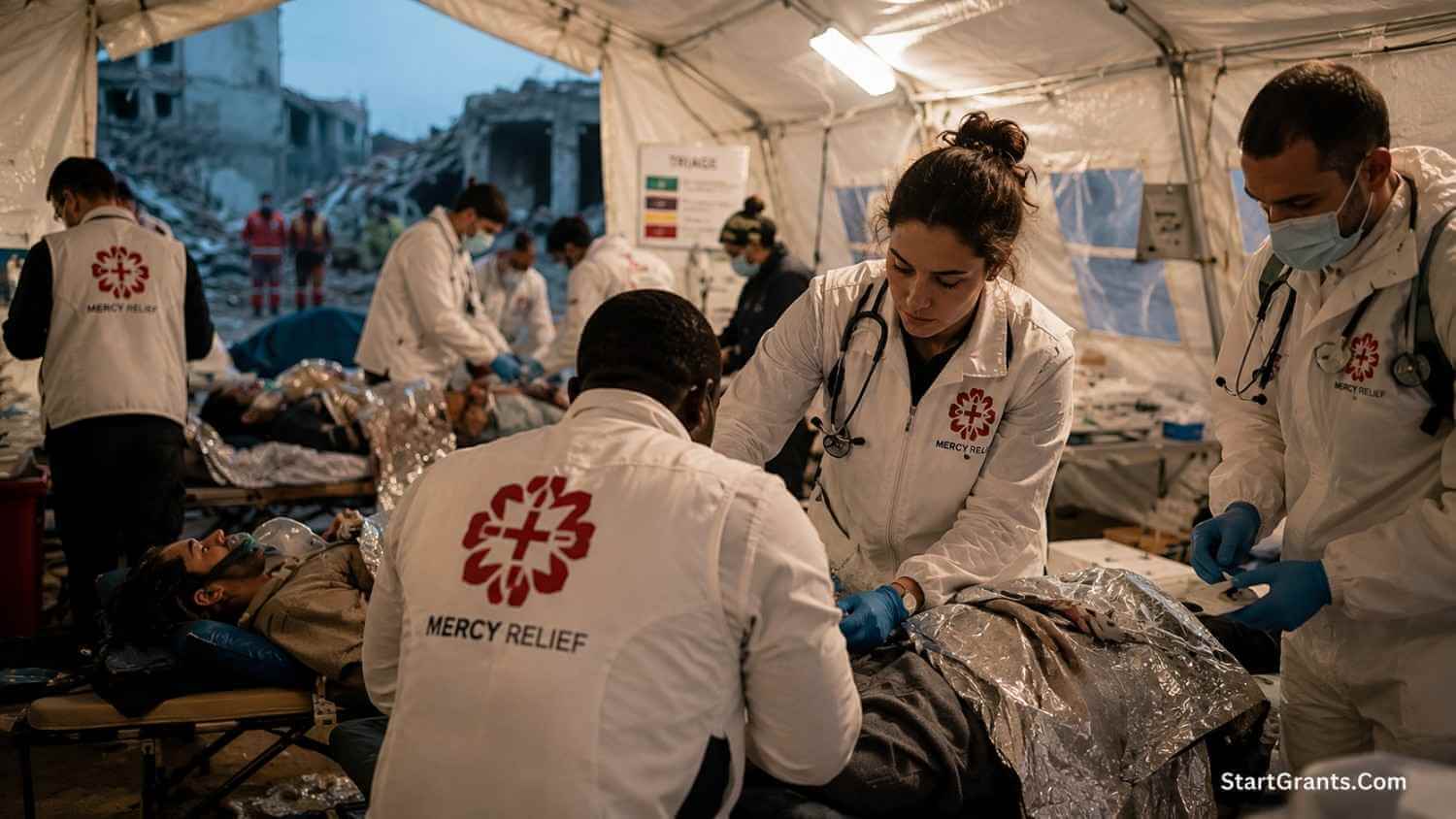
When global crises erupt, emergency medical NGOs are often the first on the ground. But before funding their operations, donors must scrutinize their financial transparency and field efficiency.
Phase 1: The Core Mission and Political Independence
To determine if an organization is worthy of your capital, you must first understand its foundational operating principles. Founded in 1971 by a group of French doctors and journalists, MSF operates under a strict mandate of medical ethics and the principles of impartiality, independence, and neutrality.
The Rejection of Government Grants
One of the most unique aspects of Doctors Without Borders is how they fund their operations. Most massive international NGOs rely heavily on government grants. For example, the U.S. Agency for International Development (USAID) distributes billions of dollars annually to charities to deliver food and medical supplies overseas.
MSF intentionally rejects the vast majority of government funding. Why? Because government grants often come with political strings attached. If MSF accepts money from a government that is actively participating in a proxy war, their medical teams on the ground lose their “neutrality” and become targets. By relying on private, individual donors for over 85% of their budget, MSF guarantees that their doctors can treat patients on both sides of a conflict without political interference.
Phase 2: Financial Transparency (The Numbers)
Bravery in the field does not excuse financial mismanagement in the boardroom. To answer the question of is Doctors Without Borders a good charity, we must look at their IRS Form 990 tax filings and independent audit reports for 2026.
Overhead and Program Expense Ratio
A charity is a business that sells impact. The most critical metric for any donor is the “Program Expense Ratio”—how much of your $100 donation actually buys medicine, and how much pays for office rent and fundraising marketing.
Doctors Without Borders USA consistently maintains stellar financial health. Historically and currently, their financial breakdown looks approximately like this:
- Program Services: ~85% of total expenses go directly to frontline medical programs.
- Fundraising: ~13% is spent on securing future donations.
- Management & General: ~2% is spent on administrative overhead.
This is considered a “Golden Ratio” in the non-profit sector. Major watchdogs like Charity Navigator consistently award MSF their highest 4-star rating, citing perfect scores in Accountability and Finance.
Pro-Tip: MSF Transparency & Independence
To truly understand how Doctors Without Borders achieves this level of efficiency, you must look at how they fiercely guard their financial independence. By relying almost entirely on private donors rather than government grants, they ensure their money is spent solely on medical needs, not political agendas. Watch their official breakdown here: What is Doctors Without Borders/Médecins Sans Frontières (MSF)?:
Phase 3: Field Efficiency and Real-World Impact
Having money is useless if you cannot deploy it quickly. MSF is renowned for its logistical supremacy. They maintain massive, pre-packaged staging warehouses in strategic locations across the globe. When an earthquake strikes, MSF does not waste time buying bandages; they load pre-built, modular surgical tents onto cargo planes and are often performing surgeries within 48 to 72 hours of a disaster.
Their impact is staggering. Annually, MSF conducts over 10 million outpatient consultations, assists in hundreds of thousands of births, and treats millions for infectious diseases like malaria and cholera in places where no local health infrastructure exists.
Phase 4: Controversies and Criticisms
No multi-billion dollar organization is flawless. A comprehensive review must address the criticisms MSF faces:
- High Turnover & Burnout: The psychological toll on MSF doctors is immense. Critics argue that the organization relies heavily on a rotating door of young, idealistic doctors who burn out quickly, making long-term continuity in specific regions difficult.
- The “Speaking Out” Policy (Témoignage): Unlike the Red Cross, which strictly remains silent to maintain access to war zones, MSF has a policy of “speaking out” against atrocities they witness. This has sometimes resulted in their expulsion from certain countries, temporarily cutting off medical access for local civilians.
Phase 5: The Muslim Perspective (Zakat, Sadaqah, Riba, & Gharar)
For Muslim philanthropists in the United States, answering the question of whether a charity is “good” transcends secular efficiency metrics. Giving charity is an act of worship (Ibadah). When evaluating a secular, Western NGO like Doctors Without Borders, a Muslim must view the organization through the lens of strict Islamic financial jurisprudence (Shariah).
The Fiqh of Zakat vs. Sadaqah
The most pressing question for Muslim donors is: Can I give my obligatory Zakat al-Mal to Doctors Without Borders?
In Islamic law (Quran 9:60), Zakat is strictly restricted to eight specific categories (the Asnaf). The majority consensus among classical and contemporary scholars is that Zakat must generally be distributed to qualifying Muslims. While some scholars permit giving Zakat to non-Muslims in extreme, life-or-death humanitarian crises where no Muslim NGO is present, MSF is a secular organization that treats everyone universally and does not separate Zakat funds from general funds.
Therefore, it is highly advised not to pay your obligatory Zakat to MSF, as they cannot guarantee a “100% Zakat Policy” restricted to the Asnaf. However, Sadaqah (voluntary charity) is entirely different. Islam highly encourages giving Sadaqah to save any human life, regardless of their religion. Funding MSF’s medical relief with your voluntary Sadaqah is a noble and Halal action.

For Muslim donors, evaluating a secular charity involves complex Fiqh rulings. While Sadaqah is universally encouraged for medical relief, ensuring that obligatory Zakat does not intermingle with Riba-bearing secular endowments requires strict due diligence.
The Dilemma of Secular Endowments and Riba
Secular megacharities like MSF hold massive cash reserves and endowments to ensure long-term sustainability. Because they are not bound by Shariah law, these reserves are almost certainly stored in conventional, interest-bearing commercial accounts and global bonds.
Generating wealth through compounding interest is explicitly Riba, which is strictly Haram. By donating to a secular charity’s general fund, a Muslim donor’s money may inadvertently be mixed into Riba-bearing accounts before it is deployed. This is another reason why Muslim donors must exercise caution and explicitly designate their donations for “immediate emergency use” rather than general endowment funds, if possible.
Gharar and Medical Malpractice Insurance
To operate a massive medical network globally, MSF is legally required to hold extensive medical malpractice and liability insurance. Traditional commercial insurance contains Gharar (excessive uncertainty) and elements of Maisir (gambling).
While Islamic charities navigate this using Takaful (cooperative insurance) or the principle of Dharurah (necessity), a secular NGO does not. While the end goal (saving lives) is pure, the financial mechanisms used by secular NGOs are not Shariah-compliant. A Muslim donor must weigh the necessity of the immediate medical relief against these structural realities.
Halal Alternatives for Medical Aid
If you wish to fund emergency medical relief but want absolute assurance that your wealth is handled with strict Halal compliance and is eligible for Zakat, you should redirect your funds to verified Muslim medical charities. Organizations such as the Islamic Medical Association of North America (IMANA) or the Palestine Children’s Relief Fund (PCRF) offer similar frontline medical responses while ensuring strict adherence to Islamic financial ethics.
Conclusion: The Final Verdict
So, is Doctors Without Borders a good charity? From a secular, administrative, and humanitarian perspective, the answer is an overwhelming yes. They operate with brutal efficiency, maintain a pristine 85% program expense ratio, and fiercely protect their political independence by rejecting most government grants. If you want your dollars to translate directly into life-saving emergency surgery, MSF is one of the premier organizations on Earth.
For the Muslim donor, the verdict requires nuance. While MSF is a magnificent avenue for your voluntary Sadaqah to alleviate human suffering, their secular financial structure—which inherently interacts with Riba-based banking and Gharar-based insurance—makes them an unsuitable vehicle for your obligatory Zakat. Save your Zakat for verified Islamic charities, but feel confident deploying your Sadaqah to help MSF save lives on the frontlines.
Frequently Asked Questions (FAQs)
Q1: Is Doctors Without Borders a legitimate 501(c)(3) charity?
A: Yes. Doctors Without Borders USA is a fully registered 501(c)(3) tax-exempt organization with the IRS. Any donations made to them by U.S. citizens are legally tax-deductible to the fullest extent allowed by law.
Q2: How much of my donation to MSF actually goes to medical care?
A: MSF is highly efficient. Historically, approximately 85% of their total expenses are directed straight into their frontline program services. Only about 15% is retained for necessary administrative overhead and fundraising costs.
Q3: Why doesn’t Doctors Without Borders take government money?
A: MSF strictly limits government funding to protect their neutrality and independence. If they accept grants from governments involved in a conflict, they risk being seen as political agents rather than neutral medical professionals, which could put their staff and patients in extreme danger.
Q4: Can a Muslim give Zakat to Doctors Without Borders?
A: According to the majority of Islamic scholars, it is highly discouraged or impermissible to give obligatory Zakat to a secular organization like MSF, as they cannot guarantee the funds will be restricted to the eight specific Islamic categories (Asnaf). However, it is highly encouraged to support them using voluntary Sadaqah.
Q5: What is a Halal alternative to Doctors Without Borders?
A: If you want to fund international medical relief while ensuring 100% Zakat compliance and avoidance of Riba, you should look into Islamic medical NGOs. The Islamic Medical Association of North America (IMANA) and Islamic Relief’s medical missions are excellent, Shariah-compliant alternatives.
Disclaimer: The information provided in this article is for educational and informational purposes only. We are not a financial advisory firm or a religious fatwa council. Always conduct your own due diligence before making charitable contributions, and consult a qualified Islamic finance scholar regarding specific Zakat calculations and the permissibility of donating to secular organizations.