Last Updated: | Author: Munir Ardi
Free baby boxes and welcome kits can provide samples, coupons, and a few newborn supplies, but the best-known registry offers are not necessarily free to obtain. Target, Walmart, Babylist, and Amazon may require a registry, qualifying purchases, membership, shipping charges, or other steps. Check the official terms before spending money because eligibility, inventory, and contents can change.
If you need essential supplies rather than promotional samples, start with our broader guide to free baby stuff for low-income families. A welcome box should supplement—not replace—help with formula, diapers, safe sleep equipment, medical care, or housing.
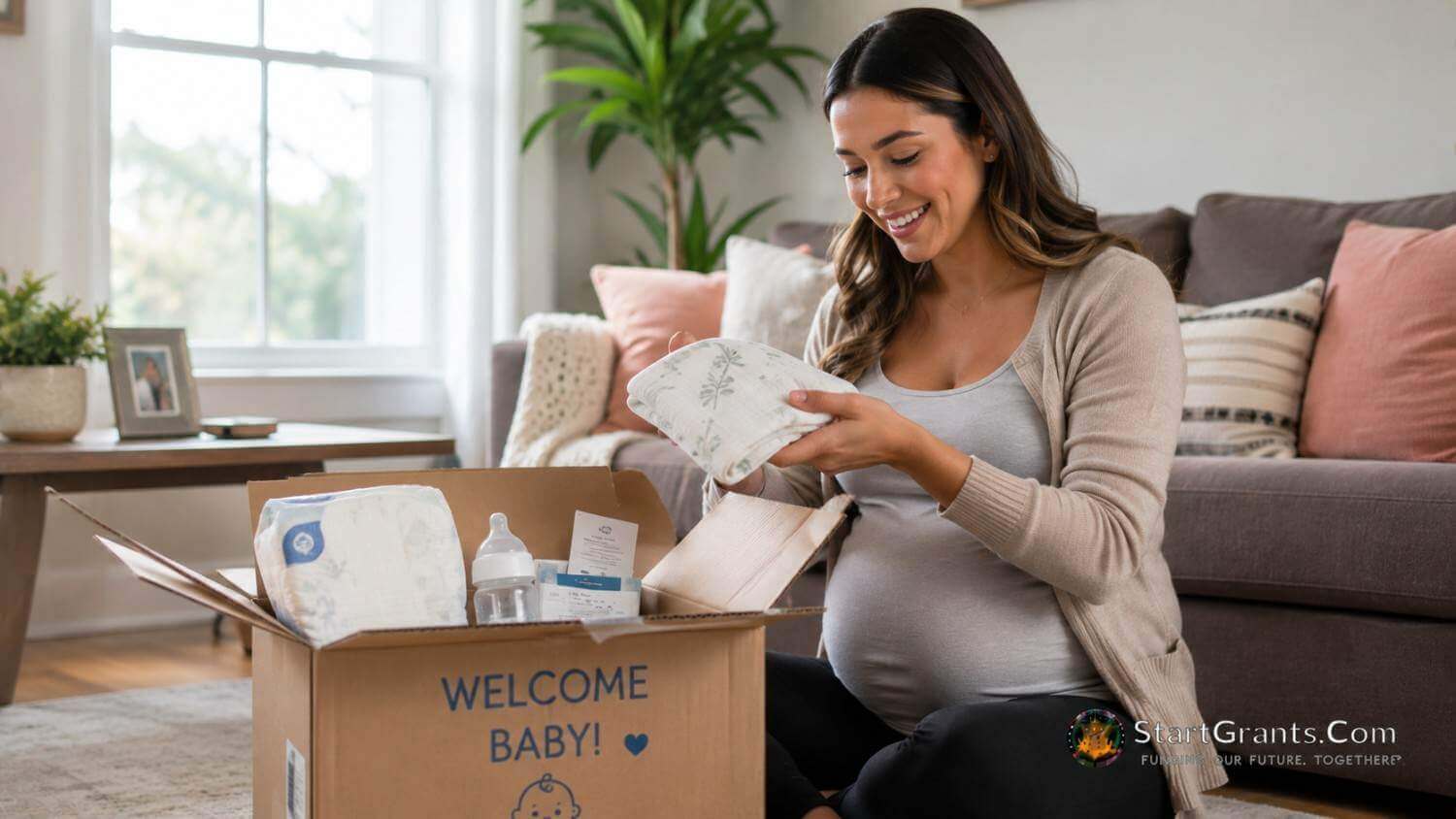
Baby welcome boxes may contain samples, coupons, or small supplies. Requirements and contents vary by provider.
What Counts as a Free Baby Box?
A baby registry welcome box is usually a marketing offer from a retailer or registry platform. It may contain sample-size diapers, wipes, bottles, personal-care products, coupons, or partner offers. The provider—not the recipient—chooses the contents, and advertised examples are not a promise of what any particular box will contain.
Do not confuse a promotional shipping box with an infant sleep product. An ordinary cardboard box that holds samples is not a crib or bassinet and should not be used for sleep.
Baby Registry Welcome Kits Available in 2026
The table below reflects official terms reviewed on September 20, 2026. These offers can change or end without notice, so open the official page and recheck the terms before making a qualifying purchase.
| Provider | Key requirements | Cost or limitation |
|---|---|---|
| Target | Join Target Circle, create a baby registry, add 10 unique items, and have more than $10 purchased from the registry. | Shipping and handling fees apply; limit one kit per year. |
| Walmart | Enroll, maintain a registry for at least seven days, add at least 20 items, and have at least $25 purchased directly through it. | First come, first served; qualification does not guarantee a box; allow 10–12 weeks for delivery. |
| Babylist | Complete registry details, add three items from other stores, complete 40% of the checklist, and make a $30 Babylist Shop purchase. | Pay $8.95 plus tax and any applicable surcharge for shipping. |
| Amazon | Eligibility is shown in the Baby Registry benefits area and may involve Prime, checklist, and purchase requirements. | Prime may have a cost; verify the live benefit status and terms in your account before buying anything. |
Update note: Values, purchase thresholds, fees, geographic restrictions, and availability are controlled by each provider and may change.
Target Baby Registry Welcome Kit
Target says its welcome-kit offer is added to the Target Circle deal list after a baby registry is created. To qualify, join Target Circle, create the registry, add 10 unique items, and have more than $10 purchased from it. Target instructs users to allow 24–48 hours for the bonus to appear after the purchase requirement is met. Its official page also says shipping and handling fees apply and limits the kit to one per year. See the official Target Baby Registry Welcome Kit requirements.
Target describes the offer as a mix of samples and Target Circle benefits valued at $100. That is Target’s promotional valuation, not cash, a guaranteed resale value, or a promise that every physical kit contains $100 of merchandise.
Walmart Baby Registry Welcome Box
Walmart’s current terms say the offer is available to adults in the 50 states and Puerto Rico while supplies last. After enrolling, the registry must contain at least 20 items, remain active for at least seven days, and receive at least $25 in qualifying purchases made directly through the registry. Taxes and shipping or delivery fees do not count toward the threshold.
Eligible users must redeem the offer from the registry. Walmart says boxes are first come, first served, completion of the requirements does not guarantee a box, and delivery may take 10–12 weeks. The box contains at least six sample-size baby or parenting products plus discount coupons, but exact contents vary. Review the official Walmart welcome-box terms.
Babylist Hello Baby Box
Babylist requires a valid U.S. shipping address, excluding U.S. territories and APO, FPO, and DPO addresses. The stated arrival date must be less than nine months away, or the baby must have arrived less than four weeks ago. The offer is limited to one box per household and one per registry.
To qualify, complete the registry profile, add three items from other stores, finish 40% of the registry checklist, and make at least $30 in purchases from the Babylist Shop. Babylist also requires $8.95 plus tax for shipping, with possible surcharges for Alaska and Hawaii. Purchases from Babylist Health or other retailers do not count. Read the official Babylist eligibility and fee details.
Amazon Baby Registry Welcome Box
Amazon displays welcome-box eligibility and current steps through its Baby Registry benefits area. Because account eligibility and offer terms can change—and Amazon’s public pages may show different information depending on sign-in status—use the official Amazon Baby Registry benefits page as the controlling source. Confirm the membership, checklist, purchase, location, and redemption requirements shown in your account before making a purchase solely to unlock the box.
Are Formula Clubs and Brand Samples the Same Thing?
No. Manufacturer rewards programs, coupons, and samples are not the same as a retailer’s registry welcome box, and sample availability is not guaranteed. Read enrollment terms and privacy choices carefully before sharing pregnancy, due-date, or infant information. If formula affordability is the actual need, promotional samples are not a reliable long-term supply; use our guide to baby formula assistance programs.
Hospital and Community Welcome Kits
The United States does not operate one federal program that sends every new parent a baby box. Hospitals, health departments, Medicaid managed-care plans, home-visiting programs, nonprofits, and community organizations may provide supplies or referrals, but local eligibility and inventory vary.
Ask the maternity unit or hospital social worker what patients may take home and whether enrollment is required. Do not assume every hospital supplies diapers, formula, car seats, or sleep equipment. See what free baby items hospitals may provide for questions to ask before delivery.
WIC is a nutrition program that provides approved foods, nutrition education, breastfeeding support, and referrals; regular WIC benefits are not a baby-box or diaper benefit. Medicaid primarily provides health coverage, although a state or managed-care plan may offer additional maternal or infant benefits. Confirm any extra with the plan listed on your card.
Baby Box Safety: The Package Is Not a Bed
A promotional box should never be used as an infant sleep space. The U.S. Consumer Product Safety Commission states that cardboard baby boxes are not subject to mandatory safety standards and do not meet the federal definition of a crib, bassinet, play yard, or handheld carrier. Read the CPSC statement on cardboard baby boxes.
For sleep, use a product specifically intended for infant sleep that meets applicable CPSC requirements, has not been recalled, and is used exactly as instructed. The American Academy of Pediatrics recommends placing babies on their backs on a firm, flat, non-inclined surface with a fitted sheet and no pillows, loose blankets, bumpers, positioners, or stuffed toys. Review the current AAP safe-sleep guidance.
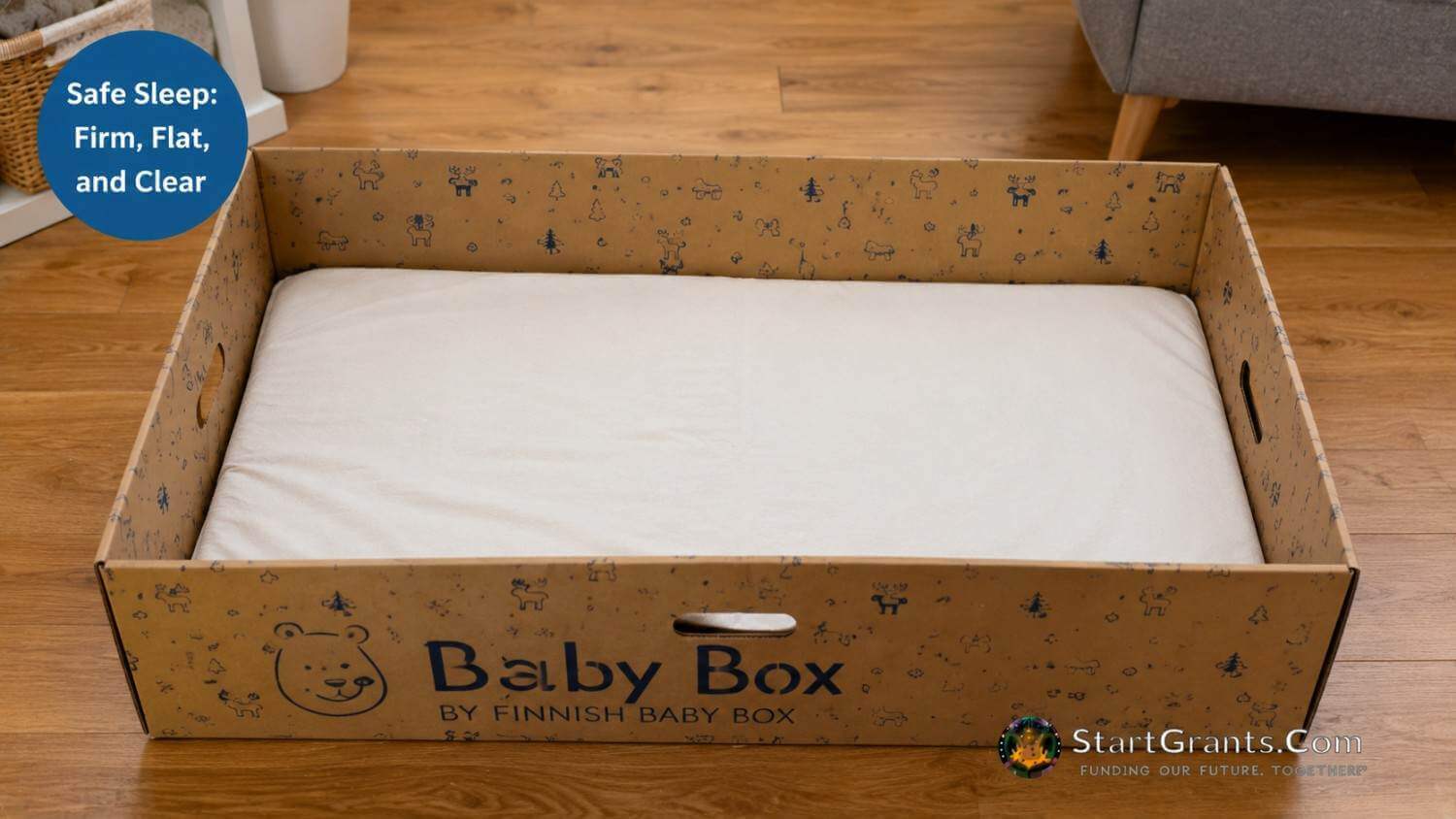
A cardboard welcome box is not automatically an approved infant sleep product. Use a CPSC-compliant crib, bassinet, portable crib, or play yard for sleep.
If your baby lacks a safe sleep space, promotional kits are not the solution. Look for free crib and safe-sleep assistance through verified local programs.
How to Compare an Offer Before Signing Up
- Open the provider’s official terms. Do not rely on an influencer’s old screenshot or an unofficial list.
- Add the real cost. Include required purchases, membership, shipping, tax, surcharges, and the value of your time.
- Check the eligibility window. Some programs use due dates, birth dates, residency, household, registry, or annual limits.
- Review privacy choices. Registry and brand programs may use contact, pregnancy, due-date, purchase, and shipping information for fulfillment and marketing.
- Do not buy unnecessary items. A box of unknown samples is not worth sacrificing rent, food, health care, utilities, or transportation.
- Inspect every product. Check labels, expiration dates, seals, instructions, age limits, and recalls before use.
Save This Baby Welcome Kit Checklist
[ ] I opened the current official offer terms.
[ ] I calculated purchases, membership, shipping, tax, and surcharges.
[ ] I confirmed the residency, due-date, and redemption rules.
[ ] I reviewed how my personal information may be used.
[ ] I did not spend essential household money just to qualify.
[ ] I will check seals, dates, instructions, age limits, and recalls.
[ ] I will not use a promotional cardboard box as an infant bed.
How to Avoid Baby-Freebie Scams
- Navigate directly to the retailer, hospital, government agency, or nonprofit instead of entering data through an unfamiliar advertisement.
- Do not pay unexplained processing or activation fees.
- Do not provide a Social Security number or bank login merely to claim samples.
- Be skeptical of guaranteed high-value boxes or offers that create artificial urgency.
- Use a unique password and review marketing-consent boxes before submitting a registry.
A Muslim Perspective
A genuine gift or promotional sample is generally different from an interest-bearing loan because the recipient is not borrowing money or promising repayment with interest. Still, a family should understand the offer’s conditions and avoid taking on credit-card interest merely to obtain a box marketed as free.
Privacy and amanah also matter. Share only information needed for a legitimate application, understand how a company may use due-date or child information, and do not create false registries or claims. A household facing genuine hardship can ask a local mosque or Muslim charity about sadaqah, zakat policy, or baby supplies, but eligibility is determined by the organization and is not guaranteed. Consult a qualified scholar for advice about a specific financing arrangement or zakat question.
Frequently Asked Questions
Are baby registry welcome boxes completely free?
Not always. Target requires registry activity and a qualifying purchase and says shipping and handling fees apply. Walmart requires registry activity and at least $25 in qualifying purchases. Babylist requires a $30 Babylist Shop purchase plus $8.95, tax, and any applicable surcharge for shipping. Amazon users should verify the current requirements displayed in their Baby Registry benefits area.
What is the fastest welcome kit to claim?
There is no guaranteed fastest option. Approval, inventory, redemption, and shipping times change. Target says its bonus may appear 24–48 hours after the purchase requirement is met, while Walmart says to allow 10–12 weeks for delivery after redemption.
Can I get a welcome box for a second or third baby?
Possibly, but each provider applies its own household, registry, account, address, or annual limits. Review the current official terms instead of assuming that a previous pregnancy automatically qualifies or disqualifies you.
Does WIC provide a free baby box or diapers?
Regular WIC benefits provide approved foods, nutrition education, breastfeeding support, and referrals—not a universal baby-box or diaper benefit. A local WIC agency may know about separate community resources.
Can I use the cardboard welcome box for infant sleep?
No. Do not use a promotional shipping or gift box as an infant bed. Use a crib, bassinet, portable crib, or play yard that meets applicable CPSC requirements, and follow current safe-sleep guidance and the manufacturer’s instructions.
What should I do if I cannot afford a qualifying purchase?
Do not spend money needed for food, housing, utilities, medical care, or transportation to unlock promotional samples. Ask a hospital social worker, health department, WIC clinic, Medicaid plan, 211, or established community organization about assistance that does not require a retail purchase.
Important Disclaimer: StartGrants.com is an independent information portal. It is not affiliated with the retailers, registry services, government agencies, health programs, hospitals, or charities discussed here and does not distribute baby boxes. Offers, fees, eligibility, inventory, contents, and safety guidance can change. Confirm terms directly with the provider. This article provides general information and does not replace advice from a pediatrician or the instructions and safety notices for a specific product.