Last Updated: | Author: Munir Ardi
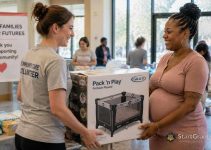
Quick answer: Free maternity clothes are most often available through local clothing closets, family resource centers, pregnancy-support organizations, shelters, faith communities, and neighborhood gifting groups. There is no standard federal benefit that supplies a maternity wardrobe, and a national organization’s local branch may not have your size or any clothing available.
Start with 211, then contact several nearby providers before traveling. Ask whether the clothing is free, provided through a voucher, exchanged through a swap, or earned through optional classes. For diapers, formula, infant clothing, and other newborn needs, use our broader guide to free baby stuff for low-income families.
Where to Look for Free Maternity Clothes
Search by service type rather than relying on one organization. A food pantry, family resource center, domestic-violence program, community action agency, mosque, church, or synagogue may operate a small clothing closet even if it does not advertise a maternity program.
| Where to ask | What may be available | What to confirm |
|---|---|---|
| Community clothing closets | Used tops, leggings, jeans, dresses, coats, or nursing clothes | Sizes, appointments, visit limits, and documents |
| Family resource or pregnancy-support programs | Donated items, boutique items, vouchers, or class-based points | Current stock and whether participation is required |
| Faith-based organizations | Closets, thrift-store vouchers, emergency aid, or referrals | Service area, intake process, and access for nonmembers |
| Shelters and crisis programs | Emergency clothing, toiletries, and case-management referrals | Whether help is limited to residents or current clients |
| Neighborhood gifting groups | Individual pieces or bundles offered by local families | Measurements, condition, pickup arrangements, and group rules |
Availability note: These are possible sources, not guaranteed benefits. Inventory and eligibility can change without notice.
Start With 211 and Local Referral Networks
Call 211 or search the official 211 website. The 211 network connects callers with local resources; it does not distribute clothing or guarantee that a referred provider currently has maternity items.
Give the specialist your ZIP code and ask for several categories:
- adult or maternity clothing closets;
- family resource centers;
- pregnancy and parenting support programs;
- community action agencies;
- faith-based material assistance; and
- family or domestic-violence shelters, when relevant.
Request more than one referral. A provider may be outside your service area, have limited hours, or lack the size you need.
Family Resource Centers and Pregnancy-Support Programs
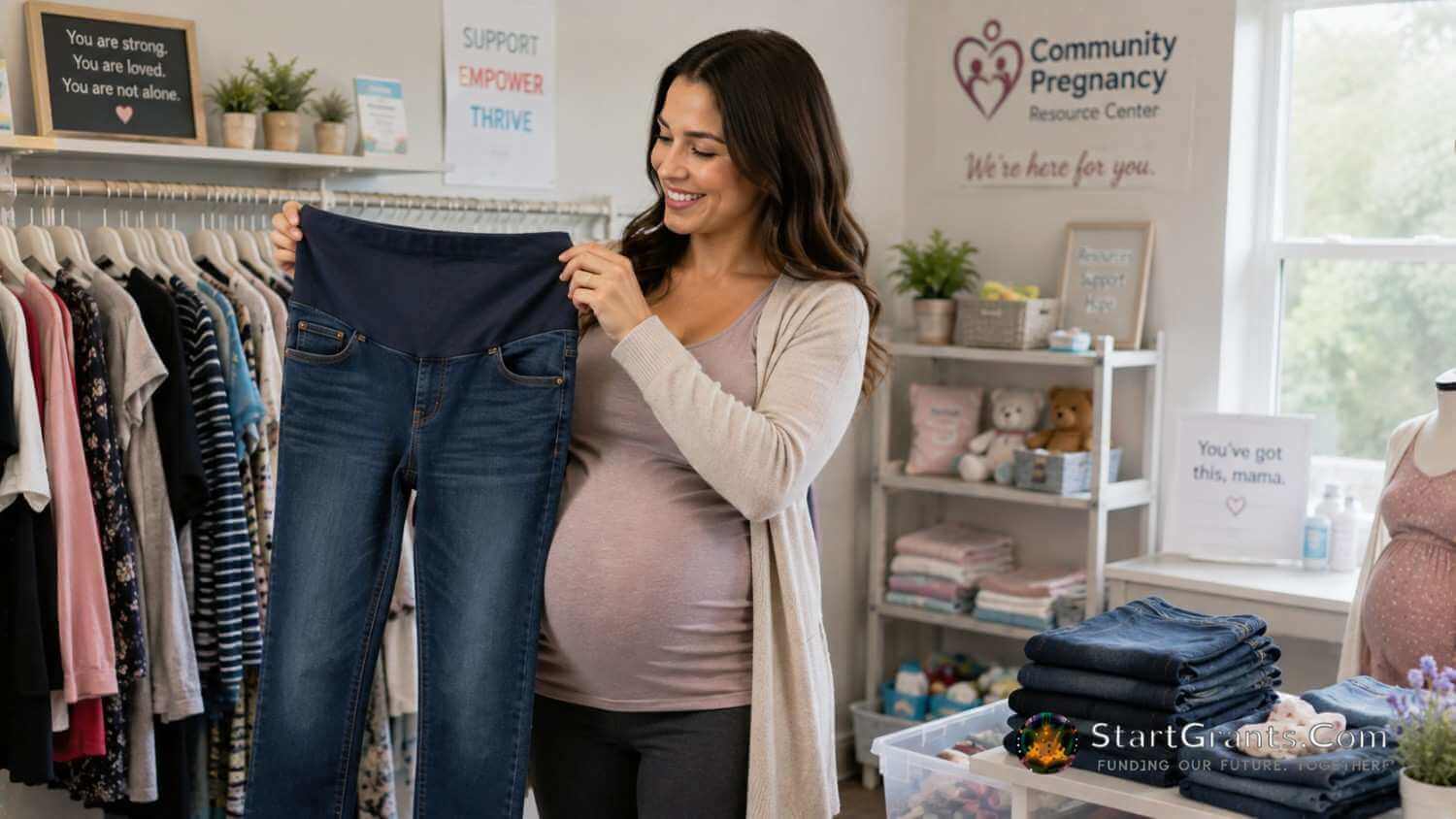
Some centers maintain maternity closets or boutiques. Others use a points model in which participants attend prenatal, parenting, nutrition, or life-skills sessions and exchange points for available items. This is material assistance, not a federal grant or an entitlement.
Before participating, ask whether classes are optional or required, whether they are educational or religious, and whether declining a service affects access to clothing. A pregnancy-support organization should not replace licensed prenatal care. If it advertises medical services, ask who provides them and verify the professional’s license with the appropriate state board.
- Ask whether maternity clothes in your approximate size are currently available.
- Confirm whether items are free, voucher-based, loaned, swapped, or earned through participation.
- Ask about identification, address, pregnancy, income, referral, or appointment requirements.
- Find out whether you choose individual items or receive a prepared bundle.
- Ask how often you may visit and whether nursing or postpartum clothing is included.
Faith-Based Charities and Thrift-Store Vouchers
The Salvation Army
Services are determined locally. Some locations may provide clothing assistance or vouchers, while others offer different programs. A nearby thrift store does not prove that a voucher is available. Use the official Salvation Army location finder, then contact the local service center and ask specifically about maternity clothing.
Catholic Charities and St. Vincent de Paul
Catholic Charities USA is a national network, while assistance is delivered by local agencies. Use its official agency locator. A local agency may offer clothing, vouchers, emergency material assistance, or referrals, but maternity inventory is not guaranteed. Our guide to Catholic Charities baby and pregnancy assistance explains how to contact the appropriate local office.
St. Vincent de Paul services also vary among local councils, parish conferences, and thrift operations. Contact a nearby council or Catholic parish and ask whether clothing assistance is available in your ZIP code.
Other faith communities
Mosques, Islamic centers, churches, synagogues, and interfaith organizations may hold clothing drives or maintain emergency funds. Ask for the family-services coordinator, women’s group, clothing closet, or a referral. Do not assume that membership or religious participation is required; confirm the local policy directly.
What WIC, Medicaid, and TANF Actually Cover
WIC benefits
WIC does not provide a maternity-clothing allowance. According to the USDA WIC program, WIC provides eligible participants with nutritious foods, nutrition education, breastfeeding support, and referrals to health and community services. Your local clinic may know about nearby clothing closets, so requesting a referral can still be useful.
Medicaid and maternity support belts
Medicaid is health coverage, not a general clothing program. Ordinary maternity pants, dresses, and tops are not a nationwide Medicaid benefit. A maternity or pelvic support belt prescribed for a medical reason is different from everyday clothing, but coverage is not automatic. Medicaid benefits and equipment rules vary by state and plan; the federal mandatory and optional benefits overview shows why state coverage can differ.
Before ordering a support product, ask your plan:
- whether the exact product or billing code is covered;
- whether medical necessity and a clinician’s order are required;
- whether prior authorization is needed;
- which in-network supplier must provide it; and
- whether you will owe any cost.
TANF cash assistance
TANF is state-administered assistance for eligible families, not a national free-clothing program. Cash benefits and spending rules vary. Review our guide to TANF benefits for pregnant women, then verify eligibility and permitted uses with your state or tribal TANF agency.
Use Buy Nothing, Freecycle, and Local Exchanges
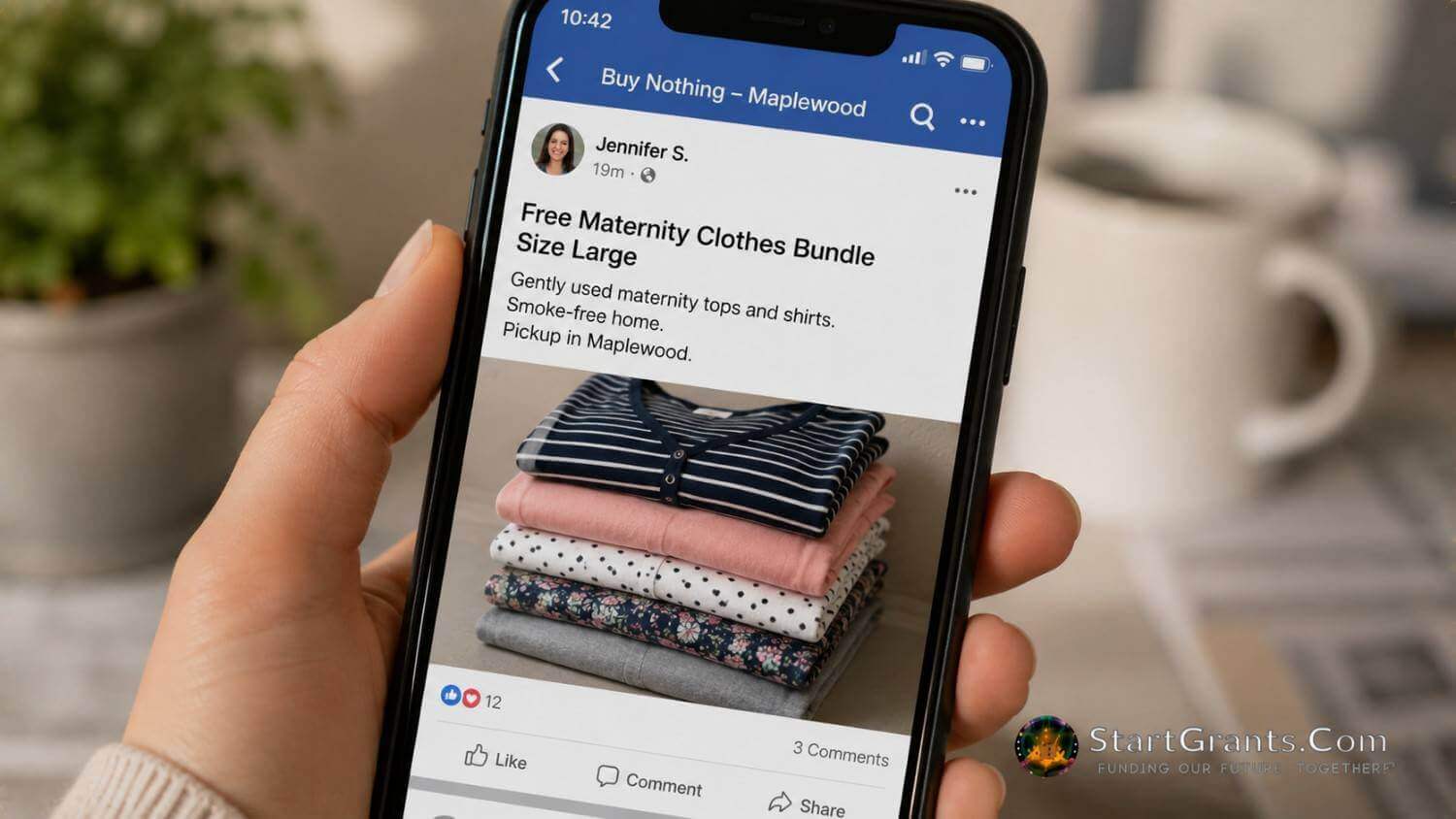
Neighborhood exchanges can help when a clothing closet has limited hours or lacks your size. The Buy Nothing Project supports local giving through its platform and community groups. The Freecycle Network operates local groups where members give and request items at no cost. Availability depends entirely on what nearby members offer.
Protect your privacy and safety
- Do not send a deposit, gift card, or unexpected shipping fee for an item described as free.
- Never share a Social Security number, benefit-card number, banking information, or identity document with an online stranger.
- Use a general pickup area rather than posting your home address publicly.
- Confirm measurements, quantity, condition, and the meeting place before traveling.
- Meet in a public place when practical or bring another adult to a porch pickup.
If Bed Rest, Disability, or Housing Instability Limits Access
If medical restrictions or disability make pickup difficult, tell the provider when you call and ask about an authorized pickup person, curbside handoff, mail, or delivery. None of these options is guaranteed. A hospital social worker, home-visiting program, faith community, or case manager may help coordinate transportation or another arrangement. Our guide to financial help during pregnancy bed rest covers income, bills, and community referrals.
If you are homeless, couch-surfing, or leaving abuse, address safe housing as well as clothing. A shelter or residential program may have emergency items or partner referrals. See our guide to maternity group homes and residential support. If you are in immediate danger, call 911. The National Domestic Violence Hotline offers confidential help by phone at 800-799-SAFE (7233), by chat, or by texting START to 88788.
Build a Small, Practical Maternity Wardrobe
When selection is limited, prioritize pieces that mix, layer, and remain useful during early postpartum recovery:
- two or three comfortable bottoms with stretch;
- several tops that coordinate with the same bottoms;
- one outfit for work, appointments, interviews, or religious services, if needed;
- a weather-appropriate coat or layering piece;
- supportive bras or nursing tops, if available; and
- loose clothing suitable for early postpartum use.
Inspect secondhand clothing before wearing it
- Ask for measurements because maternity sizing differs among brands and used garments may have stretched or shrunk.
- Inspect seams, elastic, zippers, hooks, and fasteners.
- Reject items with mold, pest evidence, strong persistent odors, or damage that cannot be repaired safely.
- Check care labels and wash or clean items appropriately before wearing them.
- Do not use bleach, high heat, or another treatment that conflicts with the care label.
Save This Maternity Clothing Checklist
[ ] Write down your current size and useful garment measurements.
[ ] Call 211 and request at least two local referrals.
[ ] Ask each provider about inventory, service area, appointments, documents, and limits.
[ ] Confirm whether clothing is a gift, voucher purchase, swap, loan, or class-based benefit.
[ ] Ask for workwear, seasonal layers, nursing tops, or postpartum pieces if needed.
[ ] Protect personal information when using neighborhood groups.
[ ] Inspect and clean every secondhand item before wearing it.
[ ] Keep a backup referral in case your size is unavailable.
A Muslim Perspective
Accepting maternity clothing offered as a genuine gift, sadaqah, or charitable distribution ordinarily does not involve an interest-bearing loan because there is no borrowed principal or interest payment. Still, confirm whether the item is a gift, a returnable loan, or subject to another agreement before accepting it.
A household experiencing genuine financial hardship may ask a mosque, Islamic center, Muslim family-service organization, or zakat committee about clothing, a store voucher, sadaqah, or other material assistance. Need alone does not create automatic eligibility for every zakat fund; each organization may apply its own documentation, geographic, and recipient-category rules. Consult a qualified scholar about a personal zakat question.
Amanah also applies to receiving donated goods: describe your need honestly, follow program limits, protect other applicants’ privacy, and pass along clean usable garments when they are no longer needed. Assistance from a secular or another faith-based organization should be evaluated according to its actual conditions rather than its name alone.
Plan for Clothing After Delivery
Some maternity tops, loose pants, robes, and nursing garments remain useful after birth. Ask the clothing provider whether it also carries postpartum items. For newborn and infant sizes, use our guide to free baby clothes programs.
Hospitals do not follow one national giveaway policy. Ask staff which opened or unopened postpartum and newborn supplies may be taken home. Our guide explains what baby supplies hospitals may provide.
Frequently Asked Questions
Can I get free maternity clothes mailed to my home?
There is no standard nationwide federal program that mails maternity wardrobes to eligible families. A local charity or volunteer may sometimes arrange delivery for a person who cannot travel, but you must confirm that directly. Be cautious if an unfamiliar site requests payment or sensitive information for a supposedly free package.
Do I need to prove that I have a low income?
It depends on the provider. A charity may request identification, proof of address, income information, benefit enrollment, proof of pregnancy, or a caseworker referral. Neighborhood gifting groups generally do not use income tests. Ask before visiting.
When should I start looking for maternity clothes?
Start when your regular clothes become uncomfortable, or earlier if local providers have waiting lists or limited appointments. There is no required pregnancy week for changing clothes. Searching early gives you time to contact several sources and compare sizes.
Are plus-size maternity clothes available?
They may be, but no size range is guaranteed. Give the provider your usual size and useful garment measurements because brands differ. Contact several clothing closets and neighborhood groups if one location does not have an appropriate fit.
Can I receive nursing bras and postpartum clothes?
Some providers stock nursing tops, bras, robes, or loose postpartum clothing, while others accept only certain types of donations. Ask about current inventory, whether undergarments are new, and the organization’s condition and hygiene policies.
Will Medicaid pay for a maternity support belt?
Coverage is not guaranteed. It may depend on your state, Medicaid plan, exact product, medical necessity, clinician documentation, prior authorization, and supplier. Contact the plan before ordering and ask for its coverage requirements.
Can I keep clothes received from a charity?
Often, donated clothes or items obtained through a voucher become yours, but some providers operate lending closets or swaps. Ask about ownership and return rules before accepting the items.
Bottom Line
The most reliable strategy is local: contact 211, several clothing closets or family programs, nearby faith-based organizations, and carefully selected neighborhood gifting groups. Confirm each provider’s current rules before traveling, build a small mix-and-match wardrobe, and treat every referral as a lead rather than a guarantee.
Important Disclaimer: StartGrants.com is an independent information portal. It is not a government agency, healthcare provider, health plan, charity, clothing distributor, or religious authority. Programs, inventory, eligibility, medical-equipment coverage, and pickup rules can change. Confirm details directly with the relevant organization or health plan. Consult a qualified healthcare professional about medical needs and a qualified religious scholar about personal religious questions.