Last Updated: August 2026 | Author: Munir Ardi
Watching your child suffer from a severe toothache is one of the most helpless feelings a parent can experience. Dental decay (caries) is the most common chronic disease among children in the United States. When a child has an infected tooth, they cannot eat, they cannot sleep, and they frequently miss school.
For low-income families, the barrier to treatment is terrifying. A single pediatric “baby root canal” (pulpotomy) and a stainless steel crown can cost upwards of $800 out of pocket. If your child needs multiple teeth fixed under general anesthesia, the hospital and dental bills can easily exceed $5,000.
However, you do not have to let your child live in pain, nor do you have to bankrupt your family. If you are searching for “pediatric dental grants for low income” families, you are legally entitled to massive federal safety nets and philanthropic programs designed specifically to protect children.
Before exploring child-specific programs, it is vital to understand the broader landscape of clinical funding by reviewing our master directory of dental patient assistance programs.

Dental decay is the most common chronic childhood disease in the U.S. In 2026, federal Medicaid mandates and non-profit pediatric grants ensure that no child has to live with untreated dental pain.
Phase 1: The Federal Mandate (CHIP & The EPSDT Loophole)
The most powerful “grant” available to low-income children is not a private charity—it is federal law. Under the Children’s Health Insurance Program (CHIP) and Medicaid, states are legally mandated to provide comprehensive dental coverage to eligible children up to age 19.
The Power of the EPSDT Benefit
Many parents assume Medicaid only covers basic cleanings. This is false. Federal law requires states to provide dental services to children through the Early and Periodic Screening, Diagnostic and Treatment (EPSDT) benefit.
Under the EPSDT mandate, if a doctor or dentist diagnoses a medical issue in a child’s mouth, the state must pay to fix it. This comprehensive coverage includes:
- Preventative Care: Fluoride treatments, dental sealants, and bi-annual cleanings.
- Restorative Care: Composite fillings, pulpotomies (baby root canals), and stainless steel crowns to save severely decayed primary teeth.
- Surgical Care: Tooth extractions and the cost of IV sedation or hospital operating room fees if the child is too young or fearful to sit awake in the dental chair.
If your family cannot afford private insurance, you must apply for CHIP immediately via the official InsureKidsNow.gov Federal Portal.
Pro-Tip: Navigating Pediatric Medicaid & CHIP
Many parents are unaware that their child’s state-sponsored health plan includes a completely separate, highly comprehensive dental tier. Finding a quality pediatric dentist who accepts these state plans can feel overwhelming.Watch this essential panel discussion hosted by the Children’s Oral Health Coalition featuring representatives from major Medicaid/CHIP dental administrators (like DentaQuest and UnitedHealthcare). They explain exactly how to access your child’s hidden dental benefits, how to find a participating “First Dental Home,” and how to advocate for medically necessary treatments (like crowns or surgical extractions):
Phase 2: Private & Non-Profit Pediatric Dental Grants
If you do not qualify for CHIP due to immigration status, or if your income is slightly above the federal threshold (the “coverage gap”), you must turn to massive philanthropic organizations dedicated to pediatric oral health.
1. ADA Foundation: Give Kids A Smile (GKAS)
Launched by the American Dental Association, the Give Kids A Smile program is the largest children’s dental charity event in the country.
- How it Works: Every year, usually kicking off in February (National Children’s Dental Health Month), thousands of volunteer dentists open their clinics to provide 100% free oral health care to underserved children. Services range from basic exams and sealants to complex extractions and fillings.
- Action Step: You can locate a GKAS event near you by contacting your state’s local dental society or calling the ADA’s toll-free public number.
2. America’s ToothFairy (National Children’s Oral Health Foundation)
America’s ToothFairy operates as a resource provider, giving financial grants and dental supplies directly to non-profit safety-net clinics across the U.S. While they do not give cash directly to parents, they fund the community clinics that will treat your child for free. You can search their network to find a subsidized pediatric clinic in your area.
3. University Pediatric Dental Clinics
If your child requires extensive full-mouth rehabilitation under sedation, contact the nearest university dental school. Pediatric residency programs (where graduated dentists are training to become pediatric specialists) offer top-tier, closely monitored care for a fraction of the cost of a private practice, often operating on a sliding-fee scale based on your income.
Phase 3: Strategic Integration (The Family Oral Health Roadmap)
A child’s dental needs evolve rapidly. You must integrate your search for pediatric grants with these related tactical guides to secure your entire family’s oral health:
- Does Your Child Need Braces? Medicaid rarely covers orthodontics unless it is medically necessary (like a severe cleft palate). For standard crooked teeth, explore our dedicated guide to free braces for kids.
- Are You Currently Pregnant? A mother’s oral bacteria can be passed to her newborn. Protect your baby before they are even born by accessing dental grants for pregnant women.
- Is the Child in Agonizing Pain Today? If your child has a swollen face or abscess and you cannot wait for charity event dates, follow our emergency protocol on how to fix bad teeth with no money immediately.
- Medically Necessary vs. Cosmetic: Pediatric grants will cover stainless steel crowns to save a tooth, but they will not pay for cosmetic white crowns on back molars just for looks. Understand these limits in our breakdown of cosmetic dentistry grants.
Phase 4: The Islamic Perspective (Protecting the Amanah & Avoiding Riba)
In Islam, children are considered a sacred trust (Amanah) bestowed by Allah (SWT). Parents bear a strict religious obligation (Fard) to protect their children’s physical health, alleviate their suffering, and provide necessary medical care. Neglecting a child’s severe dental infection due to financial fear is not acceptable when Halal resources are available.
1. The Trap of Predatory Medical Financing (Riba)
When low-income parents take their child to a corporate pediatric dental chain, they are often presented with a $3,000 treatment plan. When the parents cannot pay, the clinic’s financial coordinator will aggressively push them to sign up for medical credit cards (like CareCredit).
These cards feature deferred-interest traps. If the parent misses a payment, retroactive compound interest (upwards of 26%) is applied. In Islamic jurisprudence, entering into a contract that involves Riba (usury) is strictly forbidden (Haram). You must not plunge your family into Haram debt when lawful alternatives exist.
2. The Halal Alternatives: Takaful & Zakat
Muslim parents must utilize permissible (Halal) funding avenues to fulfill their duty to their child:
- Government CHIP / Medicaid: Enrolling your child in CHIP is 100% Halal. These are state-funded social safety nets designed to protect vulnerable children. Utilizing them aligns perfectly with the Islamic ethos of collective societal welfare (Takaful Ijtima’i).
- Utilizing Zakat for Pediatric Surgery: If a family does not qualify for CHIP and cannot afford an urgent pediatric root canal, they qualify as Al-Masakin (the needy). It is highly encouraged to approach local Islamic centers or national organizations (like Islamic Relief USA) to request Zakat funds. Community Zakat is specifically designed to eliminate medical suffering and keep families out of Riba-based debt.
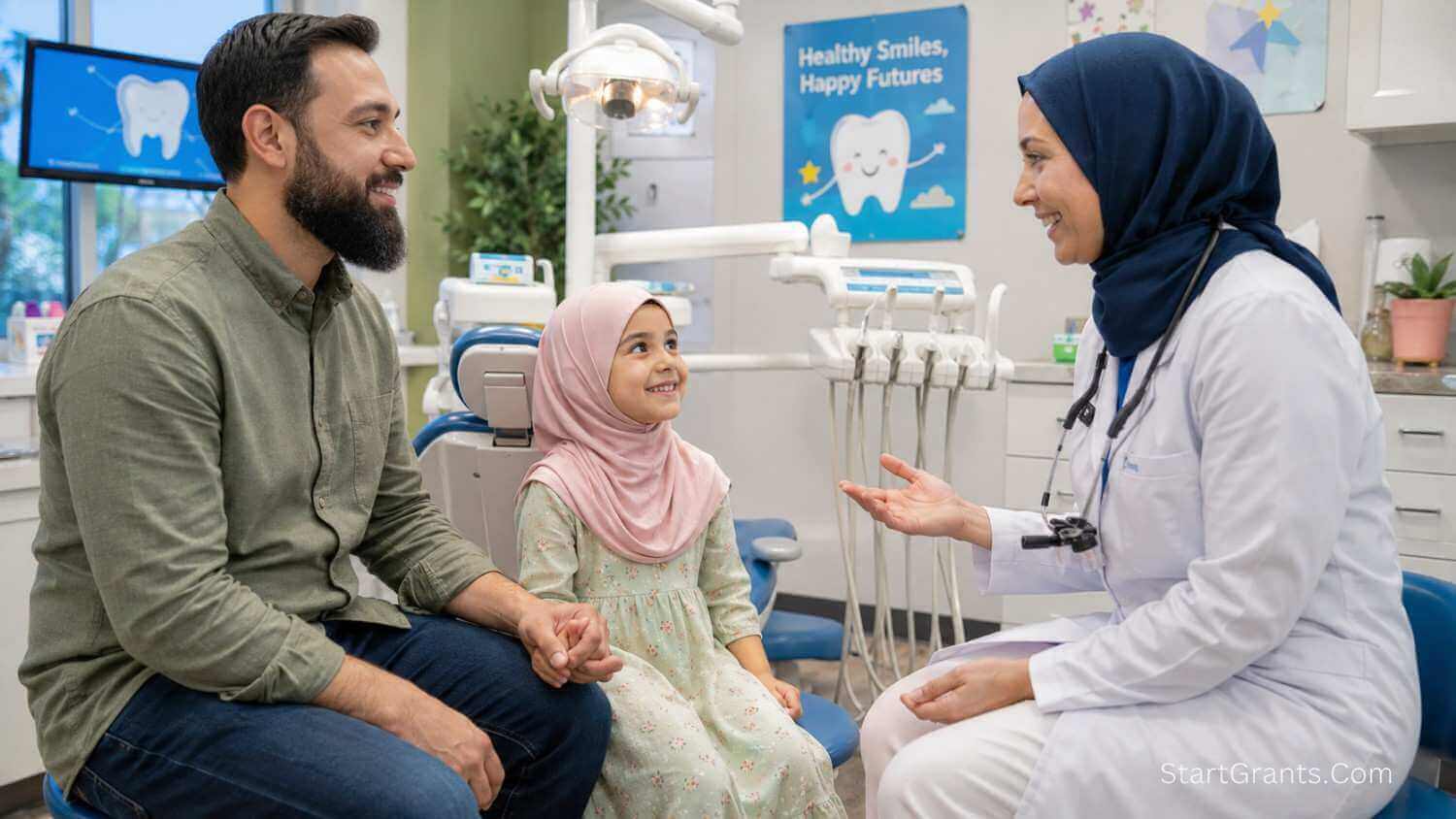
Protecting a child’s health is a divine trust (Amanah) in Islam. Utilizing government-funded CHIP programs or community Zakat for pediatric dental surgery is completely Halal and protects the family from Riba.
Conclusion: Your Pediatric Dental Action Plan
No parent should have to watch their child cry from a preventable toothache. Finding “pediatric dental grants for low income” families is a matter of knowing your legal rights and utilizing community networks.
Execute this checklist immediately:
- Apply for CHIP: Go to InsureKidsNow.gov and apply for your state’s CHIP or Medicaid program. The income limits are much higher for children than they are for adults.
- Leverage the EPSDT Law: If your child is on Medicaid, understand that the state is legally required to cover medically necessary restorations (like crowns and extractions), including hospital sedation if required by the pediatric dentist.
- Find a Safety-Net Clinic: If you are uninsured, locate a Federally Qualified Health Center (FQHC) or a university dental school to receive care on a steeply discounted sliding-fee scale.
- Mark Your Calendar for February: Contact your local dental society to register your child for the annual “Give Kids A Smile” charity event for completely free care.
Protecting your child’s smile sets the foundation for their lifelong health. Utilize these federal mandates and non-profit grants to eliminate their pain completely debt-free.
Comprehensive Frequently Asked Questions (FAQs)
Q1: What is the EPSDT mandate for children’s dental care?
A: EPSDT stands for Early and Periodic Screening, Diagnostic, and Treatment. It is a federal mandate requiring state Medicaid programs to provide comprehensive, medically necessary dental care to children under 21. This means states cannot arbitrarily cap a child’s dental benefits if a doctor deems a procedure (like a root canal or stainless steel crown) medically necessary.
Q2: Does CHIP (Children’s Health Insurance Program) cover dental care?
A: Yes. CHIP provides comprehensive dental benefits to uninsured children. Services include preventative care (cleanings, sealants, fluoride) and restorative care (fillings, crowns, extractions). CHIP is specifically designed for working families whose incomes are too high for standard Medicaid but too low to afford private dental insurance.
Q3: Why do pediatric dentists use silver (stainless steel) crowns instead of white fillings?
A: When a child’s primary (baby) tooth has a massive cavity, a standard filling will often break or fall out. Pediatric dentists use stainless steel crowns because they are extremely durable, seal the tooth from further infection, and hold the space open until the permanent tooth naturally erupts. Medicaid and grants fully cover stainless steel crowns because they are medically functional.
Q4: Can undocumented children receive free pediatric dental care?
A: While undocumented children are generally ineligible for federal CHIP, several progressive states (like California, New York, and Illinois) use state funds to cover all low-income children regardless of immigration status. Additionally, undocumented children can always receive care at Federally Qualified Health Centers (FQHCs) on a sliding-fee scale or through charities like Give Kids A Smile.
Q5: Will Medicaid pay for my child to be put to sleep (sedated) for dental work?
A: Yes. If a child is very young, has special needs, or requires extensive full-mouth rehabilitation, it is often traumatizing or impossible to treat them awake. Under the EPSDT mandate, Medicaid covers the cost of IV sedation or general anesthesia in a hospital setting when deemed medically necessary by the pediatric dentist.
Q6: What is the “Give Kids A Smile” program?
A: Launched by the American Dental Association (ADA), Give Kids A Smile is an annual charitable initiative where thousands of volunteer dentists provide free preventative and restorative dental care to underserved children across the United States, typically taking place in February.
Q7: Why shouldn’t I just pull an infected baby tooth instead of paying for a baby root canal?
A: Primary (baby) teeth hold the physical space in the jaw for adult teeth. If you extract a baby molar too early, the surrounding teeth will shift, blocking the adult tooth from coming in. This causes severe crowding and guarantees the child will need extremely expensive braces later in life. Saving the tooth with a pulpotomy (baby root canal) and crown is always the preferred medical route.
Q8: Is it Halal to use Zakat money to pay for a child’s dental surgery?
A: Yes, absolutely. Children are an Amanah (trust), and protecting them from physical harm is an Islamic obligation. If a family cannot afford critical pediatric dental surgery and faces predatory medical debt, they qualify as Al-Masakin (the needy). It is entirely Halal and highly encouraged for Zakat funds to be disbursed to cover the child’s medical bills.
Important Disclaimer: StartGrants.com is an independent information portal. We are not a government agency, pediatric clinic, or insurance provider. Always consult with a board-certified pediatric dentist for medical diagnoses.