
Last Updated: June 2026 | Author: Munir Ardi
There are over 50 million unpaid family caregivers in the United States. If you have quit your job or reduced your hours to bathe, feed, and administer medication to a severely disabled child, spouse, or aging parent, you are performing the work of a registered nurse entirely for free. This invisible labor destroys careers, empties retirement accounts, and pushes families into deep poverty.
Before exploring caregiver-specific stipends, you must review our master directory for disability and mental health grants to ensure the patient themselves is receiving their maximum federal entitlements. Furthermore, caregiving burnout is not limited to physical disabilities. If you are raising a child with severe behavioral or psychiatric conditions, you face identical exhaustion levels. We highly recommend reviewing our guide on mental health grants for children to secure specialized therapeutic funding that can reduce your daily caregiving burden.
You do not have to endure financial ruin to care for the people you love. Federal and state governments have finally realized that paying a family member is much cheaper than paying a nursing home. Here is your 2026 tactical guide on how to secure financial assistance for caregivers of disabled relatives.

Providing full-time care for a disabled family member is a demanding job. Through Medicaid waivers and federal programs, you can officially be hired and receive a monthly paycheck for the care you already provide.
Phase 1: Medicaid Self-Directed Care (Getting Paid)
If the disabled person you are caring for is eligible for Medicaid, the most powerful tool available to you is the Medicaid Self-Directed Care Program (known by different names in different states, such as CDPAP in New York or IHSS in California).
Instead of Medicaid sending a stranger from a home health agency to care for your relative, “Self-Directed Care” allows the disabled patient to act as the “employer.” They are granted a budget by the state, and they can choose to legally hire you—their daughter, son, or (in some states) spouse—as their official caregiver. You will receive a W-2, pay taxes, and receive a regular hourly paycheck funded entirely by Medicaid.
Pro-Tip: Becoming an Official Employee
Watch this breakdown of how Medicaid waiver programs allow family members to transition from unpaid volunteers to compensated healthcare workers:
Phase 2: The VA Caregiver Support Program (PCAFC)
If you are the primary caregiver for a veteran who sustained a serious injury (or aggravated a pre-existing injury) in the line of duty, the Department of Veterans Affairs offers the most robust caregiver compensation package in the country.
The Program of Comprehensive Assistance for Family Caregivers (PCAFC) provides a direct, tax-free monthly stipend to the family caregiver. The amount is based on the veteran’s level of dependency and the local cost of living, often amounting to thousands of dollars a month. In addition to the cash stipend, the program provides the caregiver with free health insurance (CHAMPVA), mental health counseling, and at least 30 days of paid respite care per year.
Phase 3: Respite Care Grants (Preventing Burnout)
Sometimes you do not just need a paycheck; you need to sleep. “Respite care” is a temporary break where a professional nurse takes over your duties for a few hours or a few days so you can rest, go to the doctor, or attend to your own family.
Many caregivers cannot afford private respite nurses, which cost $30+ per hour. However, the ARCH National Respite Network connects families with state-funded respite vouchers. Additionally, condition-specific organizations like the Alzheimer’s Association or the ALS Association offer direct “Respite Grants”—cash vouchers given directly to the family to hire a temporary caregiver so the primary caregiver can survive the marathon of chronic illness.
Phase 4: The Muslim Perspective (Birr al-Walidayn vs. Burnout)
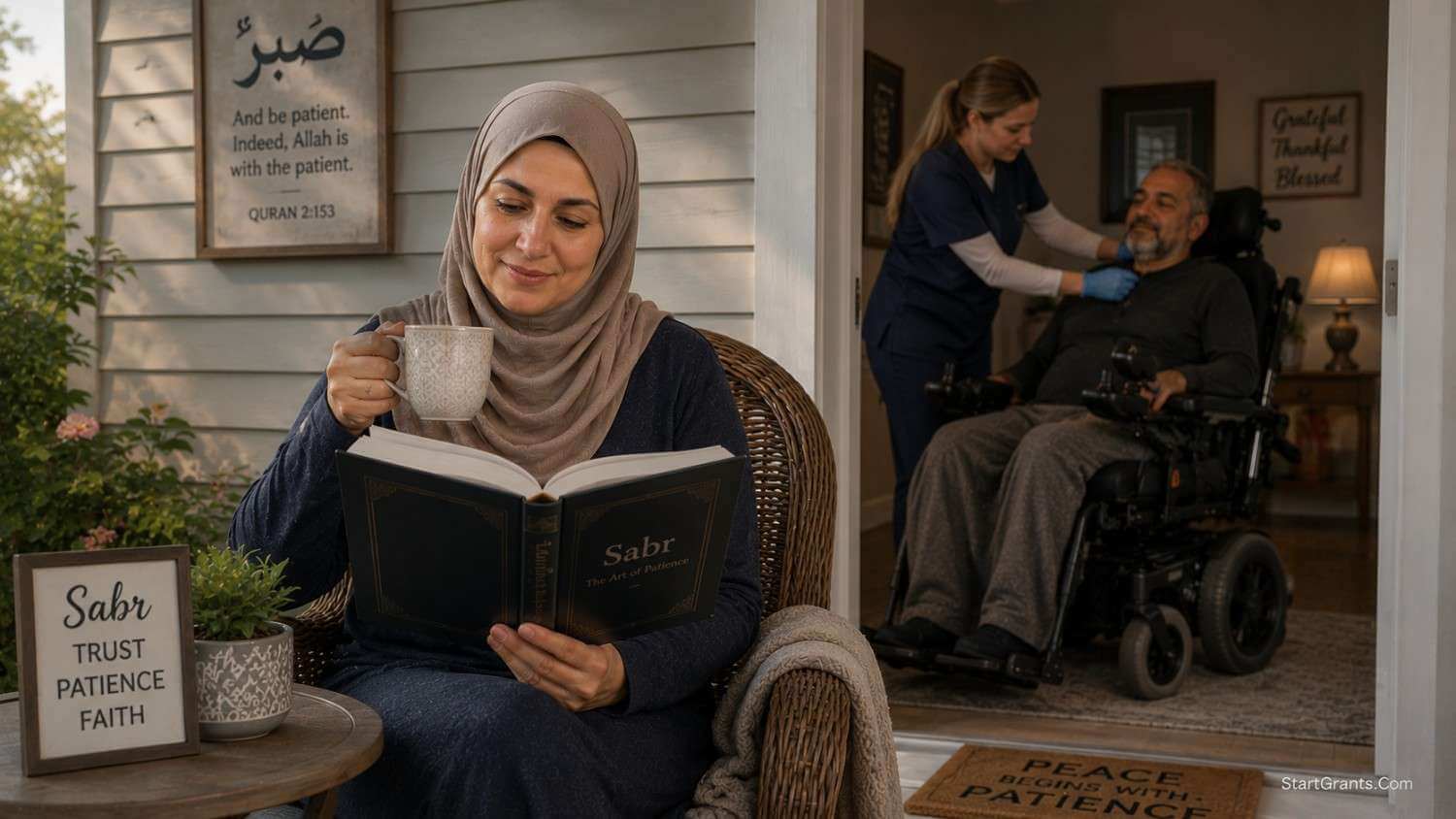
Islam honors the immense sacrifice of caregiving (Birr al-Walidayn), but it strictly forbids destroying your own well-being in the process. Claiming financial stipends and respite care is a Halal right that protects the entire family.
For Muslim caregivers, the duty to care for sick parents or disabled children is deeply embedded in the faith. However, cultural pressures often weaponize this duty, making caregivers feel “selfish” or “ungrateful” for seeking financial help or taking a break.
1. Your Labor is Worthy of Ujrah (Wages)
Birr al-Walidayn (dutifulness to parents) is a profound act of worship. However, quitting your job to become a 24/7 nurse is a highly specialized labor. In Islamic jurisprudence, receiving compensation (Ujrah) for medical and nursing care is entirely Halal. Accepting a Medicaid stipend to care for your mother does not diminish your spiritual reward; it simply ensures your own children do not starve while you perform this noble duty.
2. Protecting the Nafs (Self)
Islam forbids self-destruction (“And do not throw yourselves into destruction” – Quran 2:195). Severe caregiver burnout leads to depression, physical illness, and ultimately, a breakdown in the quality of care provided to the patient. Applying for Respite Care Grants to get a weekend of sleep is not a weakness; it is a religious obligation to protect your health (Hifz al-Nafs) so you can continue your caregiving Jihad.
Conclusion: Securing Your Own Oxygen Mask
The aviation rule applies perfectly to caregiving: You must put on your own oxygen mask before assisting others. If the caregiver collapses financially or physically, the disabled patient will inevitably end up in a state-run institution.
Do not wait until your savings are entirely depleted. Immediately contact your local Area Agency on Aging or Medicaid office to apply for Self-Directed Care waivers. If you are a military family, file for the VA PCAFC stipend today. Your labor is essential to the healthcare system, and it is time you get paid for it.
Frequently Asked Questions (FAQs)
Q1: Do I have to pay income taxes on Medicaid caregiver payments?
A: It depends on where you live. Under the IRS “Difficulty of Care” exemption (Notice 2014-7), if you live in the exact same house as the disabled person you are caring for, the wages you receive from a Medicaid Home and Community-Based Services waiver program are generally excluded from your gross income for federal tax purposes.
Q2: Can a spouse get paid to be a caregiver?
A: Historically, spouses were excluded from being paid caregivers. However, due to severe nursing shortages, many states have recently expanded their Medicaid waivers to legally allow spouses to be hired and paid as caregivers. The VA PCAFC program also fully allows spouses to receive the monthly stipend.
Q3: What if my disabled relative makes too much money for Medicaid?
A: If they do not qualify for Medicaid, you cannot use the Self-Directed Care program. However, your relative can draft a formal “Personal Care Agreement” (a legal contract) to pay you out of their own private savings or retirement funds. This is crucial for protecting their assets if they ever need to apply for Medicaid in the future.
Q4: Are there grants specifically for caregivers of dementia patients?
A: Yes. Organizations like the HFC (Hilarity for Charity, founded by Seth Rogen) and the Alzheimer’s Foundation of America offer specific respite care grants that provide families with 3 to 6 months of professional, in-home caregiving relief at no cost.
Important Disclaimer: StartGrants.com is an informational directory and does not provide financial or tax advice. Medicaid waiver rules and spousal eligibility vary drastically by state. Always consult an Elder Law attorney or a state social worker before drafting Personal Care Agreements or altering your employment status.