Last Updated: | Author: Munir Ardi
Legitimate help with expensive dental work exists, but most offers called “cosmetic dentistry grants” are not government grants and do not provide free implants, dentures, or veneers. The most realistic routes are donated medically necessary care for narrowly eligible patients, free clinic events, reduced-fee dental schools and health centers, state-specific benefits, or a partial discount from a private program. Start by getting a written diagnosis and itemized treatment plan, then match the medically necessary work—not merely the desired appearance—to the appropriate source of help.
This page focuses on the broad search for cosmetic and restorative dental assistance. For a wider directory of care and payment options, see dental patient assistance programs. If you have severe pain, swelling, fever, uncontrolled bleeding, facial trauma, or trouble breathing or swallowing, do not wait for a grant decision; seek urgent professional care. Our separate guide explains options for people who need to find urgent dental care with little or no money.
What “Dental Grant” Can Mean
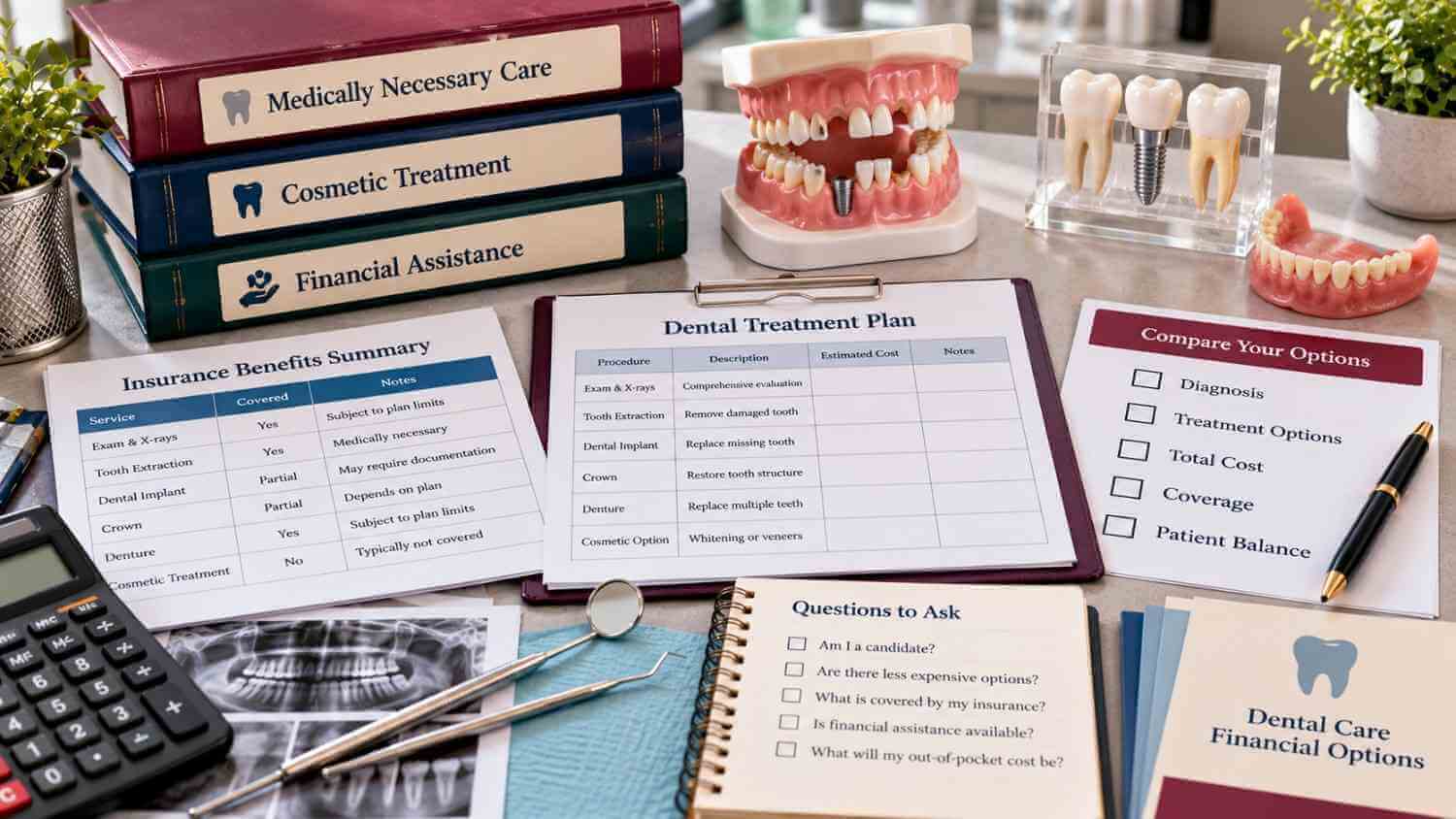
The word grant is used loosely online. Before sharing health or financial information, identify what is actually being offered.
| Option | What it may provide | Main limitation | Best first step |
|---|---|---|---|
| Donated care | Volunteer treatment for eligible patients | Narrow eligibility, local capacity, and possible closed waitlists | Check the official state program page |
| Free clinic event | Services selected by the local event | Limited dates, capacity, and follow-up care | Read the event organizer’s patient instructions |
| Dental school or health center | Reduced-fee or income-based care | Not necessarily free; treatment scope and appointments vary | Ask for fees, deposits, and treatment time in writing |
| Medicare, Medicaid, or insurance | Covered benefits under specific rules | Cosmetic work is generally excluded; adult Medicaid varies by state | Request a written coverage determination |
| Private “grant” program | A partial award or price reduction at a participating office | Patient still pays the balance and may need separate financing | Compare the net price with independent dentists |
| Clinical research | Study procedures defined by a research protocol | No guarantee of free implants, personal benefit, or eligibility | Ask the study team what is covered before consenting |
Program availability, benefits, and waitlists can change. Verify current terms with the organization, clinic, insurer, or state agency before making a treatment or financing decision.
Start With Diagnosis, Function, and Safety
A dentist should determine whether the requested work is preventive, restorative, prosthodontic, orthodontic, or elective cosmetic treatment. Missing teeth, infection, severe decay, trauma, and difficulty chewing may require medically appropriate care, but those facts do not automatically create eligibility for a grant or insurance coverage. Describe symptoms and functional limitations accurately; never ask a provider to relabel elective work as medically necessary.
Request these items before applying anywhere:
- A written diagnosis and recommended treatment sequence.
- An itemized estimate separating exams, imaging, periodontal treatment, extractions, grafting, restorations, prosthetics, anesthesia, and follow-up care.
- Alternative treatment options, including the consequences of delaying care.
- The provider’s license information and the product or laboratory warranties, if applicable.
- A written explanation of what insurance, a charity, or a private award will and will not pay.
Tax treatment is narrower than “medically necessary” marketing
The IRS Publication 502 explains which medical and dental expenses may be included when calculating an itemized deduction. Cosmetic surgery is generally excluded unless it is necessary to improve a deformity arising from a congenital abnormality, personal injury from an accident or trauma, or a disfiguring disease. A deductible expense is not the same as a grant, reimbursement, or guaranteed tax savings. Keep records and ask a qualified tax professional how the rules apply to your return.
National Charitable and Free-Clinic Routes
Dental Lifeline Network’s Donated Dental Services
Dental Lifeline Network connects eligible people with volunteer dental professionals through its Donated Dental Services program. Its national eligibility page says applicants must lack another way to obtain care and meet at least one qualifying condition: age 65 or older, permanent disability, or a need for medically necessary dental care. State pages may have additional instructions and can close applications because of capacity.
This is not a cosmetic makeover or emergency service. The organization’s state guidance says volunteers may provide comprehensive treatment to accepted patients but do not provide cosmetic treatment or emergency care. Check the official Dental Lifeline Network eligibility and state availability page rather than assuming implants or dentures will be included.
Mission of Mercy and other charitable clinics
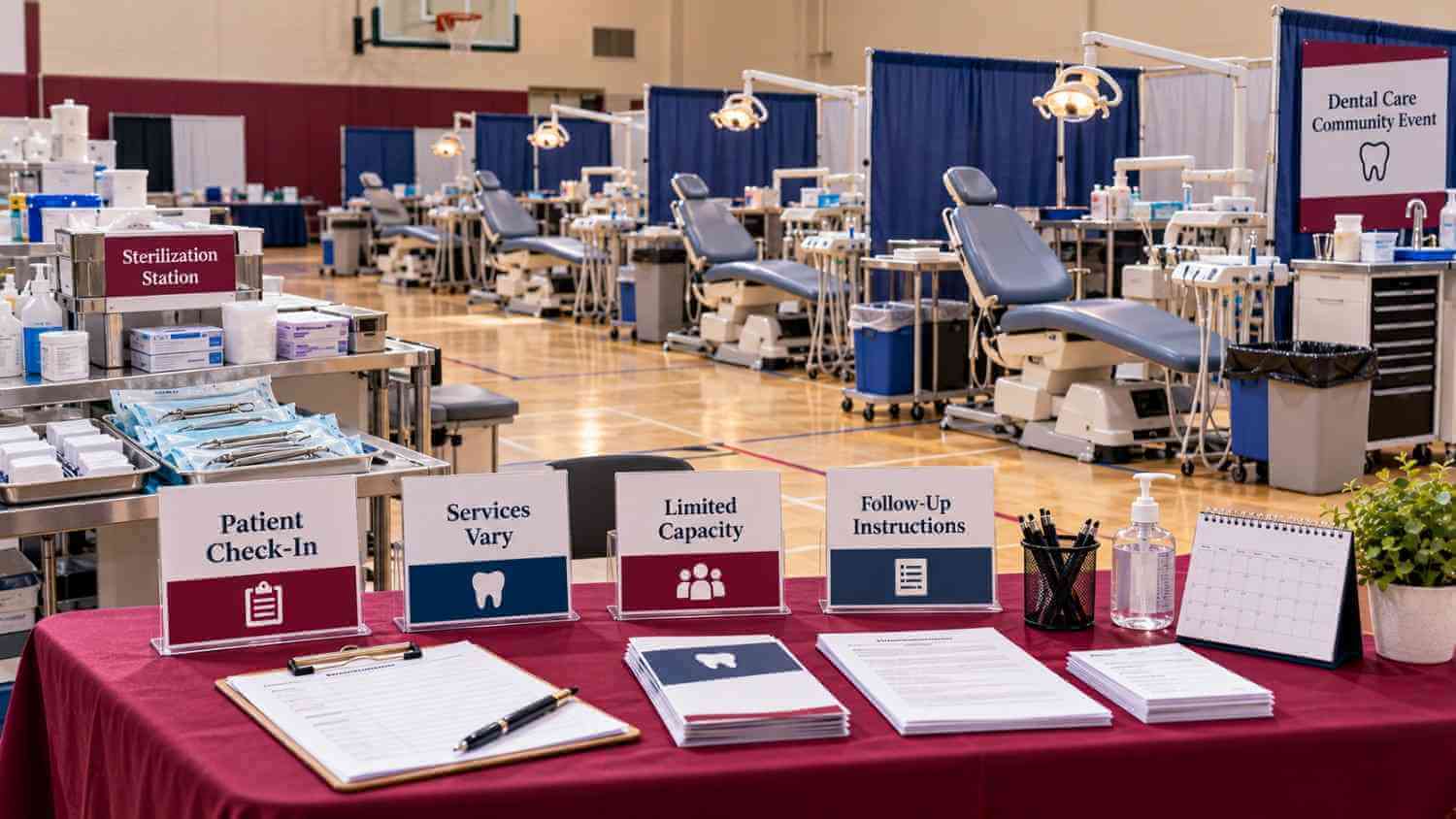
America’s Dentists Care Foundation supplies equipment and operational support to Mission of Mercy and other charitable dental clinics. The official ADCF clinic schedule directs patients to local organizers because attendee rules vary by event. Do not assume an event provides implants, crowns, dentures, or every requested service. Confirm the date, location, age rules, documents, arrival process, scope of care, and follow-up arrangements directly with the organizer.
Give Back a Smile for survivors
The American Academy of Cosmetic Dentistry Charitable Foundation operates Give Back a Smile for eligible survivors whose dental injuries resulted from domestic or sexual violence. This is a specialized charitable program, not a general cosmetic grant. Because eligibility and clinical scope require individual review, use the official AACD program information and our focused guide to dental assistance for domestic-violence survivors.
Reduced-Cost Care: Dental Schools and Health Centers
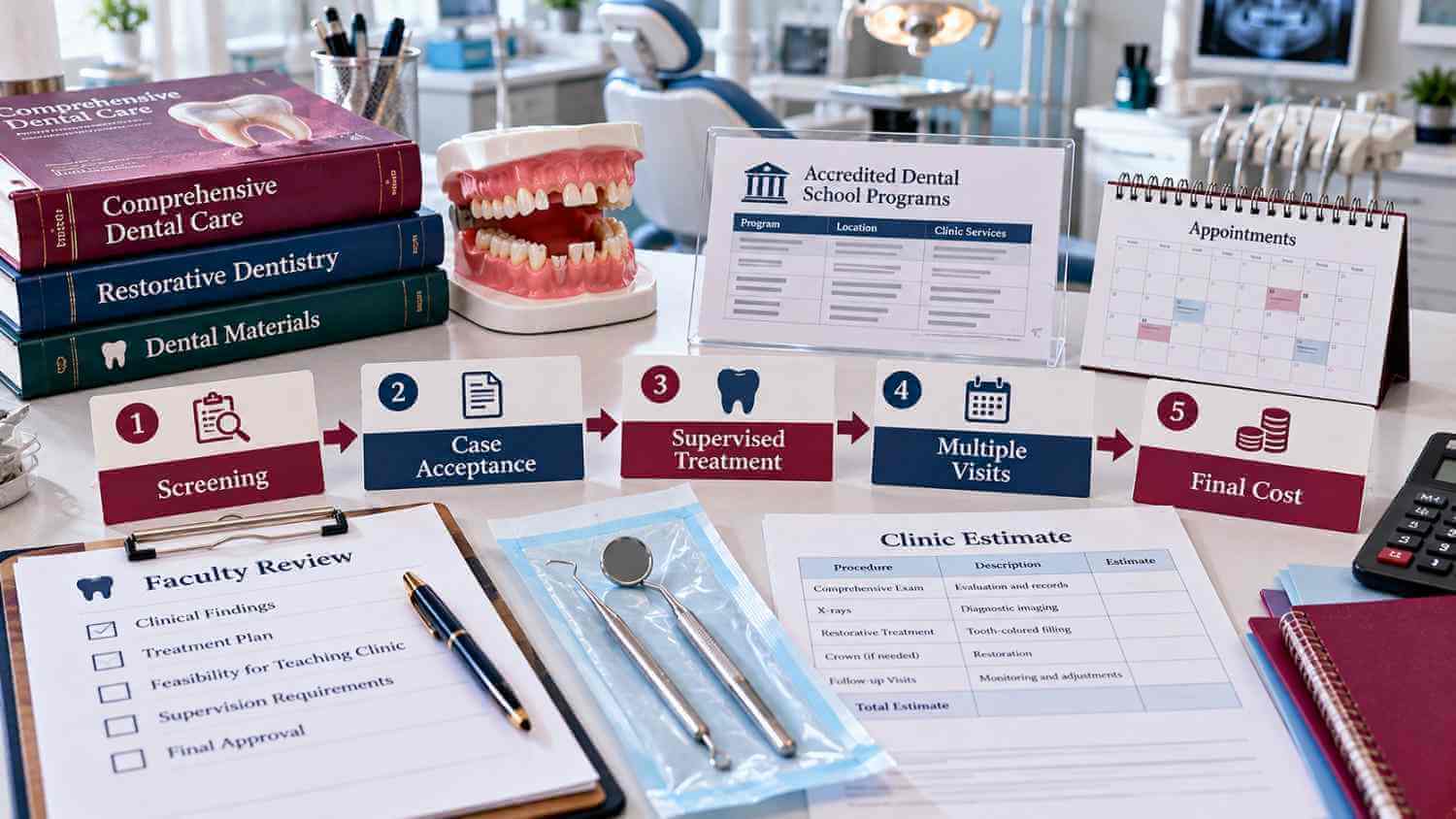
Dental schools may offer reduced-fee care provided by students or residents under supervision, but there is no universal 30%–50% discount. Fees, deposits, treatment complexity, appointment length, and acceptance criteria differ by clinic. The American Dental Association’s affordable dental care guide includes dental schools and federally qualified health centers, while the Commission on Dental Accreditation program directory can help locate accredited education programs.
HRSA-funded health centers may provide dental services and use income-based fee schedules where available. Search the official HRSA Find a Health Center directory, then call the location to confirm dental services, new-patient status, required documents, and sliding-fee rules.
Medicare, Medicaid, and Denture Assistance
Original Medicare does not provide a general dental benefit for routine or cosmetic care. CMS can pay for certain dental services when they are inextricably linked to the clinical success of another covered Medicare service. The official CMS dental coverage page describes those limited circumstances and the coordination required between medical and dental providers. This exception is not broad coverage for implants, dentures, or veneers.
Adult Medicaid dental benefits are set by each state, and federal Medicaid rules impose no minimum adult dental benefit. Consult the official Medicaid dental care overview and your state plan or managed-care handbook. Prior authorization, provider networks, frequency limits, and covered prosthodontic services can differ. Readers focused on tooth replacement can use our guides to help paying for dentures and dental assistance for seniors on Medicare.
How the Private Cosmetic Dentistry Grants Program Works
The Cosmetic Dentistry Grants program is a private program—not Medicare, Medicaid, insurance, or a government grant. Its current application disclosure says it does not provide free or fully paid procedures and that selected patients always have out-of-pocket costs. Its rules describe partial awards allocated under the program’s formula, and its eligible-procedures page says basic work such as cleanings, fillings, extractions, and root canals is excluded and must be paid by the applicant.
Read the program’s current official rules and eligible-procedures information before applying. Do not treat an assessment, recommendation, or award notice as proof that the final price is competitive.
Compare the net price, not the word “grant”
- Obtain the complete treatment plan and ordinary fee before any award or discount.
- Ask exactly which procedures are excluded and must be completed first.
- Subtract the award and add imaging, anesthesia, grafting, temporaries, laboratory work, maintenance, and financing charges.
- Get at least one independent estimate for a clinically comparable treatment plan.
- Confirm cancellation, refund, warranty, financing, and data-sharing terms in writing.
A discount tied to a participating provider can lower a bill, but it is not necessarily the lowest available net price. Never borrow based only on a headline award amount.
Clinical Trials Are Research, Not a Free-Implant Program
ClinicalTrials.gov lists research studies; it does not award dental grants or certify that a listed study provides free treatment. A study may test a material, technique, diagnostic tool, or follow-up method and may not match the care you need. Eligibility can be strict, and participation can involve risks, extra visits, randomization, or no direct benefit.
The official ClinicalTrials.gov participant guidance explains that payment and costs are described in the informed-consent document and vary by study. Ask the study contact which research costs, routine-care costs, travel expenses, complications, and follow-up services are covered. Discuss the study with an independent dentist or health professional before enrolling.
Dental Tourism Is Not a Grant
Traveling abroad may produce a lower quote, but airfare, lodging, repeat visits, complications, and follow-up care can change the total cost. The CDC notes that dental care is a common form of medical tourism and warns that licensing oversight, infection control, antimicrobial-resistant infections, continuity of care, and legal remedies can differ. Review the CDC medical tourism guidance before considering travel.
Ask who will provide each phase of care, how credentials can be verified, what implant system and laboratory will be used, who handles complications after you return home, and whether a local dentist has agreed to maintain the work. Accreditation can inform due diligence, but it cannot guarantee an individual outcome.
A Muslim Perspective
Muslim patients may need to consider more than the clinical cost of dental treatment. The purpose of the procedure, the condition being corrected, the expected benefit and harm, the honesty of the application, and the financing contract can all matter. This section provides general educational principles rather than an individual fatwa. A patient with a specific concern should consult a qualified dentist and a trusted scholar who understands both the proposed treatment and its medical context.
Changing Healthy Teeth Solely for Beautification
An important distinction in Islamic ethics is the difference between treating a genuine need and permanently changing a healthy feature solely to obtain a different appearance. A well-known hadith prohibits artificially creating spaces between teeth for beautification and describes it as changing the creation of Allah. The wording concerning beautification is important because it distinguishes elective alteration from treatment intended to remove disease, injury, abnormality, or functional harm. Readers can review the hadith in Sahih al-Bukhari 5931.
Accordingly, permanently filing, reshaping, extracting, or covering otherwise healthy teeth merely to follow a fashion, imitate a celebrity smile, or obtain a different appearance may raise a serious religious concern. A promotional label such as “smile restoration” does not by itself turn an elective cosmetic procedure into necessary treatment.
This does not mean that every procedure that improves appearance is automatically prohibited. Dental treatment often restores health and appearance at the same time. The relevant questions include why the treatment is being performed, whether a recognized problem exists, whether the proposed intervention is proportionate, and whether a safer or less destructive alternative is available.
When Dental Treatment May Address a Valid Need
The International Islamic Fiqh Academy resolution on necessary and cosmetic procedures permits procedures intended to restore function, correct congenital or acquired defects, repair damage, or remove physical or significant psychological harm, subject to appropriate medical safeguards. Applied carefully to dentistry, potentially valid reasons may include:
- Treating decay, infection, gum disease, severe enamel damage, or persistent pain.
- Replacing teeth lost through disease, trauma, or medically necessary extraction.
- Repairing teeth damaged in an accident, through violence, or by a medical condition.
- Correcting a congenital abnormality or an unusual defect that causes genuine harm.
- Restoring the ability to bite, chew, speak, or maintain adequate nutrition.
- Correcting malocclusion that causes pain, abnormal wear, speech problems, or other functional difficulty.
- Providing crowns, bridges, dentures, or implants when they are clinically appropriate for restoring lost structure or function.
- Removing a conspicuous acquired defect when the treatment is reasonable and its benefit outweighs its expected harm.
These examples are not automatic religious approvals. The same procedure can have different purposes in different patients. A crown used to protect a badly damaged tooth is not equivalent to aggressively reducing healthy teeth solely to install cosmetic crowns. Orthodontic treatment for a harmful bite is not necessarily equivalent to moving healthy teeth only to pursue a minor aesthetic preference.
Questions to Ask Before Veneers, Crowns, Braces, or Implants
Before agreeing to irreversible treatment, a Muslim patient may ask the dentist:
- Is there disease, injury, loss of function, or a recognized abnormality?
- What will happen if the condition is left untreated?
- Is the proposed procedure primarily therapeutic, primarily cosmetic, or a combination of both?
- Will healthy enamel or healthy teeth be permanently removed?
- Is there a less invasive alternative that could achieve the necessary health benefit?
- How long is the restoration expected to last, and will it require repeated replacement?
- What are the risks of infection, nerve damage, implant failure, bone loss, or future corrective treatment?
- Can the dentist document the diagnosis, functional problem, alternatives, and expected benefit in writing?
Obtaining a second professional opinion is especially sensible when a treatment plan proposes extracting healthy teeth, extensively filing enamel, completing numerous crowns or veneers, or undertaking full-mouth reconstruction without a clearly explained diagnosis.
Necessity Does Not Mean That Every Expensive Option Is Required
A valid need for treatment does not necessarily make the most expensive or elaborate option necessary. For example, a patient may genuinely need to replace missing teeth, but several clinically reasonable choices may exist, such as a removable denture, fixed bridge, or implant-supported restoration. Cost, durability, risk, ability to maintain the treatment, and available resources should be considered.
The principle of removing harm should also be balanced against avoiding unnecessary harm. Treatment should be performed by a qualified professional, have a reasonable expectation of benefit, and not expose the patient to disproportionate risk. A grant award or discount should not pressure someone into accepting treatment that is more extensive than the condition requires.
Honesty and Amanah When Applying for Assistance
Applicants should describe their condition truthfully. It is appropriate to explain documented pain, infection, difficulty chewing, speech problems, trauma, tooth loss, or functional limitations. It is not appropriate to exaggerate symptoms, hide insurance coverage, submit false income information, or describe a purely elective preference as an emergency merely to improve the chance of receiving assistance.
A dentist’s diagnosis should determine whether treatment is restorative or cosmetic. Applicants should not pressure a provider to change billing codes or label elective work medically necessary. Money restricted to certain procedures or eligible patients is an amanah and should be used only according to the award agreement.
Riba, Deferred Interest, and Dental Financing
Even when the dental procedure has a valid purpose, the financing arrangement requires separate review. Many dental offices use third-party credit cards or installment contracts. Advertising such as “no interest if paid in full” may involve deferred interest that is charged retroactively if the balance is not completely paid by the deadline. Other agreements may include interest from the beginning, late-payment interest, origination charges, or penalties.
Before signing, request the complete contract and review:
- The cash price before financing.
- The annual percentage rate and total amount payable.
- Whether “no interest” is a true interest-free arrangement or deferred interest.
- Late fees, default interest, collection terms, and early-payment rules.
- Whether the clinic or a third-party finance company owns the debt.
- What happens if treatment is interrupted, unsuccessful, or canceled.
Patients seeking to avoid riba may ask whether the clinic offers a genuine interest-free installment arrangement with a fixed disclosed price and no interest-based penalty. Other possibilities may include family assistance, a qard hasan loan, a negotiated cash discount, staged treatment, community fundraising, or support from a charitable dental fund. The legal and religious character of a contract depends on its actual terms, not the marketing label attached to it.
Zakat, Sadaqah, and Community Support
A person is not automatically eligible for zakat merely because dental care is expensive. Eligibility depends on the recipient’s financial circumstances, the applicable zakat category, the nature and urgency of the treatment, and the guidance followed by the organization distributing the funds.
A mosque, zakat committee, or Muslim nonprofit may instead use unrestricted sadaqah or a designated medical-assistance fund. Applicants should disclose other insurance, awards, savings, and assistance honestly. Donors and administrators should also clarify whether funds may cover diagnosis, emergency treatment, dentures, implants, transportation, or only the medically necessary portion of a larger treatment plan.
A Practical Decision Framework
| Situation | Primary purpose | Suggested next step |
|---|---|---|
| Treating infection, pain, decay, trauma, or lost function | Treatment and removal of harm | Obtain a diagnosis and compare clinically appropriate options |
| Repairing a congenital or acquired dental defect | Restoring a normal form or function | Document the defect, harm, expected benefit, and treatment risks |
| Procedure combines restorative and cosmetic benefits | Mixed purpose | Separate necessary treatment from optional aesthetic upgrades |
| Permanently altering healthy teeth only for a fashionable appearance | Beautification without a demonstrated need | Pause before irreversible treatment and seek qualified religious advice |
| Treatment financed through credit or deferred-interest terms | Payment arrangement | Review the full contract separately for riba, fees, and default provisions |
The categories above are general educational guidance. Borderline cases can depend on the severity of the condition, the amount of healthy tissue removed, available alternatives, treatment risk, intention, and the financing contract.
When to Seek Individual Guidance
Consult a qualified dentist for the clinical diagnosis and a knowledgeable Islamic scholar for the religious ruling when the procedure is irreversible, primarily aesthetic, medically disputed, unusually risky, or financed through a complicated credit agreement. Give the scholar the actual treatment plan rather than asking only whether “veneers” or “implants” are permissible, because the same dental product can be used either for genuine restoration or for an unnecessary alteration.
Save This Dental Assistance Checklist
[ ] Get a diagnosis and itemized treatment plan.
[ ] Ask which work is urgent, restorative, elective, or cosmetic.
[ ] Check insurance, Medicare, or state Medicaid rules in writing.
[ ] Verify charity eligibility and whether applications are open locally.
[ ] Call a dental school and an HRSA health center for comparable estimates.
[ ] Read private-program exclusions, privacy terms, and financing terms.
[ ] Compare the final net price from at least two independent providers.
[ ] Confirm who pays for follow-up care and complications.
[ ] Keep copies of applications, estimates, award notices, and receipts.
Frequently Asked Questions
Are there government grants that give individuals free cosmetic dentistry?
There is no general federal grant that gives individuals free veneers, implants, dentures, or smile makeovers. Government programs may fund clinics or cover narrowly defined benefits, while patients may find donated care, reduced-fee clinics, state benefits, or private partial-discount programs.
Can Dental Lifeline Network provide free implants?
Dental Lifeline Network does not promise a particular procedure. Accepted patients receive treatment based on clinical need, volunteer capacity, and the program available in their state. Its guidance also says the program does not provide cosmetic or emergency treatment.
Does Medicare pay for dental implants or cosmetic dentistry?
Original Medicare does not offer general coverage for implants or cosmetic dentistry. CMS may cover certain dental services when they are inextricably linked to the clinical success of another covered Medicare service, but the exception is limited and requires coordinated documentation.
Does Medicaid cover dentures or implants?
Adult dental benefits vary by state because federal Medicaid rules do not require a minimum adult dental benefit. Check your state’s current benefit handbook, provider network, prior-authorization rules, and limits before scheduling treatment.
Is the Cosmetic Dentistry Grants program completely free?
No. The program’s own application disclosure says it does not provide free or fully paid dental procedures and that selected patients have out-of-pocket costs. Compare the final price and excluded services with independent treatment estimates before accepting an award or financing.
Do dental clinical trials provide free implants?
Not necessarily. ClinicalTrials.gov is a study registry, not a free-treatment program. The study’s informed-consent document should explain procedures, risks, payment, and costs; contact the study team and ask what the sponsor covers before deciding whether to participate.
Disclaimer: StartGrants.com is an independent information portal and is not a government agency, dental provider, insurer, grantmaker, or financial adviser. Program rules, availability, clinical eligibility, and costs can change. Verify information with the official program and consult a licensed dentist before making treatment decisions; obtain appropriate tax or financial advice before relying on deductions or financing.