Last Updated: August 2026 | Author: Munir Ardi
Pregnancy is a transformative journey, but the massive surge of estrogen and progesterone brings an unexpected and dangerous complication: a dramatic decline in oral health.
Nearly 60% to 75% of pregnant women develop pregnancy gingivitis—a severe inflammation of the gums that causes bleeding, swelling, and acute pain. Even worse, severe morning sickness bathes the teeth in stomach acid, accelerating enamel erosion and rapid tooth decay. Medical research published by the National Institutes of Health (NIH) confirms that untreated maternal periodontal disease is directly linked to adverse pregnancy outcomes, including preeclampsia, preterm birth, and low birth weight.
Yet, thousands of expectant mothers avoid going to the dentist because they believe dental care during pregnancy is either medically dangerous or financially impossible without expensive private insurance.
Both assumptions are false. Routine and emergency dental procedures are completely safe during pregnancy (especially during the second trimester), and specialized funding exists to cover your treatment. If you are searching for “dental grants for pregnant women,” this comprehensive 2026 guide reveals how to access 100% free government dental coverage, non-profit maternal relief funds, and community clinic safety nets.
Before exploring pregnancy-specific programs, understand the broader landscape of dental support by reviewing our master directory of dental patient assistance programs.

Hormonal surges during pregnancy can cause severe oral infections that endanger both mother and child. In 2026, federal mandates and maternal grants provide 100% free dental care for pregnant women.
Phase 1: The Federal Medicaid Pregnancy Mandate & Postpartum Extensions
The single most powerful financial weapon for expectant mothers is Pregnancy-Related Medicaid.
Under federal law, the U.S. government mandates that every state provide Medicaid coverage to pregnant women with household incomes well above standard Medicaid poverty limits (in many states, up to 185% to 250% of the Federal Poverty Level).
1. Mandatory Dental Coverage for Pregnant Enrollees
While standard adult Medicaid dental coverage varies wildly from state to state, federal guidelines classify dental health during pregnancy as an essential component of maternal care. In almost every state, qualifying for pregnancy Medicaid unlocks comprehensive dental benefits, covering:
- Comprehensive oral exams and low-radiation digital x-rays with abdominal shielding.
- Deep dental cleanings (periodontal scaling) to eliminate gingivitis bacteria.
- Emergency tooth extractions to prevent systemic bloodstream infections.
- Composite (tooth-colored) fillings for active cavities.
2. The 12-Month Postpartum Coverage Extension
Historically, pregnancy Medicaid benefits ended abruptly 60 days after childbirth. Under the permanent federal option established through the American Rescue Plan and bipartisan legislation, over 45 states now provide 12 full months of continuous postpartum Medicaid coverage. This ensures you can complete all restorative dental work and root canals even after your baby is born.
Verify your state’s maternal eligibility and dental coverage through the official Medicaid.gov Maternal Health Portal or check child and maternal programs via InsureKidsNow.gov.
Pro-Tip: Dental Safety & Clearance While Expecting
Many expectant mothers avoid the dentist out of fear that x-rays or local anesthesia will harm the fetus. In reality, delaying treatment for an active tooth infection poses a far greater risk to your baby, as severe gum disease is clinically linked to preterm labor and low birth weight.Watch this essential breakdown from Dr. Jenny Perna (a practicing dentist and expectant mother herself). She explains exactly how pregnancy hormones cause “pregnancy gingivitis,” why the second trimester is the safest time for treatment, and how dentists protect your baby during emergency procedures:
Phase 2: Non-Profit Grants & Maternal Safety Net Clinics
If your household income is slightly above the Medicaid cutoff, or if you are an undocumented expectant mother ineligible for federal programs, you can still access free or deeply discounted care through targeted philanthropic initiatives.
1. Title V Maternal and Child Health (MCH) Block Grants
The federal Health Resources and Services Administration (HRSA) distributes Title V MCH Block Grants to state public health departments nationwide.
- The Purpose: These funds are specifically designated to eliminate healthcare barriers for low-income pregnant women, mothers, and infants.
- How to Access: Contact your local county public health department and ask for their “Maternal Oral Health Initiative” clinic partners. These clinics provide free preventative cleanings and restorative work funded by federal Title V allocations.
2. Community Health Centers & FQHCs (Sliding Scale)
Federally Qualified Health Centers (FQHCs) receive federal subsidies to deliver comprehensive primary and dental care regardless of a patient’s insurance status or ability to pay.
- Maternal Priority: Most FQHC dental clinics place pregnant women on priority scheduling lists because maternal oral infections represent urgent medical risks. Fees are assessed on a nominal sliding-scale basis (often between $0 and $25 per visit for qualifying households).
3. Dental School & Hygiene Clinic Treatment
University dental schools and accredited dental hygiene programs operate heavily discounted teaching clinics. Dental students, closely supervised by licensed board-certified prosthodontists and periodontists, provide meticulous care for cleanings, root canals, and crowns at 50% to 70% below commercial market rates.
Phase 3: Strategic Integration (Long-Term Family Oral Health)
Treating maternal oral disease is only step one. Protecting your family’s smiles requires a long-term tactical strategy:
- Preparing for Newborn & Infant Care: Cavity-causing bacteria (*Streptococcus mutans*) can be vertically transmitted from mother to baby via kissing or sharing spoons. Prepare for your child’s early dental milestones with our guide on pediatric dental grants for low income families.
- Older Children Needing Orthodontics? If you have older children struggling with severe malocclusions, explore funded orthodontic options in our guide to free braces for kids.
- Emergency Pain Relief: If you are suffering from an acute abscess or unbearable tooth pain during pregnancy and cannot wait for grant paperwork, follow our immediate protocol on how to fix bad teeth with no money immediately.
- Elective vs. Essential Procedures: Grants and Medicaid strictly cover functional health. Purely aesthetic work (like teeth whitening or cosmetic veneers) must be postponed until after nursing. Read more in our breakdown of cosmetic dentistry grants.
Phase 4: The Islamic Perspective (Fiqh of Maternal Health & Rejecting Riba)
In Islamic jurisprudence, the preservation of life and health (Hifz an-Nafs) is one of the five foundational objectives of the Shariah (Maqasid al-Shariah). When a pregnant woman suffers from an oral infection, she is carrying a medical condition that directly threatens both her own body and the unborn child (Al-Janin).
Under classical Fiqh principles, seeking medical treatment for active bodily harm is not merely recommended—it is an Islamic obligation (Wajib).
1. Avoiding High-Interest Medical Credit Cards (Riba)
When expectant mothers without insurance visit commercial dental clinics, finance managers frequently push them into third-party financing cards (such as CareCredit) offering “zero interest if paid within 6 to 12 months.”
In Islamic commercial law, these deferred-interest contracts are strictly impermissible (Haram). They contain explicit clauses mandating retroactive compound interest if the balance is not fully settled by the promotional deadline. Entering into a contract that formalizes Riba (usury) under any condition compromises spiritual purity and brings financial distress during a vulnerable life stage.
2. The Halal Alternatives: Social Welfare & Community Zakat
Muslim mothers should confidently utilize lawful, interest-free relief mechanisms:
- Government Healthcare Welfare (Medicaid / CHIP): Utilizing state-sponsored pregnancy Medicaid is completely Halal. These programs are social safety nets established through public funds to safeguard mothers and children, perfectly reflecting the Islamic principle of collective welfare (Takaful Ijtima’i).
- Utilization of Zakat & Sadaqah: An expectant mother who cannot afford urgent dental surgery or infection treatment qualifies as a recipient of Zakat under the category of the needy (Al-Masakin). Local Islamic centers, mosques, and charitable bodies (such as national Muslim relief foundations) are fully permissible sources for medical relief micro-grants to ensure a safe, healthy delivery.
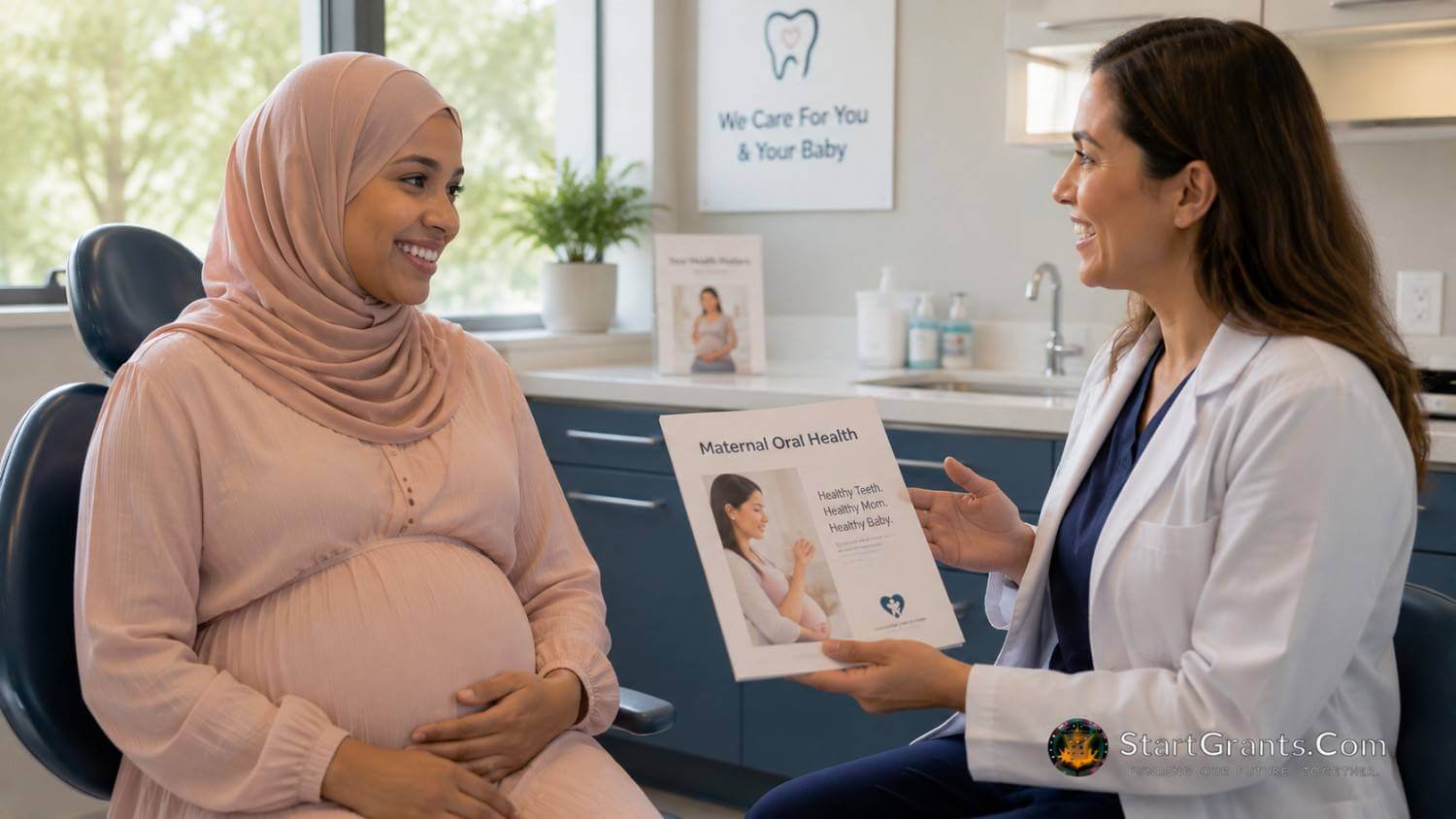
Seeking immediate medical care to protect the unborn child while utilizing state welfare or community Zakat is an act of worship in Islam, safeguarding families from interest-bearing medical debt.
Conclusion: Your Maternal Dental Action Plan
You should never have to compromise your unborn child’s health or your own well-being due to dental costs. Finding “dental grants for pregnant women” is completely achievable when you leverage state mandates.
Your tactical checklist:
- Apply for Pregnancy Medicaid Immediately: Do not wait. As soon as your pregnancy is confirmed, submit an application through your state’s health portal. Income thresholds for pregnant women are significantly higher than standard adult limits.
- Request a Dental Clearance Letter: At your next OB-GYN appointment, ask your doctor for a signed note clearing you for routine dental cleanings, local anesthesia (Lidocaine with epinephrine), and necessary extractions.
- Book During the Second Trimester: The second trimester (weeks 14 through 27) is the safest and most comfortable window for dental treatments, as organogenesis is complete and lying in the dental chair is comfortable.
- Locate a Local FQHC: If you are uninsured or waiting for paperwork, find an FQHC clinic for immediate, low-cost preventative care.
Taking care of your teeth is an essential act of maternal love. Secure your government coverage, resolve infections early, and give your baby the healthiest possible start in life.
Comprehensive Frequently Asked Questions (FAQs)
Q1: Is it safe to receive local anesthesia (numbing shots) at the dentist while pregnant?
A: Yes. The American Dental Association (ADA) and the American College of Obstetricians and Gynecologists (ACOG) confirm that local anesthetics with epinephrine (such as Lidocaine 2%) are completely safe during pregnancy. Treating an active infection is far safer for the fetus than allowing bacteria and chronic pain stress to circulate in the mother’s body.
Q2: Does Medicaid cover dental cleanings and fillings for pregnant women?
A: Yes. Under federal Medicaid guidelines, pregnancy-related Medicaid programs in virtually all states cover essential diagnostic, preventative, and restorative dental services—including comprehensive exams, x-rays with lead shielding, deep cleanings, and cavity fillings.
Q3: What is the best trimester to get dental work done during pregnancy?
A: The second trimester (weeks 14 to 27) is considered the ideal time for elective and restorative dental procedures. The baby’s primary organ development is complete, morning sickness has typically subsided, and the mother can comfortably recline in the dental chair without placing undue pressure on the vena cava.
Q4: What causes “pregnancy tumors” (pyogenic granulomas) on the gums?
A: Pregnancy tumors are benign, non-cancerous swollen growths on the gums caused by elevated progesterone levels reacting to dental plaque. They typically appear during the second trimester, bleed easily, and frequently disappear on their own after childbirth. Good oral hygiene and professional cleanings significantly reduce their occurrence.
Q5: How long does Medicaid dental coverage last after giving birth?
A: Over 45 states have permanently expanded postpartum Medicaid coverage to 12 full months after delivery. This allows new mothers to complete comprehensive dental treatment, crowns, and oral surgeries throughout the entire first year of their baby’s life.
Q6: Can dental infections cause premature labor?
A: Yes. Clinical studies show that moderate-to-severe periodontal disease causes bacteria to release inflammatory mediators (such as prostaglandins and interleukins) into the bloodstream. These chemicals can trigger uterine contractions, cervical dilation, and preterm birth.
Q7: What if I do not qualify for Medicaid due to immigration status?
A: Federally Qualified Health Centers (FQHCs) and community dental clinics receive federal funding to treat all patients regardless of legal immigration status or lack of insurance. They charge fees on a sliding scale based solely on verifiable income, ensuring undocumented mothers receive safe emergency and preventative care.
Q8: Is it permissible in Islam to use Zakat funds to cover pregnancy dental treatment?
A: Yes. In Islamic law, preserving maternal and fetal health is an urgent necessity (Darurah). If an expectant mother faces financial hardship and cannot afford essential dental treatment to prevent systemic harm, receiving Zakat or Sadaqah from community funds is completely Halal and highly commendable.
Important Disclaimer: StartGrants.com is an independent information portal. We are not a government agency, medical clinic, or insurance provider. Always consult with your OB-GYN and licensed dental practitioner before undergoing medical procedures.