
Last Updated: August 2026 | Author: Munir Ardi
Breaking into the healthcare industry does not always require eight years of medical school and hundreds of thousands of dollars in student loan debt. Becoming a Registered Dental Assistant (RDA) is one of the most tactical, fast-tracked career moves available today. In just 9 to 12 months, you can secure a recession-proof career, full medical benefits, and a highly competitive starting salary.
However, many for-profit trade schools and community colleges charge anywhere from $3,000 to $15,000 for dental assisting certificate programs. The single biggest mistake prospective students make is walking into an admissions office and blindly signing up for federal or private student loans to cover this cost.
Because the U.S. dental industry is facing a massive shortage of allied dental professionals, the government and private foundations have unlocked millions of dollars in free tuition specifically to train new assistants. If you are searching for “grants for dental assistant programs,” you must bypass the loan department entirely. In this 2026 master guide, we will break down the exact federal workforce grants, foundational scholarships, and community funds that will pay for your certification in full.
Before exploring specific assistant-level funding, we highly recommend understanding the entire educational funding landscape by reviewing our master directory on dental school grants and scholarships.
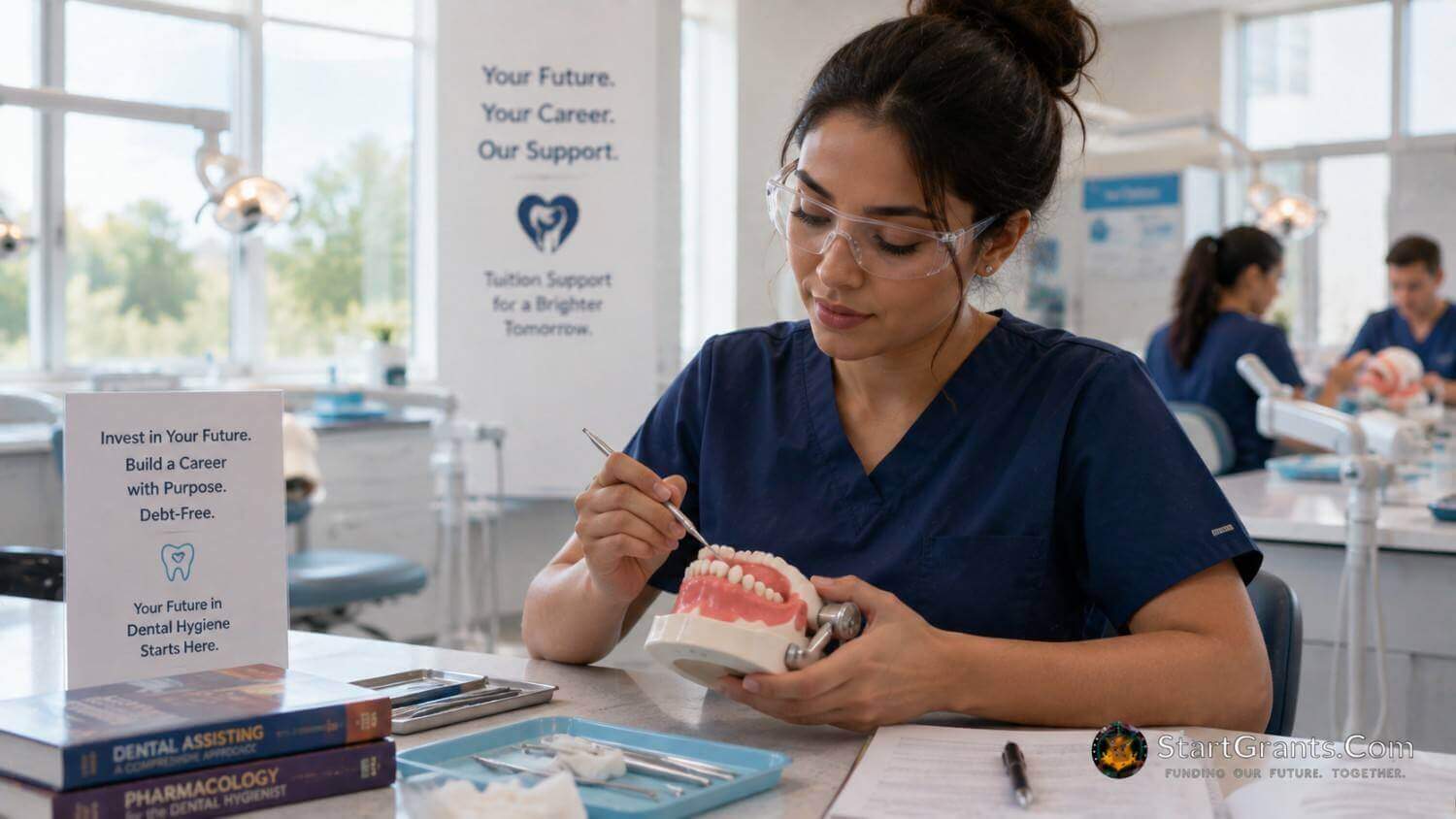
Becoming a dental assistant is one of the fastest and most secure entry points into the healthcare industry. In 2026, federal workforce grants and state initiatives can fully fund your 9-to-12-month certification completely debt-free.
Phase 1: The WIOA Federal Trade Grant (100% Tuition Coverage)
The most powerful, yet vastly underutilized, funding source for dental assisting students is the Workforce Innovation and Opportunity Act (WIOA).
WIOA is a federal program operated by the U.S. Department of Labor. Its sole purpose is to retrain displaced workers, low-income adults, and unemployed youth for high-demand careers. Because the Bureau of Labor Statistics (BLS) projects dental assisting jobs to grow significantly faster than the national average, dental assisting is officially classified as a “High-Demand Occupation.”
How to Use WIOA Funds
If you are currently unemployed, receiving SNAP benefits, or working a low-wage job, a local WIOA office can issue an Individual Training Account (ITA) voucher.
- What it Covers: WIOA grants do not just pay for your tuition. They will frequently cover the cost of your textbooks, clinical scrubs, safety goggles, and even the fees required to take your state board licensing exams (like the DANB exams).
- Action Step: You cannot apply for WIOA at your community college. You must physically or digitally visit your local American Job Center. Find your local office via the official CareerOneStop Directory (Department of Labor) to apply for workforce retraining funds.
Phase 2: The Federal Pell Grant for Trade Schools
Many students falsely believe that the Free Application for Federal Student Aid (FAFSA) is only for four-year bachelor’s degrees. This is a costly misconception.
If the dental assisting program you are attending is operated by an accredited community college or a Title IV-eligible technical school (meaning the program is usually over 600 clock hours), you can absolutely use the Federal Pell Grant.
Maximizing the Pell Grant Payout
For the 2025-2026 award year, the maximum Pell Grant is $7,395. Because most community college dental assistant programs cost between $3,000 and $5,000, a maximum Pell Grant will completely cover your tuition, leaving you with thousands of leftover dollars that the school will refund to you via direct deposit. You can legally use this refund to pay for rent, gas, and groceries while you complete your clinical hours.
Pro-Tip: The CODA Accreditation Trap
Not all fast-track dental assisting schools can accept the Pell Grant. Many unaccredited 10-week “strip mall” schools are specifically designed to force you into private, high-interest loans because federal financial aid will not pay them.Before enrolling anywhere, you must ensure the school is recognized by the Commission on Dental Accreditation (CODA). Watch this essential breakdown explaining exactly what CODA is, why the government considers it the “gold standard” of dental education, and why attending a non-accredited program can ruin your chances of securing financial aid and a state license:
Phase 3: Dental Associations & Professional Scholarships
If federal grants do not cover your entire cost of living, you must supplement your income with niche professional scholarships established by the dental industry itself.
1. ADAA (American Dental Assistants Association) Scholarships
The ADAA offers specific scholarships for student members currently enrolled in a Commission on Dental Accreditation (CODA) approved dental assisting program. These grants focus heavily on academic achievement and a demonstrated commitment to the dental profession. You can view current application cycles on the official ADAA website.
2. DANB & DALE Foundation Scholarships
The Dental Assisting National Board (DANB) and the DALE Foundation award multiple scholarships annually. One of the most sought-after is the Liz Koch Memorial Scholarship, which is open to all dental assistants, students, and educators. What makes this scholarship unique is that the funds can be used not just for tuition, but to cover the expensive fees required to take your national certification exams.
3. Employer-Sponsored “Earn While You Learn” Programs
Corporate dental networks (like Aspen Dental or Heartland Dental) are desperate for staff. Many are now offering “earn while you learn” apprenticeships. They will hire you as a sterile technician, pay you an hourly wage, and simultaneously pay for your formal dental assisting certification and state x-ray licensing out of their own corporate pockets.
Pro-Tip: Acing the Dental Clinic Interview
If you are applying for a corporate “earn while you learn” apprenticeship where the clinic pays for your training, you must stand out from other applicants. Your attitude and willingness to learn are more important than your prior medical experience.Watch this expert breakdown of the most common dental assistant interview questions and exactly how to answer them to secure your paid apprenticeship:
Phase 4: Strategic Career Pathways (The Stepping Stones)
Dental assisting is often the first step in a much larger, lucrative career in dentistry. If you plan to advance your career after earning your DA certification, you must align your educational pathway with these specialized funding guides:
- Upgrading to a Dental Hygienist: If your long-term goal is to clean teeth and double your salary, your DA experience will make you a top candidate. Prepare your funding strategy by reading our guide on grants for dental hygiene students.
- Prefer Working Behind the Scenes? If you discover you love working with your hands but prefer not to deal with patient anxiety, consider pivoting to fabrication. Explore grants for dental laboratory technician schools.
- Minority Representation in Dentistry: Dental schools and allied health programs are aggressively seeking to diversify the medical workforce. If you identify as a minority student, you must leverage targeted endowments. Review our breakdown of scholarships for minority dental students.
Phase 5: The Islamic Perspective (Education Without Riba)
For Muslim students embarking on a medical career, navigating the American financial aid system requires acute awareness of Islamic commercial law (Fiqh al-Mu’amalat).
When community college grants run out, financial aid offices will automatically package Federal Direct Unsubsidized Loans or private student loans (like Sallie Mae) into your award letter to cover the remaining balance.
1. The Prohibition of Student Loan Interest (Riba)
Standard student loans accrue compound interest from the moment the money is disbursed to your school. Under Islamic law, any contract that stipulates an increase or profit on a loan simply for the deferment of payment is the exact definition of Riba (usury). Engaging in Riba is one of the major sins (Kaba’ir) in Islam and completely compromises the spiritual purity (Barakah) of the education and subsequent income earned.
2. The Halal Alternatives: Grants & Interest-Free Endowments
Muslim students must refuse interest-bearing student loans and exhaust all permissible (Halal) options:
- Utilizing Federal & State Grants: Accepting federal Pell Grants, WIOA funds, and state-sponsored tuition waivers is completely Halal. These are government-funded social welfare benefits and philanthropic gifts that do not require repayment and carry zero interest.
- A Continuous Charity (ACC): If a financial gap remains, Muslim students must apply for interest-free educational funding through A Continuous Charity (ACC). ACC is a national non-profit organization that provides 100% Halal, Riba-free loans to American Muslim students. You borrow the exact amount you need for your dental assisting program and repay the exact same amount once you are working, keeping your faith intact.
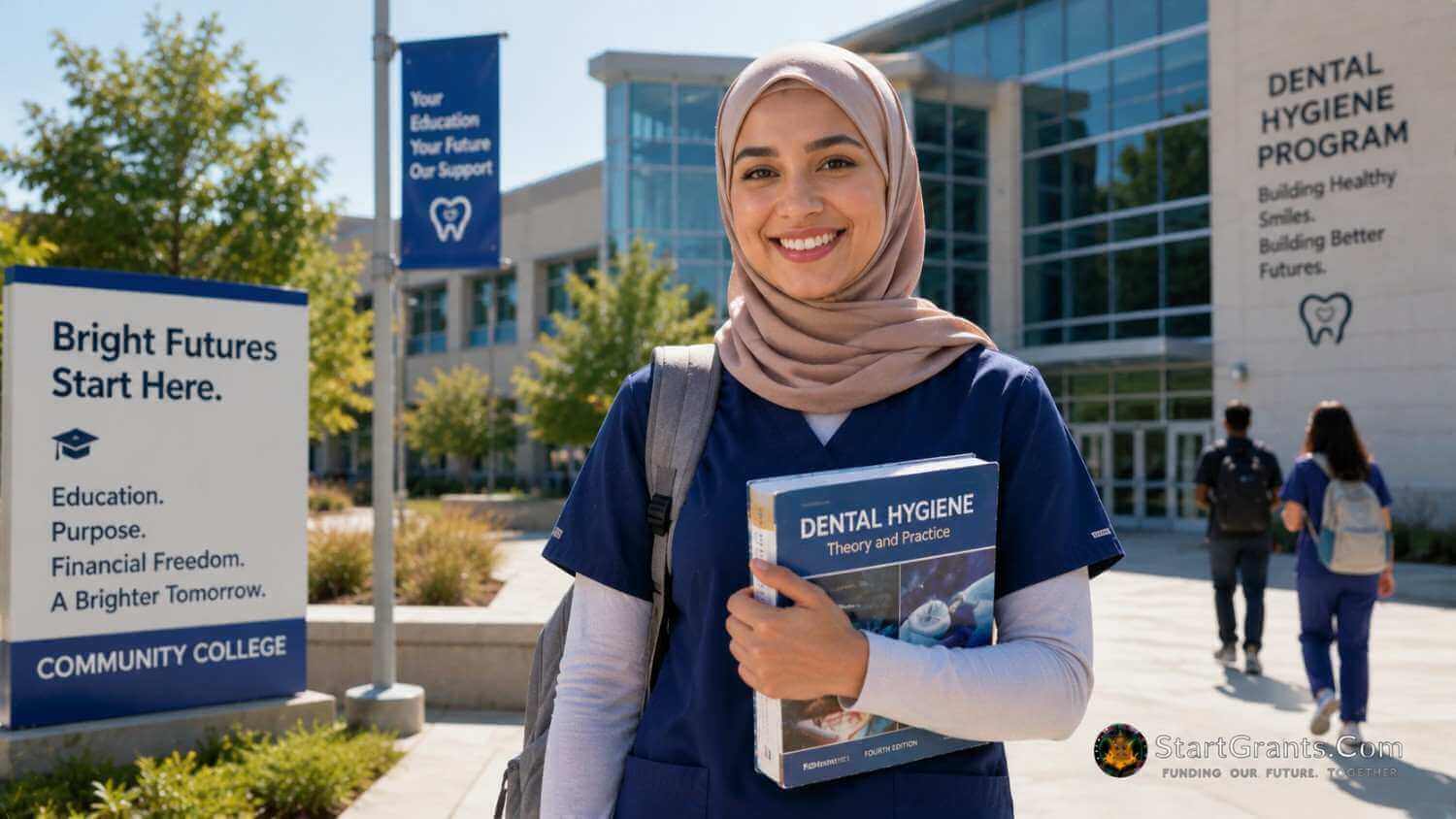
Entering the medical field is a noble pursuit in Islam. By securing federal grants or zero-interest community endowments, Muslim students can fund their dental assisting education without compromising their faith through Riba (usury).
Conclusion: Your Debt-Free Action Plan
You can start a high-paying career as a dental assistant in under a year, completely debt-free. You simply have to treat applying for grants like your first assignment.
Execute this tactical checklist:
- Visit Your American Job Center: Before applying to a college, meet with a WIOA counselor at your local Department of Labor office. Ask if dental assisting is on their “approved high-demand occupation” list to qualify for a free training voucher.
- Complete the FAFSA: Even if you think you make too much money, file the FAFSA. If you are 24 or older, you are considered an independent student, making it highly likely you will receive a maximum Pell Grant.
- Verify School Accreditation: Do not enroll in unaccredited weekend programs. Ensure your program is CODA-accredited and accepts Title IV federal funding.
- Apply for Professional Endowments: Submit applications to the ADAA and the DALE Foundation for specific dental assisting micro-grants to cover your state licensing exam fees.
- Refuse the Riba Trap: If you are a Muslim student facing a financial gap, reject federal loans and apply immediately to A Continuous Charity (ACC) for Halal funding.
The healthcare industry needs your skills urgently. Pull the right financial levers, secure your grants, and walk into your new dental career without the burden of student debt.
Comprehensive Frequently Asked Questions (FAQs)
Q1: Can I use the FAFSA (Pell Grant) for a dental assistant program?
A: Yes, but only if the program is offered at a Title IV-eligible institution, which typically includes accredited community colleges and technical schools. Fast-track, unaccredited 10-week programs held in the back of private dental offices generally do not qualify for federal financial aid.
Q2: What is the difference between WIOA grants and Pell Grants?
A: The Pell Grant is administered by the Department of Education based on financial need. WIOA (Workforce Innovation and Opportunity Act) is administered by the Department of Labor based on employment status and the need for career retraining. You can legally use both at the same time to fully fund your education and living expenses.
Q3: How much does a dental assistant program cost?
A: Costs vary wildly. A certificate program at a local community college typically costs between $3,000 and $5,000. Private, for-profit vocational schools can charge upwards of $12,000 to $15,000 for a nearly identical curriculum.
Q4: Are there scholarships that pay for the DANB certification exams?
A: Yes. The Dental Assisting National Board (DANB) exams can cost several hundred dollars. The DALE Foundation (via the Liz Koch Memorial Scholarship) offers specific financial grants designed to help students and early-career assistants pay for their certification exams and continuing education materials.
Q5: Do dental offices pay for you to become a dental assistant?
A: Increasingly, yes. Because of severe staffing shortages, many large dental service organizations (DSOs) offer paid apprenticeships. They will hire you as a sterile tech or front desk receptionist and pay for your formal dental assistant training and x-ray certification in exchange for a commitment to work for them for a certain period.
Q6: Can a dental assistant transition into becoming a dental hygienist?
A: Absolutely. While they are completely different programs (hygiene requires a 2 to 4-year degree), working as a dental assistant gives you massive clinical experience, making you a highly competitive applicant for limited-seat dental hygiene programs. Some colleges even offer accelerated DA-to-Hygiene bridge programs.
Q7: What is CODA accreditation and why does it matter?
A: CODA stands for the Commission on Dental Accreditation. Attending a CODA-accredited dental assisting program ensures the curriculum meets national standards. Most importantly, graduating from a CODA-accredited school is required to qualify for certain federal financial aid and is the fastest pathway to sitting for your national DANB exams without having to log thousands of hours of on-the-job training first.
Q8: Is it permissible in Islam to take out federal student loans if I am desperate?
A: Classical Islamic scholars are unanimous that taking an interest-bearing loan (Riba) is Haram, regardless of whether it is from the government (Federal Direct Loans) or a private bank. Students must exhaust all Halal alternatives—such as working part-time, utilizing WIOA grants, or seeking interest-free loans through organizations like A Continuous Charity (ACC)—rather than compromising their faith for education.
Important Disclaimer: StartGrants.com is an independent information portal. We are not a government agency, a university, or a financial aid provider. Always verify accreditation and financial aid eligibility directly with your chosen institution’s financial aid office.