
Last Updated: July 2026 | Author: Munir Ardi
Losing 100 pounds is a monumental achievement that requires immense physical and psychological discipline. However, the celebration is often cut short by a brutal physiological reality: massive weight loss leaves behind heavy, hanging aprons of excess skin. This excess tissue causes chronic rashes, severe back pain, fungal infections, and restricts basic mobility. It is a physical hazard that exercise cannot fix.
The only solution is surgical removal. Yet, when patients seek financial assistance, they hit a massive bureaucratic wall. Most people search for how to get grants for abdominoplasty (a “tummy tuck”), only to find out that the procedure costs upwards of $12,000 and is universally excluded by government funds and insurance. To secure capital for this life-altering operation, you must master the medical bureaucracy and pivot your strategy entirely.
Before executing the precise documentation tactics required for skin removal surgery, you must understand the broader federal and hospital funding landscape. Secure your overarching strategy by reviewing our Master Pillar: Surgery and Operation Grants.
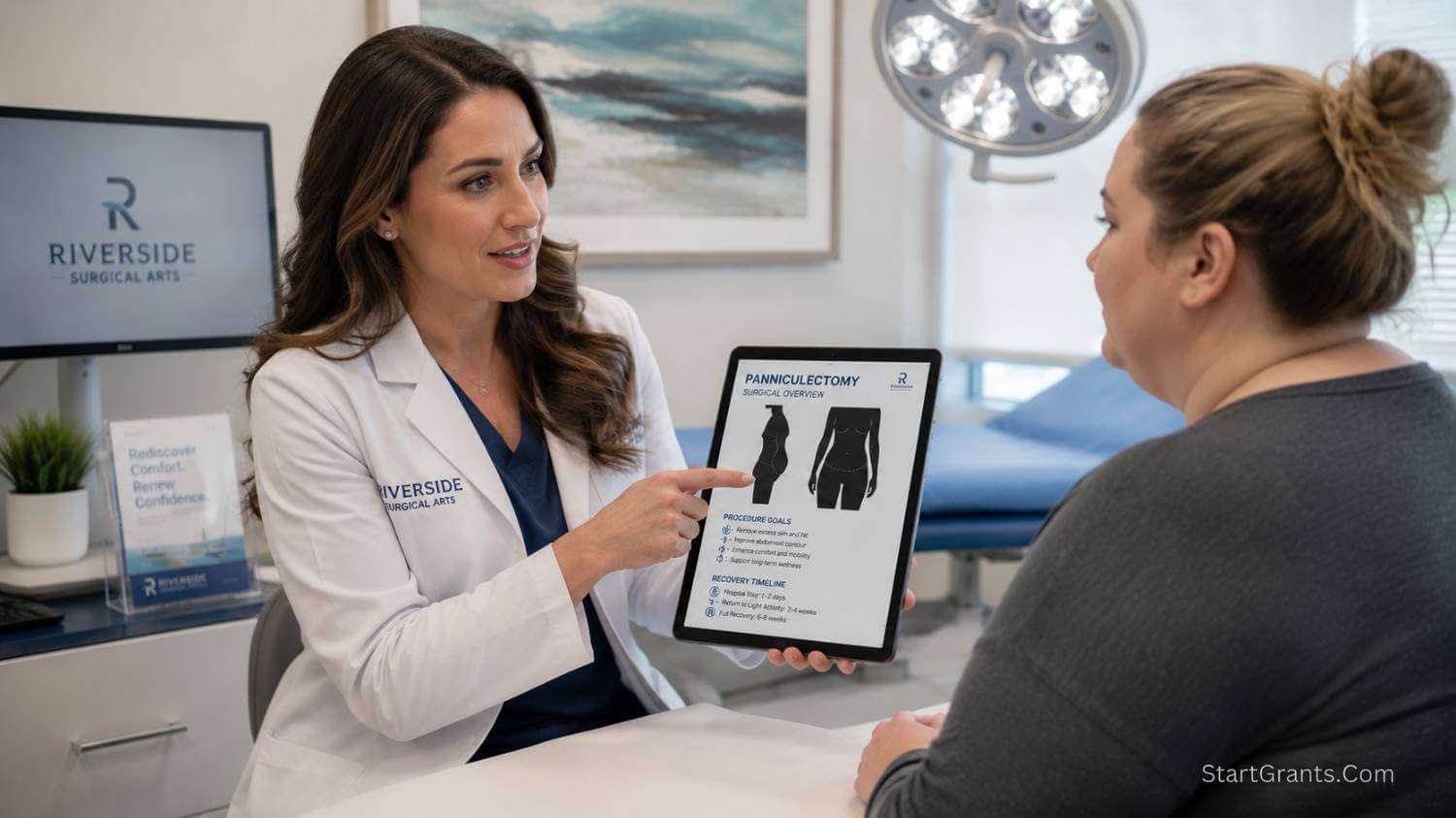
Government and private health funds will never pay for a cosmetic “tummy tuck.” Securing funding requires a strategic pivot to a “panniculectomy,” backed by a flawless trail of medical documentation proving physical necessity.
Phase 1: The “Tummy Tuck” Myth & The Panniculectomy Pivot
The single greatest reason patients are denied funding is vocabulary. In the eyes of the government, Medicaid, and private insurance companies, an “Abdominoplasty” (tummy tuck) is a purely cosmetic procedure designed to tighten abdominal muscles for aesthetic vanity. No federal agency or private foundation will ever grant you money for vanity.
To unlock funding, your surgeon must code the operation as a Panniculectomy. A panniculectomy is the surgical removal of the pannus (the heavy, overhanging apron of skin and fat) strictly to relieve a severe medical condition. Unlike an abdominoplasty, a panniculectomy does not involve tightening the underlying muscles for a “flatter stomach”; it simply removes the disease-causing excess skin. The Centers for Medicare & Medicaid Services (CMS) officially recognizes a panniculectomy as a reimbursable medical necessity if specific criteria are met.
Phase 2: Building the Medical Paper Trail
You cannot simply tell an insurance company or a grant foundation that you are in pain. You must provide an impenetrable bureaucratic shield of evidence proving that the panniculectomy is a medical necessity.
To win approval, you must build a paper trail lasting at least 3 to 6 months prior to requesting funding:
- The Photographic Evidence: Your primary care physician must take detailed clinical photographs showing the pannus hanging below the level of your pubis.
- Dermatological Records: You must have a documented history of chronic skin conditions, such as intertrigo (severe rashes) or fungal infections in the skin folds, treated by a doctor.
- Proof of Failed Conservative Treatment: You must prove that you tried prescription topical creams, powders, and antibiotics for at least three months, and they failed to cure the chronic infections.
Pro-Tip: Forcing Insurance to Pay
The line between cosmetic and medically necessary is razor-thin. To ensure your surgeon codes the procedure correctly and your insurance company cannot deny your claim, you must understand exactly how they evaluate your body. Watch this direct explanation from a Board Certified Plastic Surgeon: Tummy Tuck vs. Panniculectomy: Key Differences and Insurance Coverage:
Phase 3: Synergizing Your Surgical Journey
In almost all cases, a massive panniculectomy is the final step in a multi-year medical journey. If your excess skin is the direct result of massive weight loss following gastric bypass or a gastric sleeve, your prior medical records are your greatest asset in securing funding for the skin removal.
Insurance companies and grant committees view post-bariatric skin removal as “reconstructive” rather than “cosmetic.” If you are currently navigating the earlier stages of severe obesity and require funding for the initial weight-loss procedure, you must master the specialized funding strategies found in our guide: Financial Assistance for Bariatric Surgery. The approvals for your bariatric surgery will lay the groundwork for your panniculectomy approval later.
Phase 4: Hospital Charity Care (The Ultimate Grant)
What happens if you lack insurance, or your insurance denies the panniculectomy claim despite your flawless medical records? You do not need to take out a $15,000 personal loan.
Your ultimate “grant” is a federal law. Under the Affordable Care Act, Section 501(r) dictates that all non-profit hospitals in the United States must offer a Financial Assistance Policy (Charity Care) to maintain their tax-exempt status. If you meet the income requirements (often making less than 300% of the Federal Poverty Level), the hospital is legally bound to reduce your surgery bill by 80%, or forgive the cost of the medically necessary panniculectomy entirely.
You must find a reconstructive plastic surgeon who operates out of a major non-profit hospital network, rather than a private boutique cosmetic clinic. Private cosmetic clinics do not offer federal Charity Care; non-profit hospitals do.
Phase 5: The Muslim Perspective (Tadawi, Riba, & Gharar)
For a Muslim navigating the complex aftermath of massive weight loss, seeking reconstructive surgery in the United States introduces profound theological and ethical questions. Islamic jurisprudence (Shariah) strictly governs what can and cannot be altered on the human body, as well as the financial mechanisms used to pay for medical care.
Fikih of Plastic Surgery: Tadawi vs. Taghyir Khalqillah
The most pressing question for a Muslim patient is whether skin removal surgery is Halal. The ruling depends entirely on the intent and the condition.
In Islam, undergoing surgery purely for vanity, to look younger, or to achieve an artificial standard of beauty is classified as Taghyir Khalqillah (altering the creation of Allah) and is explicitly Haram. If a patient wants an “Abdominoplasty” simply to have a flat, toned stomach for aesthetic reasons, it is prohibited.
However, if the massive folds of excess skin are causing chronic pain, severe fungal infections, emitting foul odors, or restricting the patient’s ability to walk or perform Salah (prayer), the surgery transforms from cosmetic to reconstructive. Seeking a cure for physical suffering is classified as Tadawi (medical treatment), which is highly encouraged and completely Halal. Restoring the body to a normal, functional state is a divine right.
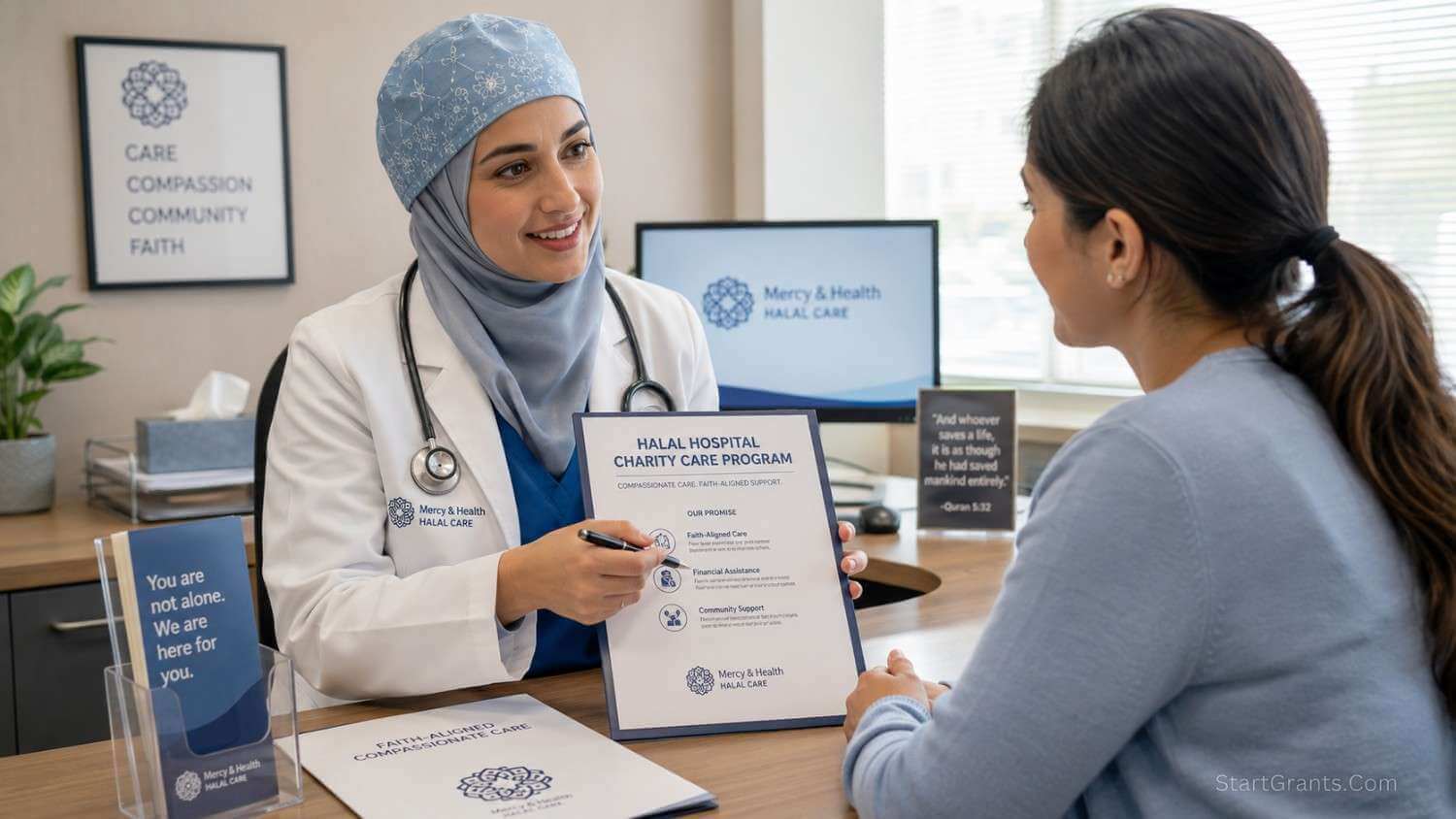
In Islamic jurisprudence, restorative surgery to eliminate physical pain is Halal (Tadawi), while purely cosmetic alterations are forbidden. Securing Halal hospital charity care ensures the patient heals without the spiritual destruction of Riba-laced medical credit cards.
The Danger of CareCredit (Riba)
Because reconstructive surgeries cost over $10,000, plastic surgery clinics aggressively market medical credit cards like CareCredit to patients. They will push the “0% interest for 12 months” promotional period.
This is a catastrophic financial and spiritual trap known as deferred interest. If the patient does not pay off the entire $10,000 balance within the promotional window, the bank retroactively applies compounding interest (often 26% APR or higher) back to the date of the surgery. In Islam, intentionally engaging in a contract that stipulates the payment of interest is explicitly Riba, which is one of the major sins. A Muslim patient must adamantly refuse these Riba-bearing medical loans.
This is why utilizing Hospital Charity Care (as detailed in Phase 4) is a religious necessity. Because Charity Care operates as debt forgiveness or a direct grant (Hibah), it requires no repayment and accumulates zero interest, making it a 100% Halal path to healing.
Gharar, Insurance, and Zakat
To cover the costs of a medically necessary panniculectomy, a Muslim patient must rely on their health insurance. Traditional commercial health insurance contains Gharar (excessive uncertainty). However, Islamic scholars widely permit its use under the principle of Dharurah (legal and medical necessity) to protect human health and avoid financial ruin.
If a Muslim patient is burdened by crushing medical debt from life-saving or medically necessary reconstructive surgeries, they legally fall into the Zakat-eligible category of Al-Gharimin (those overwhelmed by debt). It is completely Halal for the community to deploy Zakat funds to rescue the patient from this debt, ensuring their physical recovery is not shadowed by financial despair.
Conclusion
Discovering how to get grants for abdominoplasty requires changing your vocabulary from cosmetic vanity to medical necessity. By pursuing a panniculectomy, establishing a 6-month paper trail of dermatology visits, and leveraging ACA Section 501(r) Charity Care at a non-profit hospital, you can force the medical system to cover the cost of your restorative surgery.
For the Muslim patient, navigating this surgery is an exercise in profound spiritual discipline. By ensuring the procedure aligns strictly with the Halal principles of Tadawi, fiercely rejecting the Riba-laced trap of medical credit cards in favor of Hospital Hibah, and utilizing Zakat if burdened by debt, your physical healing process remains a journey of absolute spiritual purity and divine Barakah.
Frequently Asked Questions (FAQs)
Q1: Will the government or insurance pay for a tummy tuck (abdominoplasty)?
A: No. A standard abdominoplasty (tummy tuck) includes tightening the abdominal muscles and is universally classified as an elective, cosmetic procedure. Neither the government, Medicaid, nor private insurance will cover it.
Q2: What is the difference between a tummy tuck and a panniculectomy?
A: While a tummy tuck tightens muscles for cosmetic reasons, a panniculectomy is the surgical excision of the pannus (the overhanging apron of excess skin and fat) that causes chronic rashes, infections, or mobility issues. Because a panniculectomy cures a physical ailment, insurance companies and hospital charity programs will cover it if deemed medically necessary.
Q3: How do I prove that my skin removal surgery is a medical necessity?
A: You must build a documented paper trail. This includes clinical photographs of the overhanging skin, a documented history of severe rashes or fungal infections, and medical records from your primary care physician proving that conservative treatments (like prescription creams and powders) failed to cure the issue over several months.
Q4: Is it Haram for a Muslim to undergo skin removal surgery?
A: It depends on the intent. If the surgery is performed purely for cosmetic vanity to look more attractive, it is considered altering Allah’s creation (Taghyir Khalqillah) and is Haram. However, if the excess skin causes severe physical pain, chronic infections, or prevents a person from living a normal functional life or performing prayers, the surgery is considered medical treatment (Tadawi) and is completely Halal.
Q5: Why is it Haram to use CareCredit to finance my reconstructive surgery?
A: CareCredit utilizes “deferred interest.” If you do not pay off the promotional balance in time, the bank charges massive compounding interest retroactively. In Islamic finance, intentionally signing any contract that includes a clause for paying interest is classified as Riba, which is strictly forbidden (Haram). Muslims must seek Halal alternatives like Hospital Charity Care (Hibah) or interest-free loans.
Disclaimer: The information provided in this article is for educational and informational purposes only. We are not a medical provider, a billing agency, or a religious fatwa council. ACA regulations, hospital Charity Care policies, and Medicare criteria for panniculectomies are subject to change. Always consult with a Board-Certified Plastic Surgeon regarding medical necessity, a hospital financial counselor for Charity Care eligibility, and a qualified Islamic finance scholar regarding Halal medical financing, Riba avoidance, and specific Zakat eligibility.