Last Updated: | Author: Munir Ardi
Five places to check for clothes donation drop-off are Goodwill donation centers, Salvation Army locations, community clothing closets and faith organizations, shelters or specialized clothing charities, and Planet Aid collection sites. Start with an official locator or the organization’s donation page, then confirm the exact location accepts your items. Donation hours can differ from store hours, and a nearby bin may serve a resale program rather than distribute clothing directly.
This guide helps you choose a destination, prepare your bags, and understand what happens afterward. For the separate task of estimating donated clothing values, see our guide to valuing clothing donations.
Find a Clothes Donation Drop-Off Near You
Use the links below to find an actual collection point. Search by ZIP code, city, or address where the locator allows it. A national organization’s name in a search result does not mean every nearby office accepts clothing.
| Place | Useful for | Where to start | Before you go |
|---|---|---|---|
| Goodwill | Clean, gently used clothing for resale supporting local programs | Find a Goodwill donation site | Select a donation site; confirm intake hours and local exclusions. |
| The Salvation Army | Clothing accepted through participating thrift-store donation operations | Find a Salvation Army drop-off | Confirm the designated entrance, accepted items, and receipt process. |
| Community clothing closets and faith organizations | Specific sizes and items requested for local distribution | Check the organization’s own website or public office. | Confirm an active collection, current needs, and whether an appointment is required. |
| Shelters and specialized charities | Requested clothing, professional attire, or other targeted needs | Find Dress for Success donation guidance | Local policies vary; some accept only selected or new items. |
| Planet Aid | Clothing, shoes, and approved textiles | Find a Planet Aid bin | Check condition rules; do not leave bags outside a full bin. |
Hours, capacity, collection locations, and accepted items can change. Confirm with the local operator before traveling; this table is not a ranking or a promise of acceptance.
When you call, ask: “Are you accepting clean used clothing today? I have two bags of adult clothing and one bag of children’s clothes. Where should I bring them, do I need an appointment, and how do I get a receipt?” This short check can prevent an unnecessary trip.
1. Goodwill Donation Centers
Goodwill offers donation sites and stores operated by local Goodwill organizations. Its national donation guidance explains that donated goods generate revenue supporting job training and other community services. A donation should not be understood as a promise that your particular garment will be given away free.
Look for the designated donation entrance rather than assuming the main shopping entrance is correct. Some locations offer drive-through service; unloading assistance and receipts depend on the site. Ask before bringing very large loads, damaged textiles, or items beyond ordinary clothing.
Unsold items can follow different routes. Goodwill Northern New England describes its reuse and recycling process, but that regional example does not establish one nationwide timeline. Ask your local organization about outlet sales, textile partners, and disposal if those details matter to your choice.
2. The Salvation Army Donation Locations
Use the official locator to find a participating drop-off. The Salvation Army’s thrift-store donation program explains that donated goods are sold to support its Adult Rehabilitation Centers. Other local Salvation Army services may have separate donation arrangements, so confirm the recipient and destination.
Ask whether the location accepts your clothing type and how it wants bags packed. Do not assume every Family Store has the same hours or a drive-through lane. If transport is difficult, check pickup availability for your ZIP code and donation size; booking depends on the local service area and schedule.
3. Community Clothing Closets, Mosques, and Other Faith Organizations
A community clothing closet can be a useful option when you want items considered for direct local distribution. Contact the organization first: it may need children’s coats in certain sizes, work clothes, or unopened socks while having no space for other items.
Ask whether clothing is distributed free, sold to support services, or passed to another organization. Also ask about seasonal collections, storage limits, packaging, and receipt availability. A mosque, church, or community center may host an occasional drive without operating a year-round donation site.
For a concrete local example, Second Chances in Massachusetts publishes clothing collection instructions and approved drop-off routes. Its office and warehouse are not public clothing drop-offs. This illustrates why the collection address matters as much as the charity’s name.
For Muslim community collections, ask the mosque’s public office or a local relief organization for current instructions. Do not assume a bin outside a mosque belongs to a particular national charity, or that its contents will be shipped overseas. Confirm the operator and use of donations from the label and the organization’s own contact information.
4. Shelters and Specialized Clothing Charities
Match the donation to an actual request. A shelter’s storage space may be limited, and some programs accept only new items or a short wish list. Do not arrive at a confidential residential address or ask residents to receive donations.
Policies differ even among organizations serving similar needs. House of Ruth Maryland lists clothing donations by appointment, while House of Ruth in Washington, DC excludes used items and accepts clothing only when specified on its wish list. Check the specific provider rather than applying one shelter’s rules to all shelters.
Professional Clothing, Prom Dresses, and Bras
Professional attire: Dress for Success directs clothing donors to local affiliates. Ask about current sizes, styles, accessories, condition standards, and appointments before delivering suits or interview clothing. Do not assume every affiliate accepts the same items.
Formalwear: Prom-dress programs often use seasonal collection dates and specific condition requirements. Our guide to donating prom dresses covers that separate donation route.
Bras: I Support the Girls accepts new and gently used bras and publishes mail-in or drop-off guidance. Confirm its current local instructions. Do not generalize this policy to used underwear or every charity.
If you need clothing rather than a place to give it away, use our clothing assistance guide for low-income families to explore recipient-facing options.
5. Planet Aid Collection Bins
Planet Aid offers a locator for its clothing and shoe collection sites. Its current bin instructions exclude textiles that are dirty, wet, moldy, or tattered beyond repair. A collection bin is therefore not an automatic destination for every damaged garment.
Planet Aid’s accepted-items guidance allows certain lightly stained items while excluding unusable textiles. Use the current bin-specific instructions and contact the operator when an item falls between those categories. Do not place furniture, electronics, or unrelated household waste beside the bin.
The organization describes reselling donated clothes and shoes to raise funds. Do not assume everything becomes industrial rags, everything is distributed free, or every textile avoids disposal. If you need documentation, use its donation receipt request page and keep your own item list.
How to Check a Clothing Donation Bin
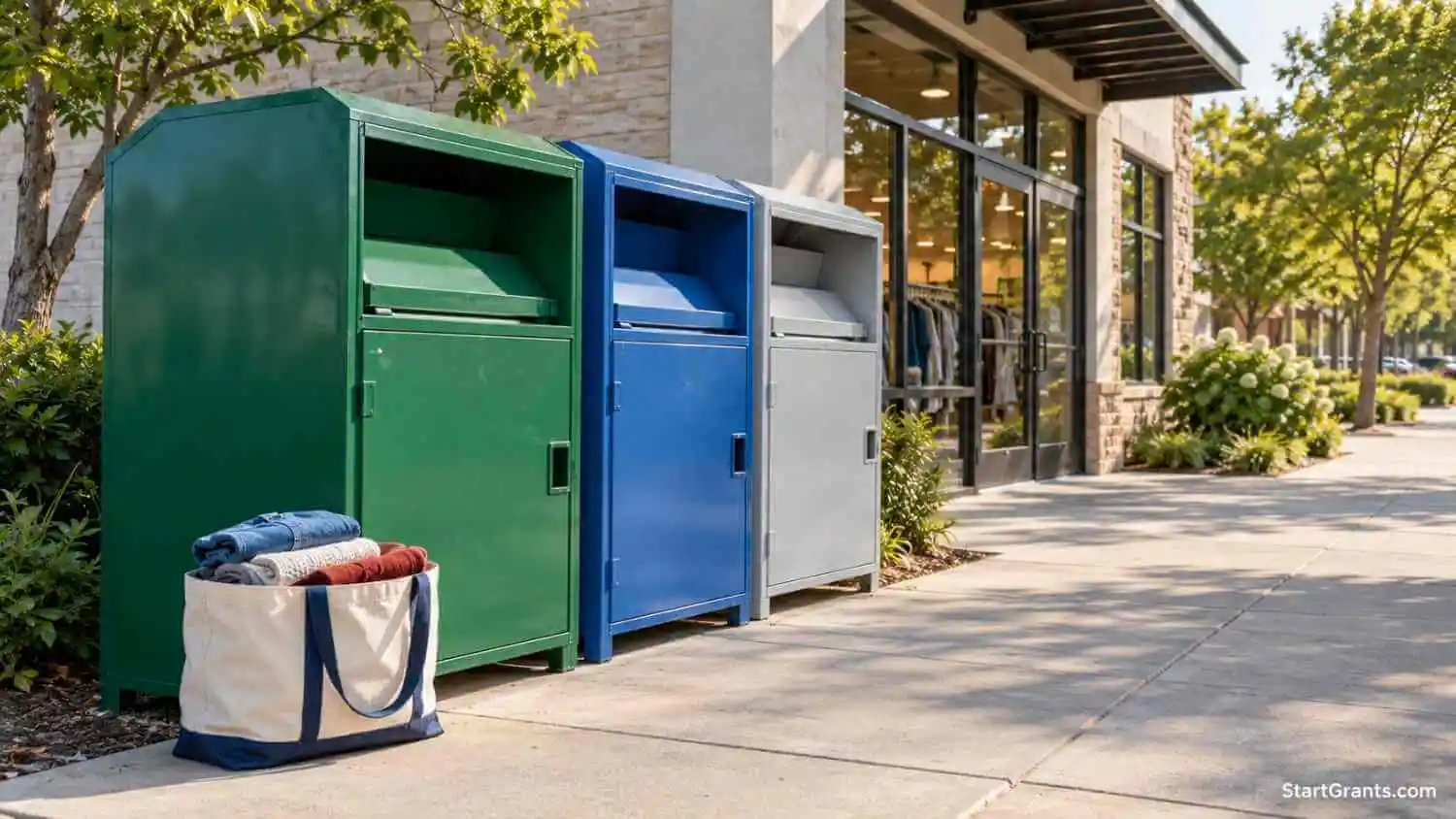
Read the label before opening your bags. Bin color, a familiar-looking logo, and words such as “green” or “community” do not establish who owns the clothing or who benefits from its sale.
- Identify the operator. Look for a legal name, website, and contact details. Verify them independently rather than relying only on a QR code.
- Identify the beneficiary. Ask whether the operator is collecting for itself or a named nonprofit partner.
- Check the stated use. Is the clothing intended for direct distribution, resale, recycling, or a combination?
- Check acceptance and access. Read condition restrictions and property-access hours. A bin is not necessarily available around the clock.
- Confirm the receipt process. Know which organization acknowledges the donation and how you will document it.
A For-Profit Operator Is Not Automatically a Scam
Some businesses collect goods on behalf of charities under disclosed arrangements. For example, GreenDrop explains its nonprofit partnerships and states that it purchases donated goods from the nonprofit, providing revenue. Its disclosures identify it as a for-profit company. Evaluate the arrangement and beneficiary instead of assuming either that all proceeds go to charity or that no charity benefits.
For federal tax purposes, use IRS Tax Exempt Organization Search to check whether the recipient is eligible to receive deductible contributions. An EIN by itself does not establish deductibility, and not every legitimate bin prints one. The IRS also explains that some eligible recipients, including certain religious organizations, may not appear in the search data. Seek clarification if the names or documentation do not match.
Where Do Donated Clothes Actually Go?
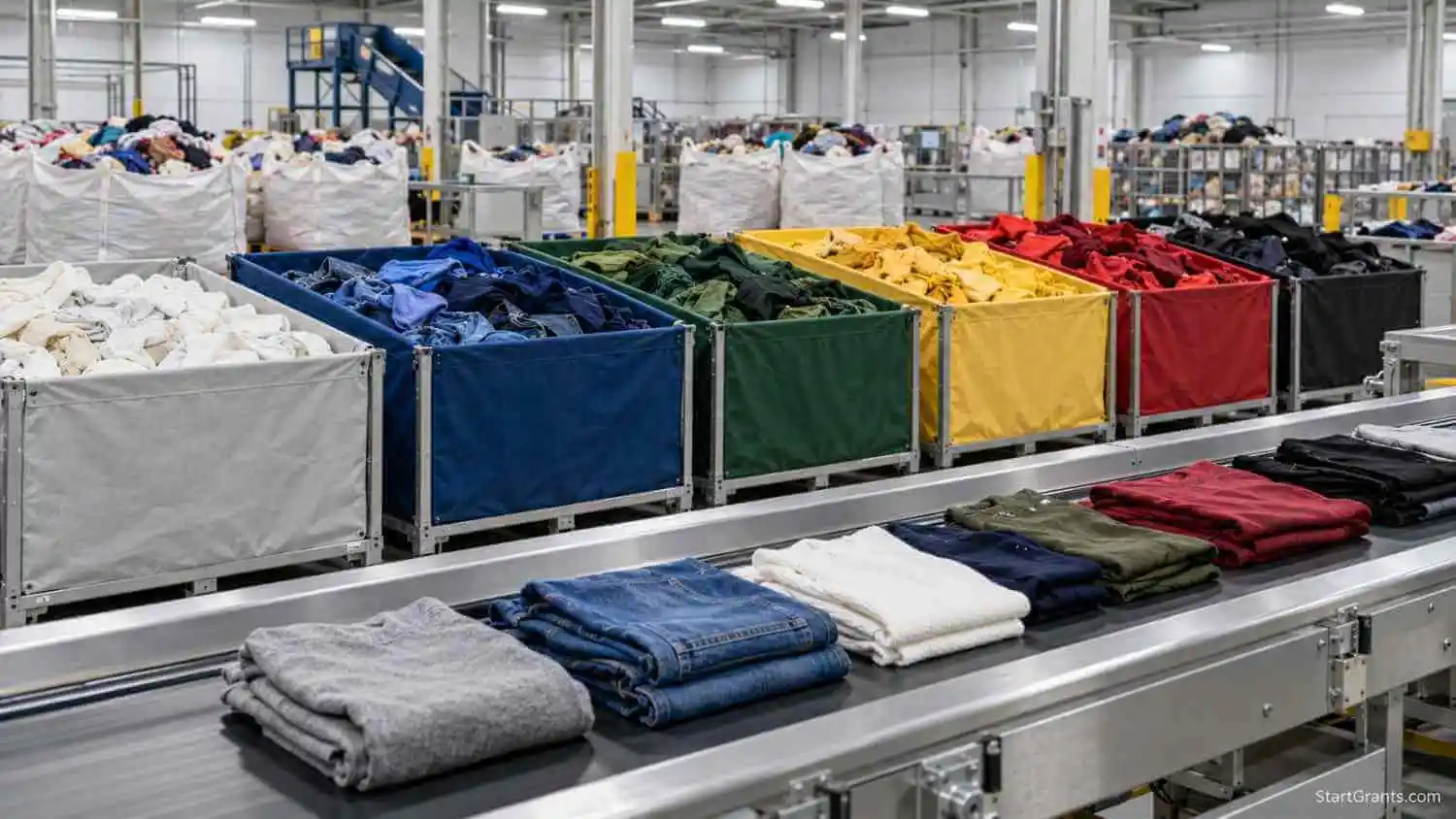
Possible routes include direct distribution, thrift-store resale, outlet sales, bulk resale, export for reuse, textile recycling, and disposal when items cannot be used. Different routes can exist within the same organization. Ask the collector for its own explanation rather than inferring the destination from the bin’s appearance.
If your priority is a garment reaching someone locally, contact a clothing closet with a matching need. If your priority is funding a charity’s work, resale may fit that goal. If the item is no longer wearable, find a program that explicitly accepts that material for recycling.
Prepare Clothing Before You Leave Home
Clean garments according to their care labels and let them dry completely. Check for odors, stains, pests, broken fasteners, and major damage. Do not assume the recipient will wash or repair the items, but avoid assuming every imperfect item is automatically discarded.
- Empty every pocket: Remove money, jewelry, identification, medication, keys, and storage devices. Check purses and bags as well.
- Separate useful categories: Label bags by clothing type or size when the recipient requests it. Keep shoes paired and avoid mixing sharp or heavy objects with clothing.
- Use suitable packaging: Follow the site’s bag, box, or hanger rules. Professional-attire programs may have different instructions from collection bins.
- Keep containers you want back: Transfer items before leaving if you want to retain a storage tote or garment bag.
- Document before handing over: Make an inventory and, when useful, photograph the clothing’s condition. Avoid including personal documents in photos.
Mail-In Donations and Home Pickup
Give Back Box: Check the Label Offer First
Give Back Box provides a mail-in route for accepted items in new or great condition. Reuse a sturdy shipping box, remove or cover old shipping labels, pack the approved goods, and obtain a unique label for each box.
Shipping is not universally free. The program has a partner-funded label page and also advertises paid shipping options. Check the offer, destination charity, weight and size limits, and price before packing. Use only the carrier identified on your label; a UPS label cannot be handed to a different carrier as though it were interchangeable.
Keep the tracking number. Follow the program’s account and itemization instructions for an emailed receipt after the donation is accepted and processed. Do not assume printing a shipping label completes the donation or guarantees a tax deduction.
Home Pickup Depends on Your Location
The Salvation Army provides an official pickup scheduling tool. Check availability and minimum requirements for your ZIP code. Other routes include Vietnam Veterans of America’s ClothingDonations.org and the donation links on AMVETS’ official support page. Confirm local service coverage, accepted items, any fees, and which organization receives the goods before booking.
Confirm whether collection is curbside, porch pickup, or another arrangement; do not assume drivers enter the home. Label bags as instructed, keep them dry, and put them out only within the agreed pickup window. A scheduled collection is different from leaving unwanted bags outside a closed charity.
Items That Need a Different Route
- Wet, moldy, pest-infested, or heavily soiled items: Keep these out of ordinary donation collections. Ask your local waste authority about disposal.
- Used underwear and socks: Acceptance varies. Many direct-service programs request new items; check the actual policy instead of assuming a universal ban or acceptance.
- Company uniforms: Follow your employer’s return and disposal policy. Remove identifying material only when permitted, especially for security or official-service uniforms.
- Chemically contaminated clothing: Do not donate it. Ask the local waste authority how to handle the particular chemical; ordinary trash is not always the correct route.
- Severely damaged textiles: Find a recycler that explicitly accepts them. Textile recycling is not the same as placing fabric in a household curbside recycling bin.
Retail Collection and Shoe Recycling
H&M garment collecting, Madewell’s Denim Trade-Up, and Levi’s denim recycling are examples of retailer collection routes. Participation and accepted materials differ. For denim, Cotton’s Blue Jeans Go Green program lists participating retailers and material requirements, including denim made with at least 90% cotton. Check current locations rather than assuming every branch participates.
For worn athletic shoes, Nike’s recycling guidance says to confirm store participation first. It excludes sandals, dress shoes, boots, and shoes containing metal such as cleats or spikes. A retailer coupon, recycling service, or trade-in credit does not by itself establish a deductible charitable donation.
Donation Receipts: What to Keep
A receipt records a contribution; it does not guarantee a tax benefit. IRS charitable-contribution guidance distinguishes gifts to qualified organizations from gifts to individuals. Clothing is a noncash contribution; the new 2026 deduction for certain cash donations by non-itemizers does not cover bags of clothing. Check applicable itemized-deduction limits for your filing year.
Keep an item description, condition record, donation date, location, recipient name, and support for your estimated value. IRS Publication 526 generally requires donated clothing to be in good used condition or better, with a limited appraisal-based exception. For a contribution of $250 or more, obtain the required contemporaneous written acknowledgment; a blank slip you complete yourself may not meet the rules.
Form 8283 instructions explain reporting requirements when claimed noncash deductions exceed $500 and additional requirements for larger gifts. The charity generally describes what it received rather than determining your value. Ask about documentation before using an unattended bin if the acknowledgment is important to your records.
A Muslim Perspective
Giving usable clothing can be an act of sadaqah. Choose items that are clean and suitable for the recipient, and follow the collector’s stated needs. Ask whether the organization distributes garments directly or sells them to support its services, so the donation matches your intention.
Do not assume ordinary used-clothing donations automatically fulfill zakat. If that is your intention, ask a qualified scholar and the receiving organization about eligibility, valuation, and distribution before donating. Respect recipients’ privacy; there is no need to photograph a family or disclose its circumstances to document your generosity.
A local mosque may organize a clothing drive, but confirm the dates and collection point. Leave items only where the organizers authorize, and keep restricted donations consistent with the purpose you agreed on.
Frequently Asked Questions
Can I leave bags outside a closed donation center or a full bin?
No. Follow the operator’s instructions and take the bags home if they cannot be accepted. Outdoor bags can be damaged or become a disposal burden, and local dumping rules may apply.
Are clothing donation bins open 24 hours?
Some are accessible around the clock, but property hours, posted restrictions, and capacity still matter. Check the location before traveling and never force items into a full chute.
Will a charity wash my clothes?
Do not assume laundry service is available. Donate clean, fully dry clothing and follow the recipient’s condition rules. Cleaning and rejection practices vary by organization.
Can I donate clothing on hangers or in storage totes?
Ask the receiving location. Some request tied bags without hangers, while specialized clothing programs may use different arrangements. Expect any container you leave to become part of the donation unless staff agree otherwise.
Do charities accept gently used bras?
Some do. I Support the Girls publishes guidance for new and gently used bras. Confirm the local donation route and do not assume the same policy applies to other underwear.
Does Goodwill give every donated item directly to someone in need?
No. Resale is a major part of Goodwill’s model, with revenue supporting local programs. Unsold items may follow other routes that vary by regional organization.
Can I ship clothing donations for free?
Some Give Back Box partner offers cover shipping, while other options require payment. Confirm the current label offer, carrier, recipient, and package limits before sending a box.
What is the best time of year to donate clothes?
Donate when a program is accepting the items you have. Ask about current seasonal needs and scheduled drives; there is no single best month for every organization.
Can a for-profit collection company support a charity?
Yes, some collect goods under arrangements with nonprofit partners. Check the named beneficiary, financial arrangement, and receipt process instead of judging only by the operator’s business status.
Where should I take clothing if I want it distributed locally?
Contact a community clothing closet, shelter, or specialized program with a matching request. Confirm that it distributes the clothing directly and can use the sizes and types you have before arranging delivery.