Last Updated: | Author: Munir Ardi
To schedule a free furniture donation pick-up, find a provider that serves your ZIP code, get approval for your specific items, and confirm the collection location and appointment. Free service is available in some areas, but acceptance, stairs, indoor access, and scheduling rules vary. A submitted request is not necessarily a confirmed booking.
This guide covers booking, preparation, apartment access, and the handover. If you still need to choose a recipient, start with who accepts furniture donations and how local acceptance policies differ.
1. Match the Pickup Service to Your Furniture and Access Needs
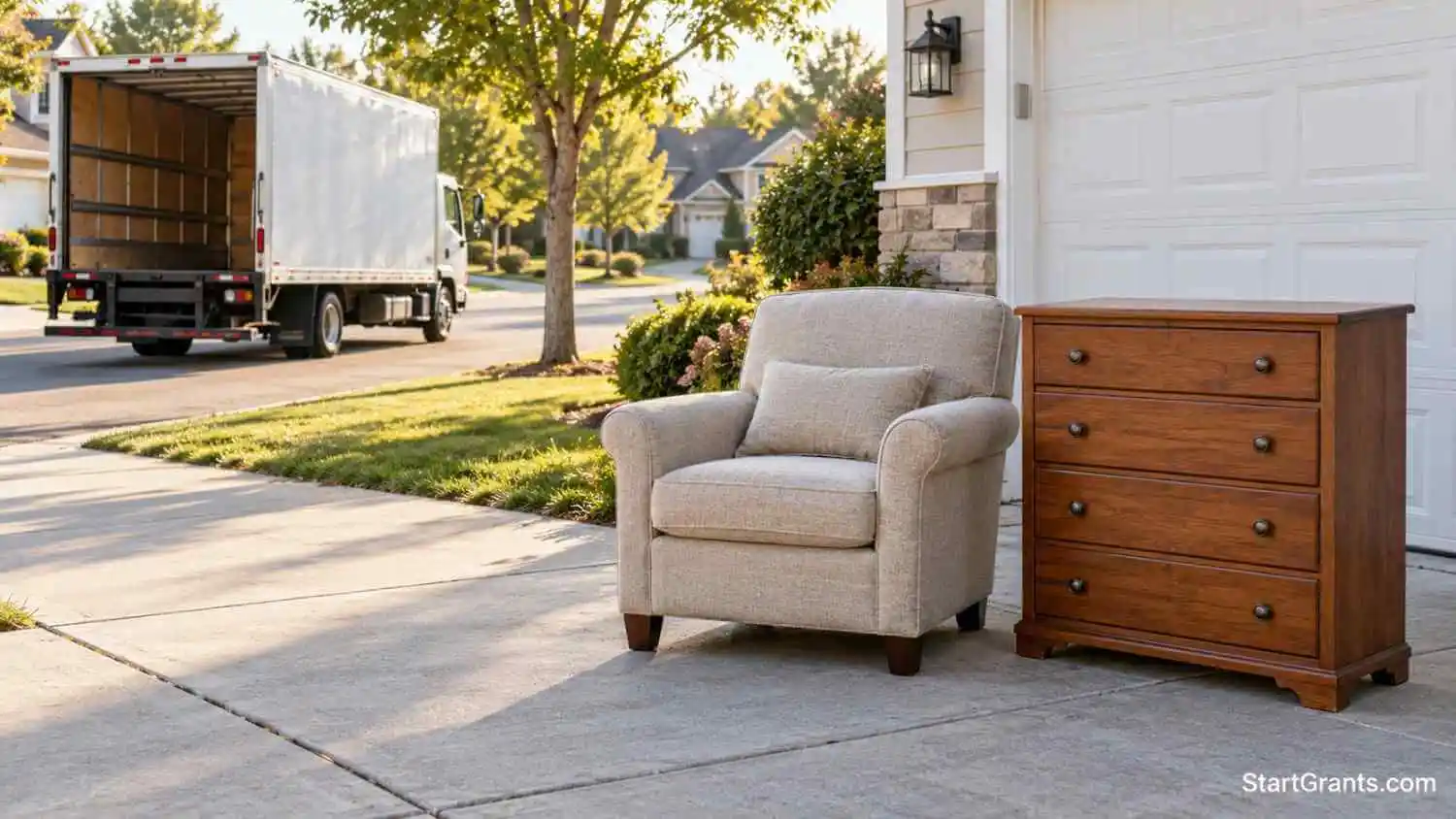
Donation collection and paid removal are different services. A charity may accept usable furniture for resale or distribution while declining damaged items. A paid hauler may offer additional labor or removal options; paying for collection does not automatically make everything in the load a charitable donation.
Start with the largest or hardest-to-move item. A provider that collects bags of clothing may lack a route for your sectional sofa. Describe each piece separately, including sleeper mechanisms, reclining sections, glass tops, or unusually large dimensions.
| Provider | Where to start | Important limitation |
|---|---|---|
| The Salvation Army | Check ZIP-code availability and request a pickup. | Ask the local operation about furniture acceptance and collection access; do not assume every ZIP code qualifies. |
| Habitat ReStore | Find the local ReStore donation service. | Many locations offer free pickup for large items. Local item lists, service areas, and access rules apply. |
| Twin Cities Habitat ReStore, Minnesota | Compare its free and priority pickup options. | Free collection uses outside staging; priority collection permits items inside the home or storage unit. |
| Out of the Closet | Review large-item pickup requirements. | Complimentary pickup requires at least two accepted large furniture items or ten large bags/boxes of eligible goods. Indoor collection is available under stated conditions. |
| Goodwill of North Georgia | Check its paid ReSupply collection option. | This regional example charges the donor for pickup through its partner. It is not a national free Goodwill service. |
| Pickup Please | Check the small-furnishings list before booking. | Items must be light enough for one person to carry. Couches, sofas, sleeper couches, mattresses, and box springs are excluded. |
| AMVETS pickup service | Read the current needed-items and exclusions list. | The published list excludes several bulky categories, including sleeper, sectional, and reclining sofas. Confirm the local route and exact piece. |
Availability and policies can change. These are provider examples, not a guarantee of service at your address. Check the current local instructions before moving anything.
For provider-specific guidance, see planning a Habitat ReStore donation or checking local Goodwill donation pickup options.
When a paid pickup may fit better
ReSupply advertises paid collection with indoor removal, stairs, and disassembly. Review the estimate and separate booking fee before reserving. Ask which charity will receive accepted goods, how rejected items will be handled, and what documentation you will receive. Do not treat a marketing promise of fast pickup as a confirmed appointment for your address.
If a charity offers free collection only from the garage, compare the total cost of arranging safe furniture moving with the price of an approved indoor pickup. Disclose access limitations before accepting a quote. Ask about cancellation charges, extra labor, and any disposal or recycling fees in writing.
For another local route, use the Furniture Bank Network directory to find nearby organizations. Contact the listed operator directly about collection, fees, and eligibility; a directory listing is not a confirmed free pickup.
2. Get Item Approval Before Choosing a Date
Prepare a short inventory: item type, quantity, width, depth, height, and condition. Add clear photographs of the full piece and any damage. For a sectional, include each section and its connecting hardware. For a dining set, specify the number of chairs and whether the table has removable leaves.
- Disclose defects: Mention stains, odors, tears, pet damage, loose joints, missing handles, and malfunctioning mechanisms.
- Describe the route: State the floor, stair count, elevator availability, doorway restrictions, and distance from the item to the truck.
- Request a decision: Ask whether photos are sufficient for preliminary approval and whether the driver will make a final assessment.
- Separate excluded items: Do not add an unapproved mattress or extra furniture after booking without contacting the provider.
Mattress acceptance is especially variable. Do not rely on a claimed nationwide rejection percentage or assume a bed-frame approval includes the mattress. Check mattress donation and recycling options separately.
Use the organization’s official website to reach its scheduler. Before entering an address or paying a fee, check whether you have moved to a named commercial partner. A donation booking should not require your Social Security number or tax-return documents.
3. Confirm the Appointment, Location, and Collection Window
Book when you know what will be available, rather than waiting until moving day. There is no universal two-week or four-week lead time that guarantees a truck. Ask for the earliest available date, how confirmation arrives, and how to change or cancel the request.
Keep the confirmation number, approved inventory, quoted charges, and dispatcher’s contact details together. If the website only acknowledges your request, wait for the actual booking confirmation before arranging movers or leaving furniture outside.
Ask these questions before you commit
- Is this pickup free for my address and approved items?
- Will the crew collect indoors, from an open garage, from a covered porch, or only from an approved outside location?
- Are stairs, elevators, disassembly, or a long carry permitted or charged separately?
- Must I be present, and who must sign any access waiver?
- Is the arrival window all day or shorter, and will I receive a call or text?
- What happens if an item is rejected or the truck cannot collect the full load?
- How will I receive the donation receipt?
Example: Your sofa is upstairs and the free service requires garage staging. Confirm a safe way to move it before booking that service. Alternatively, request an indoor collection quote or find another provider whose written policy covers your stairs. Do not wait for the driver and then ask for unapproved lifting.
4. Plan Indoor Access and Apartment Logistics
Indoor furniture collection is not universally prohibited by law. Providers set different access policies. Out of the Closet, for example, permits indoor pickup with a waiver and limits stair handling to one flight when there is no elevator. Its policy also provides for requesting a certificate of insurance in advance. Those conditions should not be applied to another organization.
For an apartment or condominium, coordinate the following with both the provider and building management:
- Elevator: Confirm whether a service elevator is required, its dimensions, the reservation process, and its available time.
- Insurance documents: Ask whether the building requires a certificate of insurance and allow time for the provider to supply it.
- Parking and loading: Arrange an authorized stopping place and check height or access restrictions for the truck.
- Route: Describe narrow hallways, locked gates, entry codes, stairs, and loading-dock arrangements privately to the scheduler.
- Timing: Make sure the building reservation fits the actual pickup window. Ask what to do if the truck is delayed.
Check local and building rules before placing furniture on a sidewalk or shared landing. Keep exits, accessible routes, and neighboring property clear. If you cannot move a heavy piece safely, arrange suitable help; do not attempt a solo stair move just to qualify for free collection.
5. Prepare Furniture Without Damaging It
Clean and inspect each approved item
Empty drawers and check beneath cushions for keys, papers, valuables, and personal belongings. Inspect joints, legs, drawer runners, and recliner mechanisms. Disclose suspected pests or mold rather than concealing them under covers.
Use cleaning methods appropriate to the material and manufacturer’s instructions. Let damp surfaces dry before pickup. Strong fragrance does not resolve an odor problem, and aggressive cleaning may damage upholstery or finishes.
Ask before disassembling
There is no reliable rule that everything originally assembled at home must be taken apart for donation. Confirm the receiving organization’s instructions first. Some pieces should remain assembled; others need limited disassembly to fit through a doorway or into a truck.
If disassembly is approved, photograph the assembled furniture and connections. Put bolts, dowels, brackets, and instructions in a sealed, labeled bag. Secure it without damaging the finish, and tell the crew where it is. Identify glass panels separately and follow the provider’s packing instructions.
For flat-pack or particleboard furniture, describe its condition and whether it has been taken apart before. Do not assume every provider accepts it or every provider bans it. Stop if disassembly would compromise its structure.
Keep outdoor staging dry and accessible
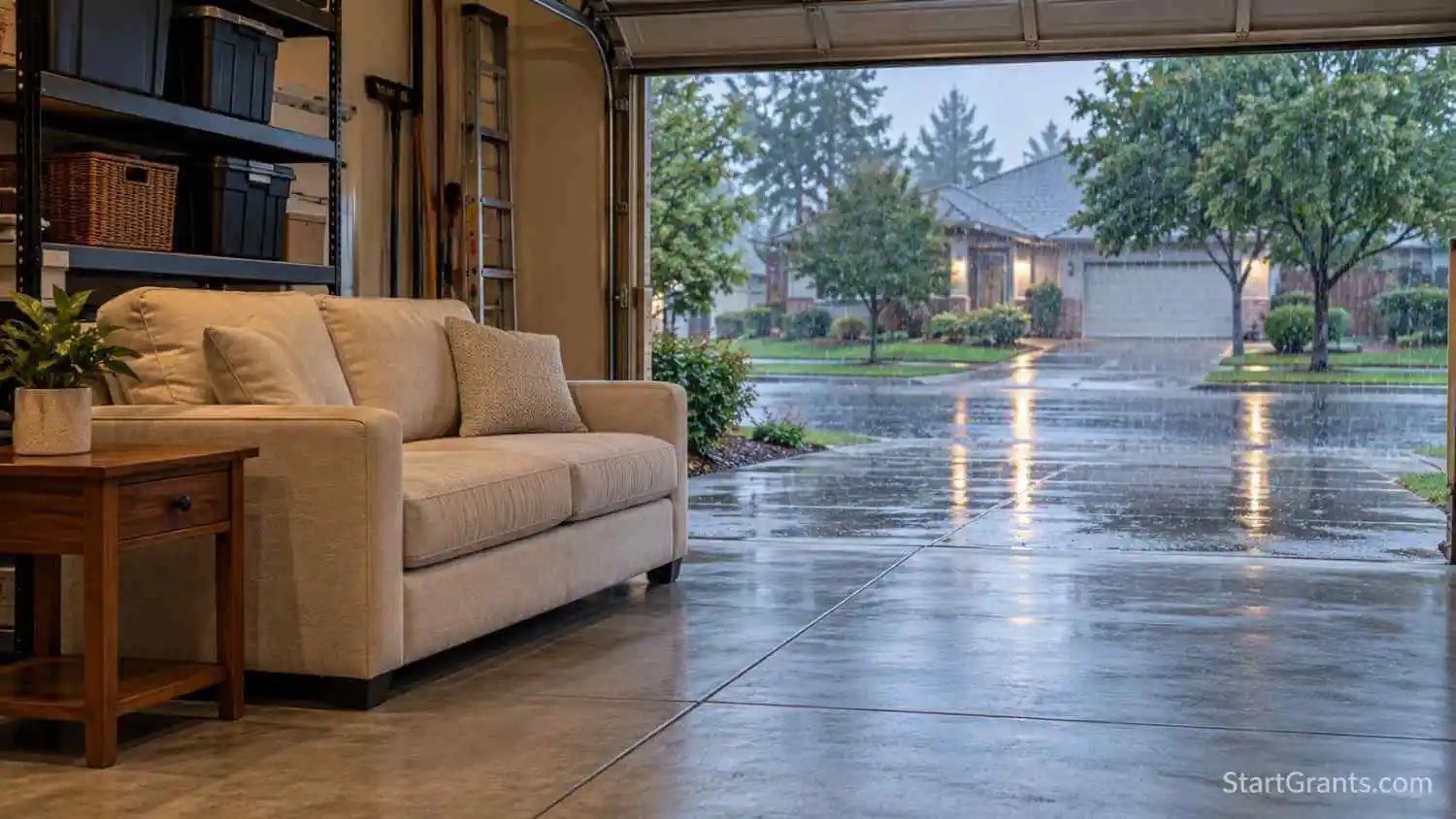
Stage furniture only where the provider has authorized collection. A dry garage or covered area may be preferable to an exposed driveway, but confirm access and whether someone must be home.
If temporary outdoor staging is unavoidable, use a suitable cover without trapping moisture or creating trip hazards. A tarp does not guarantee the piece will stay dry or remain acceptable. Avoid leaving upholstered furniture outside overnight when possible. If rain, snow, or unsafe conditions threaten the collection, contact dispatch about sheltering the items or rescheduling.
6. Handle Pickup Day and Possible Rejection
Keep your phone available and follow the confirmed instructions. Clearly distinguish approved donations from belongings you are keeping. Do not leave valuables or unrelated furniture beside the donation pile.
For an authorized unattended pickup, use the agreed labels and location and confirm how the receipt will be delivered. Do not assume an unlocked home or open garage is required; agree on access that you are comfortable providing.
When the crew arrives, confirm the provider and approved load before granting entry. Review any waiver or additional charge before signing. Keep pets and children away from the loading route and let the crew direct the lifting.
A driver may decline a piece after inspection or be unable to collect everything because of access or capacity. Ask what was declined and why, update your receipt to reflect what actually left, and keep rejected items secure while arranging an alternative. Do not pressure the crew to take unsafe or prohibited goods.
If the truck misses the appointment, contact the scheduler using the saved confirmation. Ask for a revised plan before leaving furniture outside longer. For an urgent move, compare another approved recipient, a paid hauler, or locally authorized bulky-item collection. Check reuse and disposal policies before paying.
7. Keep the Receipt and Appropriate Tax Records
A pickup receipt does not automatically create a federal tax deduction. Furniture is a noncash gift to a qualified organization. For 2026, the new deduction for non-itemizers applies to eligible cash contributions, not donated furniture. Itemizers face a charitable-contribution floor of 0.5% of adjusted gross income, alongside other limits. See IRS Publication 505 for 2026.
Record the recipient, donation date, and an accurate description of the accepted items. For a contribution of $250 or more, obtain a contemporaneous written acknowledgment with the required goods-or-services statement. A generic blank receipt may be insufficient. See IRS charitable contribution recordkeeping requirements.
You are responsible for supporting the value claimed. Use fair market value rather than the original purchase price; there is no standard dollar value for every used sofa. Furniture generally must be in good used condition or better. Photographs and comparable resale prices can support your records, but photos do not make a deduction audit-proof. IRS Publication 561 explains valuation and the narrow appraisal exception for certain items below good used condition.
If total noncash deductions for the year exceed $500, Form 8283 generally applies. A claimed deduction exceeding $5,000 for an item or a group of similar items generally requires a qualified appraisal and Section B, subject to exceptions. Similar-item grouping can span multiple recipients. Check timing and attachment requirements before donating valuable furniture; an appraisal is not universally required before the pickup itself. See the Form 8283 instructions.
Keep paid hauling invoices separate from the value of donated goods. Ask a tax professional whether any payment qualifies for a deduction rather than adding the entire service bill to the furniture’s value. The receipt should identify the actual charitable recipient, not simply the commercial collection company.
A Muslim Perspective
Donating useful furniture can be a form of sadaqah. Practical care matters: describe defects honestly, respect the recipient’s needs, and avoid shifting disposal costs onto a charity by concealing damage. Treat agreed access, collection times, and property boundaries as responsibilities to honor.
If you prefer a mosque or Muslim social-service organization, ask its local office whether it currently needs the furniture and can arrange transport. Do not assume it operates a pickup fleet. Confirm delivery instructions privately, particularly for confidential housing programs. If you intend to count the gift as zakat, consult a qualified scholar about eligibility and valuation rather than assuming a furniture donation qualifies.
Frequently Asked Questions
Will donation drivers come inside my house or apartment?
Some will and others will not. Confirm indoor access, stairs, waivers, and any added charges with the actual provider before booking. Do not assume a free pickup includes moving furniture from an upstairs room.
Do I need to be home for a furniture donation pick-up?
Follow the provider’s instructions. Some allow approved, labeled items to be collected without you present; others require attendance for access, signatures, or inspection. Confirm the arrangement and how you will receive the receipt.
How far in advance should I schedule a pickup?
Request a date as soon as your inventory and move timeline are clear. Availability varies, and no fixed lead time guarantees collection. Keep a backup plan until the appointment is confirmed.
Should I tip the pickup crew?
Ask the provider whether its staff may accept tips. A tip is not a condition of a free service unless a disclosed charge applies. Do not assume drivers’ wages or employment arrangements, and keep any tip separate from the charitable receipt.
What if rain is forecast on pickup day?
Contact dispatch about sheltered staging or rescheduling. Keep furniture dry and avoid unsafe moving in bad weather. A tarp may help temporarily, but it does not guarantee protection or acceptance.
Should I disassemble IKEA or other flat-pack furniture?
Ask the receiving organization first. Acceptance depends on its policy and the piece’s condition. Do not dismantle furniture that must stay assembled or would become unstable; keep approved hardware and instructions together.
Does a paid donation pickup guarantee a tax deduction?
No. Paying for collection does not establish that every item reached a qualified charity or that you qualify for a deduction. Keep the service invoice separate and obtain documentation for the goods actually accepted.