

Securing funding from The Home Depot requires strict alignment with their corporate philanthropic pillars.
Last Updated: May 2026 | Author: Munir Ardi
Every year, thousands of nonprofits, schools, and community organizers submit a Home Depot donation request, hoping to secure funding or materials for their local projects. The reality? The vast majority of these applications are automatically rejected within days.
Why do so many organizations fail to secure a grant? It is rarely because their cause is not noble. They fail because they treat The Home Depot like an ATM, rather than understanding the highly specific, mission-driven architecture of The Home Depot Foundation.
To successfully win a grant in 2026—whether it is a $100 in-kind donation from your local store manager, a $5,000 Community Impact Grant, or their newly launched $10,000 Path to Pro Education Grant—you must completely align your project with the corporation’s philanthropic DNA. This comprehensive guide will decode exactly how The Home Depot evaluates applications, the strict IRS eligibility requirements you must meet, and the tactical steps required to navigate their CyberGrants portal successfully.
Phase 1: Decoding The Home Depot Foundation’s Core Pillars
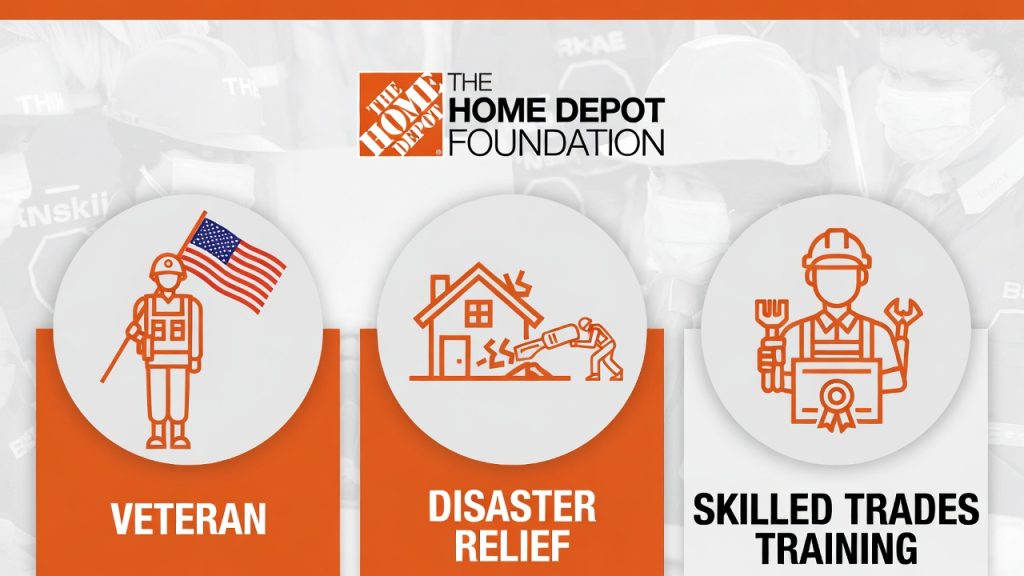
The Home Depot Foundation’s three main pillars of focus in supporting the community.
Before you even begin to draft a proposal or gather your tax documents, you must pass the most critical test: The Alignment Test. The Home Depot Foundation does not distribute funds randomly to “good causes.” Their entire philanthropic budget, which exceeds hundreds of millions of dollars, is rigidly structured around three primary pillars. If your project does not fit seamlessly into one of these three categories, your application will be denied.
Pillar 1: Veteran Causes and Housing Initiatives
This is the absolute beating heart of The Home Depot Foundation. The corporation has pledged over $750 million to veteran-related causes by 2030. Their primary objective is ending veteran homelessness and ensuring that combat-wounded veterans have accessible, safe living conditions.
- What they fund: Building new affordable housing units specifically for veterans, modifying existing homes for disabled veterans (such as building wheelchair ramps or widening doorways), and rehabilitating transitional housing facilities for homeless military personnel.
- The Strategy: If your nonprofit serves the broader homeless population, you must specifically highlight how your facility or program directly impacts military veterans to catch the Foundation’s attention.
Pillar 2: Natural Disaster Relief and Resilience
When hurricanes, wildfires, tornadoes, or severe floods devastate a region, The Home Depot is often one of the first corporate responders. They work closely with massive national organizations like the American Red Cross and Team Rubicon, but they also fund local rebuilding efforts.
- 2026 Policy Update: In May 2026, the Foundation shifted its focus heavily toward Disaster Preparedness and Community Resilience, investing an initial $5.5 million ahead of the storm season. They are prioritizing community fortification and resilient building practices, not just post-disaster cleanup.
- The Strategy: Your request will have a much higher approval rate if you articulate how the physical materials will be used to stabilize community infrastructure, create “energy hubs,” or fortify homes before the next disaster strikes, rather than just asking for cleanup supplies.
Pillar 3: Trades Training (The “Path to Pro” Initiative)
The United States is facing a massive shortage of skilled tradespeople, with an anticipated need for 4.1 million construction jobs over the next decade. To ensure the future of the home improvement industry, The Home Depot aggressively funds programs that teach youth and transitioning veterans essential trade skills.
- The 2026 Education Grant Expansion: In March 2026, the Foundation launched the new Path to Pro Education Grants. This specific program awards up to $10,000 to accredited K-12 schools, community colleges, and nonprofits.
- The Strategy: If you represent a high school or a youth development nonprofit, requesting funds to modernize a vocational training workspace or supply a “shop class” with professional-grade plumbing, carpentry, or HVAC tools is the most guaranteed way to secure funding under this pillar.
If you want to understand exactly what the grant reviewers in Atlanta are looking for, you need to see their mission in action. Watch this official short video from The Home Depot Foundation to see the types of physical, hands-on community rebuilding projects that actually win their funding approvals:
Phase 2: Mastering the Community Impact Grants
If your project aligns with the Veteran or Disaster pillars mentioned above, your primary target is the Community Impact Grant. This is the most heavily utilized program by local nonprofits across the country.
The Value and Format of the Grant
Unlike massive corporate foundation checks, the Community Impact Grant is highly localized and practical. Awards are typically given in the form of The Home Depot Gift Cards ranging from $100 up to $5,000. This ensures that the funds are spent exactly where they are intended: inside their stores, purchasing physical materials.
Strict IRS Eligibility Requirements (The 501c3 Rule)
The Home Depot does not give Community Impact Grants to individuals, neighborhood block parties, or unverified community groups. To even access the application portal, your organization must pass a strict legal threshold. You must be one of the following:
- A registered 501(c)(3) tax-exempt nonprofit organization in good standing with the IRS.
- A tax-exempt public school (K-12 or state university).
- A recognized government agency (such as a local parks and recreation department or a city fire department).
You will be required to upload your official IRS Determination Letter or a W-9 form during the application process. If your organization is awaiting its 501(c)(3) status, you cannot apply.
The Rules of Engagement: What They Will NOT Fund
The fastest way to get your application thrown into the digital trash bin is requesting funds for “operating expenses.” The Home Depot provides tools and materials, not cash for your payroll. The Community Impact Grant cannot be used for:
- Paying staff salaries or administrative overhead.
- Funding scholarships or individual sponsorships.
- Paying for advertising, marketing, or gala dinner events.
- Purchasing playground equipment (they explicitly exclude standard playgrounds).
- Funding political campaigns or lobbying efforts.
Your project budget must be a detailed itemized list of physical goods you intend to purchase from their store: lumber, paint, drywall, power tools, landscaping materials, or safety equipment. The more specific your material list, the higher your chances of approval.
Phase 3: “Local Store” Guerrilla Tactics (In-Kind Donations)
While the Community Impact Grants are processed through the corporate headquarters in Atlanta, you do not always have to fight the national crowds to get what you need. One of the best-kept secrets of The Home Depot donation request process is the power of the local Store Manager.
Every individual Home Depot location is deeply embedded in its surrounding neighborhood. To foster local goodwill, Store Managers are often given a small discretionary budget to support immediate, hyper-local needs. These are known as In-Kind Donations.
The Manager’s Discretionary Fund
Instead of a $5,000 corporate gift card, an in-kind donation from a local store usually comes in the form of physical goods, scrap materials, or small gift cards (typically ranging from $50 to $200).
- Do you need a few buckets of mis-tinted paint to cover up graffiti on a local school wall?
- Do you need leftover lumber to build raised garden beds for a community garden?
- Do you need a $100 gift card to buy trash bags and gloves for a neighborhood park cleanup?
For these micro-projects, applying through the corporate portal is overkill. You need to execute a local, face-to-face tactical approach.
How to Approach the Pro Desk or Store Manager
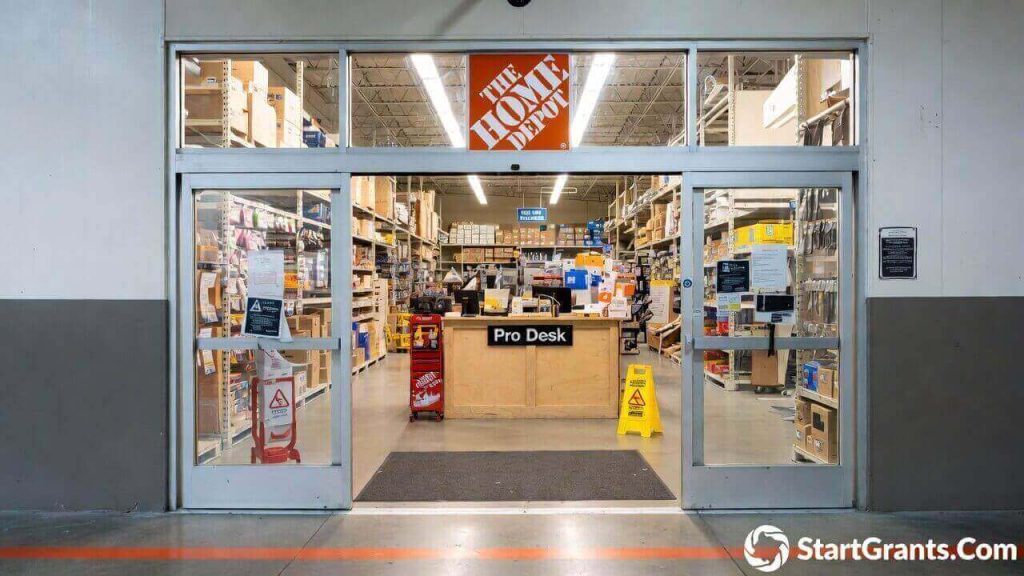
Local store managers have a discretionary budget for small, in-kind community donations.
Walking into a busy Home Depot on a Saturday morning and demanding free materials from a cashier will result in an immediate rejection. You must be strategic.
- Timing is Everything: Visit the store on a Tuesday or Wednesday morning between 9:00 AM and 11:00 AM. This is when the store is quietest, and management is actually available to speak with you.
- Find the Decision Maker: Ask the customer service desk to speak directly with the Store Manager, the Operations Manager, or the Pro Desk Supervisor.
- Bring the Arsenal: Never show up empty-handed. You must bring a physical, professionally written donation request letter printed on your organization’s official letterhead. You must also bring a physical copy of your IRS 501(c)(3) determination letter.
- Master the Pitch: If you are unsure how to structure this conversation or format your paperwork, you must study the psychology of corporate giving. Review our comprehensive master guide on how to ask businesses for donations to ensure your letter doesn’t end up in the manager’s trash bin.
Walking into a retail store and asking a manager for free materials can be intimidating if you do not have a sales background. Before you approach your local Home Depot Pro Desk, watch this excellent tutorial from a nonprofit expert on how to professionally and effectively ask corporations for sponsorships and in-kind donations without getting rejected:
Phase 4: The Veteran Housing Grants (Executive Level Funding)
If you represent a massive, established nonprofit organization (such as Habitat for Humanity, Volunteers of America, or a large regional housing authority), a $5,000 gift card is not going to cover your operational needs. For massive capital campaigns, you must target The Home Depot Foundation’s Veteran Housing Grants.
This is the heavy artillery of their philanthropic wing. These grants award funding from $100,000 up to $500,000 specifically for the physical construction, repair, or rehabilitation of housing facilities for military veterans.
Massive Capital Campaigns for Homeless Veterans
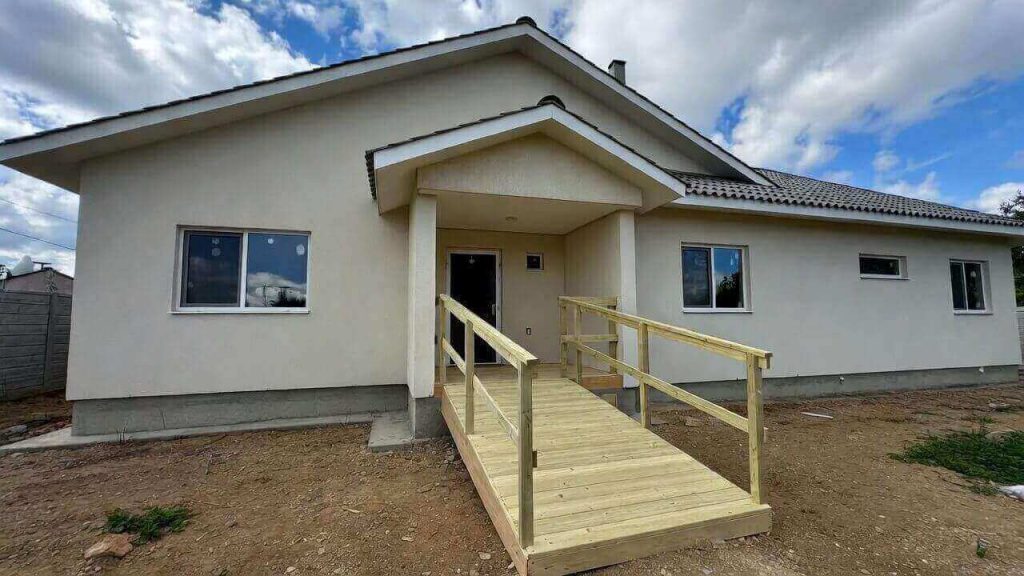
The Home Depot Foundation has pledged hundreds of millions to end veteran homelessness and improve accessibility.
The Foundation is laser-focused on eradicating veteran homelessness. They deploy massive capital to organizations that are actively building:
- Permanent Supportive Housing: Apartment complexes or tiny-home villages that provide long-term shelter and on-site wrap-around services (mental health counseling, job training) for chronically homeless veterans.
- Transitional Housing: Short-term rehabilitation facilities that help veterans transition from the streets or medical facilities back into civilian society.
- Home Repair Programs: Grants awarded to nonprofits that deploy contractors to fix the deteriorating roofs, HVAC systems, or plumbing of homes owned by senior, low-income, or disabled combat veterans.
The Stringent Requirements for Major Funding
Because of the massive financial scale of these grants, the vetting process is incredibly brutal. A simple 501(c)(3) letter is no longer enough.
- Track Record: Your organization must have a proven, multi-year track record of successfully developing and managing multi-family housing projects or executing large-scale home repair programs. Startups and newly formed charities are almost always denied.
- Matching Funds: The Home Depot Foundation rarely funds 100% of a project. They expect to see “skin in the game.” Your proposal must demonstrate that you have already secured matching funds from other corporate sponsors, local government housing bonds, or private donors. They want to be the catalyst that pushes your project across the finish line, not the sole financial pillar holding it up.
- Focus on Physical Construction: Even at the half-million-dollar level, The Home Depot restricts these funds strictly to physical construction costs, architectural planning, and building materials. You still cannot use this grant to pay the salaries of the social workers staffing the veteran facility.
Phase 5: Navigating the CyberGrants Portal (Step-by-Step)
If you are aiming for the standard Community Impact Grant (up to $5,000), the Path to Pro Education Grant (up to $10,000), or a massive Veteran Housing Grant, you cannot simply mail a letter to corporate headquarters. The Home Depot strictly processes all national philanthropic requests through a highly automated, third-party software system known as CyberGrants.
Understanding how to navigate this digital gauntlet is the difference between a funded project and an automatic rejection email.
Step 1: The Initial Eligibility Quiz
Before you can even see the application form, the CyberGrants system will subject you to a rigorous “Eligibility Quiz.” This is an automated filtering mechanism designed to immediately disqualify organizations that do not fit the Foundation’s core pillars (Veterans, Disaster Relief, Trades Training).
- The Trap: If you answer “Yes” to whether your funds will be used for a sports team, a political campaign, or general operating expenses, the system will permanently lock you out of applying for that specific cycle. You must answer these questions with absolute precision, focusing strictly on physical community improvements.
Step 2: The Project Description and Budget
If you survive the quiz, you will be granted access to the main proposal dashboard. This is where you must be exceptionally tactical. The reviewers in Atlanta read thousands of these a week; they do not have time for generic emotional appeals.
- The Narrative: Describe exactly who you are helping (e.g., “We are building a wheelchair ramp for a 75-year-old disabled Vietnam Veteran”). Be specific, be concise, and focus entirely on the physical impact of the project.
- The Itemized Budget: This is the most critical component. Do not ask for a flat “$5,000.” You must provide a granular, itemized list of materials you intend to purchase at The Home Depot. List the estimated cost of lumber, the exact number of gallons of paint, the specific power tools required, and the safety gear needed for your volunteers.
Step 3: Uploading the IRS Documentation
The final hurdle is proving your legal status. The system will require you to upload a clean, legible PDF copy of your IRS 501(c)(3) Determination Letter or your official W-9 form. Ensure the legal name on your tax documents matches the name on your CyberGrants application exactly. Any discrepancy will result in a delay or immediate denial.
Phase 6: The “Auto-Reject” Minefield
To save you the frustration of spending hours on a proposal that has zero chance of success, you must understand The Home Depot Foundation’s strict exclusionary criteria. They operate a highly disciplined philanthropic budget, and certain requests are universally blacklisted.
What The Home Depot Will Never Fund
Do not attempt to bend your project narrative to fit these categories. The CyberGrants system and the manual reviewers will catch it and flag your organization.
- Individuals or Families: The Foundation does not pay personal medical bills, cover personal rent, or fund GoFundMe campaigns for individuals, regardless of the tragedy.
- Sports Teams and Extracurriculars: They will not buy uniforms for your Little League team, fund a high school band trip, or sponsor a local marathon.
- Religious Purposes: While they frequently fund churches or faith-based nonprofits, the funds must be used for secular community service (like a food pantry renovation or a homeless shelter repair). They will not fund the construction of a sanctuary or materials for religious instruction.
- Fraternal Organizations: Sororities, fraternities, and private social clubs are universally excluded.
- Gala Dinners and Event Sponsorships: If you are looking for a corporation to buy a $5,000 table at your annual charity ball, look elsewhere. They fund hammers and nails, not hors d’oeuvres.
Phase 7: Tactical Alternatives (When Home Depot Says No)
The reality of corporate philanthropy is that even perfectly crafted proposals are often denied simply because the annual budget has been exhausted. The Home Depot Foundation receives exponentially more requests than they can possibly fund. If you receive a rejection email, you must immediately pivot your strategy to alternative targets.
The Competitor Pivot
If your project requires lumber, paint, or construction materials, The Home Depot is not the only giant in the home improvement sector. You must immediately repackage your proposal and target their direct competitors. Lowe’s, Menards, and Tractor Supply Company all operate massive, localized grant programs and in-kind donation systems that function very similarly to The Home Depot.
The General Corporate Strategy
If your project does not fit the specific “physical construction” requirements of hardware stores, you must widen your net to general retail giants. Corporations like Target, Walmart, and large-scale home goods retailers have massive philanthropic arms dedicated to broader community initiatives, such as education, family welfare, and health services.
To understand how these different corporate structures evaluate proposals and to master the art of the pivot when hardware stores say no, study our complete breakdown of the Bed Bath and Beyond donation request and corporate responsibility programs.
Conclusion: Your Tactical “Pre-Flight” Checklist for Home Depot Funding
Submitting a successful Home Depot donation request in 2026 requires abandoning the “begging” mindset and adopting a highly strategic, corporate partnership approach. You are not just asking for free materials; you are proposing a project that helps The Home Depot fulfill its philanthropic mission of supporting veterans, building community resilience after disasters, and training the next generation of tradespeople.
Before you walk into a local store or hit the “Submit” button on the CyberGrants portal, run your proposal through this final tactical checklist:
- The IRS Verification: Is your 501(c)(3) Determination Letter or W-9 physically printed out (for local stores) or scanned as a clear PDF (for the portal)?
- The Pillar Alignment: Does your project narrative explicitly mention how you are helping military veterans, recovering from a natural disaster, or teaching construction trades?
- The Granular Budget: Did you remove all requests for salaries, labor costs, and event marketing? Is your budget strictly an itemized list of hardware, lumber, paint, and safety gear?
- The Local vs. National Decision: Are you asking for less than $200? (Go to the local Store Manager). Are you asking for up to $5,000 for a general project, or up to $10,000 for a trades education program? (Use the CyberGrants portal).
By strictly aligning your community project with their core pillars and meticulously preparing your documentation, you bypass the auto-reject minefield and secure the vital funding your organization desperately needs to rebuild your community.
Do not just ask for building materials; invite their employees to volunteer. Submit your application, mention your willingness to host ‘Team Depot’, and turn a simple hardware store into your most powerful community partner.
Frequently Asked Questions (FAQs)
Q1: How much can I request from the Home Depot Community Impact Grant?
A: Eligible non-profit organizations and public schools can request up to $5,000 for standard Community Impact Grants. However, in 2026, the newly expanded Path to Pro Education Grants allow schools and nonprofits to request up to $10,000 specifically for modernizing trades training spaces and shop classes. These grants are distributed as Home Depot gift cards.
Q2: Can individuals or families apply for a Home Depot donation?
A: No. The Home Depot Foundation strictly limits its grant programs to IRS-registered 501(c)(3) non-profit organizations and tax-exempt public entities like schools, fire departments, and police stations. Individuals facing personal hardship cannot apply directly.
Q3: What is the Home Depot Veteran Housing Grant?
A: This is a specialized, large-scale funding program dedicated solely to non-profit organizations that build, repair, or rehabilitate housing facilities specifically for U.S. military veterans. These grants range from $100,000 to $500,000.
Q4: Does Home Depot sponsor youth sports teams or school trips?
A: No. The Home Depot Foundation focuses exclusively on physical community improvements. They will not fund sports uniforms, travel expenses, galas, or advertising sponsorships. If a school applies, the grant must be for a physical project like building a playground or a campus greenhouse.
Q5: Can I just ask my local Home Depot store manager for a donation?
A: While local store managers may occasionally have a very small discretionary budget for minor, immediate community needs (like a few cans of paint), all formal grant requests and anything over a nominal amount must be submitted online through the central CyberGrants corporate portal.
Q6: How long does the grant approval process take?
A: The review process is thorough. Once you submit your application through the online portal, it typically takes between four to six weeks for the Foundation to review your request and issue a final decision regarding your gift card disbursement.
Q7: What is ‘Team Depot’ and how does it help my grant application?
A: Team Depot is the company’s associate volunteer force. If your non-profit organizes a community building project (like fixing a local park) and invites local Home Depot employees to volunteer their labor, mentioning this in your application significantly increases your chances of approval.
Q8: Can mosques or Islamic non-profits apply for Home Depot grants?
A: Yes, but with strict tactical framing. The Foundation will not fund religious facilities if the materials are used solely for worship. However, if your Islamic 501(c)(3) operates a community-facing program that benefits the general public—such as building a neighborhood food pantry or a public community garden—you are fully eligible for the $5,000 grant. Frame your project around community infrastructure and Sadaqah Jariyah (continuous charity); you can learn more about structuring these types of public-benefit projects through authoritative resources on Sadaqah Jariyah and community development.
Important Disclaimer: StartGrants.com is an independent information portal. We are not a government agency and do not provide direct grants or products. Always verify the current status of programs with the providing organization.