Last Updated: | Author: Munir Ardi
If you cannot afford a safe place for your baby to sleep, a local health department, hospital, home-visiting program, or nonprofit may be able to provide a portable crib or play yard. Start with the Cribs for Kids partner locator, then call 211 and your local health department. There is no national program that guarantees a free crib to every applicant.
Availability, service areas, documents, infant age limits, and safe-sleep education requirements vary. Call before visiting. For help with other newborn essentials, see our guide to free baby supplies for low-income families.
Why a Safe Sleep Space Matters
Sudden unexpected infant death includes sudden infant death syndrome, accidental suffocation or strangulation in bed, and deaths from unknown causes. Safe-sleep practices cannot remove every risk, but they address known hazards.
The CDC recommends placing babies on their backs for every sleep, on a firm, flat surface in an appropriate crib or other approved infant sleep product. Keep pillows, blankets, bumper pads, positioners, and soft toys out of the sleep area. The CPSC safe-sleep guidance identifies cribs, bassinets, and play yards that meet federal requirements as sleep products. A couch, armchair, swing, or car seat used outside travel is not a routine sleep space.
Start With Cribs for Kids
Cribs for Kids works with local partners to help families obtain a separate safe sleep space. Its national office does not promise direct shipment to every family. The locator describes financial need, an infant age of 12 months or younger, and safe-sleep education among its criteria; a local partner will explain its current process and availability.
Find and Contact a Partner
- Enter your ZIP code in the Find a Crib map.
- Review the listed partners and any indication that they distribute a Cribette or play yard.
- Call before visiting. Ask whether equipment is available, who qualifies, and whether you need an appointment or class.
- If the partner cannot help, ask for another program serving your county.
Cribs for Kids also suggests contacting Healthy Start, Healthy Mothers Healthy Babies, a state or county health department, a prenatal or pediatric clinic, or the hospital where you will deliver when a partner is unavailable.
What Might the Program Provide?
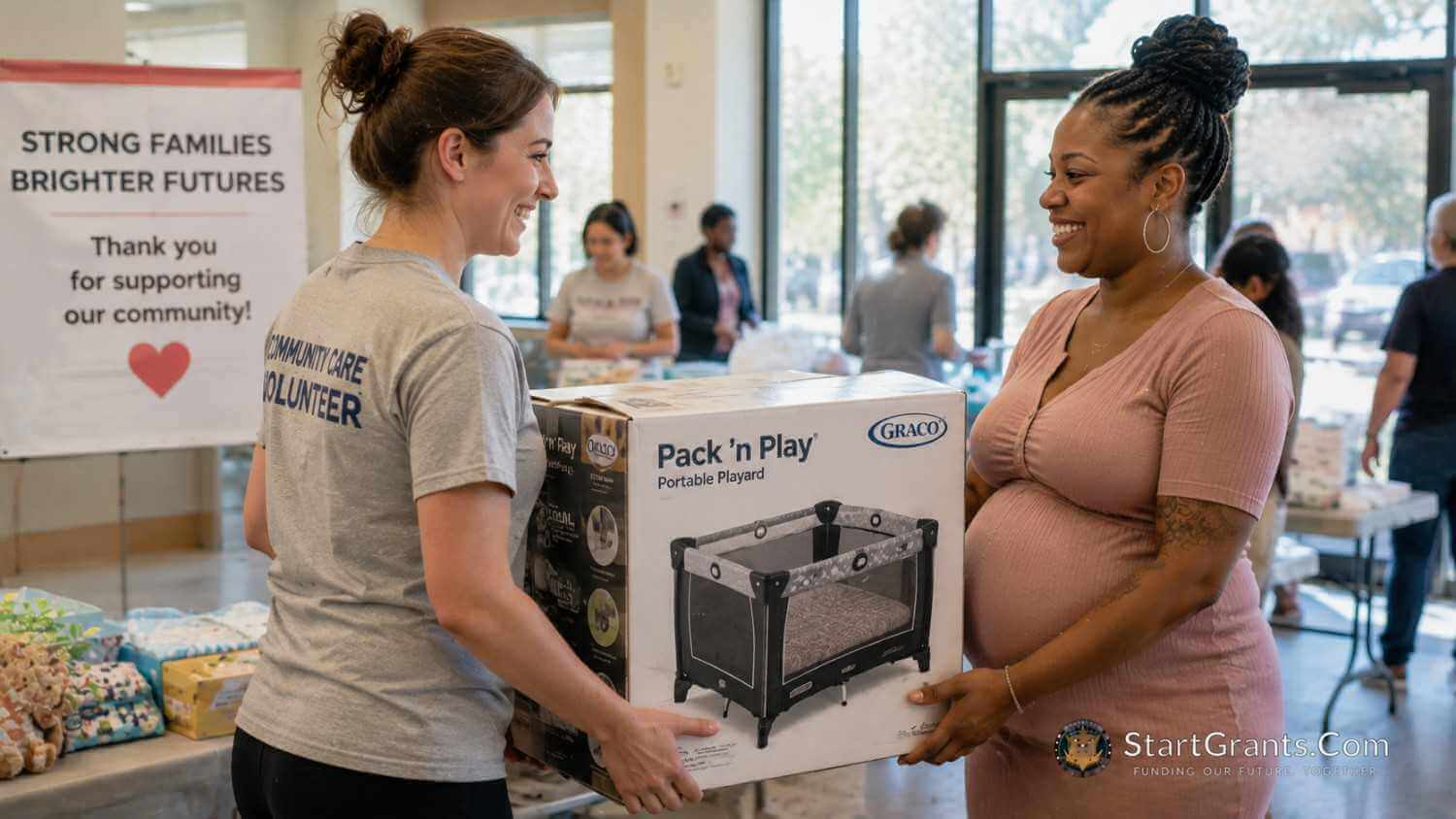
A partner may provide a Cribette portable crib, another portable crib or play yard, education, or a referral. Do not assume that every location supplies a particular brand, sheet, sleep sack, or delivery service. Follow the product’s assembly instructions and its height, weight, and developmental limits. Never add an extra mattress, foam pad, pillow, or improvised padding.
Compare Other Places to Ask
| Provider | Possible help | What to confirm |
|---|---|---|
| Cribs for Kids partner | Portable crib, safe-sleep education, or referral | Distribution, inventory, eligibility, and appointment |
| Health department or home-visiting program | Local equipment program or referral | Service area, documents, and education requirements |
| Hospital or clinic | Possible distribution or social-work referral | Availability before discharge |
| Community or faith organization | Donated equipment, gift card, or referral | Current stock and conditions |
Programs and inventory change locally. Confirm that an organization distributes a compliant sleep product before traveling.
Health Departments and Home-Visiting Programs
Search your city or county health department for “safe sleep,” “crib program,” or “maternal and child health.” Some agencies distribute portable cribs following education or a home visit; others offer referrals. The Title V Maternal and Child Health Services Block Grant supports broader state maternal and child health systems. It is not an individual entitlement to a crib.
Hospitals and Pediatric Clinics
Ask your maternity unit, social worker, prenatal clinic, or pediatric office about safe-sleep programs before delivery. Some facilities distribute equipment, while others only refer families. Our separate guide explains which baby supplies a hospital may provide; confirm your own facility’s policy.
WIC Clinics
WIC provides eligible families with supplemental foods, nutrition services, breastfeeding support, and referrals. WIC food benefits do not purchase cribs, but clinic staff may know local safe-sleep providers. Ask for a referral and see our guide to what WIC covers for newborns for the distinction between WIC benefits and community assistance.
Faith-Based Groups and Housing Programs
Community action agencies, baby closets, mosques, churches, and pregnancy-support organizations may offer a crib, gift card, or referral when resources are available. Regional Catholic Charities offices operate different services; use our Catholic Charities baby-assistance guide to plan questions for your local office.
If your family is sleeping in a vehicle, moving between temporary homes, or facing violence, explain the housing problem to a caseworker as well. Equipment alone cannot resolve an unsafe housing situation. Pregnant young people may also review maternity group homes and transitional housing options.
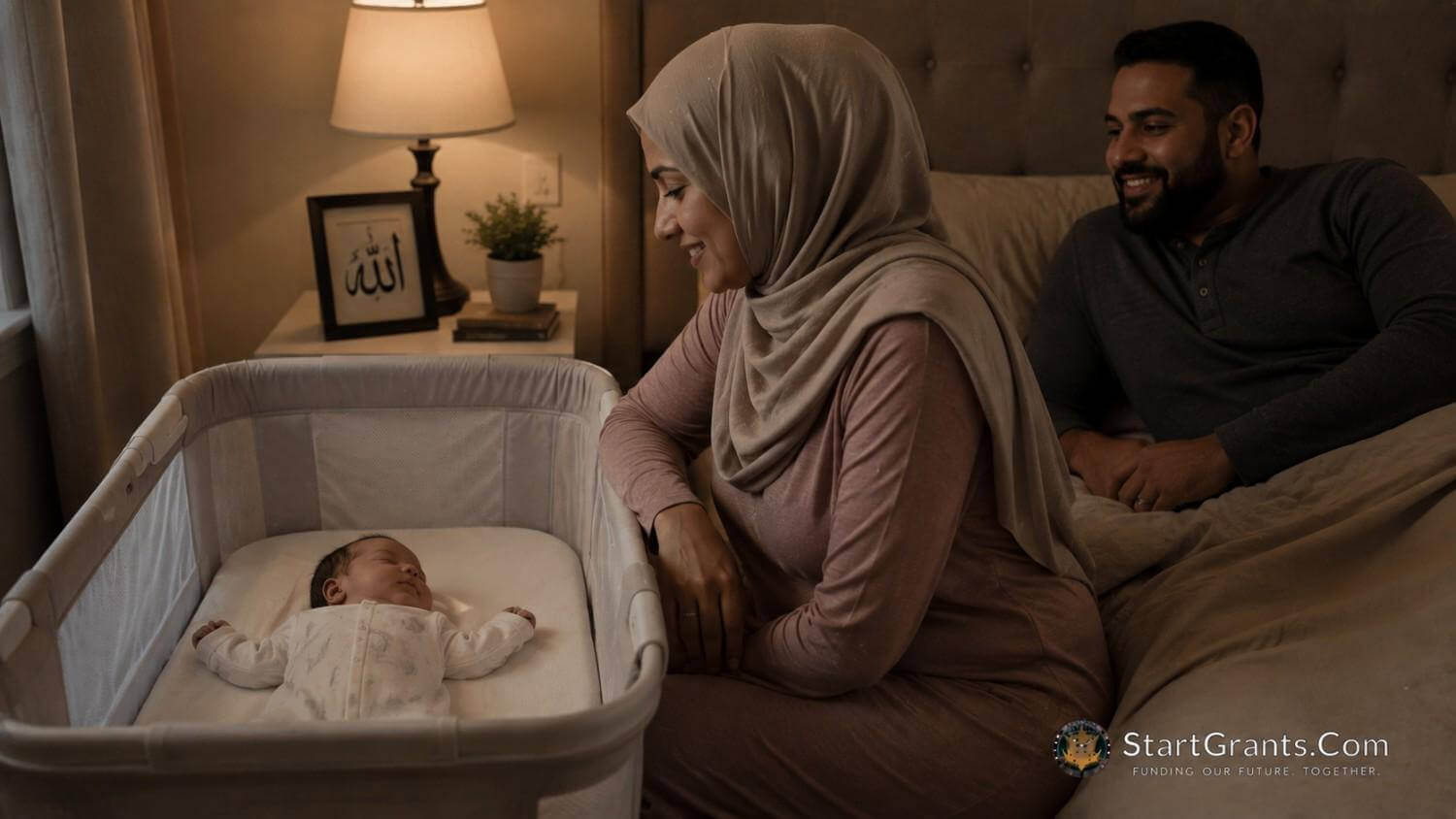
A Muslim Perspective
Protecting a baby’s health includes providing an appropriate sleep space and following current safety guidance. A donated crib is generally a gift or material assistance; a returnable equipment loan has different terms from a loan of money with interest. Ask whether an item must be returned and whether any fees or other conditions apply. This explanation is not a personal religious ruling.
Asking About Zakat or Sadaqah
A family facing hardship can ask a local mosque or Muslim social-service organization whether it offers zakat, sadaqah, or general emergency assistance for safe-sleep equipment. Eligibility depends on the recipient and the organization’s rules; owning a baby does not automatically establish zakat eligibility. Ask whether assistance is a direct purchase, gift card, general payment, or referral. A local office’s inventory should be confirmed before relying on it.
Families can also ask secular or other faith-based providers about their terms. If a condition raises a religious concern, discuss it with a qualified scholar. Seeking a safe sleep space need not wait for one particular organization.
Eligibility, Documents, and Timing
A local provider may consider residence, income, pregnancy stage, infant age, the absence of a safe sleep space, participation in another benefit program, a clinical referral, and completion of safe-sleep education. It may request identification, proof of address, pregnancy or birth documentation, income information, or a referral. These are examples, not universal rules. Ask which alternatives it accepts if you lack a document.
Begin calling when you learn that you will need help. There is no nationwide requirement to wait until a particular pregnancy week. Ask whether the program takes prenatal applications, when equipment can be collected, and whether it maintains a waitlist. Avoid planning around an unconfirmed delivery date.
Check a Donated or Secondhand Crib
A secondhand crib is not automatically unsafe, but do not use a damaged, incomplete, modified, recalled, or unidentified product. Find its manufacturer, model, and manufacture date; obtain its instructions; verify every required part; and search the CPSC recall database. Avoid drop-side cribs and older products that cannot be shown to meet current requirements. Do not replace missing safety hardware with household screws, tape, rope, or improvised brackets.
Use the correct firm, tight-fitting mattress or pad specified for that model and a fitted sheet. Do not add a second mattress. If the model or its safety status cannot be verified, ask a local program for another approved sleep product.
A Gift Box Is Not Automatically a Baby Bed
Welcome kits may contain samples, clothes, and coupons. Their cardboard containers are not automatically approved infant sleep products. Use only a product intended for infant sleep that meets the applicable CPSC requirements. Our baby boxes and welcome kits guide covers promotional items separately from safe-sleep equipment.
A car seat serves a different purpose: travel in a vehicle. If you also need one, follow our guide to finding car-seat assistance. A car seat should not replace a crib or play yard for routine sleep.
Frequently Asked Questions
Where should I look first for a free crib?
Search the Cribs for Kids Find a Crib map, call the listed partners, and then call 211. Also ask your health department, prenatal clinic, pediatric office, hospital social worker, WIC clinic, or home-visiting program for a current local referral.
Does every Cribs for Kids partner give away portable cribs?
No. A listed partner may provide equipment, safe-sleep education, or referrals. Check its listing and call to confirm current inventory and eligibility.
Do Medicaid, WIC, or SNAP enrollment automatically qualify me?
No. A local crib provider may accept benefit participation as evidence of need, but it can also set residence, pregnancy, infant-age, referral, or education requirements.
Can a family without U.S. citizenship apply?
Ask the local provider about its eligibility and documentation rules. The national locator does not establish one citizenship policy for every partner. For a personal immigration question, consult current USCIS information or a qualified immigration professional.
Is a portable crib or play yard safe for overnight sleep?
It can be when intended for infant sleep, compliant with applicable safety requirements, assembled correctly, and used within the manufacturer’s limits. Use the specified firm mattress or pad and a fitted sheet without additional padding.
Should I refuse every secondhand crib?
No, but avoid a recalled, damaged, modified, incomplete, or unidentified crib. Verify its model, manufacture date, instructions, parts, condition, and applicable safety requirements before use.
Is a cardboard baby box a safe substitute for a crib?
Do not assume so. A gift or shipping box is not automatically an approved infant sleep product. Choose a product intended for infant sleep that meets applicable safety requirements.
How early should I apply for crib assistance?
Contact programs as soon as you know you need help. A local provider may distribute equipment only at a particular pregnancy stage or after birth, so ask about its timing and waitlist.
Is receiving a free crib considered riba?
A donated crib is generally a gift, not an interest-bearing loan. Confirm whether the item is a gift or returnable equipment and review its conditions. Ask a qualified scholar about your individual circumstances if needed.
Can zakat or sadaqah help a family obtain a crib?
A family experiencing hardship may ask a mosque or Muslim charity about zakat, sadaqah, or a benevolence fund. The organization determines eligibility, payment method, and availability; assistance is not guaranteed.