
Last Updated: August 2026 | Author: Munir Ardi
There is a massive, dangerous misconception regarding service dogs in the United States. The general public often views them simply as highly obedient pets. Under federal law, this could not be further from the truth. A legitimate, fully trained service dog is legally classified as vital medical equipment, engineered to perform life-saving tasks ranging from detecting imminent seizures to guiding the blind through treacherous urban environments.
Because these animals undergo up to two years of rigorous, specialized training, acquiring a service dog is astronomically expensive. The final cost of a trained medical service dog can easily range between $15,000 and $30,000. The brutal reality of the American healthcare system is that Medicare, Medicaid, and private health insurance companies universally refuse to cover this cost. If you cannot afford to write a $30,000 check, uncovering specialized service dog grants is the only viable path to securing your medical independence.
Before executing the complex bureaucratic strategies required to acquire a service dog, you must understand the broader federal safety net that supports individuals living with severe medical limitations. Anchor your overarching strategy by reviewing our Master Pillar: Disability and Mental Health Grants.
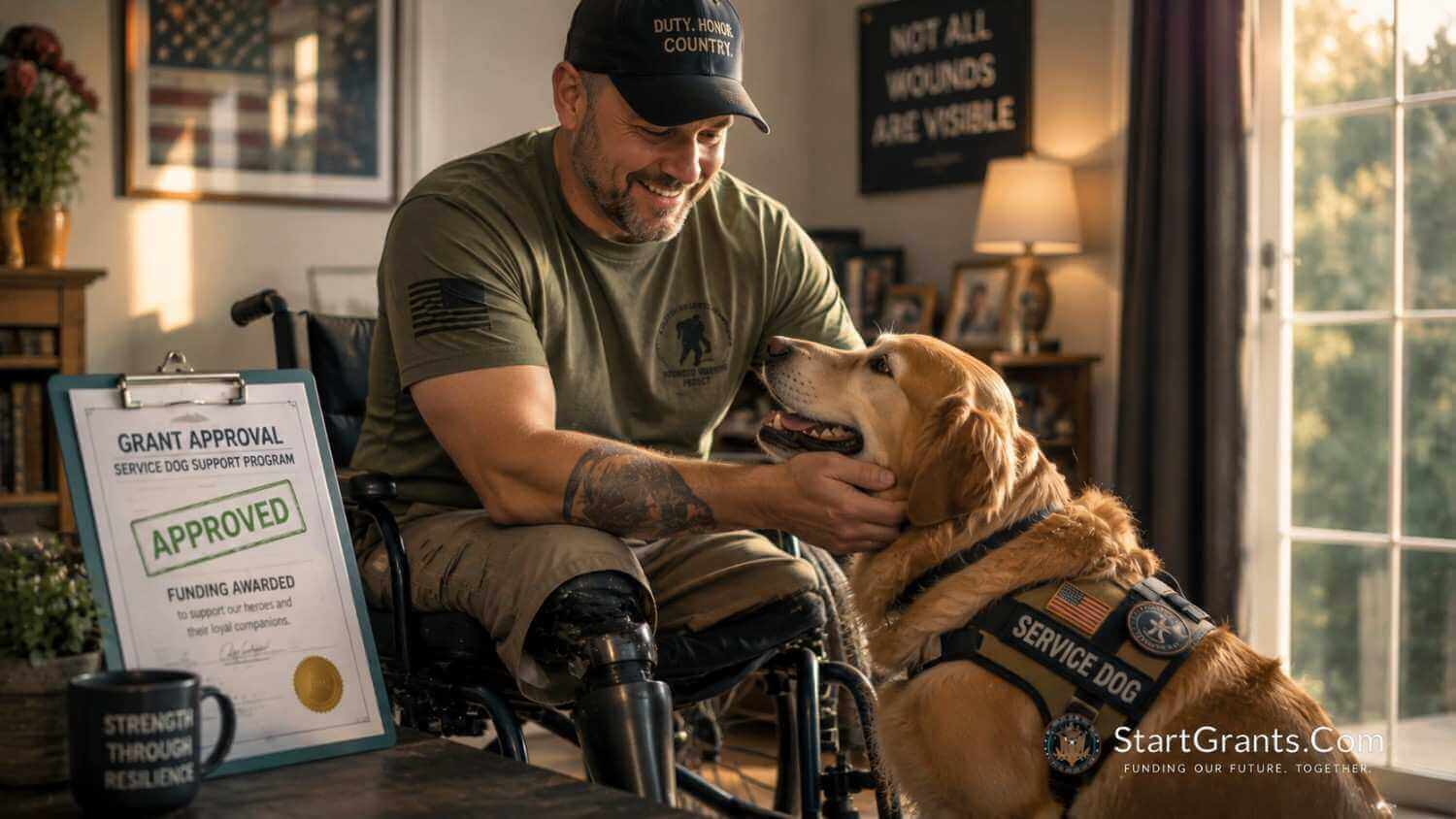
A fully trained service dog is not a pet; it is highly specialized medical equipment that can cost upwards of $30,000. For veterans and disabled individuals, securing private endowments and VA grants is the only path to affording these life-saving companions.
Phase 1: Veterans Affairs (The Federal Standard)
If your disability is connected to your military service, you have access to one of the most robust service dog funding pipelines in the country. The Department of Veterans Affairs (VA) operates a highly structured program for veterans requiring guide dogs, hearing dogs, and service dogs (specifically for mobility impairments or PTSD).
The Catch: The VA does not actually purchase the dog for you. You must acquire the dog from an agency accredited by Assistance Dogs International (ADI) or the International Guide Dog Federation (IGDF). Many of these non-profit agencies provide the dog to veterans for free using their own philanthropic grants.
The Federal Grant (Veterinary Health Benefits): Where the VA steps in is after you get the dog. The VA provides a massive, continuous grant known as “Veterinary Health Benefits.” The federal government will pay for the service dog’s comprehensive veterinary care, prescription medications, and essential hardware (like specialized harnesses) for the rest of the dog’s working life. This saves the veteran tens of thousands of dollars in maintenance costs.
Synergy Note: Veterans suffering from severe PTSD or mobility limitations who require a service dog often require physical alterations to their living space as well. To maximize your federal entitlements, you must seamlessly integrate your service dog application with housing grants. Learn how in our guide: Home Modification Grants for Disabled Veterans.
Phase 2: Children, Autism, and Seizure Alert Dogs
For parents of children with severe developmental disabilities, a service dog is often the difference between life and death. Children with severe autism are highly prone to “elopement” (bolting or wandering away into dangerous situations, like traffic or bodies of water). Autism service dogs are specifically trained in “tethering” to physically anchor the child and prevent them from running, and they are trained in search-and-rescue tracking if the child does escape.
Because the demand for pediatric service dogs is astronomical, parents must apply to massive 501(c)(3) endowments:
- 4 Paws for Ability: This agency specializes in placing service dogs with children. While they do not hand you a dog for free immediately, they operate a “fee-for-service” model where they assist you in setting up a targeted crowdfunding campaign under their non-profit umbrella to raise the $20,000+ required.
- Canine Companions: This prestigious organization provides service dogs to adults, children, and veterans with disabilities entirely free of charge. Their dogs are funded strictly by corporate and individual donations, but their waitlists can be extremely long.
To ensure you have the financial stamina to survive the waitlist and afford the travel required for the multi-week, mandatory handler training sessions, you must explore parallel pediatric funding pipelines in: How to Get Government Grants for Disabled Children.
Phase 3: Guide Dogs for the Blind
The guide dog for the visually impaired is the oldest, most recognized, and most legally protected classification of service dog in the world. The philanthropic infrastructure supporting the blind community is unparalleled.
If you suffer from profound vision loss, organizations such as Guide Dogs for the Blind (GDB) and The Seeing Eye operate massive campuses where they breed, train, and match dogs with visually impaired handlers. These organizations provide the dog, the specialized training, room and board during the training weeks, and post-graduation support 100% free of charge. The entire operation is funded through private grants and legacy endowments.
If a guide dog is not logistically viable for your specific lifestyle, or if you are waiting on an agency list, you must secure advanced technological alternatives. Navigate the federal grants available for screen readers and smart glasses in our guide: Assistive Technology for the Blind.
Phase 4: The Bureaucratic Shield (ADA vs. ESA)
The absolute fastest way to get your grant application thrown in the trash is confusing a Service Dog with an Emotional Support Animal (ESA). You must understand the strict bureaucratic definitions enforced by the Americans with Disabilities Act (ADA).
- Emotional Support Animals (ESA): Provide comfort simply by being present. They do not have specialized training. ESAs are NOT protected by the ADA. They are not allowed in restaurants, grocery stores, or non-pet-friendly hotels. Grant foundations will not give you $20,000 to buy an ESA.
- Service Dogs: Under the ADA, a service dog is individually trained to perform specific “Tasks” directly related to a person’s disability. If you suffer from epilepsy, the dog’s “Task” is alerting you 15 minutes before a seizure occurs so you can lie down safely. Because they perform a medical task, they are legally permitted to go anywhere the public is allowed to go. Your grant proposal must explicitly name the medical “Task” the dog will perform.
Pro-Tip: Bypassing the $30k Price Tag
Navigating the immense costs of a service dog requires finding legitimate, highly funded non-profit agencies that cover the expenses for low-income individuals. To discover the exact organizations currently offering fully funded or heavily subsidized service dogs, watch this incredible resource breakdown: FREE Service Dogs: 10 Agencies for Low Income—Apply Now!:
Phase 5: The Muslim Perspective (Kalbal Mu’allam, Riba, Gharar, & Zakat)
For a Muslim individual living with a severe disability in the United States, acquiring a service dog introduces profound cultural, theological, and financial challenges. In many Muslim communities, there is an intense cultural stigma surrounding dogs. Navigating this stigma while securing the necessary medical equipment requires strict adherence to Islamic jurisprudence (Shariah) and a clear understanding of Fiqh (Islamic law).
The Fiqh of Service Dogs (Kalbal Mu’allam)
A common misconception is that all interactions with dogs are strictly Haram (forbidden) in Islam. While it is true that keeping a dog purely as an indoor pet for amusement is prohibited, Islam makes explicit, undeniable exemptions for working dogs. The Qur’an (Al-Ma’idah 5:4) refers to trained hunting dogs as Kalbal Mu’allam (the trained dog).
Historically, working dogs were permitted for hunting, herding livestock, and guarding property. Today, the vast majority of contemporary Islamic scholars agree that a highly trained Medical Service Dog or Guide Dog for the blind falls directly under the exemption of a working dog. Furthermore, utilizing a service dog fulfills the supreme Shariah objective of Hifz al-Nafs (preservation of life). If a seizure-alert dog prevents a Muslim from suffering a fatal head injury, or a guide dog prevents a blind Muslim from walking into traffic, possessing that animal is a medical necessity. Muslims must bravely break the cultural stigma and prioritize their medical safety.
The Trap of CareCredit and Riba
Because service dogs cost up to $30,000, for-profit dog training academies frequently push disabled buyers to finance the animal using high-interest personal loans or medical credit cards like CareCredit.
In Islam, intentionally taking on a loan that stipulates the payment of compounding interest is explicitly Riba. Engaging in Riba is strictly Haram and eradicates the spiritual Barakah (blessing) from your household. A Muslim must adamantly refuse these predatory loans.
This reality elevates the pursuit of Service Dog Grants (Hibah) into a religious necessity. Because non-profit grants require no repayment, they are 100% Halal capital. If grants are unavailable, Muslim families must engineer Halal liquidity by utilizing savings or seeking Qard Hasan (zero-interest benevolent loans) from the community.

Overcoming cultural stigma is crucial for Muslim individuals with disabilities. In Islamic jurisprudence, a specially trained medical or guide dog (Kalbal Mu’allam) is permissible as a medical necessity. Funding these service dogs through Halal grants (Hibah) and Zakat ensures spiritual and physical independence.
Gharar and Pet Health Insurance
If you secure a $30,000 service dog, the issuing agency will legally mandate that you carry comprehensive Pet Health Insurance to protect the animal. Traditional commercial pet insurance contains Gharar (excessive uncertainty) and elements of gambling.
While standard pet insurance for hobby animals is widely considered Haram, a service dog is not a pet; it is vital medical equipment. The loss of the dog means the loss of independence and safety. Therefore, contemporary Islamic scholars apply the principle of Dharurah (legal and operational necessity). This permits the disabled Muslim to purchase the mandated commercial insurance policy to protect their life-saving medical animal, provided the intent is purely survival and compliance, not speculative profit.
Zakat Eligibility and MUHSEN
Can obligatory alms (Zakat) be used to buy a $20,000 autism service dog? Yes. If a family is financially constrained and cannot afford the specialized service dog required to keep their severely autistic child safe, they fall into the category of Al-Masakin (the needy).
It is entirely Halal and highly encouraged for the local Muslim community or Masjid to allocate Zakat funds specifically to purchase this life-saving animal for them. Organizations like MUHSEN (Muslims Understanding and Helping Special Education Needs) are pioneering disability advocacy within the U.S. Muslim community. Connecting with MUHSEN can help disabled Muslims navigate these cultural stigmas and access the community support they deserve.
Conclusion
Securing service dog grants is a grueling test of bureaucratic endurance. Because standard insurance refuses to acknowledge the medical validity of these highly trained animals, you must bypass the medical billing system entirely. By targeting elite non-profit endowments, leveraging the VA’s Veterinary Health Benefits for veterans, and explicitly understanding your federal rights under the ADA, you can acquire this life-saving companion completely debt-free.
For the Muslim navigating a severe disability, this journey requires profound theological courage. By pushing past cultural stigmas to embrace the Halal provision of the Kalbal Mu’allam (working dog), fiercely rejecting the predatory trap of Riba-laced financing in favor of Halal Hibah (grants) and Zakat, and managing insurance mandates through Dharurah, you secure both your physical independence and your absolute spiritual purity.
Frequently Asked Questions (FAQs)
Q1: Does Medicare or Medicaid pay for a service dog?
A: No. Currently, neither Medicare, Medicaid, nor standard private health insurance companies cover the cost of purchasing, training, or maintaining a service dog. They do not classify the animal as “Durable Medical Equipment,” which forces individuals to rely entirely on private 501(c)(3) grants and out-of-pocket funding.
Q2: Can I get a grant for an Emotional Support Animal (ESA)?
A: It is extremely rare. Major service dog grant foundations strictly fund dogs that are trained to perform a specific physical or medical “task” (e.g., guiding the blind, alerting to seizures, interrupting PTSD panic attacks). Because ESAs do not require specialized task training and only provide comfort, they do not qualify for these massive $20,000+ medical grants.
Q3: Does the VA give free service dogs to disabled veterans?
A: The VA does not breed or give out the dogs themselves. However, if a veteran is prescribed a service dog for a specific condition (like visual impairment or severe mobility issues) and obtains the dog from an ADI-accredited non-profit agency, the VA will pay for the dog’s veterinary care and hardware for life through the Veterinary Health Benefits program.
Q4: Is it Haram for a Muslim to keep a service dog in the house?
A: No. While keeping a dog purely as an indoor pet is Haram, Islam provides a clear exemption for working dogs (Kalbal Mu’allam). A highly trained medical service dog or guide dog is considered a medical necessity. The vast majority of Islamic scholars agree it is Halal to keep the dog inside the home to perform its life-saving duties.
Q5: Why is it Haram to use a medical credit card to buy a service dog?
A: Medical credit cards (like CareCredit) or personal loans require the borrower to pay back the principal amount plus a percentage of compounding interest over time. In Islamic finance, intentionally entering a contract that stipulates the payment of interest is classified as Riba, which is strictly forbidden (Haram). Muslims must seek Halal alternatives like Hibah (grants) or Zakat.
Disclaimer: The information provided in this article is for educational and informational purposes only. We are not a federal agency, a medical provider, an ADI-accredited training facility, or a religious fatwa council. ADA regulations, VA benefits rules, and foundation grant cycles are subject to constant legislative changes. Always consult directly with the VA for veteran benefits, an accredited service dog agency for training requirements, and a qualified Islamic scholar regarding Halal medical financing, Riba avoidance, and Fiqh rulings concerning working dogs in the home.