
Last Updated: June 2026 | Author: Munir Ardi
A stroke is the ultimate ambush. It strikes without warning, instantly altering a family’s physical and financial reality. Unlike chronic diseases that allow for financial planning, a stroke immediately thrusts the patient into the Emergency Room, followed by weeks in the Intensive Care Unit (ICU), and months of rigorous physical and speech therapy. The resulting bills can easily exceed $150,000 in the first week alone.
If you are trying to understand the broad mechanics of medical funding, ensure you start at our master command center for disease-specific financial assistance. Additionally, because the financial strategies for severe neurological trauma are closely related, families should also review our targeted guide on how to get traumatic brain injury grants to maximize your funding pool.
You cannot fight for your life if you are drowning in debt. From legally erasing your hospital bills to securing federal disability income and intensive rehab grants, here is your comprehensive “meat-and-potatoes” blueprint to finding financial help for stroke victims in 2026.
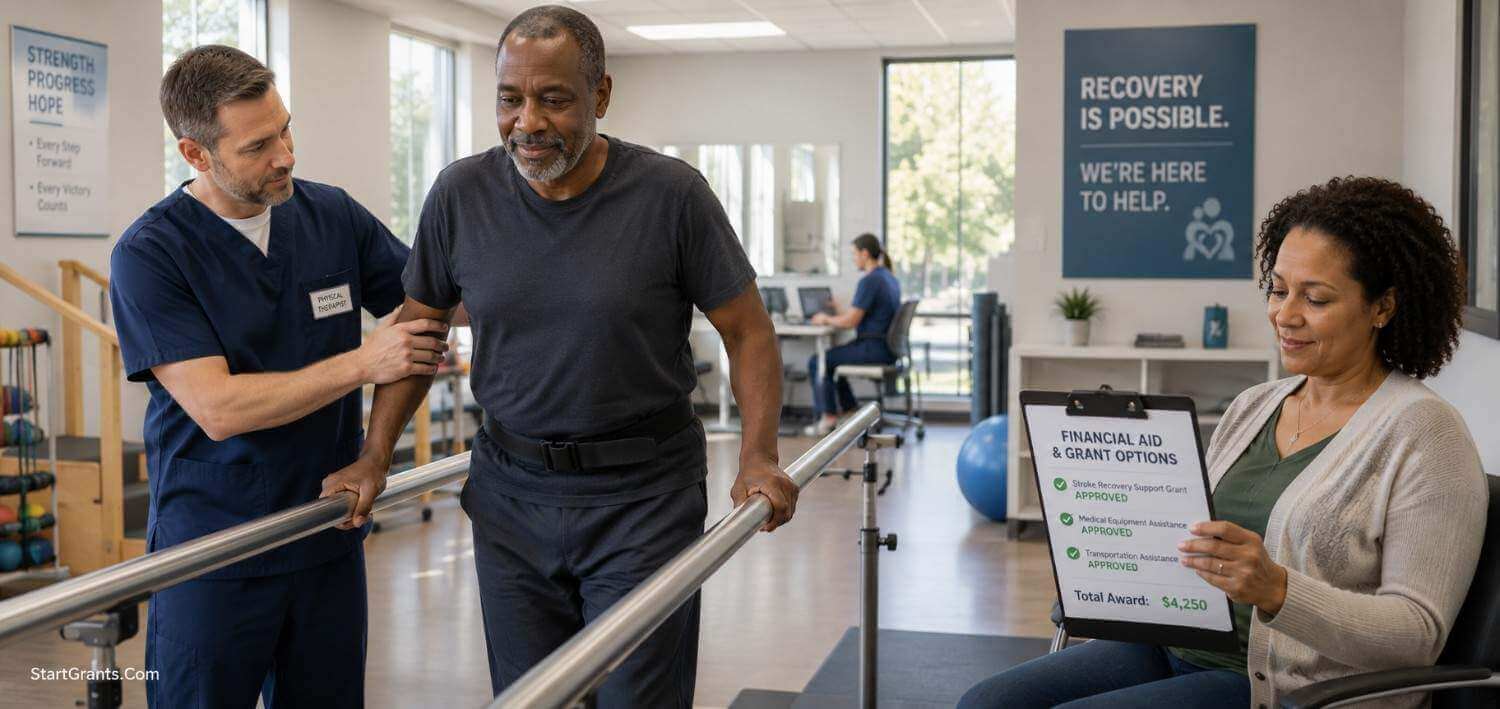
A stroke is a sudden, catastrophic financial event. Surviving the ICU is only the first step; securing grants for intensive speech and physical therapy is essential to reclaiming your independence.
Phase 1: Erasing the ICU Bill (Hospital Charity Care)
Do not panic when the $150,000 hospital bill arrives in the mail. If your stroke was treated at a non-profit 501(c)(3) hospital (which makes up nearly 60% of US hospitals), federal law mandates they offer a Financial Assistance Policy (FAP), commonly known as Charity Care.
Charity Care is not a loan; it is direct debt forgiveness. Depending on your household income (often up to 300% or 400% of the Federal Poverty Level), the hospital is legally required to reduce or completely erase your emergency room and ICU bills. You must proactively ask the billing department for the “Charity Care Application,” as they rarely volunteer this information.
Pro-Tip: Forgiving Hospital Debt
Before you empty your savings account to pay a hospital bill, watch this crucial guide on how to leverage Charity Care laws to erase medical debt:
Phase 2: Grants for Intensive Rehabilitation & Aphasia
Insurance companies are notorious for cutting off physical and speech therapy long before a stroke survivor has actually recovered. When your insurance “cap” is reached, you must turn to philanthropic foundations.
The American Stroke Association (ASA)
As a division of the American Heart Association, the ASA is the largest clearinghouse for stroke support. While they do not pay hospital bills, their local chapters often provide “Recovery Grants” to help patients afford out-of-pocket costs for continued physical therapy, occupational therapy, and specialized gym memberships designed for neuro-rehabilitation.
Aphasia-Specific Funding
If the stroke damaged the brain’s language centers, resulting in Aphasia (the inability to speak or understand language), intensive speech therapy is required. Organizations like the National Aphasia Association and local university speech clinics often offer sliding-scale fees or direct grants to cover the cost of speech-language pathologists (SLPs) and specialized communication software (like Proloquo2Go) for iPads.
Phase 3: Home Modification & Mobility Equipment
A stroke survivor returning home often finds their own house unlivable. Stairs become insurmountable, and standard bathrooms become dangerous. Medicare rarely covers the cost of home modifications.
- Rebuilding Together: This national non-profit provides free critical home repairs and accessibility modifications for low-income homeowners with disabilities. They will install wheelchair ramps, widened doorways, and roll-in showers.
- State Assistive Technology Programs: Every US state receives federal funding to run an Assistive Technology (AT) program. They offer zero-interest loans, equipment recycling (providing free refurbished wheelchairs and hospital beds), and direct grants for home safety modifications.
Phase 4: Fast-Tracking Federal Disability (SSDI)
If the stroke has left the survivor permanently unable to return to work, you must immediately apply for Social Security Disability Insurance (SSDI). Normally, SSDI takes months or years to approve. However, the Social Security Administration has a fast-track program called Compassionate Allowances (CAL).
If the stroke resulted in severe, documented neurological deficits (such as complete paralysis of an arm/leg or severe Aphasia) that persist for more than 3 months, your SSDI application can be expedited. You must ensure your neurologist clearly documents the exact severity of the impairment using the SSA’s specific “Blue Book” medical criteria (Section 11.04 for Vascular Insult to the Brain) to trigger the fast-track approval.
Phase 5: The Muslim Perspective (Qadar, Sabr, & Zakat)
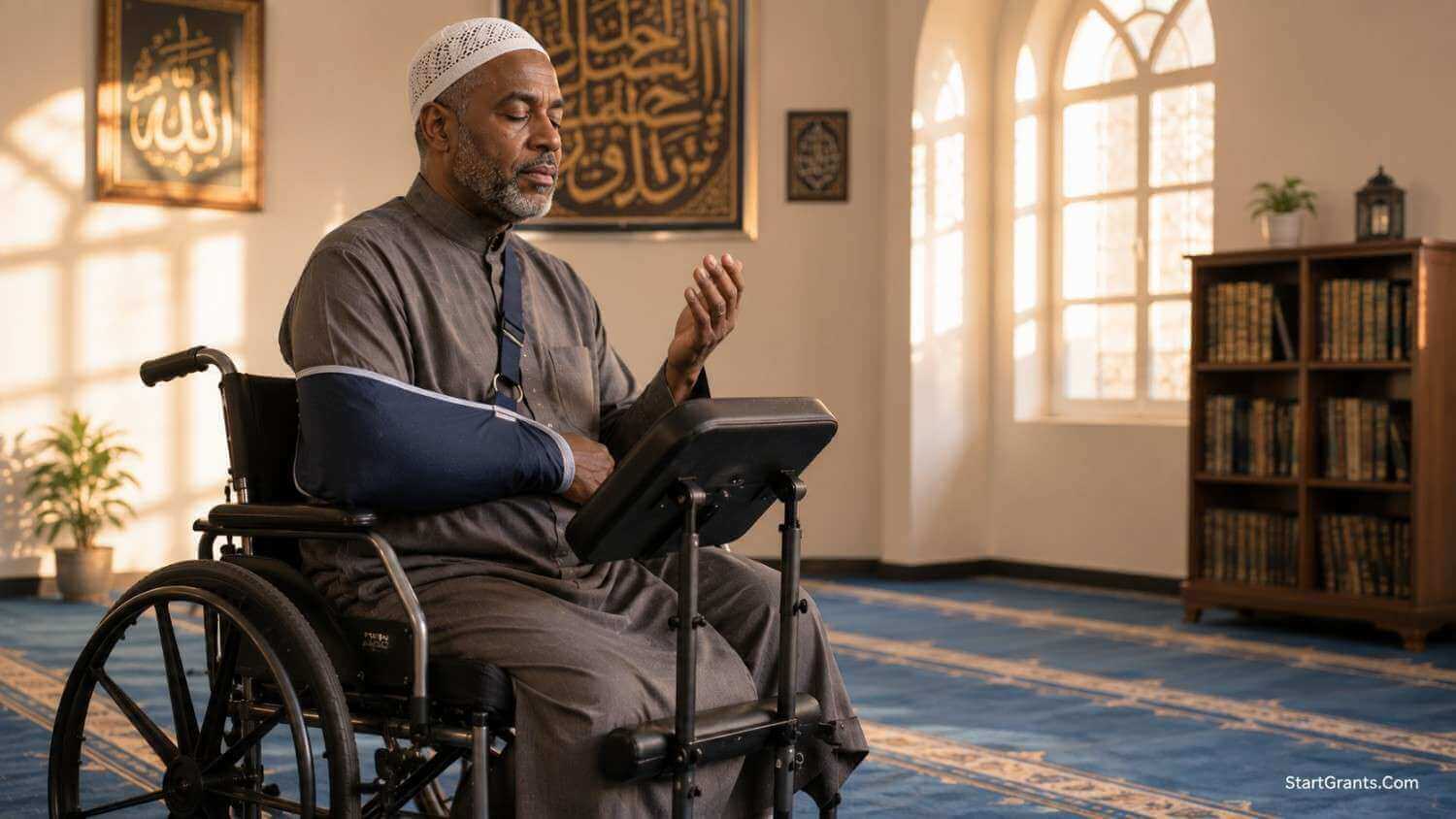
A sudden stroke tests your understanding of Qadar (Divine Decree). Facing this trauma with Sabr, while utilizing ethical Zakat funds to rebuild your life, transforms a tragedy into a profound spiritual elevation.
For a Muslim family, a sudden stroke is a profound shock to the system. It tests the core tenets of faith, specifically the belief in Qadar (Divine Decree) and the practice of Sabr (patience).
1. Redha with Qadar (Contentment with Destiny)
Islam teaches that every leaf that falls, and every illness that strikes, occurs by the will of Allah. A stroke is a severe Ibtila (test). The immediate Islamic response is Redha (contentment with Allah’s decree) and saying “Inna lillahi wa inna ilayhi raji’un.” While the physical loss of mobility or speech is devastating, accepting this trauma without anger toward the Creator preserves the patient’s immense spiritual reward and acts as Kaffarah (expiation of sins).
2. Zakat for Sudden Medical Trauma (Al-Gharimin)
The urgency to modify a home for a wheelchair or pay for intensive neuro-rehab often drives families to take out high-interest personal loans or medical credit cards. Engaging in Riba (usury) adds spiritual ruin to physical trauma.
A stroke survivor drowning in sudden medical debt perfectly fits the Zakat category of Al-Gharimin (the overwhelmed debtors). It is entirely Halal, and highly encouraged, to approach local Masjids, Muslim community centers, and Islamic relief organizations to request Zakat funds. The Muslim community has a collective obligation to catch those who fall into sudden, catastrophic medical debt, ensuring the survivor’s recovery remains free from the curse of Riba.
Conclusion: Building Your Recovery Infrastructure
Surviving a stroke proves you have the physical strength to endure the worst. Now, you must build the financial infrastructure to support your recovery.
Your immediate priority is invoking Charity Care at the hospital to stop the bleeding of ICU debt. Next, aggressively pursue SSDI if the damage is permanent, and lean on organizations like the American Stroke Association and Rebuilding Together to fund your therapy and home modifications. You do not have to bankrupt your family to reclaim your mobility.
Frequently Asked Questions (FAQs)
Q1: Does Medicare cover the cost of a wheelchair ramp after a stroke?
A: No. Original Medicare (Parts A and B) classifies wheelchair ramps and bathroom modifications as “home improvements,” not Durable Medical Equipment (DME). You must seek funding for ramps through Medicaid Waivers, the VA (if you are a veteran), or non-profits like Rebuilding Together.
Q2: My insurance stopped paying for physical therapy, but I still need it. What can I do?
A: Insurance plans often cap physical therapy at 20 or 30 visits per year. Once capped, you should ask your physical therapist if their clinic offers a “Financial Hardship Discount” or a sliding fee scale for cash-pay patients. Additionally, apply for rehabilitation grants through local chapters of the American Stroke Association.
Q3: How long do I have to apply for Hospital Charity Care?
A: Under the Affordable Care Act (ACA), 501(c)(3) non-profit hospitals must give you at least 240 days (about 8 months) from the date of your first billing statement to apply for their Financial Assistance Policy. However, it is always best to apply immediately while still in the hospital.
Q4: Can I get paid to be the family caregiver for a stroke survivor?
A: Yes, depending on your state and the survivor’s insurance. If the stroke survivor qualifies for Medicaid, many states offer “Consumer Directed Personal Assistance Programs” (CDPAP) or “Cash and Counseling” programs that allow the survivor to hire a family member as their official, paid caregiver.
Important Disclaimer: StartGrants.com is an informational directory, not a legal or medical advisor. Stroke recovery requires specialized medical supervision. Always consult a hospital financial navigator regarding Charity Care and an elder law/disability attorney for SSDI applications.