
Last Updated: | Author: Munir Ardi
To donate a car to charity in California, first choose a recipient that accepts your specific vehicle, confirm the title and any lien release, document the handoff, and submit California’s Notice of Transfer and Release of Liability (NRL) within five calendar days after transfer and delivery of possession. Keep the filing confirmation and donation records. A pickup receipt alone does not complete ownership transfer or guarantee a tax deduction. The California DMV NRL instructions and California DMV title transfer guide set out the state steps.
This page is about the California donation process, including title, smog, plates, and the NRL. Our comparison of car donation programs helps you assess charities and pickup providers. The recipient-specific pages linked below explain each organization’s own intake and mission.
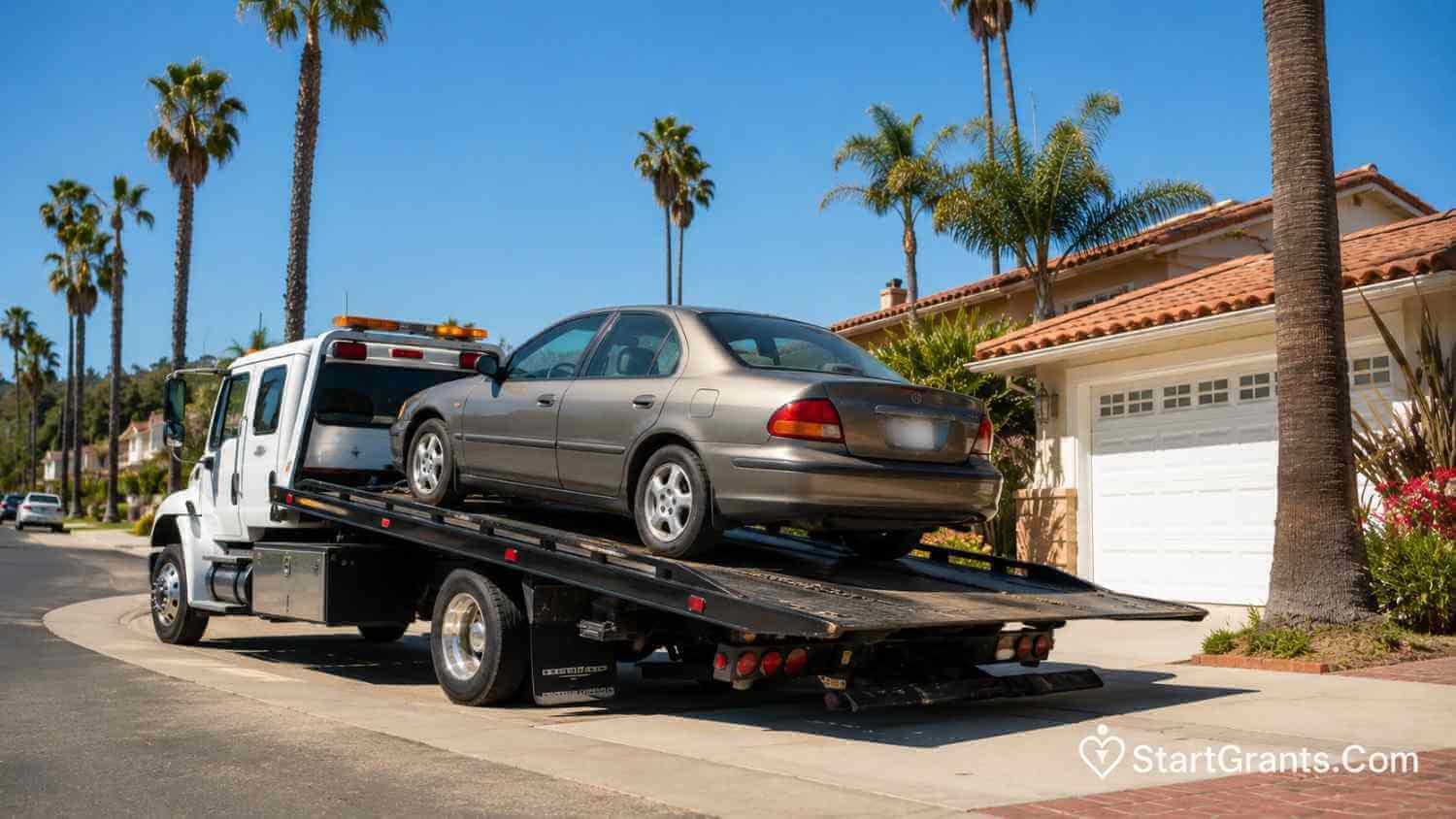
Keep transfer documents and confirm the California DMV notification after handing over your vehicle.
California Car Donation Steps at a Glance
| Stage | Donor action | Record to keep |
|---|---|---|
| Before pickup | Confirm the charity, title holders, any lien release, vehicle condition, and smog/registration questions. | Program instructions and title or REG 227 paperwork. |
| At pickup | Follow the recipient’s title-signing directions; remove personal items and verify the tow company. | Pickup receipt, transfer date, recipient details, and odometer reading. |
| Within five calendar days | File California’s NRL after title or interest and possession are transferred. | Online NRL confirmation or other proof of filing. |
| After sale or disposition | Obtain sale acknowledgment and assess federal tax documentation. | Receipt, any Form 1098-C, and tax records. |
Requirements and charity acceptance can change; use current DMV and recipient instructions for the actual transfer.
1. Choose a Charity and Confirm Its California Intake
Decide which cause you want to support, then use the organization’s own website to verify its vehicle program and whether it accepts the make, condition, and location of your car. A running car, an inaccessible non-running vehicle, and an RV require different pickup arrangements. Ask whether pickup costs anything out of pocket and whether towing and processing expenses reduce the proceeds received by the charity. If a third party handles the vehicle, identify the legal receiving charity on the donation acknowledgment.
For a California-based public media example, the KQED vehicle program FAQ say its processor considers many vehicle types, including most non-running cars that are towable and accessible, and does not charge the donor for pickup. The circumstances of your car still determine acceptance. Compare the KQED car donation process if public media is your intended beneficiary. Other missions and affiliate arrangements are described in our Salvation Army vehicle donation guide and Goodwill vehicle donation guide. These are options to assess, not guarantees that a specific California location will accept your car or direct its proceeds locally.
2. Prepare the Title, Lien Release, and Handoff
The California DMV title transfer guide list a California Certificate of Title, signatures from the seller and any lienholder, and applicable transfer documents. If your title is lost, DMV says to complete its Application for Replacement or Transfer of Title (REG 227) first. A lender shown on the record may need to release its lien. Estate, joint-owner, and out-of-state title cases can need additional documents, so ask the DMV and the recipient before arranging pickup. Never sign a title in blank or leave the buyer information to guesswork; follow the recipient’s and DMV’s instructions on where each party signs.
Before the tow, remove personal belongings, garage remotes, FasTrak and other toll tags, stored phone contacts, and home addresses from the car’s systems. Confirm the tow vendor against the appointment, note the odometer and date, keep a copy of the paperwork where permitted, and obtain a pickup receipt. Ask the recipient for its correct legal name and address for the NRL before the driver leaves.
What About California License Plates?
Do not remove every plate on the assumption that all states have the same rule. Confirm whether your standard, special, or personalized California plates stay on the vehicle or need separate handling with DMV and the recipient. Record the current plate number before handoff because the California DMV NRL instructions require it along with the last five digits of the VIN. The NRL, not the act of leaving plates attached, is the relevant state notification step.
3. File the California NRL Within Five Calendar Days
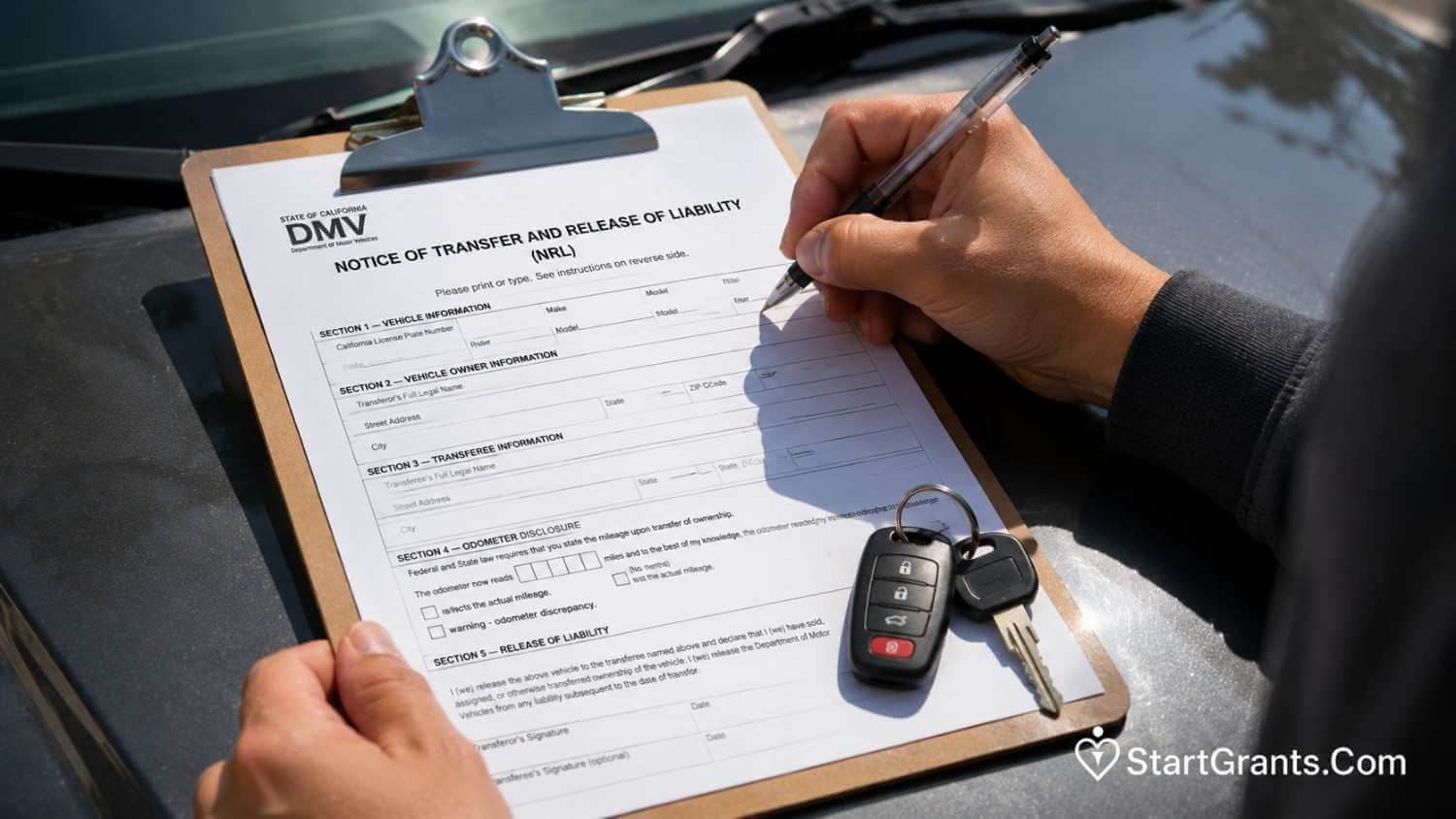
Submit the NRL and keep the DMV confirmation; this notice does not replace the title transfer.
California DMV says the seller must notify it within five calendar days after transferring title or interest and delivering possession. Filing promptly after the pickup is a sensible way to avoid missing that deadline. Complete the California DMV NRL instructions using the new owner’s name and address, plate, last five VIN digits, odometer reading, and transaction date; ask the processor who must be named as the recipient before entering the details. Save or print the confirmation.
The NRL is a notice, not the completed title transfer. DMV says the subsequent owner must finish the transfer requirements to remove the prior owner’s name from the vehicle record. If the NRL information is incomplete or disputed, a court can determine liability on the facts. Do not promise that submitting the form instantly eliminates every prior or future ticket. Ask your insurer when to cancel coverage after the transfer and state filing.
4. Can You Donate a Car That Failed a Smog Check?
Do not assume that transferring any car to a 501(c)(3) organization creates an automatic California smog exemption. The California DMV smog inspection guidance explain that smog inspections are generally required for many registrations and transfers and identify exceptions, but the general page does not establish the broad charity exception asserted in the old draft. The program’s actual transfer route, vehicle type, and exemption rules matter.
Some operators, including KQED’s KQED vehicle program FAQ, state they can accept a donation without a current smog certificate or safety inspection. That is a program intake statement; it is not a promise that every downstream title transfer or registration is exempt. Explain the emissions failure before pickup and ask the charity or processing vendor how it handles the title, any required smog documentation, and an eventual sale or dismantling. If you would rather repair or retire a failed vehicle, the California DMV smog inspection guidance point to California’s Bureau of Automotive Repair resources for emissions-related assistance; that is a separate option, not a charity grant.
5. Understand Federal Tax Treatment
Giving a vehicle to charity is a noncash gift, not cash back. A receipt or a charity’s tax-exempt label does not itself guarantee you a federal or California tax saving. Verify the exact receiving organization through the IRS Tax Exempt Organization Search and follow IRS Publication 526 for valuation, acknowledgment, and filing. Ask a qualified tax professional about any California-specific tax treatment instead of assuming the federal amount transfers automatically to a state return.
If the Charity Sells the Vehicle
For a vehicle sold for more than $500, the usual federal rule generally limits a qualified deduction to the lesser of fair market value on the donation date or gross sale proceeds. An actual $4,000 auction sale is not automatically a $4,000 deduction if the car’s fair market value was only $3,000. For a sale of $500 or less, the usual limit is the lesser of $500 or fair market value, assuming the other conditions are met. IRS rules include exceptions for certain significant intervening use or material improvements and qualifying below-market transfers to needy individuals. Do not claim an exception simply because the charity says it might keep a vehicle.
Form 1098-C and Documentation
For a deduction above $500 involving a covered vehicle, IRS Publication 526 describes the written acknowledgment and applicable Form 1098-C or equivalent statement requirements. Charity sale reporting and Form 8283 requirements depend on the facts and deduction amount. Retain the pickup receipt, final sale statement, title paperwork, NRL confirmation, and any tax forms. If the car is used for a charity’s own operations, confirm the required certification and valuation rules with the recipient and the IRS before claiming fair market value; direct use does not make every claimed amount valid.
A Muslim Perspective
Donating a usable car or its sale proceeds may be a meaningful act of voluntary sadaqah. Decide whether you want the vehicle to be sold or used directly by a community organization, then ask the recipient what it can actually do and document the arrangement. If a bank still has a lien, address its legal rights before transferring the title; donation does not discharge your loan. A car gift to a mosque or relief organization is not automatically a valid zakat payment or a source of ongoing spiritual reward. Consult a qualified scholar or zakat administrator on religious eligibility, and use the IRS Tax Exempt Organization Search to check tax deductibility of the exact legal recipient.
Final Decision
A California car donation can support a cause without a private sale, provided the recipient accepts the vehicle and its title can be lawfully transferred. The donor’s most important tasks are to verify the specific charity and processor, document the handoff, file the NRL on time, clarify smog and plate treatment for that transaction, and rely on IRS rather than promotional claims for the tax result. A donation does not automatically erase registration, lien, emissions, or tax requirements.
Frequently Asked Questions
Do I need a smog check to donate a car in California?
Do not assume that every charity transfer is exempt. California DMV lists smog requirements and specific exceptions, while some donation programs say they can accept vehicles without a current smog certificate. Ask the recipient and California DMV how your particular vehicle and transfer will be handled before signing the title.
What happens to my California license plates when I donate?
Confirm the instructions for your plate type with California DMV and the receiving program before pickup. Standard plates often stay with a vehicle, while personalized or special plates may be handled differently. Record the plate number for your Notice of Transfer and Release of Liability.
Can I donate if I lost my California title?
California DMV says a missing title requires the Application for Replacement or Transfer of Title (REG 227) as part of the transfer process. Ask DMV and the charity which documents and signatures apply, especially if a lender or co-owner is listed.
Can a charity accept a car with expired registration?
Some vehicle donation programs consider cars with expired registration, but acceptance, towing, registration obligations, and DMV processing depend on the vehicle and recipient. Disclose the status before scheduling pickup and ask the program and California DMV about any outstanding fees or steps.
How soon must I file the California release of liability?
California DMV requires a Notice of Transfer and Release of Liability within five calendar days after the title or interest and possession are transferred. Keep the confirmation. Filing the notice does not by itself transfer title or remove your name from the DMV record.
Is donating a car to a mosque or Islamic center tax-deductible?
A federal deduction may be available if the recipient qualifies to receive deductible contributions and you meet the applicable IRS rules. Verify the exact legal organization in the IRS Tax Exempt Organization Search and obtain appropriate acknowledgment. A religious affiliation alone does not guarantee a deductible vehicle donation.