Last Updated: | Author: Munir Ardi

Energy-efficiency help for homeowners is real, but there is no single federal application that awards everyone a check for windows, insulation, heating, cooling, appliances, and solar panels. In 2026, the most useful programs fall into four groups: weatherization services for income-qualified households, energy-bill and crisis assistance, state-run Home Energy Rebates, and utility or local incentives.
The right starting point depends on your income, state, housing type, current equipment, and whether the problem is an emergency. Some programs pay a contractor directly, some apply a rebate to an approved purchase, and some only help with utility bills. Approval, available measures, wait times, and household costs vary locally.
Energy-Efficiency Assistance Available in 2026
| Program | What it can provide | Main qualification | Important limit |
|---|---|---|---|
| WAP | Locally arranged weatherization services selected after an energy assessment | Income and local priority rules | Not cash; no specific measure is guaranteed |
| LIHEAP | Utility-bill, crisis, weatherization, or minor energy-related repair help, depending on the local plan | State or Tribal income and household rules | Benefits and covered emergencies vary; funds can run out |
| HOMES | Rebates for eligible whole-home projects producing at least the required energy savings | Project, savings, household, and state-program rules | Only available where a state, territory, or Tribe has launched it |
| HEEHR | Rebates for specified efficient electric equipment, electrical work, and envelope measures | Household income, equipment, project, and local rules | The headline maximum is not a guaranteed award |
| Utility/local incentives | Audits, rebates, discounts, loans, or direct-install services | Service address, customer class, product, or income | Terms differ by utility and can change during the year |
1. Weatherization Assistance Program: Services, Not a Cash Grant
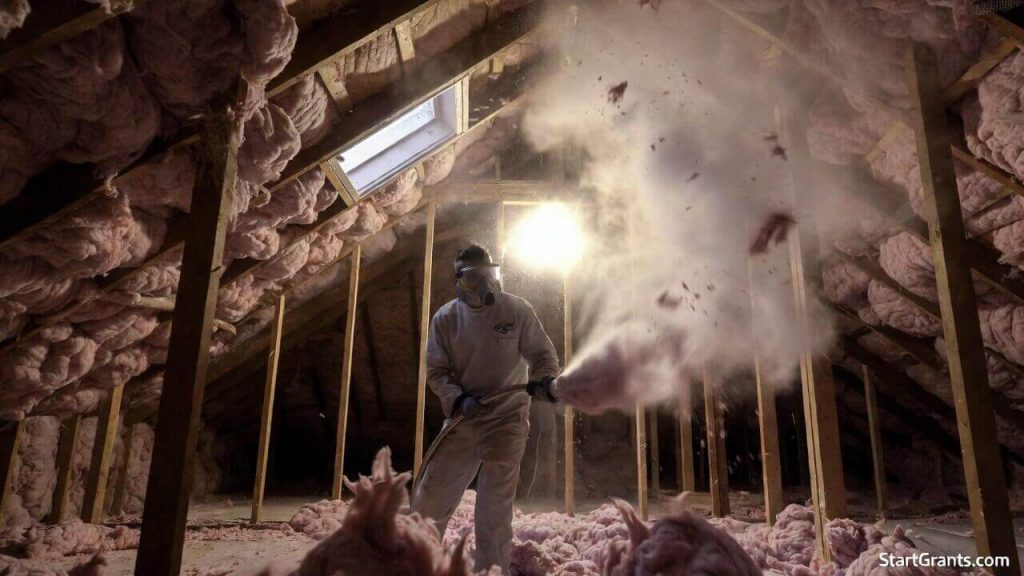
The U.S. Department of Energy’s Weatherization Assistance Program (WAP) funds states, territories, Tribes, and local organizations to make eligible homes safer and more energy efficient. The household normally does not receive grant money. After approval and selection from any waitlist, the local provider evaluates the home, develops a scope of work, arranges the work, and inspects it.
Under DOE guidelines, households at or below 200% of the federal poverty guidelines—or households receiving Supplemental Security Income—are considered income-eligible. A state or territory may instead elect to use LIHEAP’s threshold of 60% of state median income. Local rules still apply. DOE says priority is given to older adults, households with a member who has a disability, families with children, high-energy users, and households with high energy burdens.
Both homeowners and renters may apply. For a rental, the provider works with the renter and landlord to obtain permission before work begins. Income eligibility does not guarantee immediate service; eligible households may be placed on a waitlist.
What WAP may do
The audit and the program’s cost-effectiveness and health-and-safety rules determine the measures. Depending on the home and local plan, work may include:
- Air sealing, duct sealing, ventilation, and eligible insulation. See the focused guide to government help for home insulation.
- Cleaning, tuning, repairing, or replacing eligible heating and cooling equipment when the assessment supports it. Households with a failed unit can compare furnace assistance for low-income families and air-conditioning assistance options.
- Replacing an inefficient refrigerator or freezer when the local program’s testing and savings calculation justify it. Our free and discounted refrigerator guide explains other possible pathways.
- Addressing certain energy-related health and safety conditions necessary for weatherization work.
WAP is not a general remodeling program. New windows, a new roof, cosmetic work, solar panels, or complete HVAC replacement should never be promised before the provider finishes its assessment. If a major structural, moisture, electrical, or safety problem prevents the authorized energy work, the project may be deferred until that condition is resolved.
2. LIHEAP for Bills and Energy Emergencies
The HHS-funded Low Income Home Energy Assistance Program (LIHEAP) is administered by states, territories, and Tribes. It commonly helps eligible households with heating or cooling bills and energy crises. A local plan may also fund weatherization or limited energy-related home repairs.
LIHEAP is not a national promise of a new furnace, central-heating system, or air conditioner. The local administering agency decides which services are offered, what qualifies as a crisis, what documentation is required, and whether funds remain. If a heating system fails, contact the local LIHEAP office promptly and ask specifically about crisis assistance and repair or replacement policy. The separate guide to help installing or replacing central heating covers the questions to ask.
Do not wait for a grant decision if anyone faces immediate danger from extreme heat, cold, carbon monoxide, fire, or a medical emergency. Follow local emergency instructions, call 911 for an immediate threat, and use a safe temporary location when advised.
3. HOMES and HEEHR Rebates: Check Your State Before Spending

DOE’s Home Energy Rebates include two separate programs. As of this update, rebates are available only in select states, territories, and Tribal programs. The local administrator determines launch timing, eligible products, delivery method, documents, contractor rules, and reservation requirements. Confirm eligibility before ordering equipment or authorizing work.
HOMES: whole-home performance rebates
The Home Owner Managing Energy Savings (HOMES) program supports eligible whole-home projects with modeled energy savings of at least 20%. DOE states that households may receive up to $8,000. The actual amount depends on the state program, income, projected savings, project cost, and statutory limits.
A HOMES project can combine measures such as air sealing, insulation, duct work, water heating, efficient appliances, and heating or cooling. It is not a general $8,000 check. A program-approved assessment, energy model, contractor, reservation, or post-installation verification may be required. For planning a coordinated project rather than buying one product at a time, use the green-home grant and incentive guide.
HEEHR: specified electric upgrades
The current official name is the High-Efficiency Electric Home Rebate (HEEHR) Program. The frequently advertised $14,000 figure is a statutory household cap across multiple categories—not a guaranteed payment. Subject to the active local program, income rules, project cost, and product limits, the maximum categories include:
- Up to $8,000 for an eligible electric heat pump for space heating and cooling.
- Up to $4,000 for an eligible electric load service center upgrade.
- Up to $2,500 for eligible electric wiring.
- Up to $1,750 for an eligible heat-pump water heater.
- Up to $840 for an eligible electric stove, cooktop, range, oven, heat-pump clothes dryer, or qualifying combination washer-dryer.
- Up to $1,600 for eligible insulation, air sealing, and ventilation.
Generally, qualifying low-income households below 80% of area median income can receive up to 100% of eligible project costs, while households at 80% to 150% of area median income can receive up to 50%. The item caps and household cap still apply, and the local program can be more restrictive.
Major HEEHR change effective May 29, 2026
DOE’s Program Notice 26-2 removed the general fuel-switching pathway for existing homes. For state and territory HEEHR programs, HVAC and appliance rebates generally now upgrade existing electric equipment to more efficient electric equipment; eligible equipment in new construction remains allowed. An existing fossil-fuel HVAC system may remain when a heat pump is added.
The notice also requires insulation and air sealing before a HEEHR heating or cooling upgrade unless the home already meets a state-specified level approved by DOE. States may offer retail, contractor, e-commerce, direct-to-consumer, marketplace, or mail-in pathways. That flexibility is why homeowners should not assume every rebate appears instantly at a store register.
4. What Changed for Federal Tax Credits in 2026?
Many older articles and contractor advertisements still quote federal tax credits that are no longer available for new 2026 installations. The IRS says:
- The Energy Efficient Home Improvement Credit under Section 25C applied to qualifying improvements through December 31, 2025. It is not available for property placed in service in 2026.
- The Residential Clean Energy Credit under Section 25D is not available for property placed in service after December 31, 2025. A taxpayer may still be able to carry forward unused eligible 25D credit from a prior year; 25C excess credit cannot be carried forward.
Therefore, do not finance a 2026 window, heat pump, furnace, insulation, or solar project based on an assumption that a 30% federal residential credit will reduce the price later. Verify any state, utility, manufacturer, or local incentive separately. Homeowners comparing envelope options can use the energy-efficient window assistance guide, which distinguishes grants and rebates from ordinary financing.
5. Solar Assistance and the “Free Government Solar” Claim
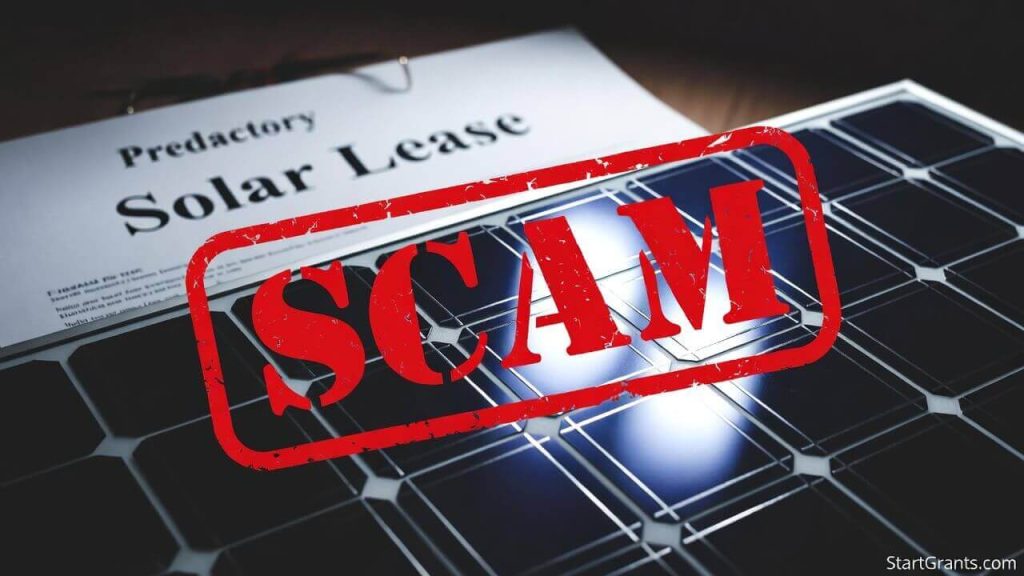
There is no universal federal program that gives every homeowner free solar panels. The federal residential solar tax credit ended for property placed in service after 2025. The EPA Office of Inspector General reports that EPA terminated Solar for All in August 2025; the former program is not an open federal household application.
Legitimate state, Tribal, utility, nonprofit, community-solar, or local programs may still exist. A zero-down solar offer can also be a private loan, lease, or power-purchase agreement. Those arrangements are not automatically fraudulent, but the homeowner may not own the system or receive the incentives, and the contract can create long-term payment, transfer, insurance, maintenance, or roof-work obligations. See the 2026 solar grant and incentive guide before signing.
The Federal Trade Commission’s consumer guidance recommends comparing bids, checking credentials, understanding who owns the equipment, and reading the entire contract. Never provide a Social Security number, bank login, or signature simply to “check eligibility,” and do not rely on a salesperson’s claim that a program is “government approved.”
6. State, Utility, Tribal, and Local Programs
Federal programs are only one layer. Electric and gas utilities, public power agencies, state energy offices, municipalities, housing agencies, and nonprofit weatherization providers may offer rebates or direct installation for thermostats, air sealing, insulation, efficient appliances, heat pumps, water heaters, or HVAC tune-ups.
Search in this order:
- Check DOE’s Energy Savings Hub for your state or territory’s Home Energy Rebate status.
- Contact your state weatherization office or the local WAP provider serving your county.
- Contact your state or Tribal LIHEAP office if you need bill or crisis assistance.
- Use the ENERGY STAR Rebate Finder, then verify the result directly with the listed provider.
- Call the utility using the phone number printed on your bill—not a number supplied by a door-to-door salesperson.
- Ask a local Community Action Agency about weatherization, utility, emergency, or housing-repair services.
Ask whether an application or rebate reservation is required before purchase, whether the contractor must be on an approved list, whether equipment must meet a particular efficiency specification, and whether the program pays the contractor or reimburses you later.
7. Do You Need a Home Energy Audit?
An audit is valuable, but the statement “you must buy an audit before applying for any energy grant” is false. WAP schedules its own professional audit after the household is selected. HOMES programs need a method to document expected whole-home savings, but the precise assessment and modeling process is set by the administrator. A utility or HEEHR equipment rebate may use product specifications or a simpler assessment instead of a full paid audit.
Before paying an auditor, ask the program:
- Is an audit required before the application, reservation, or installation?
- Must the auditor hold a specified credential or be selected from an approved list?
- Will the program provide or subsidize the audit?
- Which tests and written reports are required?
- Does an audit completed before approval remain eligible?
8. A Practical Application Roadmap
- Define the problem. Write down whether the need is a shutoff, unsafe temperature, failed equipment, high bills, drafts, moisture, or a planned whole-home upgrade.
- Collect records. Prepare identification, proof of address, household income, utility bills, ownership or lease documents, benefit letters, equipment information, and any shutoff or contractor notice. Submit only what the agency requests.
- Check WAP and LIHEAP first if income is limited. These programs do not require a household to take a consumer loan to apply.
- Confirm current rebate status. Use the official state, territory, or Tribal program—not a contractor’s screenshot or an old social-media post.
- Wait for required approval. Do not assume a purchase made before reservation or authorization will be reimbursed.
- Compare the uncovered cost. The largest advertised rebate may still leave labor, permitting, remediation, electrical, structural, or financing expenses.
- Keep copies. Save the application, approval, scope, bids, invoices, warranties, inspection results, rebate confirmation, and correspondence.
9. Financing and PACE: A Rebate Is Not the Same as Debt

A grant or rebate reduces an eligible cost under program rules. A loan must be repaid. A lease or power-purchase agreement exchanges use of equipment or electricity for contractual payments. Residential Property Assessed Clean Energy (PACE) financing is generally repaid through an assessment on the property-tax bill.
PACE rules vary by jurisdiction. It is inaccurate to call every PACE arrangement predatory, but it can affect the tax bill, mortgage obligations, refinancing, sale, and foreclosure risk. The Consumer Financial Protection Bureau’s federal residential PACE rule became effective March 1, 2026 and adds ability-to-repay and disclosure requirements. Those protections do not make a project affordable or suitable for every household.
Before accepting financing, request the cash price and financed price, annual percentage rate, total payments, fees, tax-assessment impact, lien priority, prepayment terms, equipment ownership, warranty, roof-removal terms, and home-sale transfer process. Take the agreement away from the sales meeting and obtain independent legal, housing-counseling, tax, or financial advice when the obligation is substantial.
Muslim Perspective: Using Energy Assistance Responsibly
For Muslim households, the first useful distinction is between assistance and financing. WAP services, LIHEAP benefits, and properly awarded rebates generally do not create a repayment obligation by themselves. A loan, PACE assessment, solar lease, or power-purchase agreement is a different transaction and should be reviewed on its actual terms.
- Verify the contract, not the label. Words such as “green,” “community,” “zero-cost,” “Murabaha,” or “Ijara” do not by themselves establish that a transaction matches your religious and financial requirements.
- Avoid unsupported halal or haram claims. Interest, late charges, ownership, risk allocation, penalties, and transfer terms can differ. Bring the complete agreement and payment schedule to a qualified local scholar or Islamic-finance adviser you trust.
- Apply honestly. Report household members, income, residence, and existing benefits accurately. Do not claim two federal rebates for the same qualified project when program rules prohibit combining them.
- Ask about non-debt options first. WAP, LIHEAP, utility direct-install programs, grants, and genuine rebates may reduce the need to borrow. A mosque or Muslim nonprofit may sometimes offer zakat, sadaqah, or an interest-free emergency loan, but availability, eligibility, and permissible use are local—not guaranteed.
- Protect health and family. Seeking lawful public assistance for safe heating, cooling, ventilation, and reasonable household costs is not the same as entering a debt contract. In an emergency, protect life and health first, then obtain appropriate religious and professional guidance for longer-term financial decisions.
This section offers practical questions, not a religious ruling. U.S. programs change by jurisdiction, and Islamic opinions can depend on the exact facts and contract.
Frequently Asked Questions
Is there one federal energy-efficiency grant for every homeowner?
No. Federal funding is delivered through different state, Tribal, territorial, and local programs. Eligibility, covered measures, delivery method, and availability vary.
Is the Weatherization Assistance Program a loan?
No. WAP provides approved weatherization services through local providers and does not give the household a consumer loan or cash grant. The provider selects cost-effective measures after assessing the home.
What is the WAP income limit?
DOE considers households at or below 200% of the federal poverty guidelines, or households receiving SSI, income-eligible. A state or territory may elect to use LIHEAP’s 60% of state median income criterion. Local rules and priorities still apply.
Can every household get an $8,000 heat-pump rebate?
No. Up to $8,000 is the HEEHR category cap for an eligible heat pump. The state or Tribal program must be active, and income, equipment, project cost, existing equipment, envelope, contractor, and program rules determine eligibility and value.
Does HEEHR guarantee $14,000 per household?
No. $14,000 is a household cap across eligible categories. A household receives only the approved amounts for qualifying work, subject to income percentage, item limits, project cost, local program design, and available funds.
Can I claim a federal home-energy tax credit for a new 2026 installation?
The IRS says the Energy Efficient Home Improvement Credit and Residential Clean Energy Credit ended for new property placed in service after December 31, 2025. A prior-year unused Residential Clean Energy Credit may be carried forward when IRS rules allow.
Can renters apply for energy-efficiency assistance?
Yes. Renters may apply for WAP, and some rebate or utility programs can serve rental housing. Landlord permission, building-level eligibility, equipment ownership, or other local conditions may apply.
Will LIHEAP replace my failed furnace or air conditioner?
Possibly, but not everywhere. LIHEAP crisis and repair policies are set locally, funding is limited, and the agency decides which conditions and services qualify.
Does the government give homeowners free solar panels?
There is no universal federal free-solar program for homeowners. Verify any local program and determine whether a zero-upfront offer is actually a loan, lease, power-purchase agreement, or other contract.
Are energy grants and rebates automatically acceptable for every Muslim household?
Not automatically. Assistance without repayment is different from financing, but award conditions and contracts should still be reviewed. For loans, PACE, leases, or power-purchase agreements, seek qualified religious and professional advice based on the complete terms.
Important disclaimer: StartGrants.com is an independent information portal. It is not a government agency, grant administrator, lender, tax adviser, law firm, utility, or religious authority. Programs, funding, eligibility, deadlines, and benefits can change and vary by location. Verify all information with the responsible government agency or program administrator before applying, purchasing equipment, or signing a contract. This article does not provide legal, tax, financial, medical, or religious advice.