
Last Updated: | Author: Munir Ardi
There is no single federal application called a “free home insulation grant.” What does exist is a collection of legitimate programs that may pay all or part of an insulation and air-sealing project. The best route depends on household income, location, property type, and whether a local program has launched and still has funds.
For a broader overview of heating, cooling, appliance, and building-envelope assistance, begin with our energy-efficiency grants for homeowners guide. This page focuses specifically on attic, wall, floor, crawlspace, and air-sealing assistance.
Government Insulation Assistance Available in 2026
The word grant is often used loosely online. Some programs provide a no-cost service, some reduce an approved invoice, and others reimburse part of a completed project. A loan or property-tax assessment is not a grant, even when it is marketed beside a government program.
| Program | Who it may help | How insulation assistance works | Main limitation |
|---|---|---|---|
| Weatherization Assistance Program (WAP) | Income-eligible homeowners and renters | An energy audit determines cost-effective services, which may include insulation and air sealing | Approval does not guarantee a specific measure; local waitlists are common |
| High-Efficiency Electric Home Rebates (HEEHR) | Eligible low- and moderate-income households in participating jurisdictions | Local programs may provide up to $1,600 for eligible insulation, air sealing, and ventilation costs | Only available where a state, territory, or Tribe has launched the relevant program |
| Home Owner Managing Energy Savings (HOMES) | Households completing a qualifying whole-home retrofit | A rebate is tied to modeled or measured energy savings; insulation may be part of the project | Insulation alone does not automatically produce the maximum rebate |
| Utility, state, and local rebates | Customers within a particular service area | May provide a contractor discount, reimbursement, or fixed incentive | Amounts, specifications, approved contractors, and deadlines vary |
1. Weatherization Assistance Program: The Best Starting Point for Low-Income Households
The U.S. Department of Energy’s Weatherization Assistance Program application guide says households at or below 200% of the federal poverty guidelines—or households receiving Supplemental Security Income—are considered eligible under DOE guidelines. A state or territory may instead elect to use the Low Income Home Energy Assistance Program standard of 60% of state median income.
Meeting an income guideline is only the first step. The local provider verifies documents, applies state rules and priorities, and may place eligible applicants on a waitlist. DOE notes that priority may be given to older adults, households containing a person with a disability, families with children, high-energy users, and households with a high energy burden.
What WAP may do
WAP is a service program, not a check for the applicant to spend. A local energy audit or approved priority list determines which measures are appropriate and cost-effective. Depending on the home, approved work may include:
- attic, wall, floor, foundation, or duct insulation;
- air sealing around accessible leakage points;
- duct sealing and selected heating-system work;
- ventilation or limited health-and-safety measures required for weatherization; and
- other measures authorized by the state’s approved plan.
WAP does not promise a complete renovation or every improvement requested by the resident. A home can also be deferred when major roof, structural, moisture, electrical, sanitation, or hazardous-material problems make the work unsafe. Some grantees have Weatherization Readiness Funds to address qualifying barriers, but this is not a nationwide entitlement.
Can renters and manufactured-home residents apply?
Yes. DOE states that both homeowners and renters may apply. For a rental home, the weatherization provider works with the tenant and landlord to obtain permission before work begins. Manufactured homes can also be weatherized when they meet the local program’s eligibility and technical requirements. Do not assume that landlord permission alone guarantees approval or a particular scope of work.
Why Air Sealing and Insulation Are Usually Evaluated Together
Insulation slows heat flow; air sealing reduces uncontrolled air movement through gaps and penetrations. In many houses, treating one without examining the other leaves avoidable drafts or creates moisture and ventilation problems.
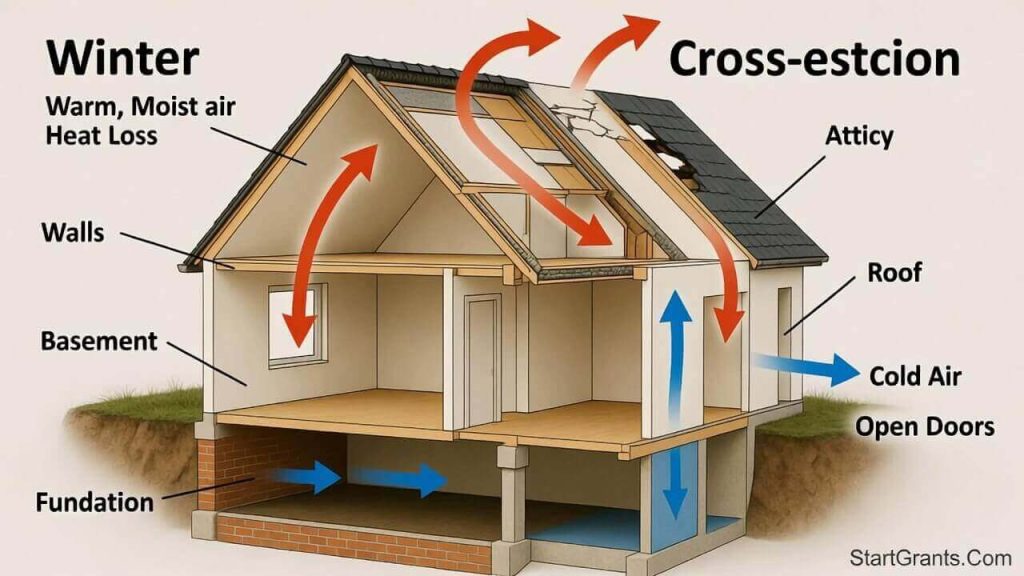
ENERGY STAR estimates that typical homeowners may save an average of about 15% on heating and cooling costs—about 11% of total energy costs—by air sealing and adding insulation in attics, floors over crawlspaces, and accessible basement rim joists. That is an estimate for typical homes, not a guaranteed bill reduction. Existing insulation, climate, fuel prices, house size, installation quality, and occupant behavior all affect the result.
A home assessment should examine the building envelope before expensive equipment is sized or replaced. Readers planning a broader project can compare insulation with assistance for energy-efficient windows. If the heating system is also unsafe or failing, review the separate guides to central-heating assistance and a free or subsidized furnace. Each program must still approve its own work.
2. High-Efficiency Electric Home Rebates: Up to $1,600, but Not Everywhere
In May 2026, DOE changed the program name from Home Electrification and Appliance Rebates to High-Efficiency Electric Home Rebates (HEEHR). Under the federal framework, eligible insulation, air sealing, and ventilation work may receive a rebate of up to $1,600.
The statutory cost-sharing rules generally allow a qualifying household below 80% of area median income to receive up to 100% of eligible project costs, while a qualifying household from 80% through 150% of area median income may receive up to 50%, subject to the category cap. Households above 150% of area median income are not eligible for HEEHR. A state, territory, or Tribal program may impose additional documentation, product, contractor, inspection, and reservation requirements.
Availability is the most important catch. DOE’s Home Energy Rebates status page says rebates are available only in select jurisdictions. Check the official state, territory, or Tribal page—not a contractor advertisement—before spending money.
The 2026 DOE guidance also gives administrators flexibility to offer eligible insulation and air-sealing projects incrementally and to permit certain DIY pathways where local code allows. That flexibility does not mean every local program accepts DIY work. Obtain written confirmation first, including which materials, receipts, photos, inspections, and purchase dates are required.
3. HOMES Rebates: A Whole-Home Project, Not an Insulation Coupon
The other federal rebate pathway is the Home Owner Managing Energy Savings (HOMES) Rebate Program, renamed by DOE in May 2026. Under the federal framework, a qualifying whole-home retrofit may receive up to $4,000, or up to $8,000 for a qualifying low-income project. States and territories have substantial authority over delivery, approved models, contractors, quality assurance, and consumer documentation.
Insulation can be part of a HOMES project, but buying rolls of fiberglass does not automatically earn a rebate. The project must follow the local modeled- or measured-savings pathway. A program may require an energy model, utility-use data, a blower-door test, installation verification, or post-project documentation. The exact combination is not uniform nationwide.
Do not ask a contractor to “make the numbers reach 35%.” Ask the program-approved assessor to identify a realistic scope and expected savings. If the scope changes, the rebate may change or disappear. Also request written guidance before trying to combine HOMES, HEEHR, WAP, utility money, or another federal benefit for the same expense.
For projects combining insulation with other sustainability measures, see our guide to government grants for green homes.
4. Utility, State, and Local Insulation Rebates
Electric and gas utilities may offer rebates for attic insulation, air sealing, duct sealing, or a whole-home energy assessment. There is no national “per-inch” or “per-square-foot” payment. One utility may require a participating contractor and pre-inspection; another may reimburse eligible materials; a neighboring utility may offer nothing.
Use the ENERGY STAR Rebate Finder as a starting point, then confirm the offer directly with the sponsoring utility or government agency. Verify:
- that your address and utility account qualify;
- whether approval is required before purchase or installation;
- minimum existing and final R-values;
- approved materials and contractor requirements;
- whether air sealing, ventilation, or testing is mandatory;
- the eligible-cost definition and maximum rebate; and
- the funding deadline and required proof of completion.
If inadequate insulation is making a medically vulnerable household unsafe during hot weather, insulation funding may still take time. Our guide to air-conditioning financial assistance covers separate emergency and equipment pathways.
The Federal Insulation Tax Credit Ended After 2025
Many pages still say homeowners can claim 30% of insulation and air-sealing material costs, up to the $1,200 annual §25C limit. That information applies only to qualifying improvements placed in service from January 1, 2023, through December 31, 2025.
The IRS Energy Efficient Home Improvement Credit page, updated in April 2026, confirms that the credit is not available for a new insulation project placed in service in 2026. A taxpayer filing or amending a return for qualifying 2025 work should use the rules and Form 5695 applicable to that tax year and consult a qualified tax professional when necessary.
Do not phase a new project across 2026 and later years expecting a fresh $1,200 credit each year. That strategy was valid only while the expanded credit remained in effect.
R-Value, Climate Zones, and Material Selection
R-value measures resistance to heat flow. A higher number indicates greater insulating resistance, but the correct target depends on climate, the location in the building, existing insulation, assembly type, moisture behavior, local code, and the funding program’s specifications.
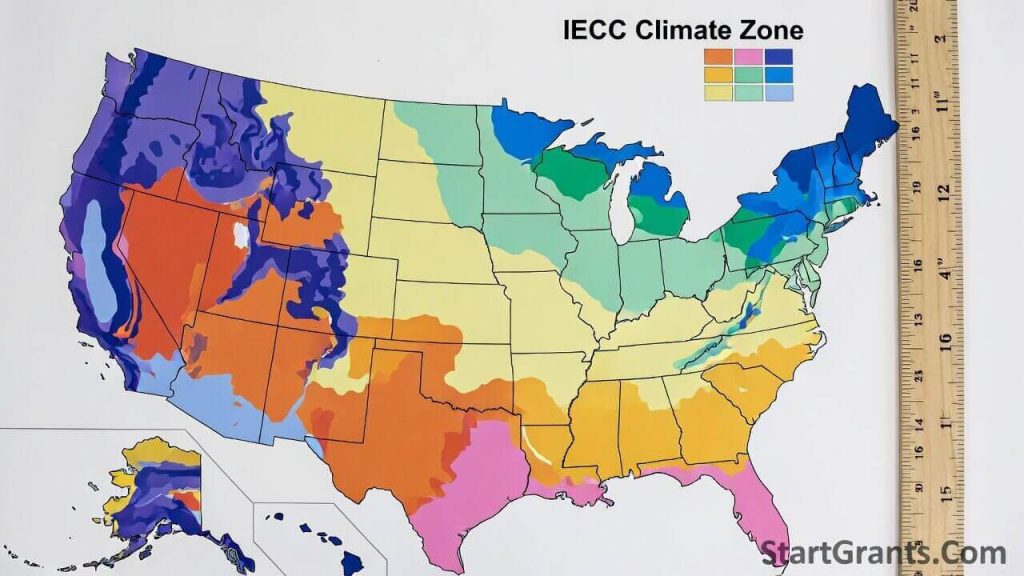
ENERGY STAR’s recommended insulation R-value table provides useful planning ranges for attics, floors, basements, and crawlspaces. Treat these as guidance, not a substitute for the program specification or local building code.
Fiberglass, cellulose, mineral wool, rigid foam, and spray foam can all work in appropriate assemblies. The best option is not simply the material with the largest R-value per inch. Consider fire safety, moisture control, air permeability, installation access, pest conditions, existing wiring, ventilation, cost, and whether the program has an approved-material list.
Safety Comes Before Insulation
Covering a roof leak, wet wood, unsafe wiring, or contaminated material with new insulation can make the home harder and more expensive to repair. A qualified assessment should identify barriers before the project begins.
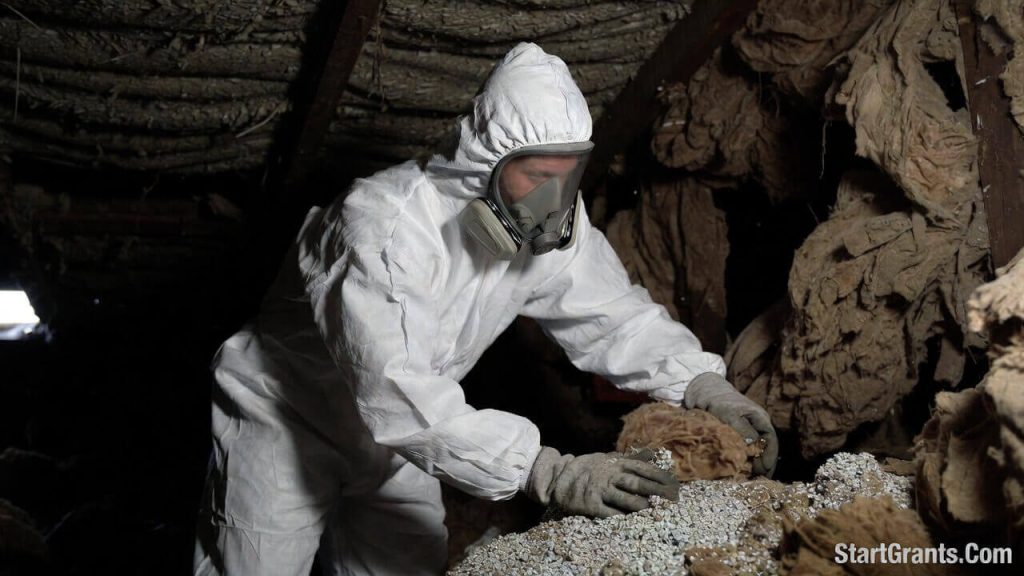
Vermiculite and possible asbestos
If the attic contains loose, pebble-like vermiculite, do not sample, sweep, vacuum, move, or insulate over it yourself. The EPA recommends assuming vermiculite insulation may contain asbestos and leaving it undisturbed.
WAP does not automatically provide complete asbestos removal. Depending on the grantee’s approved health-and-safety plan and available Weatherization Readiness Funds, the agency may inspect, arrange limited testing or containment, fund an eligible readiness measure, defer the home, or require remediation by a qualified professional before weatherization continues.
Moisture, combustion, electrical, and ventilation concerns
- Repair active roof, plumbing, drainage, or condensation problems before covering the area.
- Do not seal around chimneys, flues, heat-producing fixtures, or combustion appliances with an inappropriate product.
- Have unsafe or obsolete wiring evaluated before burying it under insulation.
- Air sealing can change building pressure and ventilation needs; combustion-safety and ventilation testing may be required.
- Use licensed or appropriately certified professionals when hazardous materials, structural damage, or code-regulated work is involved.
A Practical Application Plan
- Start with the official administrator. Contact the state WAP administrator, state energy office, Tribal program, or utility—not a social-media lead form.
- Ask whether funds are currently open. Confirm income rules, service territory, property eligibility, waitlist, and whether renters or manufactured homes are accepted.
- Do not purchase first. Ask whether the program requires pre-approval, an approved contractor, an audit, existing-condition photographs, or a rebate reservation.
- Disclose hazards immediately. Tell the assessor about vermiculite, roof leaks, mold-like growth, combustion appliances, old wiring, or previous water damage.
- Get a written scope. It should identify the areas treated, existing and final R-values, air-sealing work, ventilation or safety measures, materials, labor, warranty, inspections, and the amount the program will pay.
- Separate the rebate from financing. Ask for the cash price, rebate amount, and financed balance as three separate figures.
- Keep the complete file. Save the approval, audit, contract, invoices, product documentation, photographs, inspection results, and proof of payment.
Muslim Perspective: Funding Insulation Without Hidden Riba
For Muslim households, an essential first distinction is between assistance and financing. WAP services and genuine grants or rebates normally do not require the household to repay principal with interest. A contractor loan, home-equity product, credit card, or PACE assessment is a financing contract even if the salesperson presents it as part of a “government energy program.”
Because Islamic rulings can depend on the exact contract, necessity, fees, ownership structure, and personal circumstances, StartGrants does not declare every rebate automatically halal or every financing arrangement automatically haram. A household seeking a religious ruling should show the complete agreement—not only the advertisement—to a trusted scholar or qualified Islamic-finance adviser.
A practical checklist for Muslim homeowners
- Prioritize non-repayable help. Apply first for WAP, authorized HEEHR or HOMES rebates, utility incentives, and legitimate local grants.
- Ask whether repayment is required. Confirm the principal, interest rate or APR, fees, late charges, term, security interest, lien position, and total of payments.
- Do not confuse PACE with a grant. The Consumer Financial Protection Bureau explains that PACE is repaid with interest and fees through a property-tax assessment, sometimes for 5, 10, or 20 years.
- Request an unbundled cash quote. A written cash price makes it easier to see whether a “special payment” hides financing costs or an inflated project price.
- Ask about community assistance. A local mosque, zakat committee, Islamic charity, or community action agency may consider essential home-safety needs. Eligibility and the permissible use of zakat or sadaqah vary, so ask the local administrator rather than assuming coverage.
- Protect privacy respectfully. If the household prefers a specific appointment arrangement or wants another adult present during an attic inspection, request it in advance. The auditor must still receive safe access to every area required by the program.
Avoid categorical marketing promises such as “100% halal government insulation.” The safest approach is to verify the source of the funds, repayment obligation, contract, and contractor before work begins.
Frequently Asked Questions
Is there a federal grant that gives homeowners cash for insulation?
No universal federal program gives every homeowner a cash check for insulation. WAP provides approved weatherization services, while HEEHR, HOMES, and local programs may reduce or reimburse eligible project costs where available.
Can WAP provide free attic or wall insulation?
It can, but insulation is not guaranteed. The local provider must approve the household and property, then an energy audit or approved priority list determines the cost-effective measures.
What are the WAP income limits in 2026?
Under DOE guidelines, households at or below 200% of the federal poverty guidelines or receiving Supplemental Security Income are considered eligible. A state or territory may elect to use the LIHEAP standard of 60% of state median income and may apply additional rules and priorities.
Can renters receive insulation assistance?
Yes. Renters may apply for WAP, but the provider must work with the landlord to obtain permission before work begins. State rebate programs may have separate rental-property rules.
Is the 30% federal insulation tax credit available in 2026?
No. The Energy Efficient Home Improvement Credit applies to qualifying improvements placed in service through December 31, 2025. It is not available for new insulation installed in 2026.
Can a 2026 state rebate pay up to $1,600 for insulation?
Possibly. HEEHR allows up to $1,600 for eligible insulation, air sealing, and ventilation, but only for qualifying households in a participating jurisdiction. Income, project-cost, product, contractor, and documentation rules apply.
Does HOMES automatically pay $8,000 for attic insulation?
No. HOMES is a whole-home performance rebate. The maximum amount depends on household income, the participating jurisdiction, eligible project costs, and verified modeled or measured energy savings.
Will WAP remove asbestos or mold before insulating?
Not automatically. A local agency may use approved health-and-safety or Weatherization Readiness resources for certain barriers, but it may instead defer the home or require qualified remediation before weatherization.
What should I do before signing an insulation contract?
Verify the program with the official administrator, obtain written pre-approval, confirm contractor eligibility, disclose hazards, compare the cash price with any financing, and make sure the contract identifies the scope, R-values, rebate, remaining balance, and cancellation terms.
Final Takeaway
The most realistic path to low-cost or no-cost insulation in 2026 is not a generic “government grant” form. It is a local process: apply through WAP if income-eligible, check whether HEEHR or HOMES has launched in your jurisdiction, search your utility’s current rebates, and obtain approval before buying anything.
Insulation can improve comfort and reduce energy waste, but it must be matched to the home and installed safely. Treat promises of automatic approval, guaranteed savings, a compulsory blower-door “hack,” or a new $1,200 federal tax credit as warning signs.