Last Updated: | Author: Munir Ardi
There is no nationwide federal grant that automatically installs free solar panels on an individual homeowner’s roof. State, tribal, local, utility, and nonprofit programs may still provide rebates, grants, discounted systems, or community-solar savings, but availability depends heavily on location and funding.
The federal landscape also changed substantially: the Residential Clean Energy Credit is not available for solar property placed in service after December 31, 2025, and the Environmental Protection Agency terminated the federal Solar for All program in August 2025. Any 2026 sales proposal that assumes a new 30% residential federal solar credit needs to be recalculated.
Solar is only one part of a home-energy plan. Before requesting quotes, review our energy-efficiency assistance guide for homeowners to compare upgrades that may lower consumption before a solar system is sized.
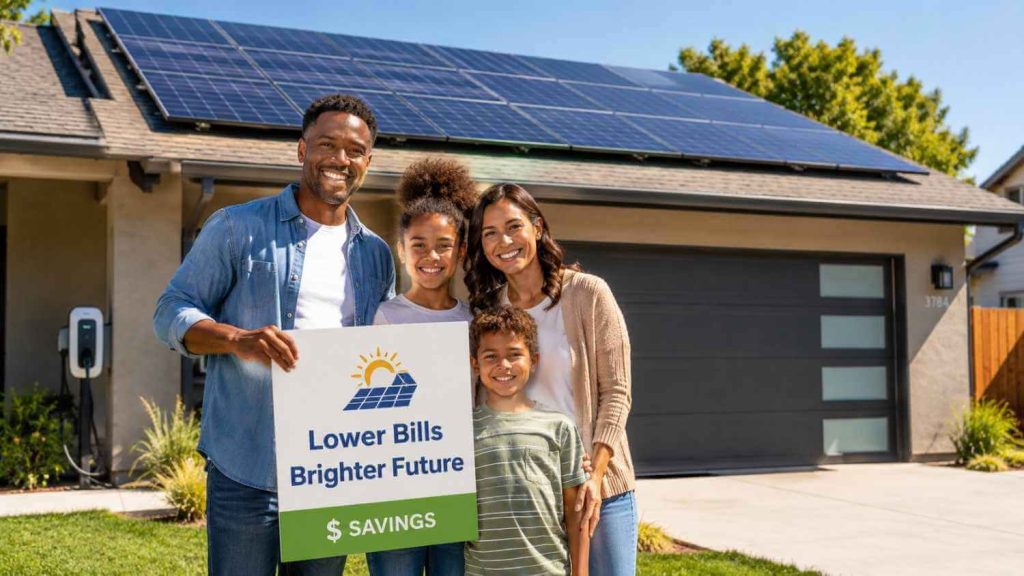
Are Government Grants for Solar Panels Available in 2026?
Sometimes, but there is no single application that works nationwide. Most federal solar funding goes to governments, tribes, utilities, businesses, farms, nonprofit organizations, affordable-housing owners, or program administrators rather than directly to an ordinary homeowner.
| Type of help | What it may do | What to verify |
|---|---|---|
| State, tribal, local, or utility grant/rebate | Reduce upfront cost or provide an income-qualified installation | Current funding, income rules, approved installers, ownership, and preapproval |
| Community solar | Provide utility-bill credits without panels on the subscriber’s roof | Subscription charge, promised savings, cancellation, credit treatment, and availability |
| WAP-approved solar | Allow solar photovoltaics in limited weatherization programs | Whether the state’s WAP plan has DOE approval and whether the home qualifies |
| SRECs or performance incentives | Create payments or credits tied to renewable generation | System registration, certificate ownership, market price, term, and fees |
| Loan, lease, PPA, or PACE financing | Reduce or eliminate upfront payment | It is financing or a service contract—not a grant—and creates long-term obligations |
The 30% Residential Solar Tax Credit Ended for New 2026 Systems
The old article’s largest factual error was treating the 30% Residential Clean Energy Credit as available for a solar system installed in 2026. The IRS now states that the credit covered qualified property installed from 2022 through December 31, 2025, and is not available for property placed in service after that date.
That means a homeowner generally cannot claim a new residential credit merely because a contract was signed, deposit was paid, or panels were ordered during 2025. The placed-in-service and expenditure rules are tax-specific, so households with a project crossing the deadline should use the current IRS instructions and consult a qualified tax professional.
What about a system installed by the end of 2025?
A taxpayer with eligible residential solar property from a qualifying year may still need to claim the credit on the correct tax return or amend a return. The residential credit was nonrefundable, but the IRS says excess unused credit can be carried forward to reduce tax owed in future years. Keep contracts, invoices, proof of payment, equipment information, permits, and the placed-in-service date.
A carryforward from an eligible earlier system is different from earning a new credit for a 2026 installation. Do not let a salesperson include a 30% 2026 federal homeowner credit in the payback calculation.
Commercial credits are not a replacement homeowner benefit
Businesses and qualifying project owners may have access to separate clean-electricity tax provisions. Their existence does not revive the expired Residential Clean Energy Credit for an individual household. In a lease or power purchase agreement, the company that owns the system may evaluate business incentives; the homeowner should focus on the actual contract price and bill savings offered.
Solar for All Was Terminated—Check Local Programs Separately
EPA announced Solar for All awards in 2024, but the EPA Office of Inspector General reported in January 2026 that the federal program was terminated in August 2025. As of this update, the former award list should not be presented as a currently available source of rooftop-solar funding.
Some state, city, utility, tribal, or nonprofit programs use “Solar for All” or similar language but have different funding. A local program may continue independently, be redesigned, be paused, or stop accepting applications. Verify its current status directly with the named administrator rather than assuming that an older press release remains valid.
Where Solar Assistance May Still Exist
1. State, tribal, city, county, and utility programs
Local incentives may include upfront rebates, income-qualified installations, production-based payments, low-cost financing, property-tax treatment, sales-tax exemptions, or community solar. These benefits are not uniform, and some exhaust annual funding quickly.
The Department of Energy’s Homeowner’s Guide to Solar points consumers to the Database of State Incentives for Renewables and Efficiency (DSIRE). Use a directory to identify possibilities, then confirm every amount, deadline, equipment rule, and application with the state energy office, public utility commission, local government, tribe, or utility that actually administers it.
2. Net metering and renewable-energy certificates
Net metering or another export-compensation tariff may credit electricity sent to the grid. It is not a grant, and the credit may be lower than the retail rate. Rules can include system-size limits, time-of-use rates, non-bypassable charges, annual true-ups, or different treatment for new customers.
In some jurisdictions, an eligible solar system can generate Solar Renewable Energy Certificates or similar clean-energy credits. Registration may be required before production qualifies. Certificate prices can change, aggregators may charge fees, and a lease or PPA may assign the certificates to the system owner. Do not describe SRECs as guaranteed monthly income.
3. Community solar for renters and unsuitable roofs
Community solar lets multiple customers subscribe to a shared project and receive credits through their electric bills. It can help renters, apartment residents, and homeowners whose roofs are shaded or unsuitable. The Department of Energy notes that enrollment depends on state policy and available projects.
Before enrolling, compare the subscription payment with the expected utility credit, and review escalation, cancellation, moving, credit-check, late-payment, and low-income-discount terms. A “no panels required” offer is not automatically a government benefit.
4. Solar through the Weatherization Assistance Program
Federal law allows renewable-energy systems within WAP, and DOE has published an approval process for solar photovoltaics. In practice, WAP solar is limited. The state or tribal grantee must have an approved approach, the household and dwelling must qualify, and the project must comply with program cost, technical, installation, and savings requirements.
WAP should not be advertised as a nationwide free-solar program. Local providers often prioritize cost-effective envelope, health-and-safety, heating, cooling, and baseload measures. Ask the official weatherization provider whether solar is included in its current plan; do not assume the applicant can choose panels instead of the measures identified by the energy assessment.
5. USDA REAP for farms and rural small businesses
The Rural Energy for America Program can support renewable-energy projects, including solar, but it is not a general residential grant. Eligible applicants are agricultural producers and rural small businesses that meet program requirements. A homeowner does not qualify simply because the house is in a rural area. The current USDA program page states that REAP grant applications are not being accepted at this time; guaranteed-loan applications may still be submitted. Applicants should confirm status with their State Rural Development Energy Coordinator before preparing an application.
A farm or home-based business should confirm applicant eligibility, business use, site eligibility, application timing, matching funds, environmental review, and whether costs incurred before approval are ineligible. Do not use a residential solar salesperson as the sole source of USDA guidance.
“Free Solar” Usually Means a Lease, PPA, or Financing Offer
The Federal Trade Commission warns that the federal government does not install solar systems in homes for free. “No upfront cost” may describe a legitimate financing structure, but it does not mean no cost.
Solar lease
The solar company owns the equipment, while the customer pays a scheduled lease amount. The payment may rise under an annual escalator. Confirm maintenance, performance guarantees, insurance, roof removal and reinstallation, buyout, home-sale transfer, and end-of-term responsibilities.
Power purchase agreement
The provider owns the system and sells the generated electricity to the customer at the contract rate. A PPA can sometimes reduce electricity expense, but savings depend on solar production, the PPA rate and escalator, utility rates, fixed charges, and export-credit rules. The customer generally does not receive ownership-based incentives.
Solar loan
The homeowner owns the system but repays principal, interest, and possible fees. The Consumer Financial Protection Bureau has warned that dealer fees can inflate financed prices while making an advertised interest rate appear lower. Request both the cash price and total financed price.
PACE financing
Property Assessed Clean Energy financing, where available, is repaid through a property-tax assessment. It is not a grant. The obligation can affect taxes, mortgage requirements, refinancing, foreclosure risk, and a future sale. Federal consumer-credit protections for residential PACE transactions changed effective March 1, 2026, but state availability and contract terms still require careful review.
Prepare the Home Before Requesting Solar Quotes
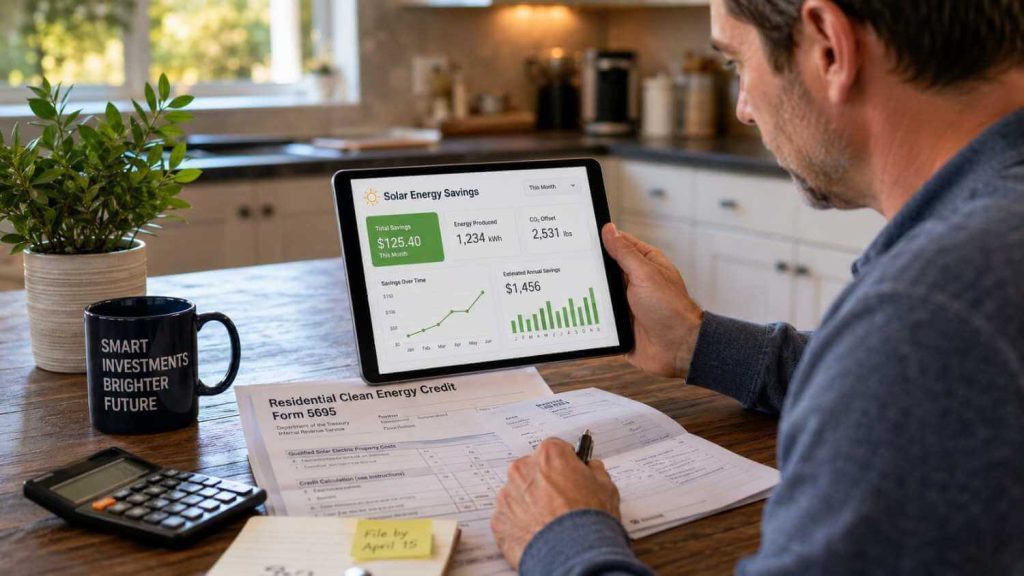
A solar array can remain on a roof for decades. Before signing:
- Review at least 12 months of electric bills. Separate usage charges from fixed charges and identify seasonal changes.
- Reduce avoidable consumption first. Air sealing, insulation, and other efficiency work may reduce the solar system size needed. See our home-insulation assistance guide and energy-efficient window assistance guide.
- Inspect the roof. Confirm remaining life, leaks, structural capacity, shading, orientation, roof warranty, and the future cost of removing and reinstalling panels.
- Check the electrical system. Ask whether the service panel, meter, wiring, grounding, or transformer needs an upgrade and who pays for it.
- Contact the utility. Verify interconnection rules, export compensation, required insurance, application fees, system-size limits, and permission to operate.
- Ask the home insurer and mortgage servicer. Determine whether panels affect coverage, premiums, inspections, or mortgage conditions.
- Confirm permits and installer licensing. Requirements differ by jurisdiction.
If unusually high summer cooling costs are the immediate problem, compare solar economics with financial assistance for air conditioning. Cooling assistance and rooftop-solar funding are separate eligibility paths.
For a whole-home sequence rather than a solar-only project, consult our green-home grants and assistance guide.
How to Compare Solar Proposals
Obtain multiple written proposals based on the same energy-use data. Each proposal should clearly state:
- cash price, financed price, APR, dealer fees, and total payments;
- system ownership and ownership of renewable-energy certificates;
- panel, inverter, battery, racking, and monitoring model numbers;
- system size in DC kilowatts and estimated first-year production in kilowatt-hours;
- assumed utility-rate increases, export rate, degradation, shading, and downtime;
- workmanship, roof-penetration, equipment, and production warranties;
- responsibility for maintenance, inverter replacement, roof work, and removal;
- lease or PPA escalator, buyout schedule, cancellation, moving, and home-sale transfer;
- any lien, UCC filing, property-tax assessment, security interest, or mandatory arbitration;
- permit, inspection, interconnection, and permission-to-operate timeline; and
- all government, utility, and company incentives included in the calculation.
Remove any unavailable 2026 federal residential credit from the proposal and compare the remaining cost with conservative energy savings. Solar may still make financial sense in some locations, but it should stand on current numbers—not an expired tax benefit or an assumed future electricity rate.
Muslim Perspective: Stewardship and Contract-Specific Review
Reducing waste and using energy responsibly can align with Islamic stewardship, but environmental benefit does not remove the need to understand ownership, price, risk, debt, and contract obligations. Muslim households should avoid universal “halal solar” or “haram solar” claims based only on a marketing label.
Grants and rebates are not automatically loans
A genuine public grant, utility rebate, or charitable contribution is generally different from borrowing money with interest. Verify whether the award creates repayment, a lien, performance obligations, income recertification, property restrictions, or repayment after a sale. Applicants should report household, income, property, and project information accurately.
Review conventional financing and hidden costs
For families concerned about riba, examine the APR, interest calculation, late-payment terms, dealer fees, prepayment conditions, and security interest in any solar loan. “Zero interest” may involve deferred interest or a higher financed price. Provide the complete contract—not only the sales summary—to a trusted scholar or qualified Islamic-finance adviser for a case-specific review.
A lease or PPA needs its own analysis
A lease or PPA is not automatically equivalent to a loan, but that does not automatically make every agreement acceptable. Review who owns the equipment and energy, how the price is determined, annual escalation, maintenance duties, roof-damage responsibility, early termination, buyout, transfer at sale, insurance, and penalties. Terms marketed as ijara should still be checked for genuine ownership, risk allocation, and transparent obligations.
Verify Islamic-finance labels
A murabaha-style arrangement should disclose the financier’s role, acquisition and ownership of the asset, fixed sale price, markup, payment schedule, collateral, default treatment, and late-payment provisions. The Arabic name alone is not proof that a product follows the structure represented.
Community support may be possible but is not guaranteed
Local sadaqah, environmental projects, mutual aid, or qard hasan may help a household with an essential energy need. Whether zakat can fund a solar project depends on the recipient’s circumstances, local policy, and scholarly interpretation; do not assume an ordinary capital improvement automatically qualifies. A mosque or zakat committee may reasonably prioritize utility crises, safe heating or cooling, essential repairs, or debt relief instead.
Solar Scam Warning Signs
- The salesperson says a new 2026 federal program pays 30% of residential solar.
- The company claims affiliation with the government or utility without verifiable proof.
- You are told the system is “free,” but the lease, PPA, loan, or assessment is not explained.
- The quote assumes a guaranteed utility-rate increase or guaranteed SREC income.
- The salesperson refuses to provide cash and financed prices separately.
- You are pressured to sign immediately or told funding expires that day.
- The proposal omits the annual escalator, dealer fee, lien, roof work, or transfer terms.
- The installer wants sensitive information before identifying the exact program.
- The company asks for gift cards, cryptocurrency, or payment to release a government grant.
Verify the program through a government or utility website, confirm contractor licensing, search state enforcement and complaint records, and report deceptive conduct to the FTC and the appropriate state consumer-protection office.
Frequently Asked Questions
Does the federal government give homeowners free solar panels?
No nationwide federal program automatically installs free rooftop solar for individual homeowners. Location-specific government, utility, tribal, or nonprofit programs may provide assistance to qualifying households.
Is the 30% residential solar tax credit available in 2026?
No. The IRS states that the Residential Clean Energy Credit is not available for property placed in service after December 31, 2025.
Can I use an unused solar credit from an earlier year?
The IRS says excess unused Residential Clean Energy Credit from an eligible year can be carried forward to reduce tax owed in future years. This does not create a new credit for a system installed in 2026.
Is EPA Solar for All still operating?
The EPA Office of Inspector General reported that the federal Solar for All program was terminated in August 2025. Separately funded local programs with similar names must be checked individually.
Can WAP install solar panels?
Federal rules allow solar within WAP, but only through grantees with an approved approach and for qualifying homes and projects. It is not a nationwide entitlement or homeowner-selected grant.
Are solar grants available for low-income families?
They may be available through a state, tribe, local government, utility, nonprofit, approved WAP initiative, or community-solar program. Eligibility, ownership, savings, and funding must be verified locally.
Are “no-cost” solar panels actually free?
Usually not. The offer may be a loan, lease, PPA, PACE assessment, or third-party-owned system. Review the full term, price, escalator, transfer, roof, lien, and cancellation provisions.
Can an ordinary rural homeowner use a USDA REAP solar grant?
Not merely because the home is rural. REAP is for qualifying agricultural producers and rural small businesses, subject to program requirements.
Is solar financing permissible for a Muslim household?
The answer depends on the actual contract. Review interest, markup, ownership, risk, late-payment, collateral, lease, and buyout terms with a trusted scholar or qualified Islamic-finance adviser rather than relying on a product label.