
Last Updated: May 2026 | Author: Robert
Upgrading to a new mattress is essential for your health and sleep quality, but it immediately creates a massive logistical headache: what do you do with the old one? You drag it into the living room, pull up your phone, and call your local thrift store, expecting them to gladly take it off your hands. Instead, you are met with a firm, unconditional “No.”
If you are currently frustrated, wondering who accepts mattress donations and why it is so incredibly difficult to get rid of a used bed, you are not alone. Mattresses are the single most rejected item in the entire charitable sector. You cannot simply leave them on the curb, and you cannot sneak them into a donation bin overnight without facing severe illegal dumping fines.
However, you are not entirely out of options. While the traditional “Big 3” charities might turn you away, there are specialized networks, state-sponsored recycling programs, and retailer loopholes designed specifically to solve this problem. Before you pay an exorbitant fee for a junk removal service, you must understand the strict health laws governing used mattresses and the highly specific organizations that are still legally permitted to accept them. (To see how bulky items factor into your overarching philanthropic strategy, please review our comprehensive guide to donations and fundraising.)
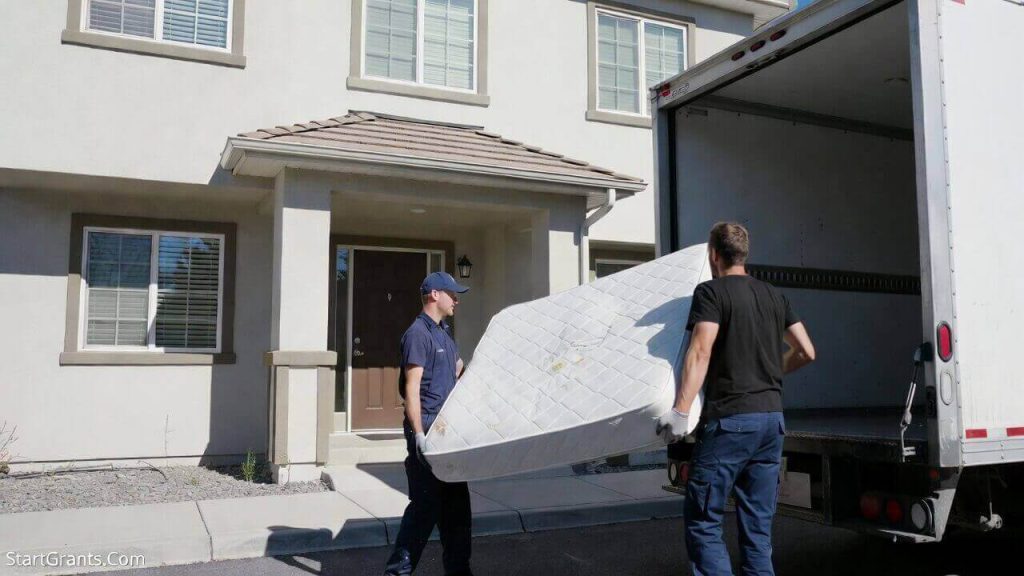
When thrift stores reject your old bed, utilizing a retailer “White Glove” take-back program is often the easiest and most legal disposal method.
Phase 1: The Harsh Reality (Why 90% of Charities Say No)
To understand how to dispose of your mattress, you must first understand why major non-profit organizations like Goodwill, The Salvation Army, and Habitat for Humanity generally refuse to accept them. It is not because they do not want to help people; it is because accepting a used mattress is a massive financial and legal liability.
1. State Health Codes and the “Law Tag”
In the United States, the resale of used mattresses is heavily regulated by state and federal health departments. In many states, it is entirely illegal for a thrift store to sell a used mattress unless it has undergone a rigorous, legally certified chemical sanitization and heat-treatment process.
- The Cost Barrier: Most local charities operate on razor-thin margins and simply cannot afford the specialized commercial sterilization equipment required to comply with these laws.
- The White Tag vs. Yellow Tag: You have likely seen the white tag that says, “Under penalty of law this tag not to be removed.” If a charity is legally allowed to sanitize and resell a mattress, state laws usually require them to attach a bright yellow or red tag certifying that it has been sterilized.
2. The Bed Bug Epidemic (Cimex Lectularius)
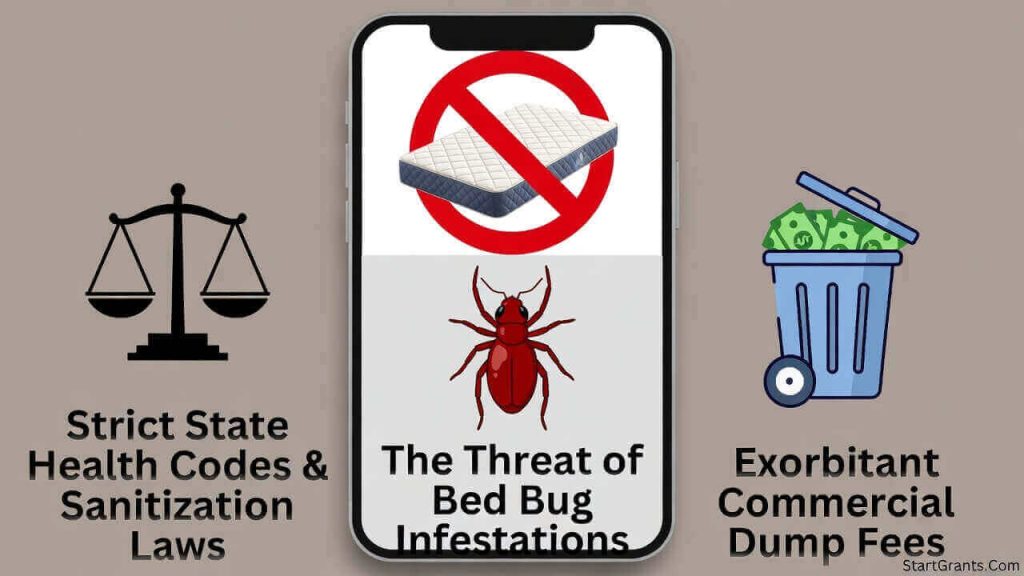
The ban on used mattresses is not about being ungrateful; it is about protecting the charity from devastating financial liabilities and health code violations.
This is the ultimate dealbreaker for any non-profit organization. A single mattress infested with bed bugs can absolutely devastate a charity. If a contaminated mattress is loaded onto a donation truck or brought into a warehouse, the infestation will rapidly spread to clothing, upholstered furniture, and other donations.
- The cost of hiring commercial exterminators to heat-treat an entire charity warehouse can run into the tens of thousands of dollars, completely bankrupting the organization’s monthly budget. To mitigate this risk, almost all major thrift stores have adopted a blanket “zero-tolerance” policy for used mattresses.
3. The “Dump Fee” Crisis
What happens if someone donates a mattress with a sagging center or a permanent stain? The charity cannot sell it, nor can they give it to a family in need. Instead, the charity becomes legally responsible for disposing of it.
- Landfills charge commercial entities by weight and volume (known as tipping fees or dump fees). Mattresses take up a massive amount of space in dumpsters. Charities spend millions of dollars every year paying local municipalities to throw away unsellable, heavily soiled mattresses that the public dumped on their property.
Phase 2: The Rare Organizations That Actually Accept Them
While the retail thrift stores will reject your bed, organizations that operate on a “direct-to-client” model are often more flexible, provided your mattress is in pristine condition.
The Furniture Bank Network
Unlike thrift stores, organizations registered with the Furniture Bank Association of North America (FBANA) do not sell donated items to the general public. Instead, they act as distribution centers for social workers.
- The Mission: When families transition out of homelessness, escape domestic violence, or arrive as refugees, social workers bring them to a Furniture Bank to pick out essential items for their new, empty apartments.
- Mattress Acceptance: Because the need for a clean place to sleep is so critical, many regional Furniture Banks do accept used mattresses. However, they enforce the strictest quality control in the industry. The mattress must be free of all rips, tears, and bodily fluid stains. It must be structurally sound (no broken springs or severe sagging).
St. Vincent de Paul
The Society of St. Vincent de Paul is a global Catholic charity network. Depending on your specific county and state laws, some local chapters of St. Vincent de Paul have invested heavily in the necessary sanitization equipment.
- In regions where it is legal, they are one of the very few traditional charities that will send a truck to pick up a high-quality mattress, sanitize it, and either provide it directly to a low-income family or sell it in their thrift stores to fund their food pantries and emergency utility assistance programs. You must call your local parish or SVdP thrift store directly to verify their regional policy.
Local Shelters and Transitional Housing
Small, independent homeless shelters or safe houses for domestic violence survivors sometimes accept twin or full-sized mattresses in excellent condition. Because they operate independently, they are not bound by the massive corporate policies of a national charity.
- The Catch: You will almost always have to deliver the mattress yourself, as these small non-profits rarely have the budget to operate moving trucks. Furthermore, many require that the mattress be enclosed in a brand-new, factory-sealed waterproof encasement before they will accept it.
Phase 3: The Retailer Take-Back Loophole (White Glove Delivery)
If you are researching mattress donation because you just purchased a brand-new bed, you might be overlooking the easiest and most legally sound disposal method available: making the retailer deal with it.
When you purchase a mattress from a major brick-and-mortar retailer (such as Mattress Firm, Macy’s, or local regional chains) or even large online brands that offer “White Glove Delivery,” they frequently offer an old mattress removal service.
How the Loophole Works
- One-for-One Exchange: When the delivery crew arrives to set up your new mattress and box spring, they will haul away your old mattress and box spring.
- The Logistics: These large retailers have massive commercial contracts with mattress recycling facilities and landfills. They bake the cost of disposal into their delivery fees.
- The Caveat: The delivery crew has the right to refuse the removal if the old mattress is heavily soiled, soaking wet, or shows clear signs of a severe pest infestation. It is a health hazard for the drivers to put a contaminated mattress into the same truck that carries brand-new inventory.
Always negotiate the removal of your old mattress before you finalize the purchase of your new one. If the salesperson wants the commission, they will often waive the $50-$100 removal fee to close the deal.
Phase 4: State-Sponsored Mattress Recycling (The “Bye Bye Mattress” Program)
If your mattress is stained, sagging, or simply too old to be accepted by a Furniture Bank, you must pivot away from the idea of “donation” and focus entirely on “recycling.” Mattresses are an environmental disaster when sent to a landfill. A single mattress takes up to 40 cubic feet of space, and the metal springs frequently jam the heavy machinery used to compact trash.
However, a mattress is incredibly recyclable. Up to 80% of a standard innerspring mattress—the steel coils, the polyurethane foam, the wood frame of the box spring, and the cotton fibers—can be broken down and sold as raw materials.
The Mattress Recycling Council (MRC)
To combat the landfill crisis, several US states have passed Extended Producer Responsibility (EPR) laws. These laws legally require mattress manufacturers and retailers to fund the recycling of old mattresses. This initiative is managed by the Mattress Recycling Council, a non-profit organization established by the industry itself.
- The “Bye Bye Mattress” Network: The MRC operates the consumer-facing “Bye Bye Mattress” program. If you live in a state with an active EPR law—currently California, Connecticut, Rhode Island, and Oregon—you are in luck. (Note: In 2026, the state-mandated point-of-sale recycling fees that fund this program range from $11.75 in Connecticut to $22.50 in Rhode Island).
- How It Works: When you buy a new mattress in these states, you pay a small, mandatory recycling fee at the point of sale. This fee funds a massive statewide network of free or low-cost drop-off locations, recycling facilities, and collection events.
- Finding a Facility: You can use their online locator tool to find a designated transfer station or recycling center near you. You simply load your old mattress into a truck, drive to the facility, and drop it off for free (because you already paid the fee when you bought your new bed).
Have you ever wondered what actually happens when you drop your old bed off at a state-sponsored recycling facility? Mattresses are incredibly complex to break down manually, but industrial recycling centers can salvage up to 80% of the materials. Watch this fascinating behind-the-scenes look at how massive recycling machines tear apart old mattresses to reclaim the wood, foam, and steel:
Phase 5: Junk Removal & Municipal Bulk Trash Day
If you do not live in a state with a mandated recycling program, and your mattress is not in good enough condition for a charity to accept, your options narrow significantly. You must either rely on your local government or pay a private company to solve the problem.
Municipal Bulk Trash Pick-Up
Before you spend a single dollar, you must check your city or county’s waste management website. Many municipalities across the country offer residents one or two free “Bulk Trash Days” per year.
- The Process: You must usually call your city’s sanitation department or fill out an online form to schedule a pick-up. You cannot simply drag the mattress to the curb on your regular trash day; the standard garbage trucks physically cannot compress a mattress.
- The Wrapping Law: In major metropolitan areas (like New York City or Chicago), sanitation laws strictly require you to seal the mattress entirely in a heavy-duty plastic mattress bag before placing it on the curb. If the mattress is not sealed, the sanitation workers will refuse to take it, and the city will issue you a massive fine for a health code violation.
Private Junk Removal Services (1-800-GOT-JUNK, LoadUp)
If you missed bulk trash day, or if you physically cannot carry a heavy king-size mattress down a flight of stairs, a private junk removal service is your absolute last resort.
- The Cost: Companies like 1-800-GOT-JUNK or LoadUp specialize in hauling away bulky items. However, convenience is expensive. Expect to pay anywhere from $80 to $150 strictly to have a single mattress removed from your bedroom.
- The Advantage: These services will do all the heavy lifting. You do not need to move the mattress to the curb; they will carry it out of your house, load it into their truck, and transport it to the nearest recycling facility or landfill.
Phase 6: The DIY Deconstruction (Upcycling)
What if you have a truck, but your local landfill charges an exorbitant $50 “tipping fee” just to throw the mattress away, and you refuse to pay a junk removal service? The most labor-intensive, yet cost-effective solution is to deconstruct the mattress yourself.
If you have a pair of heavy work gloves, a utility knife, and a set of bolt cutters or heavy pliers, you can break down a mattress in your driveway or garage in about an hour.
- The Fabric and Foam: Cut off the outer fabric cover (the ticking) and pull out the layers of polyurethane foam and cotton batting. The fabric can often be thrown in your regular municipal trash bin over several weeks, while the foam can be repurposed for pet beds, soundproofing, or carpet padding.
- The Steel Coils: Once the foam is removed, you are left with the steel innerspring unit. Use the bolt cutters to cut the springs down into smaller, manageable pieces, or borrow a reciprocating saw to cut the entire frame in half. You can then drive the steel coils to a local scrap metal yard. Many scrap yards will actually pay you a small amount of cash for the steel weight.
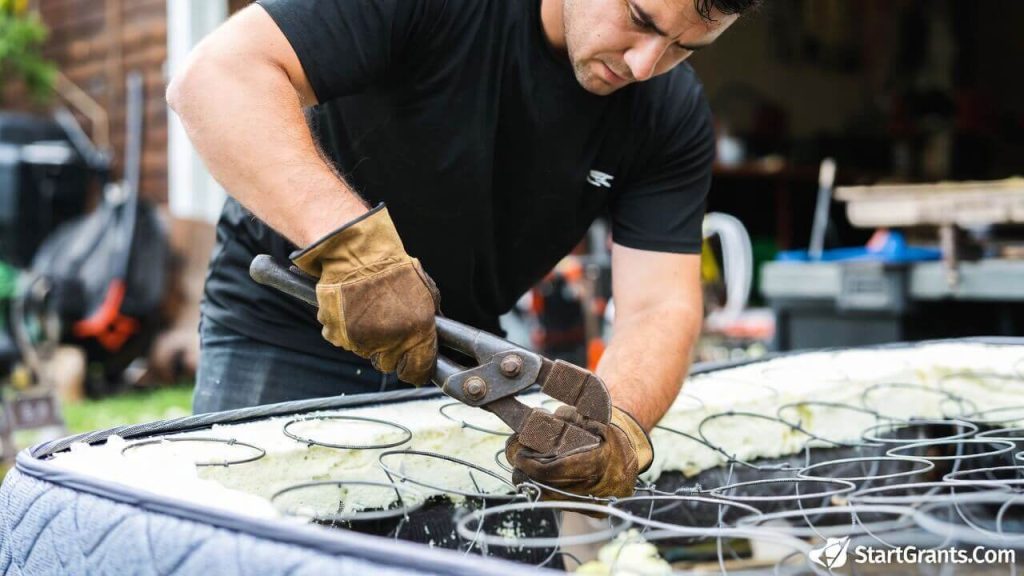
If a junk removal service is too expensive, deconstructing the mattress yourself allows you to throw the fabric away over time and sell the steel coils to a scrap yard.
- The Box Spring: A box spring is primarily just a wooden frame covered in fabric. Strip the fabric off, pull out any staples, and you are left with raw wood that can be used for firewood (if untreated), composted, or thrown in the standard trash.
Phase 7: The Condition Checklist & Logistics
If you are lucky enough to have a mattress in perfect condition, and you have found a local Furniture Bank or shelter willing to take it, you must ensure the logistics are flawless. Remember, charities are not obligated to take your items. If you want to know who accepts furniture donations and the strict rules governing bulky item pick-ups, you must read our comprehensive pillar guide.
When donating a mattress, the driver will perform a rigorous inspection at your door:
- The Light Test: Drivers are trained to shine a bright flashlight across the surface of the mattress to look for faint water rings or bodily fluid stains. Any discoloration is an immediate rejection.
- The Odor Test: If the mattress smells like smoke, mildew, or heavy perfumes used to mask odors, it will be rejected.
- The Sagging Rule: If the mattress has a deep, permanent body impression in the center, or if the edge support has completely collapsed, it cannot be donated. A charity will not give a broken bed to a family in need.
If you have found a local shelter or Furniture Bank willing to accept your mattress, it must pass their rigorous visual inspection. A single water ring or sweat stain will result in an immediate rejection. Before the charity truck arrives, watch this highly professional and effective cleaning guide directly from The Home Depot on how to properly deep-clean, deodorize, and remove stubborn stains from your mattress using simple household ingredients:
Phase 8: The “Bedroom Set” Alternative & Final Logistics
It is incredibly common to face a scenario where you are trying to donate an entire bedroom set, only to hit a brick wall when the charity driver refuses the mattress. Do not let the rejection of one item ruin your entire decluttering project. You must separate the mattress from the structural furniture.
While 99% of thrift stores will instantly reject a used mattress due to strict health codes, they are still an excellent option for the rest of your bedroom.
- The Goodwill Strategy: If you have heavy solid-wood dressers, nightstands, or lamps to give away, you can often schedule a Goodwill donation pickup for those specific items, leaving you to only deal with recycling the mattress itself.
- The Habitat Alternative: Similarly, if you are remodeling the entire room, Habitat for Humanity donations are perfect for solid bed frames, headboards, and even old bedroom doors or light fixtures. Their ReStore network will gladly take the structural pieces to fund affordable housing, even if they must legally decline the mattress.
- General Pick-Up Rules: No matter which organization you choose for the rest of your bedroom suite, understanding the strict logistical rules of a furniture donation pick up is vital. Always ensure your acceptable bulky items are on the ground floor, outside on a covered porch, or in a garage, as charity truck drivers are rarely insured to navigate narrow staircases or enter your private residence.
Conclusion (Navigating the Mattress Maze)
Figuring out who accepts mattress donations requires patience and a realistic understanding of non-profit limitations. You cannot treat a charity like a free junk removal service. If your mattress has even the slightest stain, tear, or structural defect, you must abandon the idea of donating it and pivot immediately to recycling.
Always start by checking if your state participates in the Mattress Recycling Council’s “Bye Bye Mattress” program for free drop-off locations. If you are buying a new bed, aggressively negotiate a “White Glove” retailer take-back before you hand over your credit card. If your mattress is truly in immaculate, pristine condition, bypass the traditional thrift stores entirely and contact a specialized Furniture Bank or local domestic violence shelter where your donation will directly furnish a home for a family in crisis.
A used mattress is a logistical liability, but it doesn’t have to be a permanent one. Check your state’s MRC recycling portal today, wrap it in plastic if necessary, and finally reclaim your bedroom space.
Frequently Asked Questions (FAQs)
Q1: Will Goodwill or The Salvation Army take a mattress?
A: Generally, no. Due to strict state health codes requiring commercial chemical sanitization, as well as the severe financial threat of a bed bug infestation, virtually all major national thrift stores have a zero-tolerance policy for used mattresses. They will reject them at the loading dock and during residential pick-ups.
Q2: How can I get rid of a mattress for free?
A: The easiest free method is utilizing a “Retailer Take-Back” program when purchasing a new mattress; the delivery crew will haul the old one away. Alternatively, if you live in a state with Extended Producer Responsibility (EPR) laws, you can drop it off at a designated recycling facility for free. Finally, if the mattress is clean, you can list it as a “Curb Alert” on local Freecycle or Buy Nothing Facebook groups.
Q3: Is it illegal to put a mattress in an apartment dumpster?
A: Yes, in most municipalities, it is highly illegal. Mattresses take up massive amounts of cubic space and the steel springs destroy the hydraulic compactors inside garbage trucks. If you are caught dumping a mattress into a commercial bin, you can face severe fines for illegal dumping.
Q4: Can I donate a mattress with a small water stain?
A: Absolutely not. Non-profit organizations and shelters enforce a strict visual inspection. Even if you know the stain is just spilled water, the charity cannot legally verify that it is not a biohazard. Any discoloration or watermark will result in an immediate rejection.
Q5: How do I legally dispose of a mattress infested with bed bugs?
A: You cannot donate it, and you cannot leave it exposed on the curb. Most municipal sanitation departments strictly require you to completely encase the infested mattress in a heavy-duty plastic mattress bag, seal every seam tightly with duct tape, and clearly label the plastic with the words “BED BUGS” before the garbage truck will take it.
Q6: What happens if I return a “Bed-in-a-Box” during the trial period?
A: Online mattress companies rarely ask you to ship the expanded mattress back. Their return policy usually requires you to find a local 501(c)(3) charity willing to accept it. Once you provide the official donation receipt, they will issue your refund. Finding the charity is entirely your responsibility.
Q7: How does donating a clean mattress align with Islamic charity principles?
A: In Islam, ensuring a vulnerable family has a clean, safe place to sleep is a deeply respected form of Sadaqah (voluntary charity). Bypassing the landfill to donate a pristine mattress to a family escaping domestic violence or newly arrived refugees directly alleviates the suffering of Al-Masakin (the needy) and Ibn Al-Sabil (the wayfarer). It provides dignity, which brings continuous spiritual rewards. If you have a high-quality mattress to give, consider exploring programs like ICNA Relief’s Transitional Housing network.
Important Disclaimer: StartGrants.com is an independent information portal. We are not a government agency and do not provide direct grants or products. Always verify the current status of programs with the providing organization.