
Last Updated: | Author: Munir Ardi
Yes—Doctors Without Borders is a credible charity to consider if you want to support international medical humanitarian care. Its public financial reporting, established medical work, and current independent charity rating support that assessment. But “good charity” does not mean flawless: donors should also review safeguarding concerns, operational limits, and whether the organization’s mission matches their priorities.
This review focuses on Doctors Without Borders USA and the wider Médecins Sans Frontières (MSF) movement. We distinguish US financial figures from international accounts and identify the years behind the numbers. For a broader comparison across causes, see our comparison of nonprofit organizations to donate to.

Is Doctors Without Borders Legitimate?
Doctors Without Borders USA, Inc. is a 501(c)(3) organization with EIN 13-3433452. Its official ways-to-give page provides donation information and receipts. The international movement and its national associations are related, but they are not interchangeable legal entities for donation or tax purposes.
Before paying, verify the recipient’s legal name and enter through the official website rather than an unsolicited link. Our guide to checking whether a nonprofit is legitimate explains the broader verification process. This article is an editorial review of public sources, not an independent audit or a guarantee about every MSF project.
What Is Doctors Without Borders’ Charity Rating?
As checked on October 5, 2026, Charity Navigator lists Doctors Without Borders USA with a 96% score and a Four-Star rating. The profile includes four evaluation areas: Accountability & Finance, Impact & Measurement, Leadership & Planning, and Culture & Compensation.
Some financial and accountability entries use fiscal-year 2024 Form 990 data. A rating displayed in 2026 therefore should not be described as an audit of 2026 operations. Scores and methodologies can change, and a high score does not establish that every intervention succeeds or every ethical concern has been resolved.
How Much of MSF’s Spending Goes to Programs?
MSF USA’s financial reporting page states that, since 2009, an average of more than 85 cents per dollar spent has been allocated to medical humanitarian programs. This is a historical spending average—not an exact 2025 expense breakdown and not proof that 85 cents of each donation purchases medicine.
The same reporting page lists 2025 financial statements and a 2024 Form 990. Read the documents’ fiscal years before comparing figures. Program services include more than bedside supplies, and spending ratios alone cannot establish quality, patient outcomes, or cost-effectiveness.
| Measure | Reported figure | How to interpret it |
|---|---|---|
| MSF USA program spending | More than 85% on average since 2009 | Historical US average; not a current-year itemized allocation. |
| International social-mission allocation | 79% in 2025 | Combines humanitarian programs, project support, and other social-mission activities. |
| International private operating income | 98% in 2025 | A funding-source measure, not a program-expense ratio. |
Sources: the MSF USA reporting page linked above, MSF’s 2025 international financial summary, and its 2025 funding figures. Categories and accounting scopes differ. Check newer reports when they become available.
The international 79% figure includes 63% for humanitarian programs, 13% for project and program support, and 3% for awareness raising, the Access Campaign, and the Drugs for Neglected Diseases initiative. These categories cannot be directly compared with a US fundraising association’s program-services percentage.
Who Funds Doctors Without Borders?
MSF’s 2025 international figures report that 98% of operating income came from private sources, including individual donors and private institutions. MSF also identifies public institutional contributors. It would be inaccurate to say the movement accepts no government money.
Private funding supports MSF’s ability to set priorities independently. However, financial independence does not guarantee access, remove political pressures, or make staff safe. The MSF charter commits the organization to medical ethics, impartiality, neutrality, and independence from political, economic, and religious powers.
What Does MSF Do, and What Do Its Activity Numbers Show?
Founded in 1971, MSF provides medical humanitarian assistance in settings affected by conflict, disasters, epidemics, and exclusion from health care. Its official history explains the movement’s development. The 2025 International Activity Report reports work in 72 countries during 2025.
For that year, MSF reported 17,071,300 outpatient consultations, 405,000 births assisted, and 2,941,600 emergency room admissions. These are activity counts, not necessarily unique patients, independently verified lives saved, or a calculation of what your individual donation will accomplish.
Emergency response also involves logistics, procurement, transport, staffing, and local coordination. The activity report describes country-level work and constraints. There is no basis here for promising that MSF will perform surgery within 48–72 hours of every disaster. Access, security, infrastructure, and permissions can affect what care is possible.
Ethical Concerns and Operational Limits Donors Should Review
Safeguarding and staff behavior
MSF’s Annual Behavior Accountability Report 2025, published August 27, 2026, reports 1,122 complaints across the movement in 2025 and 299 confirmed cases of abuse or inappropriate behavior after review and investigation. Some complaints remained under investigation at year-end. These totals cover projects and headquarters; they are not all sexual-abuse cases.
MSF also acknowledges concern about underreporting, especially among patients and communities. Publishing complaints is useful transparency, but it does not make the underlying harm acceptable or prove that reporting systems work equally well everywhere. Donors should consider prevention, access to reporting channels, investigation, sanctions, and support for affected people alongside financial measures.
Speaking out, neutrality, and access
MSF’s principle of témoignage, or bearing witness, includes speaking publicly about suffering and abuses it observes. Its discussion of speaking out explains how this relates to humanitarian principles. Donors may value advocacy or prefer another humanitarian approach; that is a mission-fit decision.
Donors should not assume that every interruption in MSF’s work results from advocacy. Read the evidence about the particular setting rather than treating neutrality as a guarantee of uninterrupted care.
How to Donate Safely and Understand Restrictions
Start from the official donation options page linked earlier. Confirm the amount, payment frequency, recipient entity, and any optional fees before submitting payment. Save the confirmation and check your account after starting a recurring gift.
MSF’s official donor guide says it encourages unrestricted gifts and sometimes accepts restrictions to specific crises. Ask Donor Services whether your proposed restriction is available and what happens if needs or access change. Do not assume adding “immediate emergency use” to a payment note prevents investment, removes administration costs, or creates a religiously compliant arrangement.
Review its current privacy policy, including sharing and opt-out provisions. A recognizable charity name does not eliminate the need to understand how the organization and payment platform handle your information.
Are Donations to Doctors Without Borders Tax Deductible?
Qualifying contributions to MSF USA may be deductible under US federal rules, subject to your circumstances and documentation. Eligibility is not limited to US citizens, and a charitable deduction is not a dollar-for-dollar refund.
The IRS 2026 tax-law guidance describes the 2026 deduction for qualifying cash gifts by eligible non-itemizers: up to $1,000, or $2,000 for married couples filing jointly. Itemizers face a new 0.5%-of-adjusted-gross-income floor, explained in Publication 505, along with other applicable limits.
Keep donation records. For a contribution of $250 or more, the IRS written acknowledgment guidance explains the required contemporaneous written acknowledgment. Seek individualized tax advice for substantial gifts, noncash donations, or giving through a donor-advised fund.
A Muslim Perspective
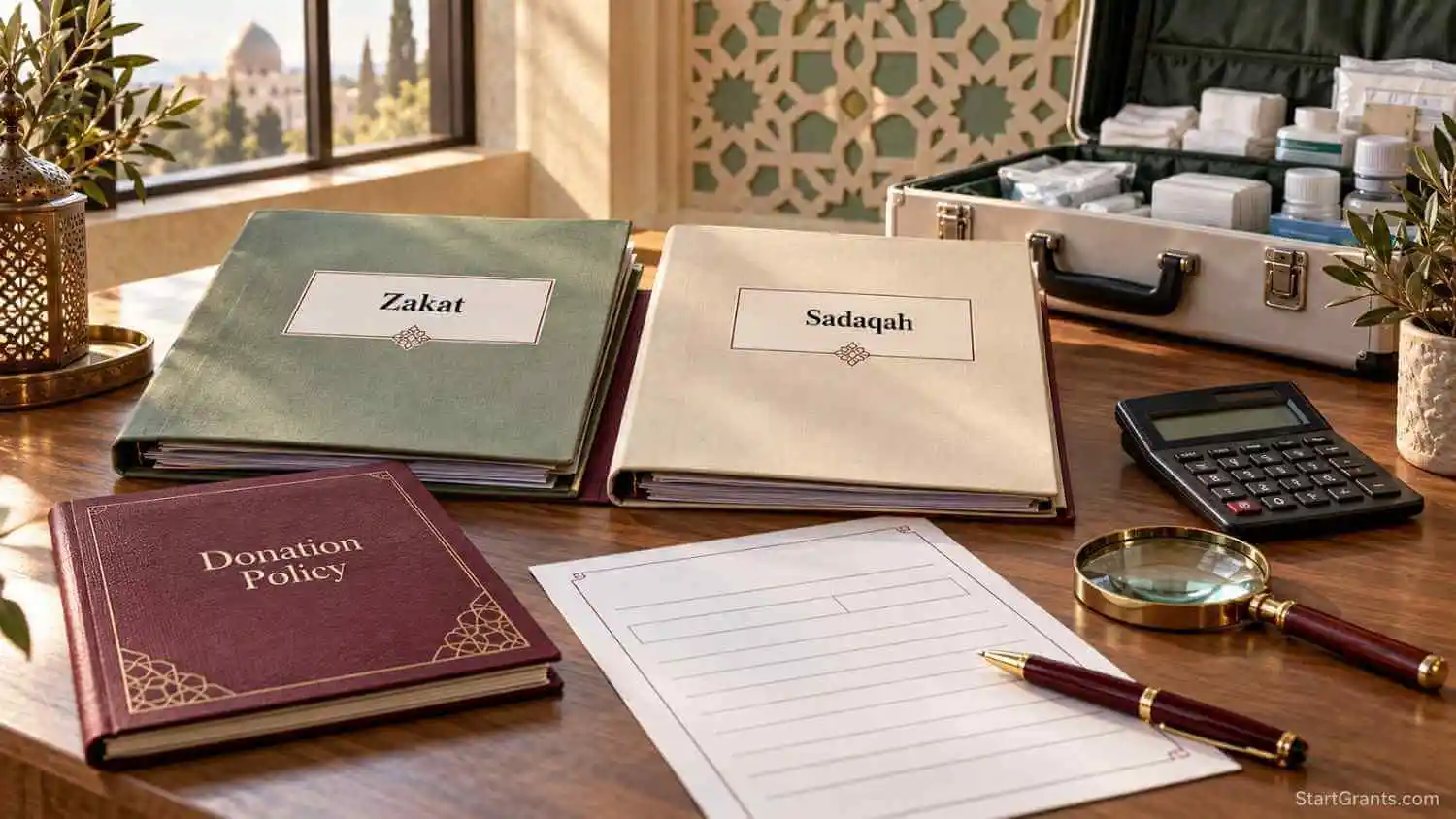
For Muslim donors, distinguish voluntary sadaqah from obligatory zakat. MSF’s impartial medical mission and its secular status do not, by themselves, establish whether a particular donation arrangement fulfills your zakat obligations.
Ask for a documented zakat arrangement
This review did not establish a dedicated MSF USA zakat policy from the official materials examined. That is a limitation of the available evidence, not proof that an arrangement could never exist. Before treating a gift as zakat, obtain written information about qualifying recipients, separation of funds, permitted costs, and the scope of any scholarly supervision.
Bring those details to a qualified scholar familiar with humanitarian giving. Do not rely on an unsupported claim of scholarly consensus or assume that treating people in severe hardship automatically meets every zakat condition.
Riba, investments, and insurance: avoid assumptions
If investment holdings, interest income, cash management, or insurance arrangements matter to your religious assessment, ask specific questions and review relevant financial disclosures. This article does not establish the religious status of every MSF financial product or insurance contract. A reserve balance alone does not prove that your donation enters a particular interest-bearing investment.
Likewise, a restricted gift does not automatically resolve those questions. Consult an appropriate scholar using the actual arrangement rather than labeling an entire medical charity halal or haram.
Comparing other medical charities
For example, IMANA publishes a zakat donation page describing support for its medical relief missions. This is its stated donation purpose, not an independent certification of every financial arrangement. If you are considering another medical or humanitarian charity, its religious identity alone does not establish equivalent services, current zakat eligibility, or blanket Shariah compliance. If comparing organizations, request each one’s current program and zakat policies and verify the intended use of your gift. Apply the same financial and safeguarding questions to faith-based and secular charities.
Frequently Asked Questions
Is Doctors Without Borders a good charity to donate to?
Doctors Without Borders is a credible option for donors who want to support international medical humanitarian care. Its reporting and charity rating support consideration, but donors should also review safeguarding concerns, operational limits, and mission fit.
What is Doctors Without Borders USA’s Charity Navigator rating?
As checked on October 5, 2026, Charity Navigator listed Doctors Without Borders USA at 96% with a Four-Star rating. Ratings can change, and some underlying financial entries use fiscal-year 2024 data.
Does exactly 85% of every donation go directly to medical supplies?
No. MSF USA reports a historical average of more than 85% of spending allocated to medical humanitarian programs since 2009. That is not an exact current-year allocation or a promise that the same share of each gift purchases supplies.
Does Doctors Without Borders accept government funding?
The international movement accepts some public institutional funding. In 2025, MSF reported that 98% of operating income came from private sources, which supports its financial independence.
Can I restrict my donation to a particular crisis?
MSF encourages unrestricted gifts and sometimes accepts crisis-specific restrictions. Confirm the available designation and its terms directly with Donor Services before paying.
Can I give zakat to Doctors Without Borders?
This review did not establish a dedicated MSF USA zakat policy from the official materials examined. Obtain written details about recipient eligibility and fund handling, then consult a qualified scholar before treating a donation as fulfilling zakat.
Are donations to MSF USA tax deductible?
Qualifying donations to MSF USA may be deductible under US federal rules, subject to the recipient, contribution, documentation, and taxpayer requirements. A deduction reduces taxable income rather than refunding the entire donation.
Important disclaimer: StartGrants.com is an independent information portal and is not affiliated with MSF or a charity-rating service. This public-source review is not an independent audit, a guarantee of donation outcomes, individualized tax advice, or a religious ruling. Confirm current donation policies with MSF, consult a qualified tax professional about your deductions, and seek qualified scholarly guidance for zakat or Islamic finance questions.